
Kasia Polish Mom
Polish-born, Chicago-raised, feeding a family of six with babcia’s recipes and a global pantry. I grew up folding pierogi at my grandmother’s kitchen table and never stopped — 15+ years of cooking from scratch, one Sunday dinner at a time. Everything here is tested on four kids, a hungry husband, and the memory of a woman who never measured anything but always got it right.
Kimchi Pierogi — Poland Meets Korea in a Dumpling
This is the recipe that made me realise my two food worlds were always meant to collide.
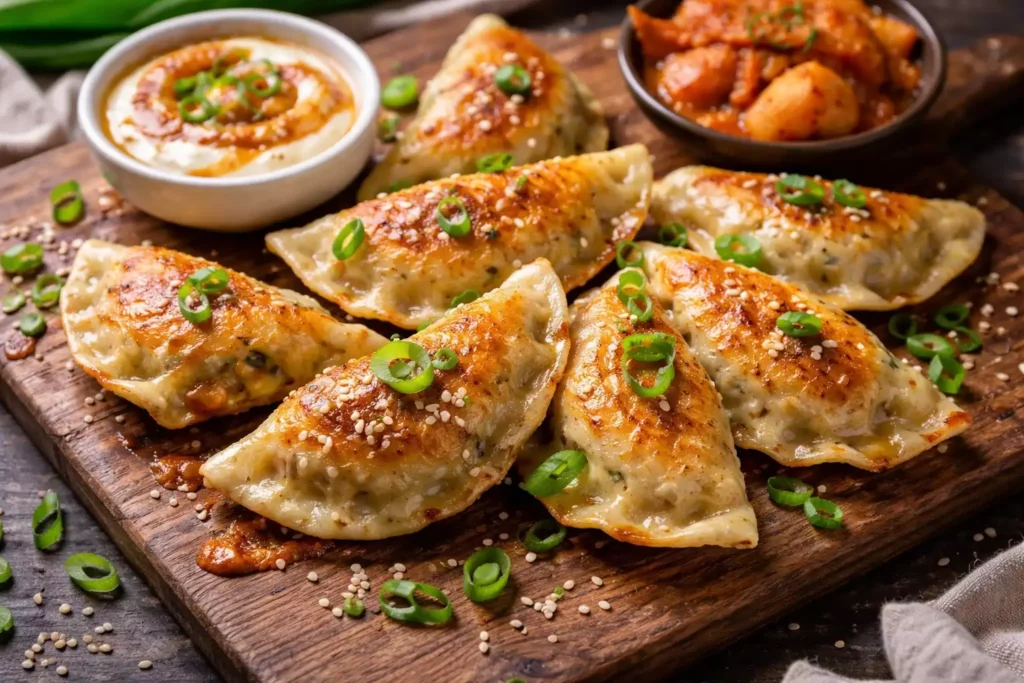
Kimchi pierogi. Say it out loud. Let it settle in your brain. Polish dumplings filled with Korean fermented cabbage, potato, and cheese, pan-fried in butter, and served with gochujang sour cream. It sounds like a fever dream, but it’s the most popular recipe on Polish Mom, the one that gets shared the most, talked about the most, and requested at every dinner party I attend. It’s the recipe that defines what this blog is about: “where pierogi meet pad thai” isn’t just a tagline. It’s a philosophy. And kimchi pierogi is where that philosophy became real food.
The origin story: I had leftover pierogi dough and leftover kimchi in the fridge on the same Tuesday night. My brain connected two facts simultaneously — both Polish and Korean cuisine love fermented cabbage (sauerkraut and kimchi), and both cultures put that fermented cabbage inside or alongside dumplings. What if I put kimchi inside pierogi dough? The idea felt so obvious that I was almost embarrassed it took me years to think of it. Twenty minutes later, I had the first batch. My husband tasted one, paused, and said “this is the best thing you’ve ever made.” Given that I’ve made thousands of recipes over 15+ years of cooking, that’s either a huge compliment or a devastating comment on everything else. I chose to hear it as a compliment.
Ingredients
For the Pierogi Dough
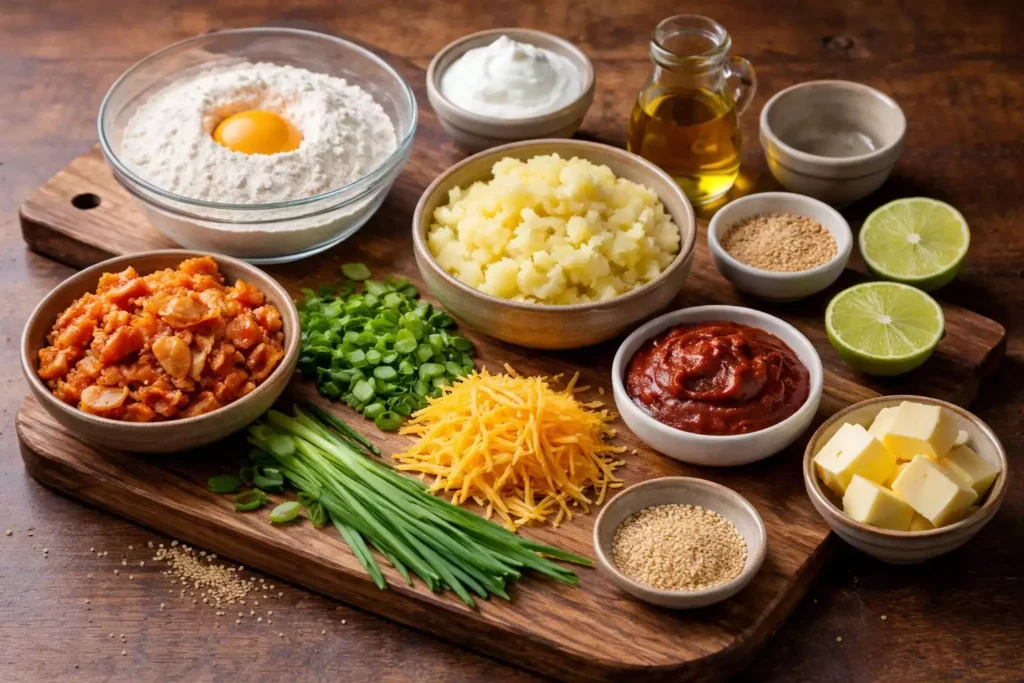
- • 2 cups all-purpose flour
- • 1/2 teaspoon salt
- • 1 egg
- • 2/3 cup warm water
- • 1 tablespoon sour cream
For the Kimchi Filling
- • 1 cup kimchi, drained and finely chopped
- • 1 cup mashed potato (about 2 medium potatoes)
- • 1/2 cup sharp cheddar, shredded
- • 1 green onion, finely sliced
- • 1 teaspoon sesame oil
- • Salt and pepper
For the Gochujang Sour Cream
- • 1/2 cup sour cream
- • 1 tablespoon gochujang
- • 1 teaspoon sesame oil
- • Squeeze of lime
For Serving
- • Butter for pan-frying
- • Sliced green onions, sesame seeds, extra kimchi
How to Make Them

Make the Dough
Mix flour and salt. Make a well. Add egg, warm water, and sour cream. Stir until a shaggy dough forms, then knead 5-7 minutes until smooth and elastic. Cover and rest 30 minutes. This is my babcia’s pierogi dough — the sour cream makes it slightly tender and easier to roll. It’s the same dough I use for every pierogi variant, from classic potato-cheese to these kimchi beauties. The dough doesn’t know what’s going inside it. It just does its job.
Make the Filling
Drain the kimchi THOROUGHLY — squeeze it in a clean towel until no more liquid comes out. Wet kimchi = wet filling = pierogi that fall apart in the water. This is the same lesson from gyoza (dry the cabbage!) transferred to pierogi (dry the kimchi!). Mix the chopped kimchi with mashed potato, cheddar, green onion, sesame oil, salt, and pepper. Taste the filling — it should be tangy from the kimchi, creamy from the potato, and savoury from the cheese. The sesame oil adds a subtle Asian note that bridges the two cuisines.
Assemble
Roll the dough thin (about 2mm). Cut circles with a glass or cookie cutter. Place a teaspoon of filling in the centre. Fold, press edges firmly, and crimp with a fork or pinch into the traditional pierogi pleat. My hands know this motion so well I can do it while having a conversation, watching TV, or mediating a sibling argument. Pierogi assembly is Polish muscle memory, and it serves me equally well whether the filling is babcia’s potato-cheese or my kimchi invention.
Cook
Boil in salted water for 3-4 minutes after they float. Drain. Then — and this is critical — pan-fry in butter over medium-high heat for 2-3 minutes per side until golden and crispy. The pan-fry step is what makes these transcendent. Boiled pierogi are good. Pan-fried pierogi are extraordinary. The butter creates a crispy, golden exterior that shatters against the soft, tangy filling.
Serve
Mix the gochujang sour cream (sour cream + gochujang + sesame oil + lime). Plate the golden pierogi. Drizzle with gochujang sour cream. Top with sliced green onions and sesame seeds. Extra kimchi on the side. The visual alone — golden Polish dumplings with red Korean condiment, green onions, and white sesame seeds — tells the story of what Polish Mom is about.
Why This Fusion Works
Sauerkraut and kimchi are both lacto-fermented cabbage. Both provide tangy acidity that cuts through rich, starchy foods. Poland uses sauerkraut alongside pierogi. Korea uses kimchi alongside dumplings (mandu). Putting kimchi INSIDE pierogi is just removing the “alongside” and making it “inside” — and the result is a dumpling that carries both traditions in every bite. The potato and cheese are Polish. The kimchi and sesame are Korean. The gochujang sour cream is the bridge between both worlds. Everything about this recipe feels obvious in hindsight, which is how you know a fusion works: it feels like it always should have existed.
Tips
💡 Pro Tips
✓ Squeeze the kimchi DRY. The #1 rule. Wet kimchi ruins the filling and the dough.
✓ Use well-fermented kimchi. Older, more sour kimchi has deeper flavour. Fresh, mild kimchi is too subtle.
✓ Pan-fry after boiling. The butter crust is what makes these special. Boiled-only kimchi pierogi are good. Pan-fried ones are legendary.
✓ Make extra and freeze. Freeze uncooked pierogi on a parchment sheet, then bag them. Boil from frozen, adding 1 minute to cook time.
How to Store
Fridge 3-4 days. Freeze uncooked for 3 months. When reheating, always pan-fry — the re-crisping in butter brings them back to life perfectly.
Frequently Asked Questions
Where do I buy kimchi?
Asian grocery stores (best selection), the refrigerated section of most grocery stores, or even Costco. Look for traditionally fermented kimchi (refrigerated, not shelf-stable) for the best flavour. The stronger and more sour, the better for this recipe.
Can I use store-bought pierogi dough?
If you can find it, yes. Some Polish delis sell fresh pierogi dough. Wonton wrappers work in a pinch for a thinner, crispier result — not traditional but functional. Homemade dough is worth the 10-minute effort, though. It’s part of the experience.
Kasia Polish Mom
Polish-born, Chicago-raised, feeding a family of six with babcia’s recipes and a global pantry. I grew up folding pierogi at my grandmother’s kitchen table and never stopped — 15+ years of cooking from scratch, one Sunday dinner at a time. Everything here is tested on four kids, a hungry husband, and the memory of a woman who never measured anything but always got it right.