
Kasia Polish Mom
Polish-born, Chicago-raised, feeding a family of six with babcia’s recipes and a global pantry. I grew up folding pierogi at my grandmother’s kitchen table and never stopped — 15+ years of cooking from scratch, one Sunday dinner at a time. Everything here is tested on four kids, a hungry husband, and the memory of a woman who never measured anything but always got it right.
Miso Butter Kotlet Schabowy — Japanese-Polish Pork Cutlet
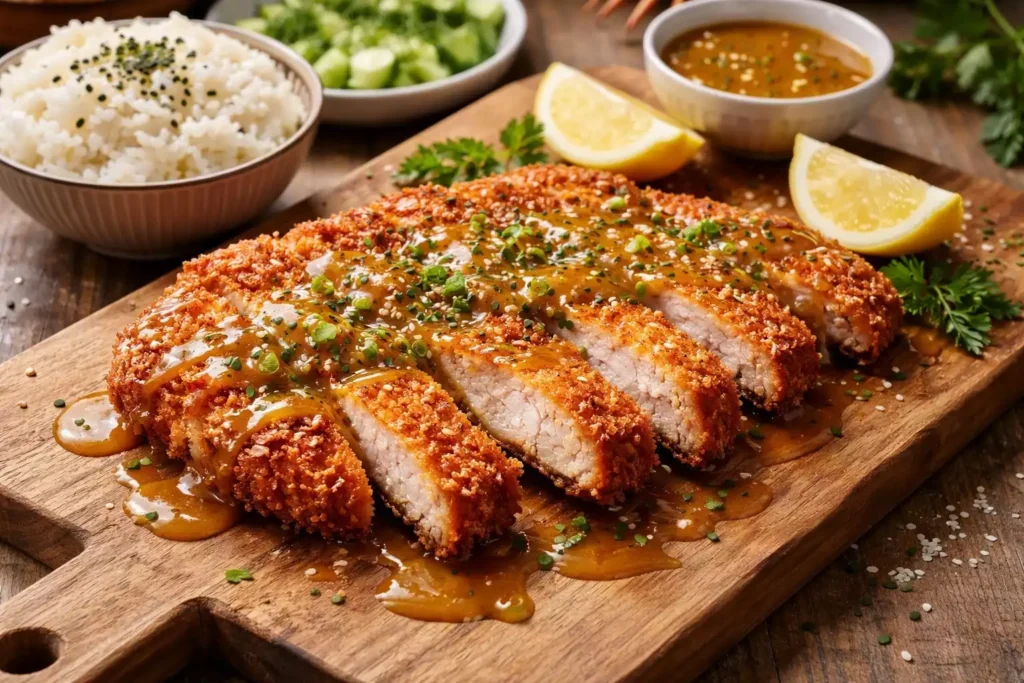
My babcia would be confused by the miso butter. But she’d eat three of these. I’m certain of it, because babcia could always sense when food was good, regardless of how foreign the ingredients were. She once tried kimchi at a Korean restaurant, made a face, and then quietly asked for more. Babcia’s palate was adventurous even when her vocabulary for Asian food was limited. The miso butter pork cutlet is what happens when her schabowy tradition meets Japanese katsu technique meets umami-rich miso butter. Three cuisines. One plate. My favourite recipe on the entire blog.
The concept: a pork cutlet pounded thin, breaded in panko (Japanese) using the classic Polish three-station method (flour, egg, breadcrumbs), fried until golden, then drizzled with a miso butter sauce that’s savoury, slightly sweet, and deeply umami. It’s schabowy’s crunch meets katsu’s lightness meets Japanese miso’s depth. Every element borrows from a different tradition, and together they create something that belongs to all three and none of them simultaneously.
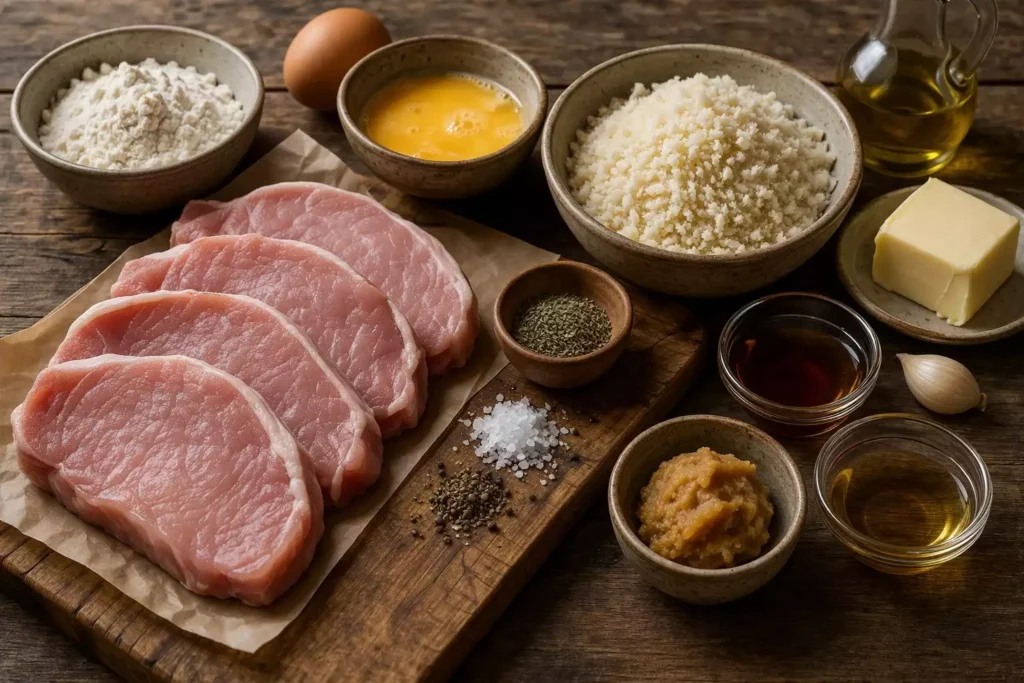
Ingredients
For the Pork Cutlet
- • 4 boneless pork loin chops, pounded to 1/2 inch thick
- • 1/2 cup flour
- • 2 eggs, beaten
- • 1.5 cups panko breadcrumbs
- • 1/2 teaspoon marjoram (the Polish signature)
- • Salt and pepper
- • Vegetable oil for frying
For the Miso Butter Sauce
- • 3 tablespoons butter
- • 2 tablespoons white miso paste
- • 1 tablespoon mirin (or rice vinegar + 1 tsp sugar)
- • 1 tablespoon soy sauce
- • 1 teaspoon honey
- • 1 clove garlic, minced
How to Make It
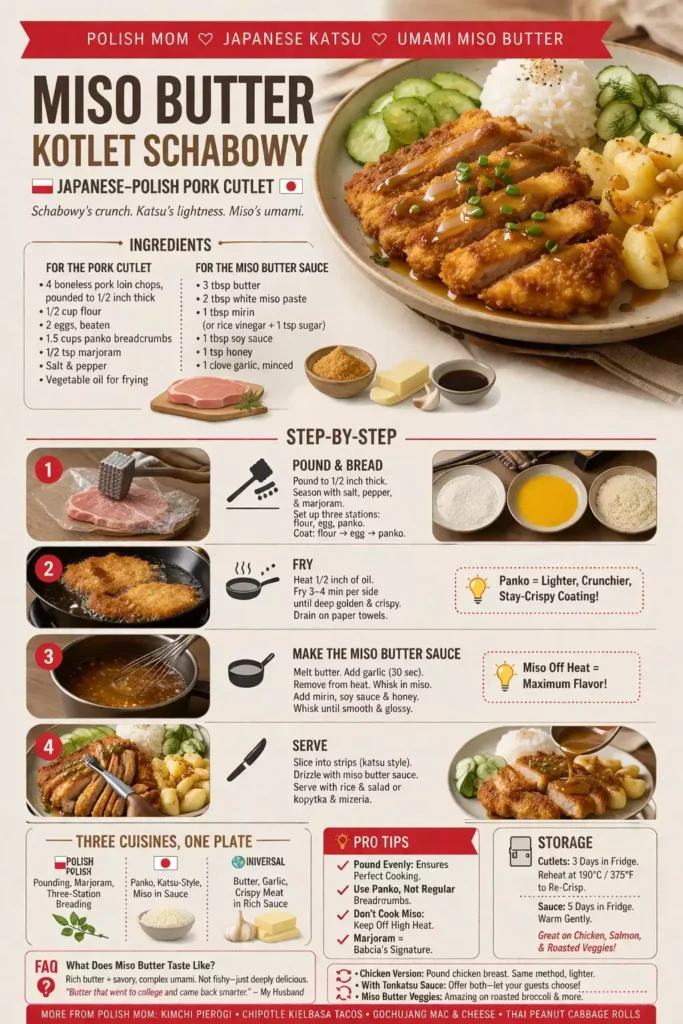
Pound and Bread
Place pork chops between plastic wrap and pound to 1/2 inch thickness using a meat mallet. This is pure schabowy technique — the pounding tenderises the meat and creates a uniform thickness for even cooking. Season with salt, pepper, and marjoram. Set up the three-station breading: flour, beaten eggs, panko. The same station I’ve used for schabowy my entire life, for katsu since discovering Japanese food, for bang bang shrimp, and now for this fusion. Coat each cutlet: flour, egg, panko. Press the panko firmly.
Fry
Heat 1/2 inch of oil in a large skillet over medium-high heat. When the oil shimmers, add the cutlets. Cook 3-4 minutes per side until deep golden and crispy. The panko should be audibly crunchy when you tap it. Drain on paper towels. The cutlet at this stage is essentially a schabowy made with panko instead of regular breadcrumbs — lighter, crunchier, and with that distinctive Japanese flakiness.
Make the Miso Butter Sauce
In a small saucepan, melt butter over medium heat. Add garlic — 30 seconds. Remove from heat. Whisk in miso paste (removing from heat prevents the miso from cooking at too high a temperature, which would kill its complex flavour). Add mirin, soy sauce, and honey. Whisk until smooth and glossy. The sauce should be savoury, slightly sweet, and deeply umami — the kind of flavour that makes you pause and try to identify all the layers.
Serve
Slice the cutlet into strips (katsu style). Drizzle the miso butter sauce over the top. Serve with steamed rice and a simple salad, or — for the full cross-cultural experience — with kopytka and mizeria. The kopytka catch the miso butter sauce in their little potato-dumpling surfaces, and the mizeria provides the tangy coolness that balances the richness. Poland, Japan, and the American Midwest all at one table. This is what Polish Mom cooking looks like.
Three Cuisines, One Plate
• Polish: The pounding technique, the marjoram seasoning, the three-station breading method
• Japanese: Panko breadcrumbs, the katsu-style slicing, miso paste in the sauce
• Universal: Butter, garlic, the concept of “crispy meat in rich sauce”
This recipe is the clearest expression of what I’ve been doing on Polish Mom all along: recognising that cooking traditions across cultures share more than they differ, and that the space between those traditions is where the most interesting food happens. Babcia pounded pork. Japanese grandmothers bread katsu. When I combine both techniques and add miso butter, I’m not inventing something new — I’m revealing a connection that was always there.
Tips
💡 Pro Tips
✓ Pound evenly. Uneven cutlets cook unevenly. The thinnest parts burn while the thickest parts stay raw.
✓ Panko, not regular breadcrumbs. Panko creates a lighter, crunchier coating that stays crispy under the sauce.
✓ Miso off heat. Don’t cook miso at high temperatures — it loses its nuanced flavour.
✓ Marjoram is the Polish signature. Japanese katsu has no seasoning in the coating. Polish schabowy uses marjoram. This recipe uses marjoram — a subtle nod to babcia in every bite.
How to Store
Cutlets keep 3 days in the fridge. Reheat in the oven at 190C / 375F to re-crisp. The sauce keeps 5 days refrigerated — warm gently before drizzling. The miso butter sauce also works on chicken, salmon, and roasted vegetables. Make extra. You’ll find uses for it all week.
Frequently Asked Questions
What does miso butter taste like?
Imagine the richness of melted butter combined with the savoury depth of soy sauce, but more complex and nuanced. Miso adds a fermented umami quality that makes everything taste “more” — more savoury, more interesting, more layered. It’s not fishy or weird. It’s deeply savoury in a way that surprises people who’ve never tasted miso before. My husband described it as “butter that went to college and came back smarter.”
Variations
• Chicken version: Pound chicken breast thin and use the same breading and sauce. Lighter, still excellent.
• With tonkatsu sauce: Serve the miso butter on the side and offer traditional tonkatsu sauce too. Let people choose — Japanese tradition or Polish Mom fusion. Some guests want both, which I respect enormously.
• Miso butter vegetables: The sauce alone transforms roasted broccoli, sweet potato, or green beans. Make extra and use it as a weeknight vegetable upgrade. My kids eat miso-buttered broccoli voluntarily, which is a sentence I never expected to write.
Can I use chicken katsu instead of pork?
Absolutely — pound chicken breast thin and bread identically. The miso butter sauce is versatile enough to work with any protein. Pork is my preference because the schabowy connection makes the cross-cultural story more complete, but chicken katsu with miso butter is equally delicious and slightly lighter. Either way, the three-station breading and the miso butter drizzle are what define this dish.
More From Polish Mom
Kimchi Pierogi · Chipotle Kielbasa Tacos · Gochujang Mac & Cheese · Thai Peanut Cabbage Rolls (Gołąbki Remix)
Kasia Polish Mom
Polish-born, Chicago-raised, feeding a family of six with babcia’s recipes and a global pantry. I grew up folding pierogi at my grandmother’s kitchen table and never stopped — 15+ years of cooking from scratch, one Sunday dinner at a time. Everything here is tested on four kids, a hungry husband, and the memory of a woman who never measured anything but always got it right.