
Kasia Polish Mom
Polish-born, Chicago-raised, feeding a family of six with babcia’s recipes and a global pantry. I grew up folding pierogi at my grandmother’s kitchen table and never stopped — 15+ years of cooking from scratch, one Sunday dinner at a time. Everything here is tested on four kids, a hungry husband, and the memory of a woman who never measured anything but always got it right.
Gochujang Mac & Cheese — Spicy Korean Comfort Fusion
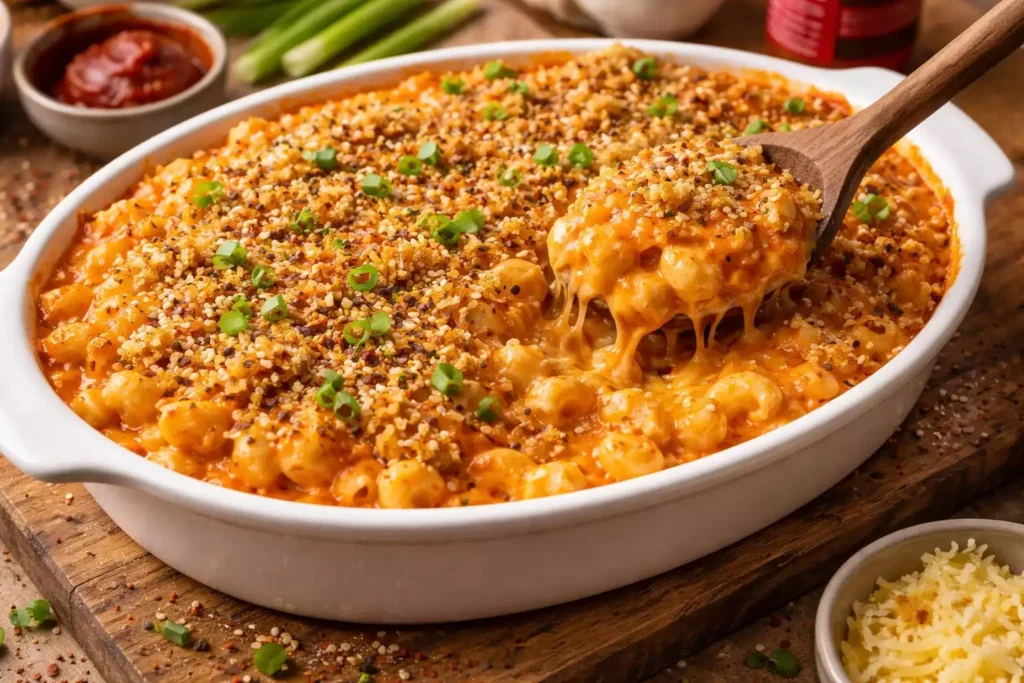
I accidentally squeezed gochujang into my mac and cheese once and the result was so good I pretended it was intentional.
The real story: I was making regular baked mac and cheese — my standard three-cheese version that the kids request weekly. I reached for the sriracha to add a kick to my own portion and grabbed the gochujang tube instead. They look similar if you’re cooking at 6pm with one eye on the stove and the other on a homework crisis. I squeezed a tablespoon directly into the cheese sauce before I realized the mistake. Rather than start over (not an option at 6pm), I stirred it in and hoped for the best.
The best happened. The gochujang melted into the cheese sauce and created something extraordinary — a creamy, rich mac and cheese with a deep, sweet-spicy warmth that was completely different from the sharp hit of sriracha. The fermented quality of gochujang added a savoury depth that made the cheese sauce taste more complex, more interesting, more grown-up without losing the comfort factor. My husband tasted it and said “what did you do differently?” I said “I meant to do that” with the confidence of someone who absolutely did not mean to do that. This recipe has been a staple ever since.
Ingredients
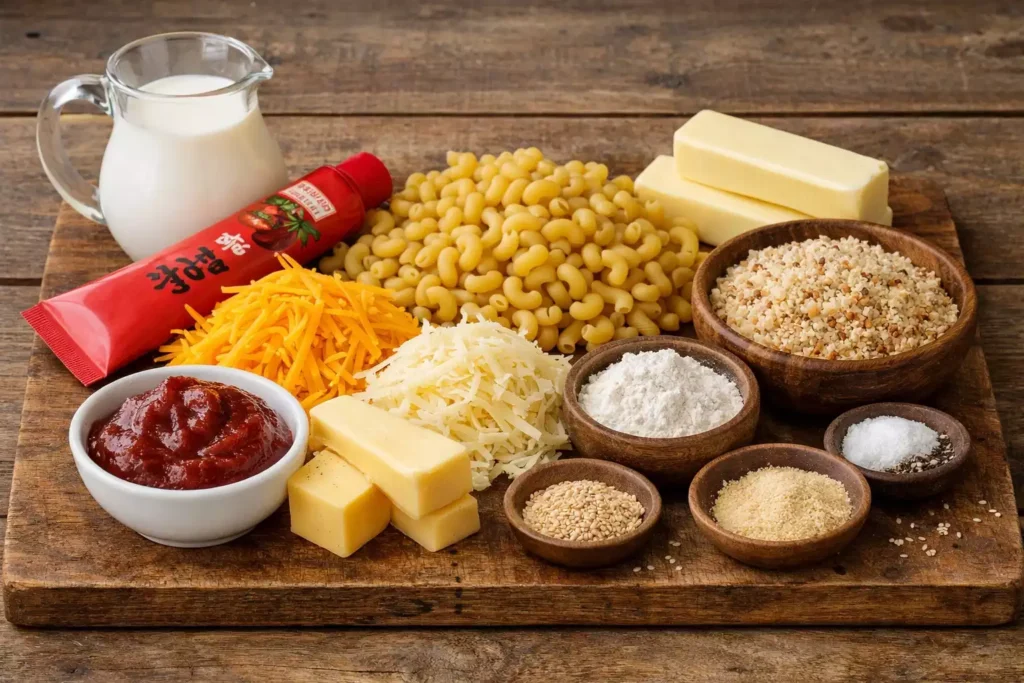
- • 1 pound elbow macaroni or cavatappi
- • 3 tablespoons butter
- • 3 tablespoons flour
- • 3 cups whole milk
- • 2 cups sharp cheddar, shredded
- • 1 cup gruyère, shredded
- • 2-3 tablespoons gochujang (2 for mild, 3 for medium)
- • 1 teaspoon garlic powder
- • Salt and pepper
- • Panko breadcrumb topping: 1 cup panko + 2 tbsp melted butter + sesame seeds
How to Make It
Make the Cheese Sauce
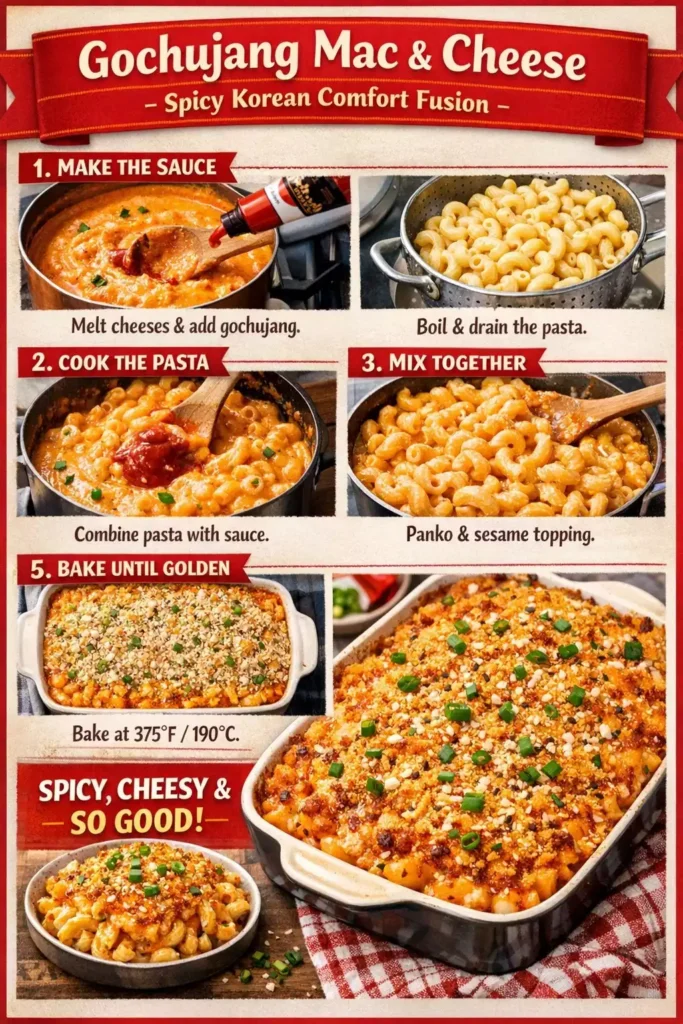
Melt butter in a large pot. Whisk in flour — cook 1 minute (this is a roux, the same French technique I use in about 40% of my recipes). Gradually pour in milk, whisking constantly to prevent lumps. Cook 5-6 minutes until thickened. Remove from heat. Stir in cheddar, gruyère, and gochujang until melted and smooth. The sauce should be orange-red, creamy, and glossy. Taste: it should be cheesy, savoury, and have a warm, building spiciness from the gochujang that’s completely different from hot sauce heat.
Combine and Bake
Cook pasta 1 minute short of al dente. Drain. Stir into the cheese sauce. Pour into a baking dish. Top with the panko mixture (panko tossed with melted butter and sesame seeds — the sesame seeds are a nod to the Korean element). Bake at 190C / 375F for 20-25 minutes until bubbly and the panko topping is golden. The sesame-panko crust adds crunch and ties the Korean-American fusion together visually and texturally.
Why Gochujang Works in Mac and Cheese
Gochujang is fermented, which means it has umami depth that hot sauce doesn’t. It’s also naturally sweet, so it complements the richness of cheese without making the dish one-dimensionally spicy. Regular hot sauce adds sharp heat. Gochujang adds warm, complex, slightly sweet spiciness that enhances rather than overwhelms the cheese. Think of it this way: hot sauce is a solo act. Gochujang is a harmony — it makes everything else sound (taste) better.
The trending factor: gochujang mac and cheese has been blowing up online because it works so well. This isn’t just fusion for fusion’s sake — it’s a genuine flavour improvement on an already perfect comfort food. The internet got this one right.
Tips
💡 Pro Tips
✓ 2 tablespoons gochujang for kids, 3 for adults. The heat is gentle but present. Start lower and add more if needed.
✓ Sesame-panko topping is the signature. Regular breadcrumbs work but sesame seeds signal “this is Korean mac” and add nutty crunch.
✓ Don’t skip the gruyère. It adds a nutty, melty quality that pure cheddar can’t match.
✓ Cook pasta 1 minute short. It finishes cooking in the oven and absorbs sauce better when slightly underdone.
Variations
• With gochujang chicken on top: Leftover Korean chicken over gochujang mac and cheese. Korean-American comfort food taken to its logical extreme.
• Stovetop version: Skip the baking. Just stir the pasta into the sauce and serve. Faster, still excellent, but you miss the crispy topping.
• With kimchi: Stir 1/2 cup chopped kimchi into the pasta before baking. Double fermented — gochujang AND kimchi. My most aggressive fusion mac and cheese.
How to Store
Fridge 4-5 days. Reheat in the oven covered at 175C / 350F for 15 minutes, or microwave with a splash of milk. The panko topping softens overnight — if re-crisping matters, add fresh panko before reheating in the oven. Freezes for 2 months.
Frequently Asked Questions
Is this very spicy?
With 2 tablespoons gochujang, it’s a gentle warmth — noticeable but not overwhelming. My younger kids eat it without complaint. With 3 tablespoons, it’s medium. The cheese and milk mellow the heat significantly. This is comfort food with a kick, not a spice challenge.
Can I use regular hot sauce instead of gochujang?
You can, but the result will be different. Hot sauce (like Frank’s or sriracha) adds sharp, vinegary heat. Gochujang adds warm, sweet, fermented depth. They’re different flavour profiles — one screams, the other hums. For this recipe, gochujang’s humming warmth is what makes the cheese sauce taste sophisticated rather than just spicy. If you don’t have gochujang, sriracha plus a teaspoon of miso paste gets you partway there. But honestly, a tub of gochujang costs $4, lasts months, and opens up dozens of recipes. It’s the best $4 investment in your Asian condiment collection.
The Happy Accident Philosophy
Some of my best recipes started as mistakes. The gochujang grab instead of sriracha. The time I used coconut milk instead of regular milk in zupa pomidorowa (also surprisingly good). The kimchi pierogi born from leftover ingredients. Cooking mistakes aren’t failures — they’re unplanned experiments. My babcia never followed a recipe exactly. She adjusted, tasted, adapted. She’d be the first to approve of gochujang in mac and cheese, because babcia understood that the best cooking comes from curiosity, not rigidity.
More From Polish Mom
Spicy Korean Chicken Stir Fry (Gochujang) · Spicy Dragon Chicken · Chili Crisp Noodles (10-Min) · Thai Basil Chicken (Pad Krapow)
Kasia Polish Mom
Polish-born, Chicago-raised, feeding a family of six with babcia’s recipes and a global pantry. I grew up folding pierogi at my grandmother’s kitchen table and never stopped — 15+ years of cooking from scratch, one Sunday dinner at a time. Everything here is tested on four kids, a hungry husband, and the memory of a woman who never measured anything but always got it right.