
Kasia Polish Mom
Polish-born, Chicago-raised, feeding a family of six with babcia’s recipes and a global pantry. I grew up folding pierogi at my grandmother’s kitchen table and never stopped — 15+ years of cooking from scratch, one Sunday dinner at a time. Everything here is tested on four kids, a hungry husband, and the memory of a woman who never measured anything but always got it right.
Korean BBQ Kielbasa Rice Bowl
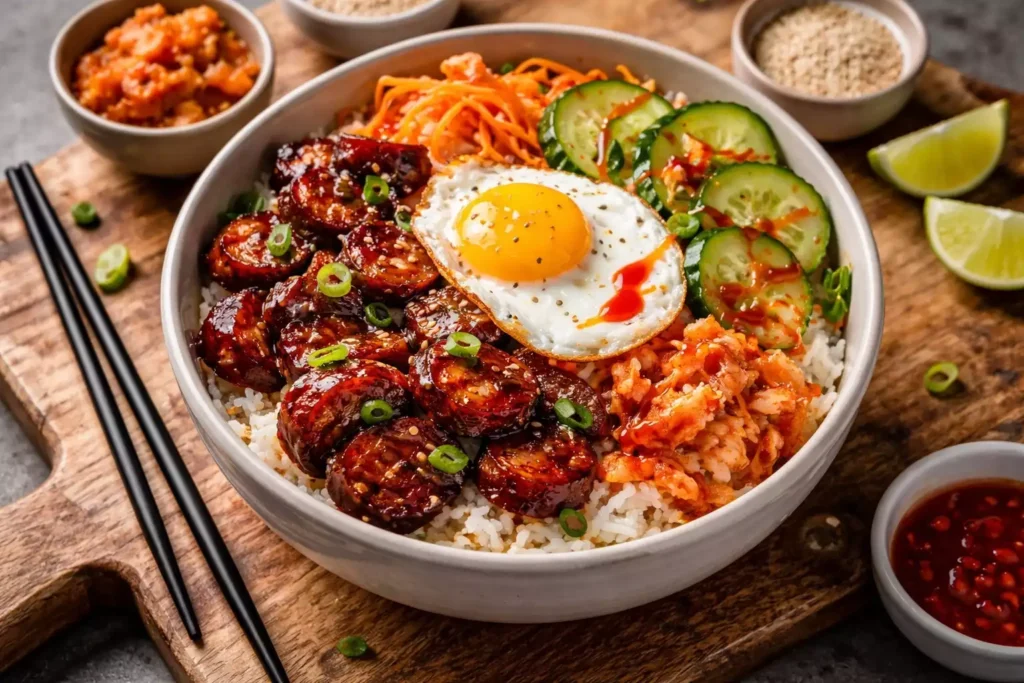
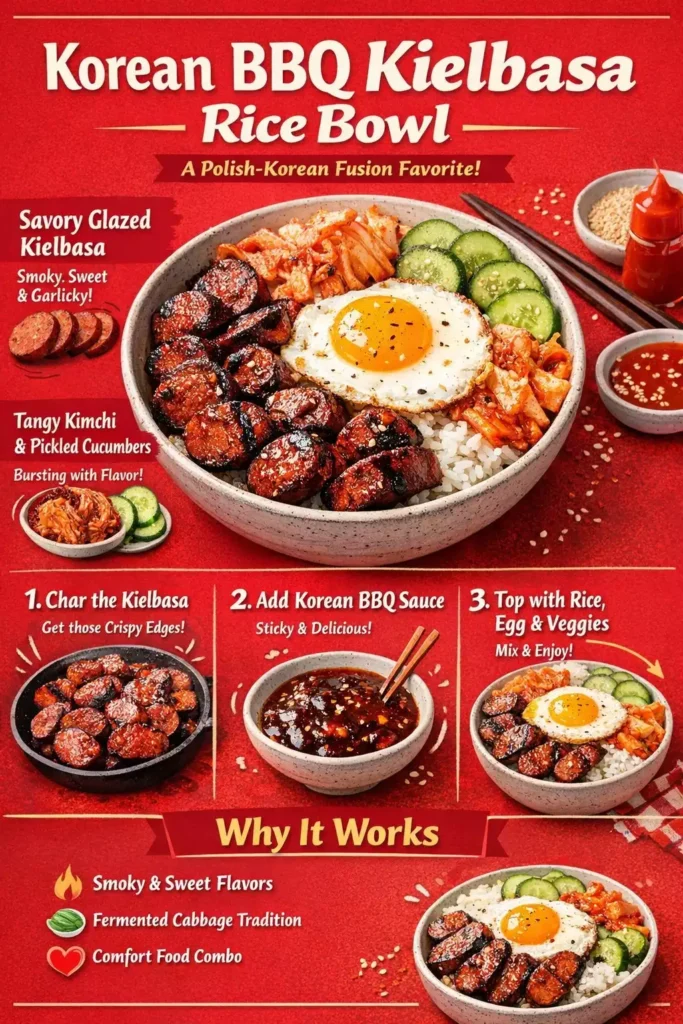
My kids call this “the Polish-Korean thing” and it’s the only way they’ll voluntarily eat kimchi. I consider this a monumental parenting achievement — getting American children to eat fermented Korean cabbage by combining it with something they already love (kielbasa) in a format they’re comfortable with (rice bowl).The Korean BBQ kielbasa bowl is exactly what it sounds like: Polish kielbasa sliced and charred, then glazed in a sweet-savoury Korean BBQ sauce, served over rice with quick pickled cucumbers, kimchi, and all the fixings. It’s the same flavour philosophy as a Korean beef bowl, but with kielbasa standing in for bulgogi. The swap works because kielbasa’s smokiness is similar to the charred quality of Korean grilled meat, and the BBQ sauce — soy, sesame, ginger, brown sugar — coats kielbasa just as beautifully as it coats beef.
This recipe started as a kielbasa taco spinoff. If kielbasa works in Mexican food (it does), why not Korean? So I charred it, glazed it, put it over rice with kimchi and pickled cucumbers, and served it to my family without announcing it as “fusion” because that word makes my teenagers suspicious. I just called it “dinner.” They ate everything. The kimchi was finished first. I said nothing and internally celebrated.
Ingredients
Korean BBQ Kielbasa
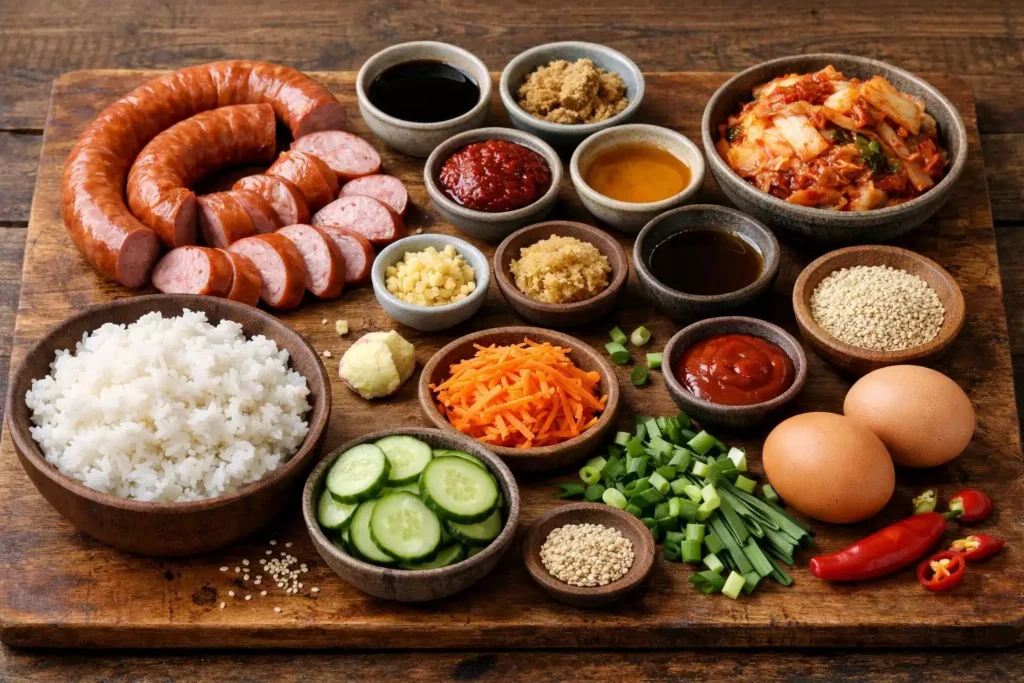
- • 1 pound Polish kielbasa, sliced into half-moons
- • 3 tablespoons soy sauce
- • 2 tablespoons brown sugar
- • 1 tablespoon sesame oil
- • 1 tablespoon rice vinegar
- • 2 cloves garlic, minced
- • 1 teaspoon ginger, grated
- • 1 tablespoon gochujang (optional, for heat)
Bowl Components
- • Steamed jasmine rice
- • 1/2 cup kimchi
- • Quick pickled cucumbers (same recipe as Korean beef bowls)
- • Shredded carrots
- • Fried egg
- • Sliced green onions, sesame seeds, sriracha
How to Make It
Make the Sauce
Whisk soy sauce, brown sugar, sesame oil, rice vinegar, garlic, ginger, and gochujang together. Set aside.
Cook the Kielbasa
Heat a skillet over medium-high heat (no oil needed — kielbasa has enough fat). Add the kielbasa slices and cook 2-3 minutes per side until deeply caramelised and charred. The natural sugars in kielbasa create beautiful crispy edges that are perfect for catching the sauce. Pour the Korean BBQ sauce over the kielbasa in the pan. Toss for 1-2 minutes until the sauce thickens into a glossy glaze and coats every piece.
Assemble the Bowls
Rice in the bottom. Glazed kielbasa on top. Kimchi, pickled cucumbers, shredded carrots arranged around the sides. A fried egg with a runny yolk in the centre. Green onions, sesame seeds, sriracha to finish. Break the yolk over everything and mix before eating.
Why Kielbasa Works in Korean Food
Kielbasa and Korean BBQ share a flavour DNA: smoke, garlic, sweetness. Korean BBQ sauce (soy, sesame, brown sugar) enhances the existing character of kielbasa rather than fighting it. The smoke in kielbasa comes from actual smoking during production. The smoke in Korean BBQ comes from grilling over charcoal. Different sources, same flavour family. When you glaze kielbasa in Korean BBQ sauce, the smoke compounds, the garlic amplifies, and the sweetness balances. It’s not a compromise — it’s a collaboration.
The kimchi alongside kielbasa also makes cultural sense. Both Polish and Korean cuisines are built on fermented cabbage traditions. Serving kielbasa with kimchi instead of sauerkraut is just… shifting the fermented cabbage east. Same principle. Different latitude. My babcia would understand the logic even if she’d never heard of kimchi.
Tips
💡 Pro Tips
✓ Char the kielbasa BEFORE adding sauce. Caramelised edges are what make this dish. Adding sauce too early prevents charring.
✓ Runny egg yolk is mandatory. It becomes part of the sauce and enriches every component in the bowl.
✓ Quality kielbasa matters. Get it from a Polish deli if possible. The smokiness is more pronounced and the texture is firmer.
✓ Serve kimchi at room temperature. Cold kimchi straight from the fridge is fine but room temperature kimchi has more pronounced flavour.
Variations
• Bibimbap style: Add sautéed spinach, mushrooms, and extra gochujang. Mix everything together.
• With kopytka: Replace rice with kopytka for a fully Polish base. Korean-glazed kielbasa on potato dumplings is a Polish Mom original that has no precedent and needs no justification.
• Spicy version: Double the gochujang and add fresh chilli slices. The full heat treatment.
How to Store
Kielbasa keeps 5 days. Components store separately. The Korean BBQ glaze thickens in the fridge — reheat in a skillet with a splash of water. Assemble fresh bowls each time.
Frequently Asked Questions
Where do I get Korean BBQ sauce?
This recipe makes its own from pantry staples (soy sauce, brown sugar, sesame oil, rice vinegar, garlic, ginger). Store-bought Korean BBQ sauce works too — CJ bibigo and Annie Chun’s are good brands available in most grocery stores. The homemade version is fresher and lets you control sweetness and heat, but store-bought saves 5 minutes on a busy night and I’m not above that shortcut on a Tuesday.
My kids won’t eat kimchi — will they still eat this?
Serve the bowl without kimchi for resistant eaters and put kimchi as an optional topping. The glazed kielbasa over rice with pickled cucumbers and a fried egg is delicious even without kimchi. My strategy: serve the bowl for a few weeks without kimchi, then one week add a tiny spoonful on the side. Curiosity usually wins eventually. That’s how my youngest went from “what’s that red stuff” to eating full servings. Patience and proximity. The kielbasa makes the bowl familiar enough that the kimchi becomes just another topping rather than a scary foreign food.
The Polish-Korean Connection
I’ve written about this across many recipes now, but it bears repeating: Polish and Korean cuisines share more DNA than most people realize. Both cultures are built on fermented cabbage (sauerkraut / kimchi). Both have strong dumpling traditions (pierogi / mandu). Both love pickled vegetables as accompaniments. Both use garlic aggressively. Both value communal, family-style dining. When I put kielbasa in a Korean BBQ bowl, I’m not forcing two unrelated cuisines together — I’m highlighting connections that already exist. The garlic-smoke-fermented-cabbage overlap is genuine, and this recipe is the most direct expression of that shared culinary philosophy.
More From Polish Mom
Kimchi Pierogi · Chipotle Kielbasa Tacos · Miso Butter Kotlet Schabowy · Gochujang Mac & Cheese
Kasia Polish Mom
Polish-born, Chicago-raised, feeding a family of six with babcia’s recipes and a global pantry. I grew up folding pierogi at my grandmother’s kitchen table and never stopped — 15+ years of cooking from scratch, one Sunday dinner at a time. Everything here is tested on four kids, a hungry husband, and the memory of a woman who never measured anything but always got it right.