
Kasia Polish Mom
Polish-born, Chicago-raised, feeding a family of six with babcia’s recipes and a global pantry. I grew up folding pierogi at my grandmother’s kitchen table and never stopped — 15+ years of cooking from scratch, one Sunday dinner at a time. Everything here is tested on four kids, a hungry husband, and the memory of a woman who never measured anything but always got it right.
Pierogi Gyoza — Pan-Fried Polish-Japanese Hybrid
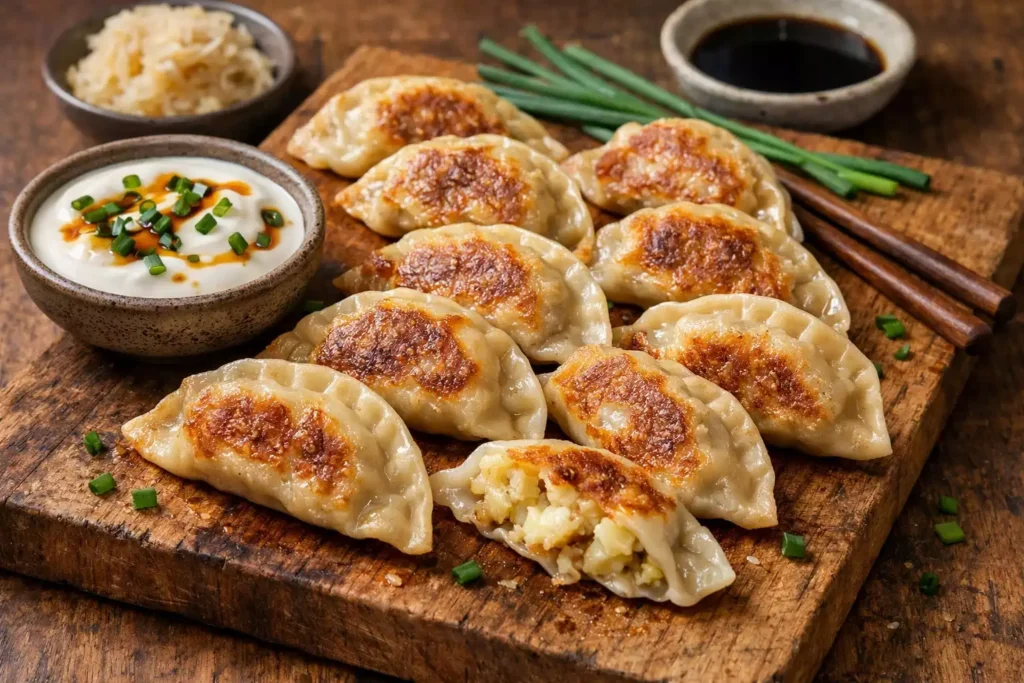
I was too tired to make pierogi dough one day and used gyoza wrappers instead. Sometimes laziness is the mother of genius.
The result was a dumpling that’s thinner, crispier, and faster than traditional pierogi but still filled with the exact same potato-cheese filling that babcia perfected. Gyoza wrappers are paper-thin compared to pierogi dough — they crisp up beautifully when pan-fried, cook in 3 minutes instead of 5, and come pre-cut in perfect circles so you skip 30 minutes of rolling and cutting. The filling doesn’t know it’s in a Japanese wrapper. It tastes exactly the same. But the texture is different: lighter, crispier, almost like a pierogi that went to finishing school.
I call these pierogi-gyoza dumplings, and they’ve become my weeknight shortcut when I want pierogi flavour without pierogi effort. Traditional pierogi from scratch take 2+ hours. These take 30 minutes including filling prep. The trade-off is a thinner wrapper that’s less chewy and more delicate — different from babcia’s thick, satisfying dough but excellent in its own right. I make traditional pierogi on weekends when I have time and patience. I make these on Tuesdays when I have neither.
Ingredients
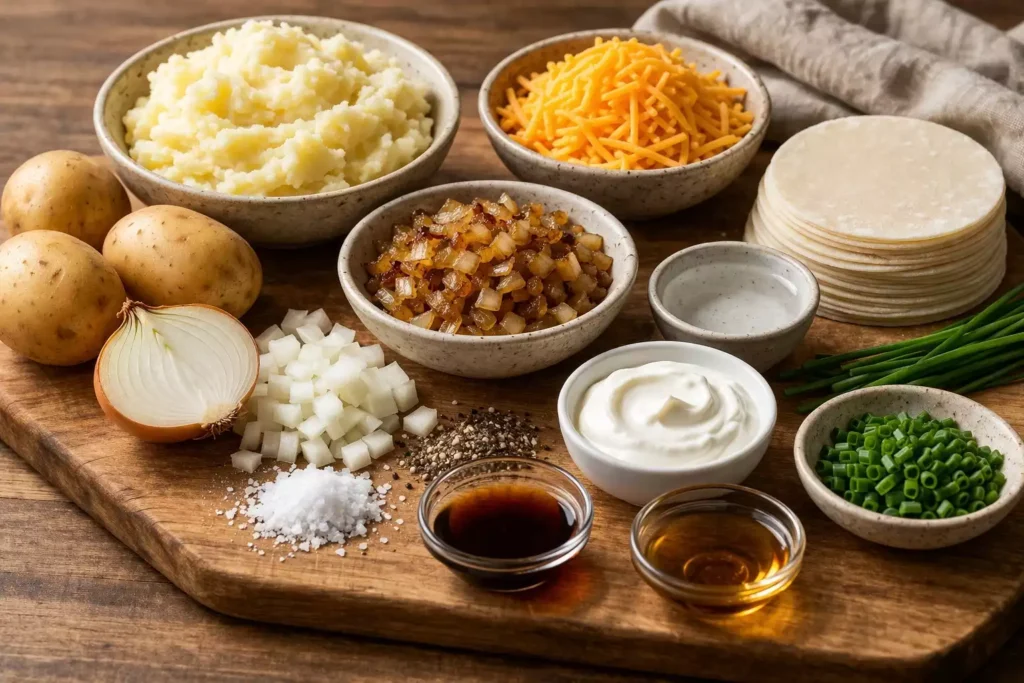
For the Filling
- • 2 cups mashed potato (about 3 medium potatoes)
- • 1 cup sharp cheddar, shredded
- • 1 small onion, diced and caramelised in butter
- • Salt and pepper
For Assembly
- • 1 package round gyoza wrappers (about 40 wrappers)
- • Water for sealing
Ponzu-Sour Cream Sauce
- • 1/4 cup sour cream
- • 1 tablespoon ponzu sauce (citrusy Japanese soy sauce)
- • 1 teaspoon sesame oil
- • Sliced chives
How to Make Them
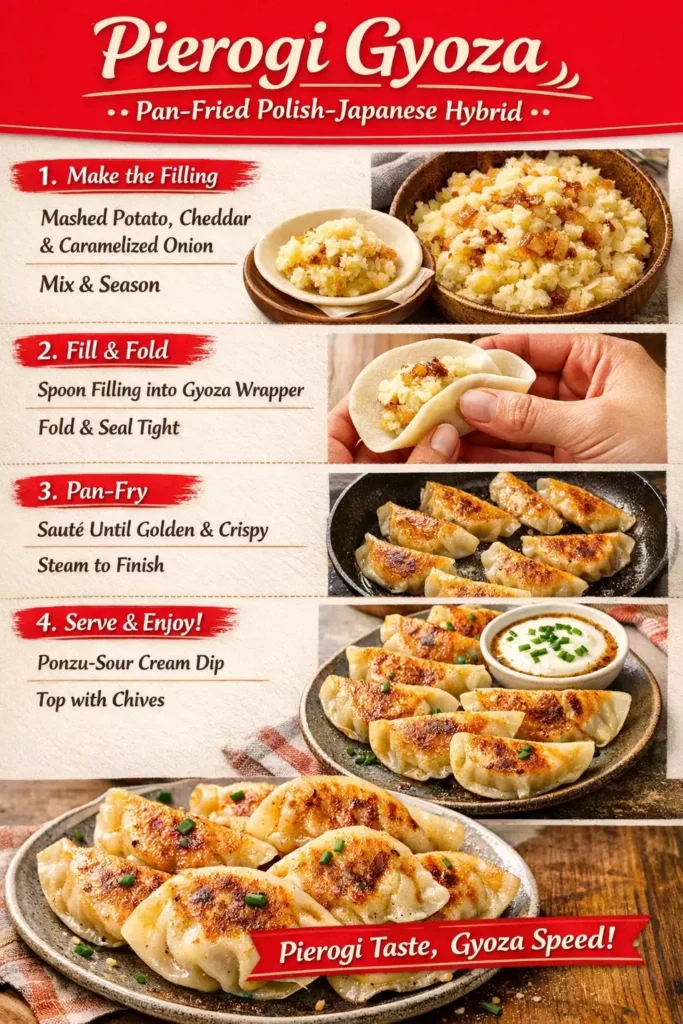
Make the Filling
Boil potatoes, drain, mash until smooth. Caramelise the diced onion in butter for 8-10 minutes until golden and sweet. Mix mashed potato with cheddar and caramelised onion. Season with salt and pepper. This is babcia’s exact pierogi filling — the same one I’ve been making since childhood. Nothing changes here. The filling is sacred.
Fill and Fold
Place a gyoza wrapper in your palm. Add 1 teaspoon of filling (less than pierogi — gyoza wrappers are smaller and thinner). Wet the edges with water. Fold in half and seal, pressing out air. You can crimp with a fork (pierogi style), pleat one side (gyoza style), or simply press flat (efficient style). I use all three depending on how much patience I have left. The dumplings should be tightly sealed with no air pockets.
Cook (Two Methods)
Pan-fried (recommended): Heat butter and oil in a non-stick skillet. Place dumplings flat-side down. Cook 2-3 minutes until golden. Add 1/4 cup water, cover immediately. Steam 2-3 minutes until wrappers are translucent and cooked through. Uncover and cook 1 more minute to re-crisp the bottoms. This is the gyoza cooking method applied to pierogi filling — crispy bottoms, soft tops.
Boiled (classic pierogi style): Drop into boiling salted water. Cook 2-3 minutes after they float. Drain. Toss in butter. Faster and simpler, but you lose the crispy bottom that makes the gyoza-wrapper version special.
The Ponzu-Sour Cream Sauce
Stir together sour cream, ponzu, sesame oil, and chives. Ponzu is a citrusy Japanese soy sauce that adds brightness and umami — it’s the Japanese answer to the lemon-sour cream combination. This sauce bridges both dumpling traditions: the sour cream is Polish, the ponzu is Japanese, and together they create a dipping sauce that honours both.
Why Gyoza Wrappers Work for Pierogi Filling
Gyoza wrappers are wheat flour and water — essentially the same composition as pierogi dough, just rolled much thinner and pre-cut. The filling doesn’t interact differently with either wrapper. The potato-cheese melts and becomes creamy whether it’s wrapped in thick Polish dough or thin Japanese wrappers. The difference is textural: pierogi dough gives you a chewy, substantial bite. Gyoza wrappers give you a crispy, delicate bite. Both are excellent. Both serve the filling well. It’s like the difference between thick-crust and thin-crust pizza — different experiences, same love.
Tips
💡 Pro Tips
✓ Less filling per dumpling. Gyoza wrappers are smaller and thinner than pierogi dough. Overfilling bursts them.
✓ Keep wrappers covered. They dry out fast. Work under a damp towel.
✓ Pan-fry for best results. The crispy-bottom technique is what makes these special.
✓ Freeze extras. Same as pierogi — freeze on a sheet pan, then bag. Cook from frozen.
How to Store
Fridge 3 days. Freeze uncooked for 3 months. Reheat by pan-frying from refrigerated or frozen — the re-crisping brings them back perfectly. These are excellent meal prep dumplings.
Frequently Asked Questions
Is this blasphemous to pierogi tradition?
Depends who you ask. My uncle: yes. My mother: “interesting.” My babcia (theoretical): she’d eat them, enjoy them, and then make her traditional version the next day to remind everyone what “real” pierogi taste like. I think there’s room for both. Traditional pierogi on weekends. Gyoza-wrapper shortcuts on weeknights. Respect the tradition, embrace the evolution.
The Tuesday Night Shortcut Philosophy
Every recipe on Polish Mom exists on a spectrum from “weekend project” to “weeknight survival.” Traditional pierogi from scratch are a weekend project — 2+ hours, dough making, rolling, cutting, filling, boiling, frying. These pierogi-gyoza dumplings are weeknight survival — 30 minutes, no dough, store-bought wrappers, same filling, still delicious. Both have value. Both express care for the people you’re feeding. The difference is just how much time and energy you have to express that care on any given day.
My babcia made everything from scratch because that was her era and her way. She’d spend entire Saturdays making pierogi for the week. I don’t have entire Saturdays — I have 45-minute windows between soccer practice and bedtime routines. The gyoza wrapper shortcut lets me deliver pierogi flavour within those windows. Babcia would understand the practicality even if she’d personally choose the traditional method. Love adapts to the time available.
What is ponzu sauce?
A Japanese citrus-based soy sauce — tangy, salty, and bright. Available in the Asian aisle of most grocery stores. If you can’t find it, substitute with: 2 tablespoons soy sauce + 1 tablespoon fresh lemon juice + 1 teaspoon rice vinegar. It’s the Japanese equivalent of adding lemon to sour cream — same instinct, different ingredients. The ponzu-sour cream sauce is my favourite cross-cultural bridge condiment on the entire blog.
Kasia Polish Mom
Polish-born, Chicago-raised, feeding a family of six with babcia’s recipes and a global pantry. I grew up folding pierogi at my grandmother’s kitchen table and never stopped — 15+ years of cooking from scratch, one Sunday dinner at a time. Everything here is tested on four kids, a hungry husband, and the memory of a woman who never measured anything but always got it right.