Kasia Polish Mom
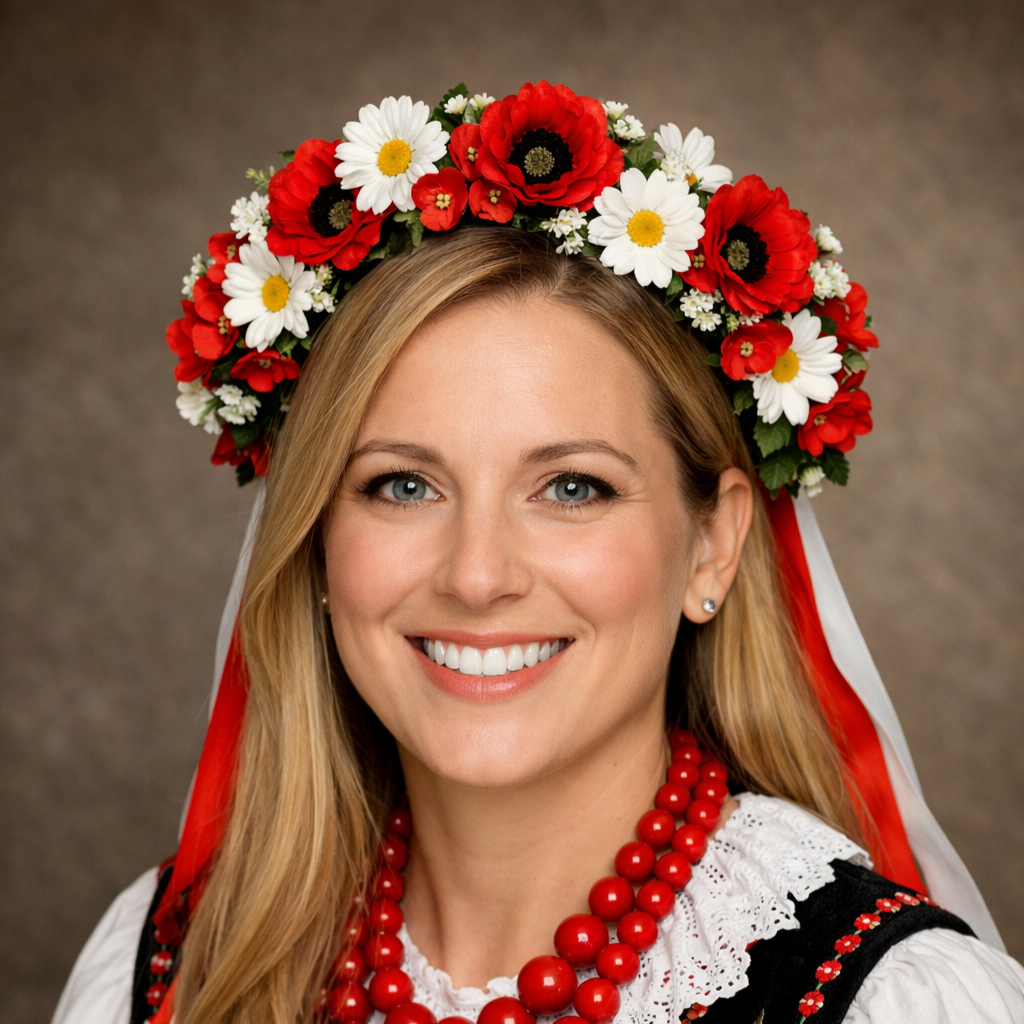
Polish-born, Chicago-raised, feeding a family of six with babcia’s recipes and a global pantry. I grew up folding pierogi at my grandmother’s kitchen table and never stopped — 15+ years of cooking from scratch, one Sunday dinner at a time. Everything here is tested on four kids, a hungry husband, and the memory of a woman who never measured anything but always got it right.
Gochujang Honey Chicken Cutlet
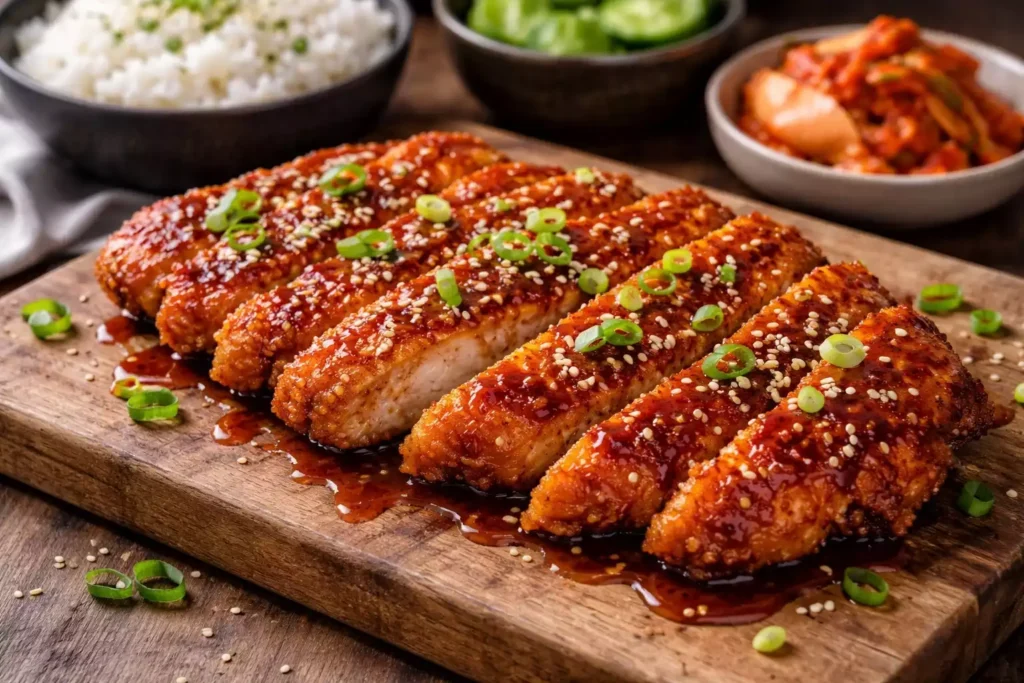
Gochujang on schabowy is the crossover event my kitchen has been building toward for years. Every miso butter cutlet, every kimchi pierogi, every gochujang mac and cheese has been leading to this moment: a classic Polish breaded cutlet, fried in the traditional three-station method, glazed with Korean gochujang sauce, and served with pickled vegetables and rice. It’s the culmination of everything Polish Mom represents — the point where babcia’s technique meets Seoul’s flavours.
The cutlet itself is pure schabowy — pounded chicken breast (or pork, but chicken is lighter and takes the glaze better), coated in flour, egg, and breadcrumbs, fried until golden. The gochujang glaze goes on AFTER frying — soy sauce, gochujang, honey, garlic, and sesame oil, reduced into a sticky, spicy-sweet lacquer that coats the crispy cutlet without softening it (if you work fast). The first bite gives you crunch from the breading, then the sweet-spicy-savoury hit of gochujang, then the juicy chicken underneath. Three layers of texture and flavour in every bite.
Ingredients
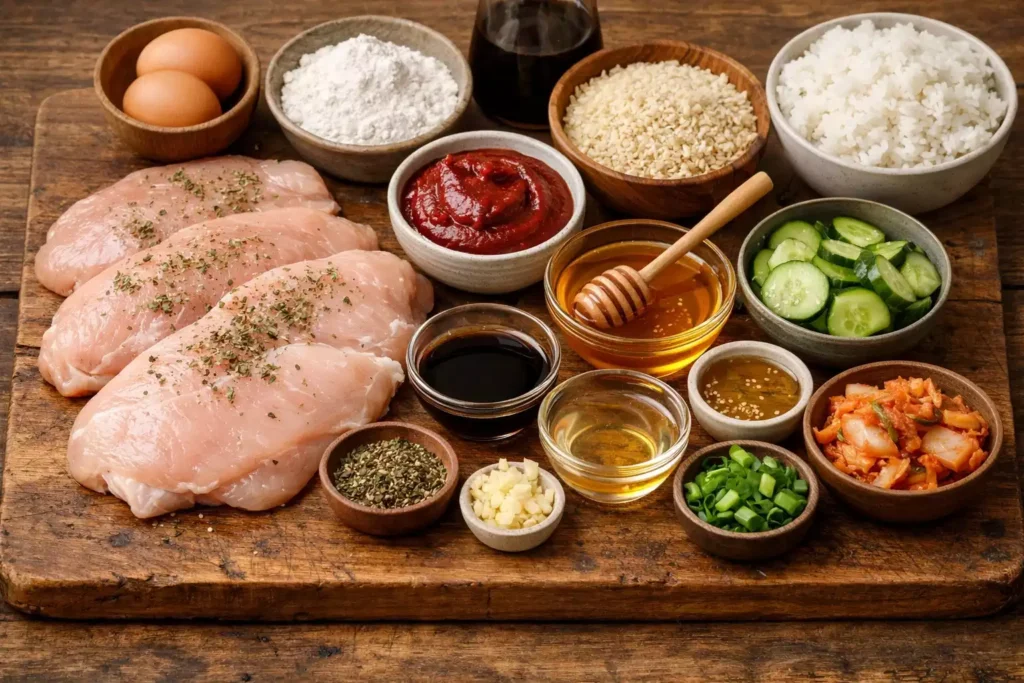
For the Cutlet
- • 4 chicken breasts, pounded to 1/2 inch thick
- • 1/2 cup flour
- • 2 eggs, beaten
- • 1 cup breadcrumbs (panko or traditional — both work)
- • 1/2 teaspoon marjoram (babcia’s signature)
- • Salt and pepper
- • Vegetable oil for frying
Gochujang Glaze
- • 3 tablespoons gochujang
- • 2 tablespoons soy sauce
- • 2 tablespoons honey
- • 1 tablespoon sesame oil
- • 2 cloves garlic, minced
- • 1 tablespoon rice vinegar
For Serving
- • Steamed rice
- • Quick pickled cucumbers or kimchi
- • Sesame seeds, sliced green onions
How to Make It
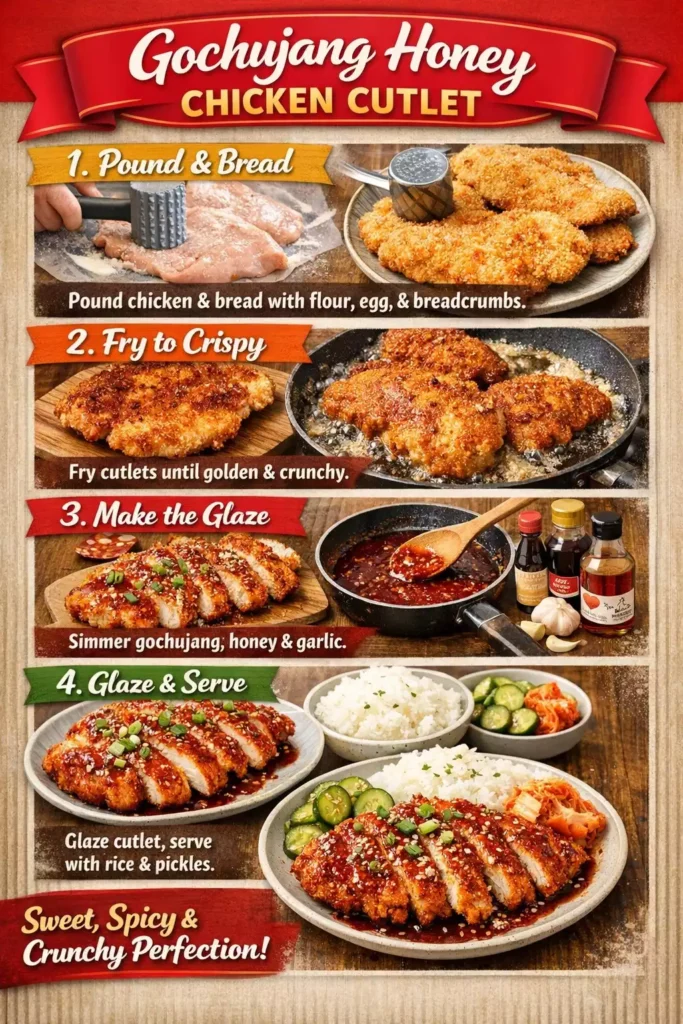
Pound and Bread
Place chicken between plastic wrap and pound to even 1/2 inch thickness. Season with salt, pepper, and marjoram. Bread through the three stations: flour, egg, breadcrumbs. Press the coating firmly. This is schabowy technique — I’ve done it thousands of times and my hands do it on autopilot. The marjoram is the Polish signature that nobody in Korea would add, but it’s my recipe and babcia’s herb stays.
Fry
Heat 1/2 inch of oil over medium-high heat. Fry the cutlets 3-4 minutes per side until deep golden and crispy. The internal temperature should hit 165F / 74C. Drain on paper towels.
Make the Glaze
In a small saucepan, combine gochujang, soy sauce, honey, sesame oil, garlic, and rice vinegar. Cook over medium heat 2-3 minutes until the sauce reduces and becomes glossy and sticky. It should coat a spoon and drip slowly.
Glaze and Serve
Slice the cutlet into strips (katsu-style presentation). Drizzle the gochujang glaze over the top — generously but quickly, before the coating has time to absorb moisture and soften. Sprinkle with sesame seeds and green onions. Serve with rice and pickled cucumbers or kimchi.
The Crossover Event
This recipe sits at the exact centre of the Polish Mom Venn diagram. The technique is 100% Polish — pounding, three-station breading, pan-frying in oil, marjoram seasoning. The flavour finishing is 100% Korean — gochujang, soy, sesame, honey. The serving format borrows from Japanese katsu — sliced, over rice, with pickled sides. Three Asian and European traditions collaborating on one plate.
When I served this to my family, my husband said “so this is what all those other recipes were building up to.” He was right. Gochujang chicken taught me the sauce. Katsu curry taught me the panko technique. Schabowy gave me the foundation. This recipe is the synthesis — everything I’ve learned from three cuisines combined in a single dish. If Polish Mom had a thesis statement on a plate, this would be it.
Tips
💡 Pro Tips
✓ Glaze after slicing, not before. Slicing first lets the glaze coat every surface. Glazing a whole cutlet means less coverage.
✓ Work fast with the glaze. The longer the sauce sits on the breading, the softer it gets. Drizzle and eat. Speed is crunch’s best friend.
✓ Marjoram in the flour. The Polish signature. It adds a herbal warmth that sits underneath the gochujang and adds complexity.
✓ Pickled sides are essential. The tang of pickles or kimchi cuts through the rich, sweet-spicy glaze. Balance is everything.
Variations
• With pork: Use pork loin for a true schabowy base. More traditional, slightly richer.
• Double-dip glaze: Glaze once, let it set 30 seconds, glaze again for a thicker coating. More sauce, more flavour, slightly less crunch. Worth the trade-off.
• With kopytka: Instead of rice, serve alongside kopytka tossed in sesame butter. The full Polish-Korean plate.
How to Store
Best fresh — the glaze softens the coating over time. If storing: keep cutlet and glaze separate. Reheat cutlet in oven at 190C / 375F for 8 minutes, then drizzle fresh glaze. Fridge 3 days.
Frequently Asked Questions
Is the gochujang glaze very spicy?
Medium — warm and building rather than sharp. The honey and sesame oil mellow the heat. My teenagers eat it comfortably. For kids under 10, reduce gochujang to 1.5 tablespoons and increase honey to 3 tablespoons. Still flavourful, barely any heat. The beauty of this recipe is the glaze is separate from the cutlet — you can make mild-glazed portions for kids and full-strength for adults from the same batch of fried cutlets.
Regular breadcrumbs or panko?
Either works but they produce different results. Regular breadcrumbs (babcia’s choice) give a denser, more traditional schabowy crunch. Panko (Japanese choice) gives a lighter, airier, crispier coating that holds up slightly better under the wet glaze. I use panko when I want maximum crunch retention under sauce, and regular breadcrumbs when I want the nostalgic schabowy texture. Both are correct. Both make babcia and Japan proud simultaneously.
The Evolution of Schabowy
If you trace my recipes chronologically, you can see schabowy evolving across the blog: traditional kotlet schabowy (pure Polish), schabowy burger (Polish-American), chicken katsu (Polish technique, Japanese seasoning), miso butter cutlet (Polish-Japanese sauce), and now gochujang cutlet (Polish-Korean glaze). The breading technique stays constant — babcia’s three-station method. The world around the technique changes. That’s the Polish Mom cooking philosophy in microcosm: the foundation is Polish, the inspiration is global, and the dinner table is where they meet.
More From Polish Mom
Spicy Korean Chicken Stir Fry (Gochujang) · Spicy Dragon Chicken · Chili Crisp Noodles (10-Min) · Thai Basil Chicken (Pad Krapow)
Kasia Polish Mom
Polish-born, Chicago-raised, feeding a family of six with babcia’s recipes and a global pantry. I grew up folding pierogi at my grandmother’s kitchen table and never stopped — 15+ years of cooking from scratch, one Sunday dinner at a time. Everything here is tested on four kids, a hungry husband, and the memory of a woman who never measured anything but always got it right.