
Kasia Polish Mom
Polish-born, Chicago-raised, feeding a family of six with babcia’s recipes and a global pantry. I grew up folding pierogi at my grandmother’s kitchen table and never stopped — 15+ years of cooking from scratch, one Sunday dinner at a time. Everything here is tested on four kids, a hungry husband, and the memory of a woman who never measured anything but always got it right.
Freezer-Friendly Pierogi Batch (100 at a Time)
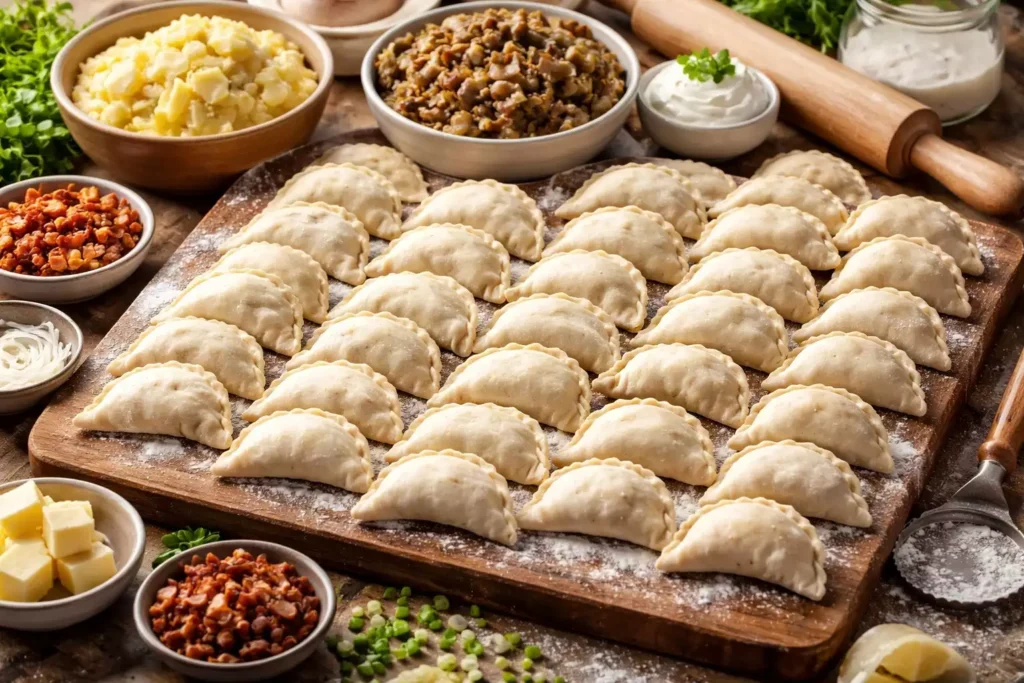
In Poland, pierogi making is a family event. Babcia kneads the dough. Mama rolls. The kids help fill and fold. Everyone gathers in the kitchen on a Saturday afternoon and makes hundreds of pierogi destined for the freezer, enough to last weeks. It’s a ritual, a tradition, a social event disguised as cooking.
I do it solo while listening to true crime podcasts. Different vibe, same result.
Freezer pierogi are one of the greatest meal prep strategies in Polish cooking — invest 2-3 hours once, and you have a freezer stocked with homemade dumplings that go from frozen to dinner in 8 minutes. No defrosting needed. Drop them in boiling water, wait until they float, pan-fry in butter, done. It’s the Polish version of keeping frozen burritos in the freezer, except these are handmade, filled with three different fillings, and taste infinitely better than anything store-bought.
Filling 1: Classic Potato-Cheese (Ruskie)
3 cups mashed potatoes + 1.5 cups sharp cheddar + 1 caramelised onion + salt + pepper The babcia standard. Creamy, cheesy, comforting. The filling that defines pierogi for most people.
Filling 2: Sauerkraut-Mushroom (Kapusta z Grzybami)
2 cups drained sauerkraut + 1 cup sautéed mushrooms + 1 diced onion (sautéed) + salt + pepper The Christmas pierogi. Tangy, earthy, deeply savoury. My babcia made these for Wigilia (Christmas Eve) and they’re the most traditionally Polish filling on this list.
Filling 3: Kimchi (The Fusion)
1 cup drained kimchi + 1 cup mashed potato + 1/2 cup cheddar + 1 green onion + sesame oil The Polish Mom original. The filling that made this blog famous. Tangy, spicy, creamy — sauerkraut’s Korean cousin inside babcia’s dough.
The Dough
Mix, knead 5-7 minutes until smooth and elastic. Rest 30 minutes covered. This is babcia’s recipe — the sour cream makes the dough tender and slightly tangy. It rolls beautifully and seals without cracking. I’ve never changed it. Some things shouldn’t be modified.
4 cups flour + 1 tsp salt + 2 eggs + 1 cup warm water + 2 tbsp sour cream
Solo Method (My Reality)
Roll dough thin on a floured surface. Cut circles with a glass (about 3 inches). Place 1 teaspoon of filling in each centre. Fold, seal, crimp with a fork. Place on a floured parchment-lined sheet pan. I do this in batches: roll a section, cut 12-15 circles, fill and fold all 12-15, then roll the next section. With podcast playing and a glass of wine within reach, I can produce 60 pierogi in about 45 minutes. It’s meditative once you find your rhythm.
Family Method (The Polish Tradition)
If you have helpers: one person rolls, one cuts circles, one fills, one folds. An assembly line of four people can produce 100+ pierogi in an hour. This is how babcia did it — the whole family in the kitchen, flour everywhere, stories being told, children sneaking raw dough (it’s fine, let them). The pierogi making IS the event. The finished product is almost secondary.
Freezing
Place uncooked pierogi on parchment-lined sheet pans, not touching each other. Freeze for 2 hours until solid. Transfer to freezer bags, squeeze out air, label with filling type and date. They keep for 3 months. This flash-freeze method prevents them from sticking together — if you dump them straight into a bag, you’ll have a pierogi brick that’s unusable.
Cooking from Frozen
Boil a large pot of salted water. Drop frozen pierogi in — don’t thaw. They sink, then float after 4-5 minutes. Cook 1-2 minutes after floating. Drain. Pan-fry in butter for 2-3 minutes per side until golden and crispy. The total time from freezer to plate: 8-10 minutes. Faster than delivery. Better than any restaurant.
Tips
✓ Don’t overfill. 1 teaspoon per pierogi. Overfilled pierogi burst during boiling.
✓ Seal thoroughly. Any gap means water gets in during boiling and the pierogi falls apart.
✓ Flour everything. The dough sticks. Flour the surface, the rolling pin, the circles, and the sheet pans.
✓ Make three fillings. The effort to make pierogi is in the dough and assembly. Making three fillings instead of one adds 15 minutes but triples your variety.
How to Store
Frozen: 3 months. Cooked: fridge 3-4 days, reheat by pan-frying in butter. The freezer stash is the whole point — Sunday’s 2-hour session gives you Wednesday night’s dinner (8 minutes) and Friday night’s dinner (8 minutes) and next week’s lunches. The investment of time pays dividends for weeks.
The True Crime Podcast Connection
Babcia had family conversation and laughter during pierogi making. I have headphones and Dateline. The vibe is different but the meditative quality of repetitive kitchen work is the same — roll, cut, fill, fold, repeat. After the first 15 minutes, your hands work automatically and your mind goes somewhere else. For babcia, that somewhere was family stories and gossip. For me, it’s learning about cold cases and disappearances, which my husband finds concerning but my pierogi find irrelevant. The rhythm is the same. The outcome is the same. 60 pierogi, a full freezer, and the quiet satisfaction of knowing your family is fed for weeks. The soundtrack is personal preference.
How many pierogi does one batch make?
The dough recipe makes about 50-60 pierogi. A typical session for me produces 60 pierogis across three fillings — 20 of each. That’s enough for 3-4 family dinners (we eat about 15-18 per dinner for six people). Double the dough recipe and you’ll have 100+ pierogi, which keeps the freezer stocked for 2-3 weeks. The effort-to-output ratio is best with large batches — the setup time is the same whether you make 30 or 100.
My pierogi fall apart during boiling. Help!
Three possible causes: the edges aren’t sealed properly (press firmly, use a fork crimp, and ensure no air pockets), the filling is too wet (dry the kimchi, let the potato cool, drain the sauerkraut), or the water is too aggressively boiling (a gentle simmer is better — rolling boil tosses them around and tears the dough). Fix all three and your pierogi will be bulletproof.
Kasia Polish Mom
Polish-born, Chicago-raised, feeding a family of six with babcia’s recipes and a global pantry. I grew up folding pierogi at my grandmother’s kitchen table and never stopped — 15+ years of cooking from scratch, one Sunday dinner at a time. Everything here is tested on four kids, a hungry husband, and the memory of a woman who never measured anything but always got it right.