






Kasia Polish Mom
Polish-born, Chicago-raised, feeding a family of six with babcia’s recipes and a global pantry. I grew up folding pierogi at my grandmother’s kitchen table and never stopped — 15+ years of cooking from scratch, one Sunday dinner at a time. Everything here is tested on four kids, a hungry husband, and the memory of a woman who never measured anything but always got it right.
Żurek — The Sour Rye Soup That IS Polish Easter

There is a moment, every single Easter morning in Poland, when you walk into the kitchen and the smell hits you. Sour, smoky, deeply savory — and you know, before you even see the pot, that żurek is on the stove. This is not just soup. This is Easter itself in liquid form. My babcia started her fermented rye starter on Holy Monday without fail. The whole house smelled like a bakery that had taken a delicious left turn. I am not exaggerating when I say this soup is the reason Easter exists in the Polish imagination.
Making żurek from scratch — fermented rye starter and all — is one of those kitchen projects that sounds intimidating until you actually do it. Then you realize it is just flour, water, garlic, and time. The starter takes five days. The soup itself takes maybe 45 minutes. The result tastes like something your babcia’s babcia would recognize, and that is the highest compliment I know how to give food.
This is my family’s żurek recipe — the one I grew up eating, the one my kids now fight over at the Easter table. White sausage, hard-boiled eggs, horseradish if you are feeling bold. The sour rye base does things to your taste buds that cream soups and broths simply cannot. Once you have had real żurek, żurek from a packet tastes like a lie.
Let’s make it properly.
Why This Żurek Recipe Works
The magic of żurek lives in its fermented rye starter — the zakwas żytni. Unlike thickened soups that rely on flour or cream for body, żurek gets its silky texture and complex sour tang from actual fermentation. The lactic acid produced over five days of slow fermentation creates a flavor depth you absolutely cannot shortcut. I have tried the packet version. I served it to my mother once. She looked at me with the kind of disappointment only Polish mothers can achieve. Never again.
The white sausage — biała kiełbasa — cooked directly in the soup transfers its smoky pork flavor into the broth, making every spoonful richer. Hard-boiled eggs add protein and that quintessential Easter symbolism. And a spoonful of fresh Polish horseradish stirred in at the end? That is not optional. That is tradition.
Ingredients
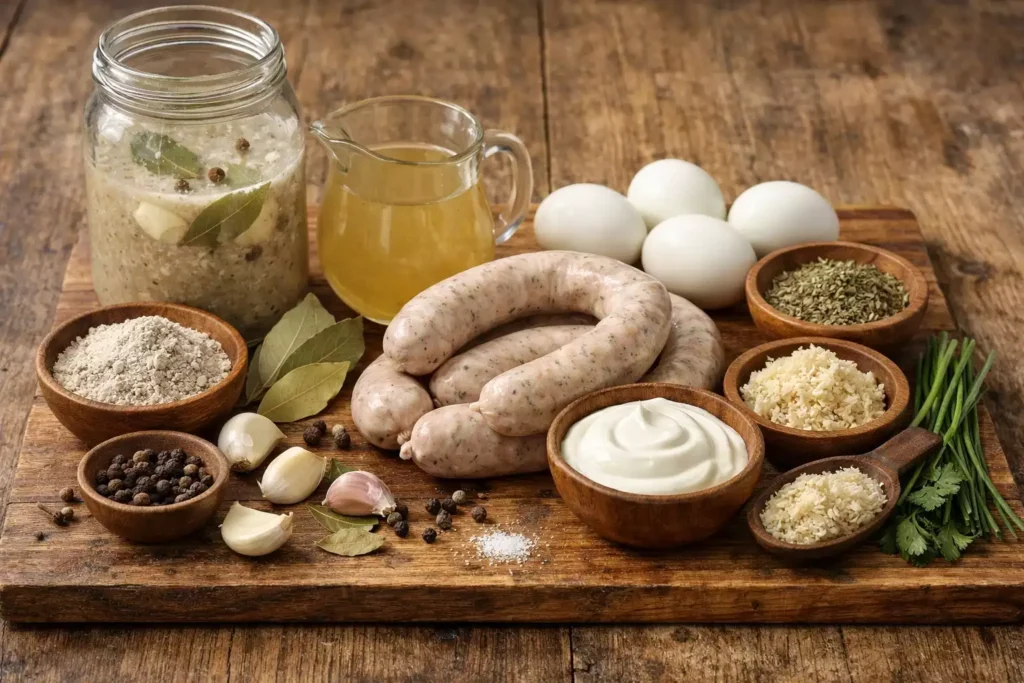
For the Rye Starter (Zakwas — start 5 days ahead)
- 100g (¾ cup) whole grain rye flour
- 500ml (2 cups) lukewarm water
- 3 cloves garlic, peeled and lightly crushed
- 2 bay leaves
- 4 allspice berries
For the Soup
- 1 litre (4 cups) finished zakwas (strained)
- 500ml (2 cups) good chicken or pork broth
- 400g (14oz) biała kiełbasa (Polish white sausage), sliced
- 4 hard-boiled eggs, halved
- 150ml (⅔ cup) sour cream (18% fat minimum)
- 4 cloves garlic, minced
- 1 tbsp marjoram, dried
- 1 tsp white pepper
- Salt to taste
- 2 tbsp fresh horseradish (optional but strongly encouraged)
- Fresh chives or parsley, chopped, to serve
How to Make It

1
1Start the Rye Starter (Day 1, 5 Days Before Easter)
Combine the rye flour and lukewarm water in a clean glass jar (at least 1 litre capacity). Add the garlic, bay leaves, and allspice. Stir well, cover loosely with a cloth or lid slightly ajar — it needs to breathe. Leave at room temperature, away from drafts. Stir once daily. By day 3 you will see bubbles and smell a gentle sour tang. By day 5 it should be pleasantly sour-smelling and ready. Strain out the solids before using.
2
2Simmer the Sausage
Pour the strained zakwas and the broth into a large pot over medium heat. Add the sliced white sausage and the minced garlic. Bring to a gentle simmer — do not boil hard, as this will reduce the sour character. Simmer for 20 minutes until the sausage is fully cooked and has flavored the broth.
3
3Add the Seasoning
Add the dried marjoram and white pepper. Taste and adjust salt — the soup will already have a good savory-sour base, so go carefully. The sourness should be present but not aggressive. If your starter fermented for a full five days in a warm kitchen, it will be quite punchy; use slightly less and supplement with extra broth if needed.
4
4Temper the Sour Cream
This step matters. Do not add cold sour cream straight into hot soup — it will curdle and you will have sad white lumps in your beautiful Easter soup. Instead, ladle a cup of the hot soup into a bowl, whisk in the sour cream until smooth, then pour the tempered mixture back into the pot while stirring. The soup will become creamy, silky, and slightly paler. This is what you want.
5
5Serve with Eggs and Horseradish
Ladle into deep bowls. Place two hard-boiled egg halves into each bowl — nestle them right into the soup. Add a teaspoon of fresh horseradish on the side or stir it directly into the bowl. Finish with chopped chives or parsley. Serve immediately with dark rye bread on the side.
Żurek Tips That Actually Matter
Rye flour type matters. Use wholegrain dark rye flour for the starter, not light rye. The darker flour ferments better and produces a richer, more complex sourness. Light rye makes a weaker, thinner starter.
Temperature affects fermentation speed. A warm kitchen (22–25°C / 72–77°F) will ferment the starter in 4–5 days. A cool kitchen might take 6–7 days. Start early to be safe — you do not want a starter crisis on Holy Saturday.
The packet shortcut. I know. Life happens. If you absolutely cannot make the starter from scratch, commercial żurek concentrate exists. It is fine. It is not amazing. My mother will never know if you do not tell her.
Marjoram is non-negotiable. It is the single most important herb in żurek. Do not substitute thyme or oregano. Marjoram has a softer, sweeter quality that is completely irreplaceable here.
Serving Żurek at the Easter Table
In most Polish households, żurek is served on Easter Sunday morning as part of the big śniadanie wielkanocne — the Easter breakfast feast. It sits proudly alongside sliced white sausage, baked ham, ćwikła (beetroot with horseradish), and a mountain of blessed bread. The eggs in the soup come from the święconka basket — blessed at church the day before, they carry extra significance on the plate.
Some families serve żurek in a hollowed-out rye bread bowl, which is spectacular and also means you eventually eat the bowl, which is the best possible outcome. Others go with traditional deep pottery bowls. Both are correct. There is no wrong vessel for żurek.
Pair it with Polish white sausage and a small bowl of fresh chrzan on the side.
Variations Worth Trying
Żurek z ziemniakami. Some regions of Poland serve żurek with boiled potatoes instead of (or in addition to) bread. Drop cubed boiled potatoes right into the soup bowl before ladling the żurek over them. Hearty, filling, and absolutely delicious.
Vegetarian żurek. Skip the white sausage, use vegetable broth, and add extra hard-boiled eggs and some sautéed mushrooms. The zakwas base is naturally vegan, so the soup is easy to adapt. It will taste different, but it will still taste like Easter.
Żurek in a bread bowl. Hollow out a small round rye sourdough loaf, brush the inside with melted butter, toast it briefly in the oven, and serve the soup inside. This is festive, impressive, and guarantees no leftovers.
Regional Silesian version. In Silesia, żurek is sometimes made with smoked kiełbasa instead of white sausage and served with a boiled potato and onions fried in butter. A regional variation worth exploring.
Storage and Reheating
The finished soup keeps in the refrigerator for up to 3 days. Store the eggs separately — they turn rubbery if left in the soup. Reheat gently over low heat, stirring frequently; do not boil or the sour cream will split. The zakwas starter can be refrigerated for up to 2 weeks or frozen for 3 months. If you make extra starter, freeze it — you will want żurek again before next Easter.
FAQ
Can I use sourdough starter instead of making rye zakwas from scratch?
You can use an active sourdough starter as a base and add rye flour to it, but the flavor profile will be slightly different — wheat sourdough has a milder tang than rye. For authentic żurek flavor, rye zakwas made the traditional way is worth the extra few days.
My starter smells too sour after 5 days. Did I ruin it?
A very sour starter is actually fine — you just use less of it and top up with more broth. The ratio is flexible. Start with ½ litre of starter instead of a full litre and taste as you go. An overly acidic starter means fermentation worked perfectly; it just ran long in a warm kitchen.
What is the difference between żurek and biały barszcz?
Great question — they are related but different soups. Żurek is made from fermented rye and has a distinctly sour, grainy character. Biały barszcz is lighter, cream-based, and made from a white beet or wheat ferment. Both are Easter staples in Poland, but żurek is the one that smells like Easter morning.
Can I make żurek in a slow cooker?
You can — add all the soup ingredients (sausage, broth, strained starter, garlic, spices) and cook on low for 4 hours. Add the tempered sour cream in the last 30 minutes. The result is deeply flavored and completely hands-off. Still add fresh eggs at serving.

Kasia Polish Mom
Polish-born, Chicago-raised, feeding a family of six with babcia’s recipes and a global pantry. I grew up folding pierogi at my grandmother’s kitchen table and never stopped — 15+ years of cooking from scratch, one Sunday dinner at a time. Everything here is tested on four kids, a hungry husband, and the memory of a woman who never measured anything but always got it right.