
Kasia Polish Mom
Polish-born, Chicago-raised, feeding a family of six with babcia’s recipes and a global pantry. I grew up folding pierogi at my grandmother’s kitchen table and never stopped — 15+ years of cooking from scratch, one Sunday dinner at a time. Everything here is tested on four kids, a hungry husband, and the memory of a woman who never measured anything but always got it right.
Biała Kiełbasa — The Easter Sausage Every Polish Table Needs
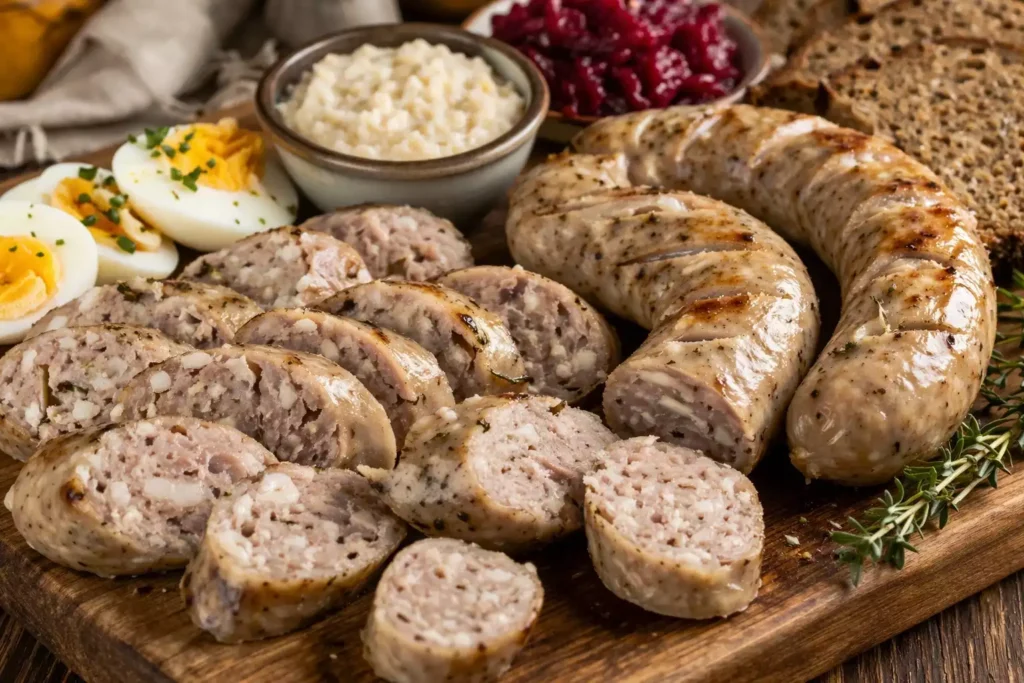
If you walk into any Polish butcher shop the week before Easter, there is exactly one thing every person in line is there to buy: biała kiełbasa. The fresh white sausage. The unsmoked, marjoram-heavy, garlic-scented pork sausage that every Polish family has been arguing about for generations — whose butcher makes it best, whose babcia’s version was the real deal, whether you boil it or bake it or cook it directly in żurek. My family has had this debate at every Easter table I can remember. Nobody has ever won. The sausage keeps showing up.
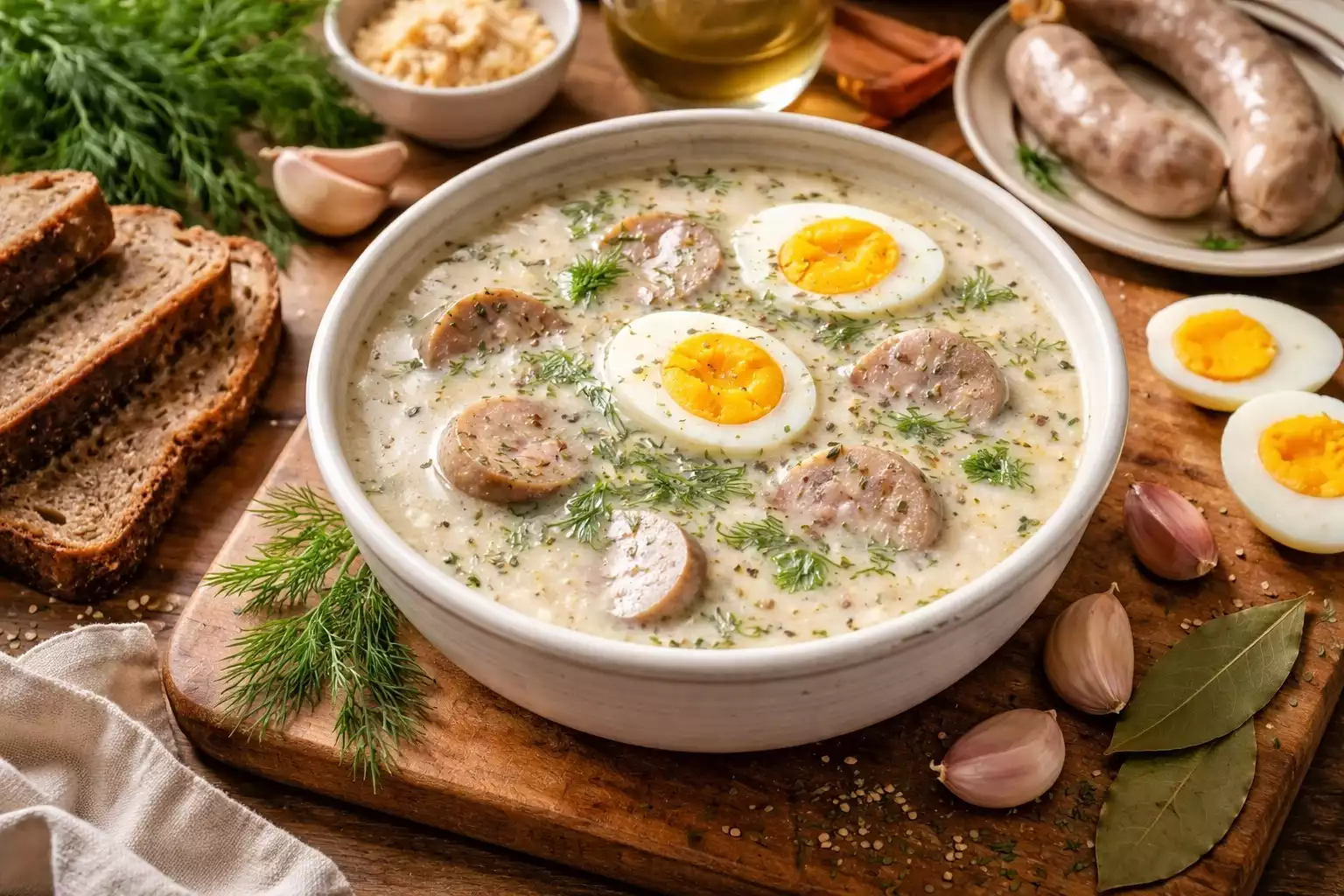
Biała kiełbasa is called “white” because it is not smoked — it is a fresh sausage, pale in color, made from coarsely ground pork with garlic and marjoram as the defining flavors. It goes into the blessed Easter basket on Saturday. It ends up in the żurek soup on Sunday morning. It appears on the cold cuts platter, sliced and served with horseradish and dark bread. It is essentially the most versatile thing on the Easter table, and it deserves its own recipe post.
Here is how to cook biała kiełbasa properly — three ways — plus everything you need to know about this essential Polish Easter staple.
Why Biała Kiełbasa Is Easter
Polish white sausage is categorically different from smoked kielbasa. Smoked kielbasa is cured, preserved, and shelf-stable — it is wonderful, but it is not Easter sausage. Biała kiełbasa is a fresh sausage that must be cooked before eating. It has a short shelf life and needs refrigeration. This perishability is part of its identity — it is a seasonal, celebratory food made fresh and eaten quickly.
The marjoram in biała kiełbasa is the key flavor note — it gives the sausage an almost herbal, slightly floral quality that distinguishes it from any other sausage in the world. Combined with the garlic and the loose pork grind, the result is something that smells like Easter before you have even taken a bite.
Ingredients
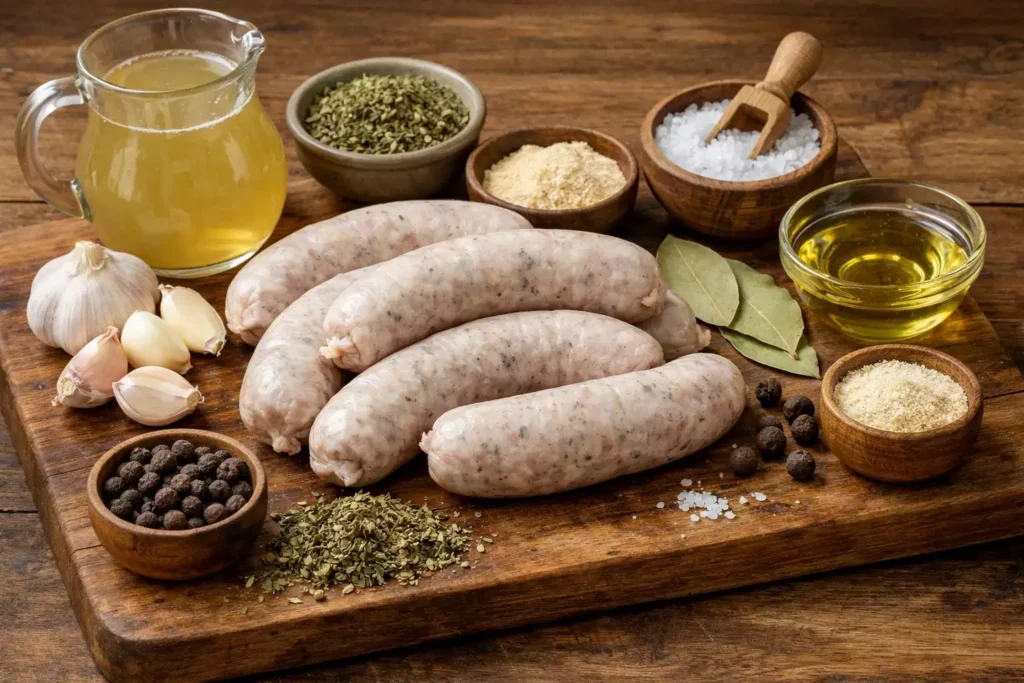
Put ingredients on wooden board, don’t put ready food just ingredients. Don’t include any text over the image[/aiccp-img]
For Boiling Biała Kiełbasa
- 600g (1.3 lbs) biała kiełbasa (Polish white sausage)
- 1 litre (4 cups) water or light pork broth
- 2 bay leaves
- 3 allspice berries
- 3 cloves garlic, peeled
- 1 tsp marjoram
For Baking Biała Kiełbasa
- 600g (1.3 lbs) biała kiełbasa
- 3 tbsp beer or water
- 1 tsp marjoram
- 1 tsp garlic powder
- 1 tbsp cooking oil
For Pan-Frying
- 600g (1.3 lbs) biała kiełbasa, sliced
- 1 tbsp butter or lard
- 2 cloves garlic, minced
- Salt and pepper to taste
How to Make It

1
1Method One: Boiling (Traditional, for Żurek)
Place the sausage in a pot. Add enough water or light pork broth to cover by 2cm. Add bay leaves, allspice, garlic, and marjoram. Bring to a very gentle simmer over medium-low heat — the water should barely bubble. Do not boil hard or the sausage casing will burst. Simmer for 25–30 minutes until cooked through (internal temperature 74°C / 165°F). This is the method to use when the sausage is going directly into żurek or biały barszcz. The cooking liquid becomes extra-flavorful broth — do not throw it out.
2
2Method Two: Baking (For the Easter Table Platter)
Preheat the oven to 180°C / 350°F. Place the sausage in a baking dish. Score the casing diagonally at 2cm intervals (this prevents bursting and helps the skin crisp). Pour the beer or water into the dish — just enough to cover the bottom. Rub the sausage with oil, marjoram, and garlic powder. Bake for 35–40 minutes, turning once at the halfway point, until golden and fragrant. The skin will blister slightly and caramelize — this is the goal. Rest for 5 minutes before slicing.
3
3Method Three: Pan-Frying (Fastest, Most Flavor)
Slice the sausage into 2cm rounds. Melt butter or lard in a heavy skillet over medium heat — lard is authentic and gives the best flavor. Add the sausage slices in a single layer. Fry for 3–4 minutes per side until deep golden and crisp at the edges. Add garlic in the last minute of cooking. Season with salt and pepper. Serve immediately while hot and slightly charred. This method produces the best texture if you are eating it as a standalone dish.
4
4Serve at the Easter Table
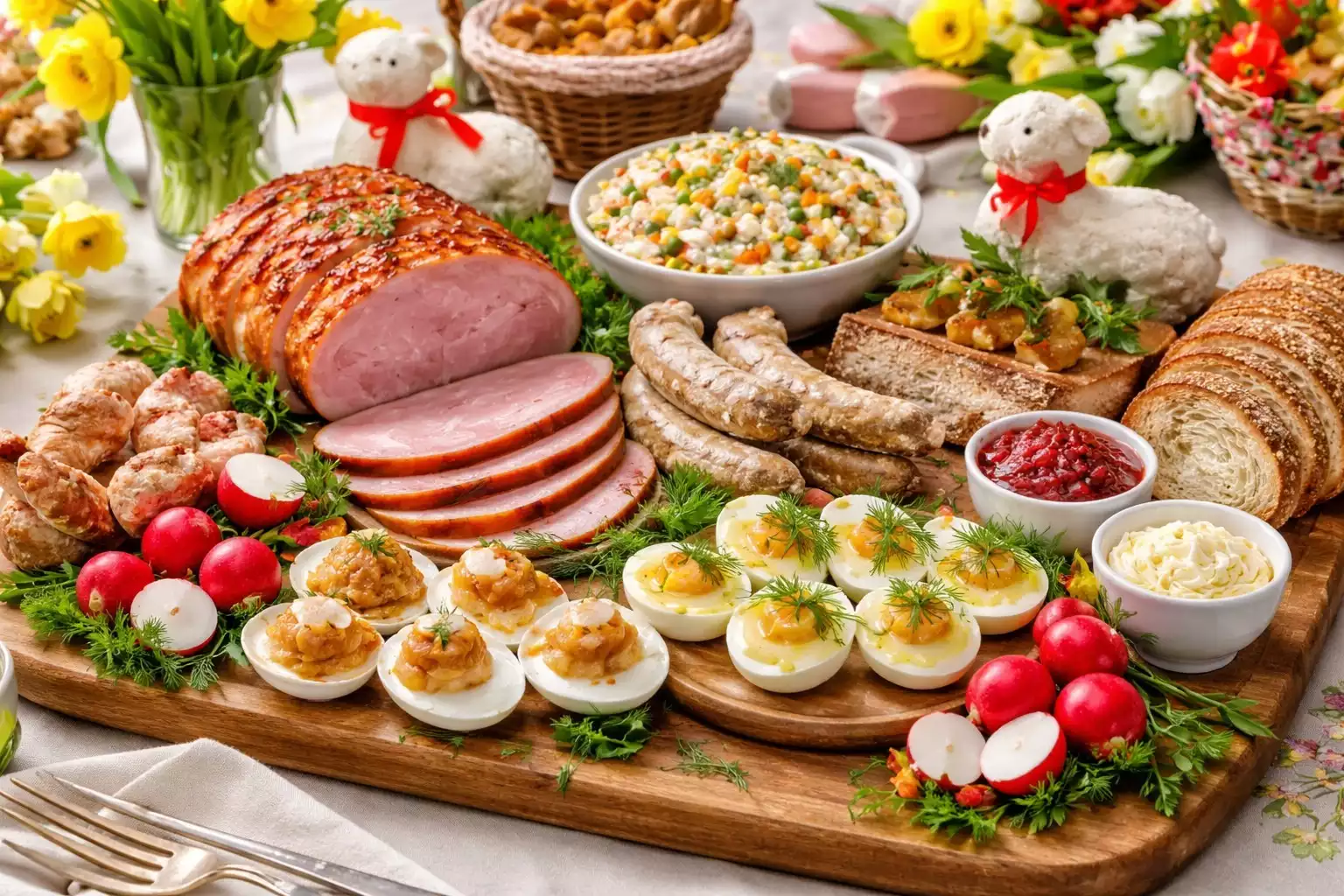
For the traditional Easter presentation: arrange sliced boiled or baked sausage on a platter alongside hard-boiled eggs, a bowl of fresh horseradish, and ćwikła. Dark rye bread on the side. This is the Easter cold cuts spread that every Polish family assembles before the soup even hits the table.
Kiełbasa Tips Worth Knowing
Source it fresh. Biała kiełbasa from a Polish deli is categorically better than anything in a supermarket. If you have a Polish specialty store nearby, go there. The difference in quality is enormous — fresher pork, more marjoram, proper casing. It is worth the trip.
Do not overcook the boiled version. A long boil will make the sausage tough and cause the casing to burst. Gentle simmering under 85°C is the sweet spot. Use a thermometer if you are unsure.
The cooking liquid is gold. Broth from boiling biała kiełbasa is deeply flavored with pork, marjoram, and garlic. Use it as the broth base for your żurek or biały barszcz. It turns a good soup into a great one.
Lard matters. For pan-frying, proper lard gives a flavor that butter simply cannot replicate. It is the traditional fat for Polish cooking for very good reason. If you have access to good-quality rendered lard, use it here.
Biała Kiełbasa at the Easter Table
In Poland, biała kiełbasa appears in two forms at Easter: as an ingredient inside the Easter soups and as a star of the cold platter. The święconka basket — the blessed Easter basket taken to church on Holy Saturday — always contains a piece of white sausage, symbolizing prosperity and the joy of breaking the Lenten fast. For the Sunday breakfast feast, it sits at the center of the table in whatever form the family prefers.
The combination of biała kiełbasa with chrzan is one of the defining flavor pairings of Polish Easter. The heat of fresh horseradish against the fatty, herb-scented sausage is not a subtle combination. It is the taste of Easter morning.
Variations Worth Trying
Grilled biała kiełbasa. Easter Monday in Poland sometimes involves grilling — if the weather cooperates. Biała kiełbasa on a charcoal grill, blistered and smoky, is an entirely different and equally spectacular experience. Serve with mustard.
Biała kiełbasa z kapustą. Slice and pan-fry the sausage with sauerkraut and onions in a single pan for a quick weeknight meal that uses Easter leftovers brilliantly. Add a splash of beer, cover, and steam for 10 minutes. Hearty, practical, delicious.
In hunter’s stew (bigos). Leftover biała kiełbasa is excellent sliced into bigos — the Polish hunter’s stew of sauerkraut, meat, and mushrooms. It adds a fresher flavor note than the smoked kielbasa traditionally used.
Storage and Reheating
Raw biała kiełbasa is a fresh sausage and must be refrigerated and used within 2–3 days of purchase. It can be frozen for up to 3 months. Cooked sausage keeps in the refrigerator for 3–4 days. Reheat in a pan with a small splash of water to prevent drying out, or in a 160°C / 320°F oven wrapped in foil for 15 minutes.
FAQ
What is the difference between biała kiełbasa and regular kielbasa?
Regular kielbasa (smoked kielbasa) is cured and smoked — it is pre-cooked and can be eaten cold or heated. Biała kiełbasa is a fresh, unsmoked, uncured sausage that must be fully cooked before eating. It has a completely different texture, flavor profile, and shelf life. They are both kielbasa in name, but entirely different products.
Where can I buy biała kiełbasa?
Polish specialty grocery stores and delis are your best source. In larger cities with Polish communities (Chicago, New York, Detroit), Polish delis stock it year-round. Around Easter, some Eastern European grocery stores stock it seasonally. Online Polish food retailers also ship it frozen. Making it yourself from scratch is possible but a project for another day.
Can I substitute bratwurst or other fresh sausage?
In a pinch, a good-quality fresh pork bratwurst will work in the soups as a structural substitute. The flavor will be different — no marjoram, different spice blend — but the soup will still be good. For the cold platter presentation, however, there is no substitute that gives you the authentic Easter experience. Source the real thing if at all possible.
How do I know when biała kiełbasa is fully cooked?
The safest method is a meat thermometer — internal temperature should reach 74°C / 165°F. Visually, the sausage will be firm to the touch with no pink inside when sliced. The skin will have tightened slightly and the color will have shifted from pale pink-white to a more opaque, cooked appearance.
Kasia Polish Mom
Polish-born, Chicago-raised, feeding a family of six with babcia’s recipes and a global pantry. I grew up folding pierogi at my grandmother’s kitchen table and never stopped — 15+ years of cooking from scratch, one Sunday dinner at a time. Everything here is tested on four kids, a hungry husband, and the memory of a woman who never measured anything but always got it right.