

Kasia Polish Mom
Polish-born, Chicago-raised, feeding a family of six with babcia’s recipes and a global pantry. I grew up folding pierogi at my grandmother’s kitchen table and never stopped — 15+ years of cooking from scratch, one Sunday dinner at a time. Everything here is tested on four kids, a hungry husband, and the memory of a woman who never measured anything but always got it right.
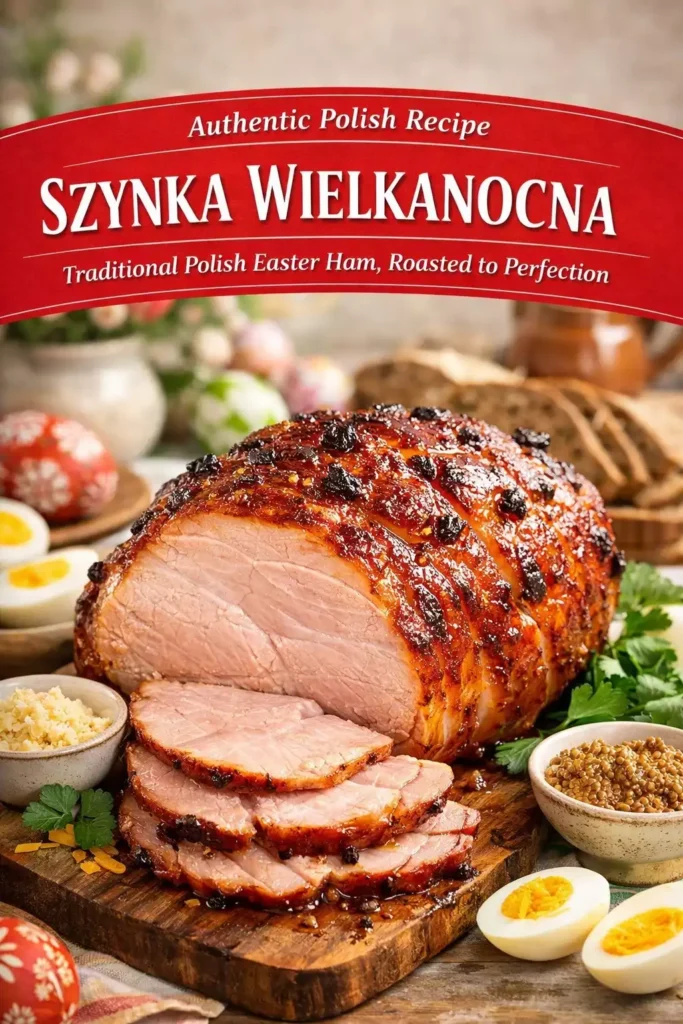
Szynka Wielkanocna — Polish Easter Ham Done Right
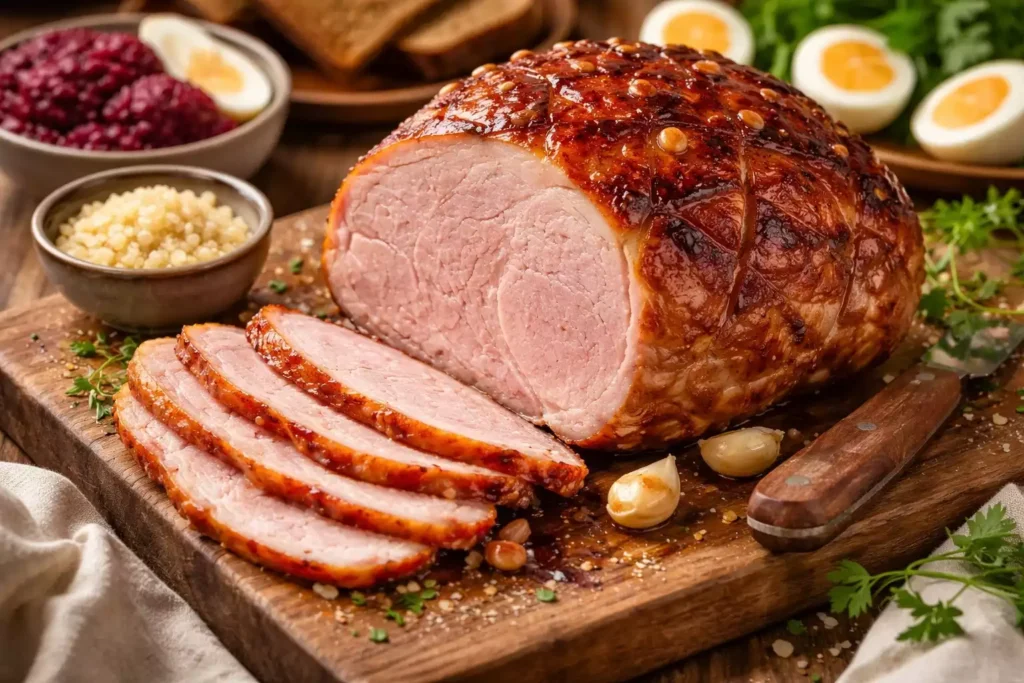
No Polish Easter table is complete without a glazed ham in the center. Not a ham from a deli packet, not a supermarket spiral-cut situation — a proper szynka wielkanocna, roasted low and slow and finished with a glaze that makes the whole kitchen smell like a holiday. My babcia roasted hers every year in a clay pot, basted with honey and beer, and sliced it cold at the table on Easter Sunday morning. We would eat it with horseradish and dark bread and argue about whether it was better than the year before. (It was always better. Every year it was the best ham she had ever made, according to dziadek. This was not an accident.)
Polish Easter ham is not the same as an American glazed ham. It is subtler, less sweet, with garlic and marjoram doing as much work as the glaze. The meat should be pale and juicy, not caramelized to a candy-shell crust. The glaze is there to give the exterior color and a hint of sweetness — the ham itself does the heavy lifting.
This recipe uses a bone-in pork leg or shoulder, which is traditional. You can use a boneless joint if that is easier to source, but bone-in gives you better flavor and a more impressive presentation. Start this the day before — the brine is what makes the difference between good ham and legendary ham.
Why This Polish Easter Ham Works
The brine is the secret. Two hours of salting or, ideally, overnight in a proper brine infuses the pork with garlic, bay, and allspice from the inside out. No amount of surface seasoning achieves this. When the brined ham goes into the oven, every slice from center to edge will be properly seasoned — not just the exterior. This is the single biggest upgrade from a standard roasted ham, and it takes five minutes of actual work.
The low roasting temperature (160°C) keeps the meat juicy and prevents the dreaded dry edge that turns up when hams are roasted too hot. Patience here is paid back in texture. The beer-honey glaze in the last 30 minutes adds color and a gentle sweetness without overpowering the pork’s natural flavor.
Ingredients
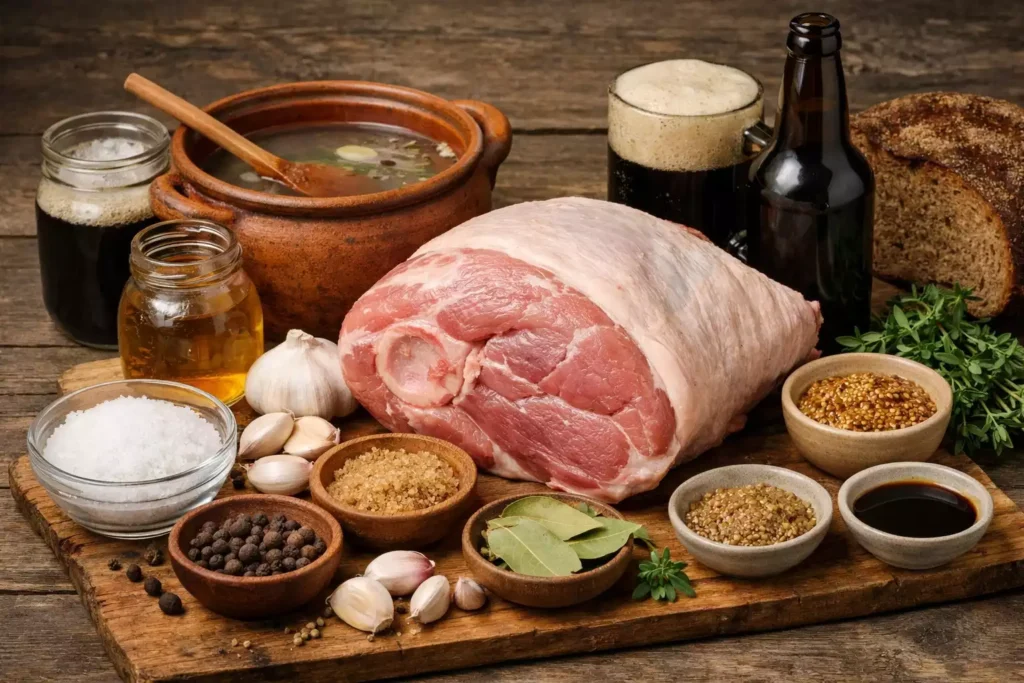
For the Brine
- 2 litres (8 cups) cold water
- 60g (4 tbsp) coarse salt
- 2 tbsp sugar
- 6 cloves garlic, crushed
- 4 bay leaves
- 6 allspice berries
- 1 tsp black pepper, whole
- 1 tsp marjoram
For the Ham
- 1.5–2kg (3–4.5 lbs) bone-in pork leg or shoulder (skin on if possible)
- 4 cloves garlic (for studding)
- 1 tsp dried marjoram
- 1 tsp black pepper, ground
For the Glaze
- 3 tbsp runny honey
- 100ml (½ cup) dark beer
- 1 tsp whole grain mustard
- 1 tsp soy sauce
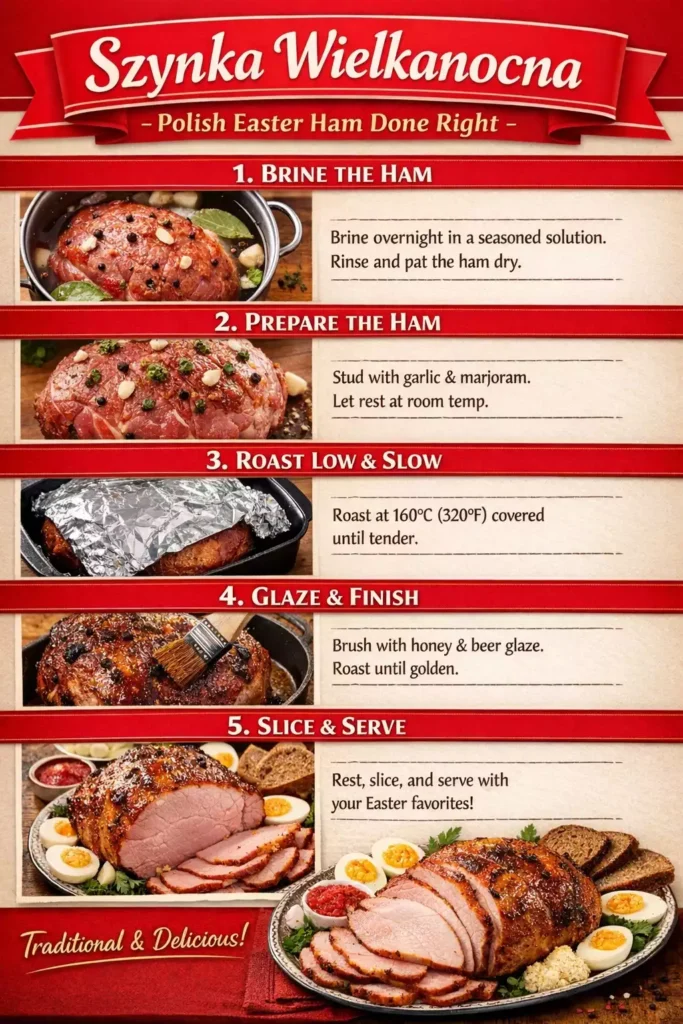
How to Make It
1
1Brine the Ham (Day Before)
Combine all brine ingredients in a large pot and stir until the salt and sugar dissolve. Submerge the pork joint completely. If the ham floats, weigh it down with a plate. Refrigerate for 12–24 hours. Remove from brine, rinse under cold water, and pat completely dry with paper towels. This step is not optional — it is the foundation of a great ham.
2
2Prepare the Ham
Using a small knife, make 8–10 deep incisions all over the meat. Push a sliver of garlic and a pinch of marjoram into each cut. Rub the exterior with ground black pepper and a little marjoram. Let the ham sit at room temperature for 30 minutes before roasting. Cold pork going into a hot oven cooks unevenly.
3
3Roast Low and Slow
Preheat the oven to 160°C / 320°F. Place the ham in a roasting dish on a bed of sliced onions if you have them (they prevent sticking and add flavor to the pan juices). Add 200ml of water to the pan. Cover tightly with foil. Roast for approximately 35–40 minutes per 500g — a 1.8kg joint will take about 2.5 hours. The ham is done when it reaches an internal temperature of 70°C / 160°F.
4
4Glaze and Finish
Whisk together the honey, beer, mustard, and soy sauce. Remove the foil from the ham and increase the oven temperature to 200°C / 400°F. Brush the glaze generously over the ham. Return to the oven uncovered for 20–30 minutes, brushing with more glaze every 10 minutes, until the exterior is deep golden and sticky. Watch carefully — honey burns fast at high heat.
5
5Rest and Serve
Remove the ham from the oven and rest on a cutting board for at least 20 minutes before slicing. This is non-negotiable — cutting too soon will release all the juices onto the board rather than keeping them in the meat. Slice thinly and arrange on a serving platter. Serve warm from the oven or at room temperature.
Ham Tips From Three Generations of Easter Tables
Bone-in is better, always. The bone conducts heat through the center of the joint and also contributes collagen and flavor to the surrounding meat. A boneless joint will cook faster but will never have the same richness. Go bone-in if you can find it.
The brine can be shortened. If you are pressed for time, even a 2-hour dry rub of salt, garlic, marjoram, and pepper (pressed into the meat) will give you noticeably better results than skipping the step entirely. Overnight is ideal; any seasoning time is better than none.
The glaze timing is critical. Apply the glaze only in the final 30 minutes. A glaze applied too early will burn before the meat is cooked. Too late and it will not caramelize properly. 30 minutes at high heat, applied in two coats, gives the perfect sticky crust.
Save the pan drippings. The liquid at the bottom of the roasting pan — ham juices, beer, honey — is spectacular. Strain it, skim the fat, and use it as a sauce or drizzle over sliced ham when serving.
Szynka Wielkanocna at the Easter Table
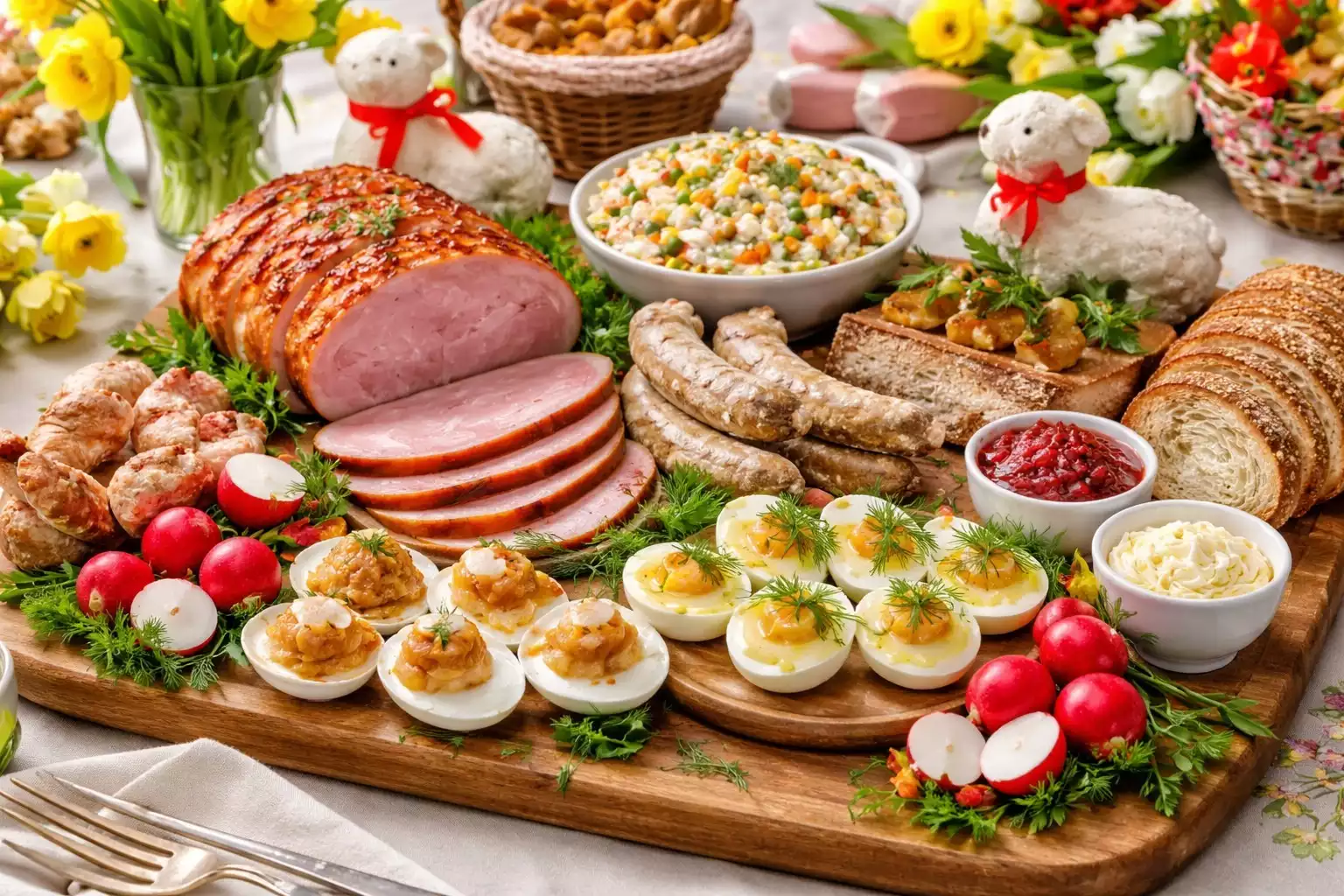
Polish Easter ham traditionally sits at the center of the śniadanie wielkanocne table, surrounded by hard-boiled eggs, biała kiełbasa, fresh horseradish, ćwikła, and dark rye bread. A piece of ham also goes into the święconka blessed Easter basket the day before — small, symbolic, and a bridge between the liturgical and the culinary.
The ham is served both warm (straight from the oven if you time it right) and cold — leftover cold slices on dark bread with mustard are one of Easter Monday’s great pleasures. Do not let anyone convince you that the leftovers are less than the original feast. They are different and equally wonderful.
Serve alongside sałatka jarzynowa for a complete Easter table.
Variations Worth Trying
Honey-mustard glaze. Increase the mustard to a full tablespoon and reduce the honey slightly for a more assertive, tangy glaze. Works especially well with a fattier shoulder cut.
Apple and beer baste. Replace the water in the roasting pan with apple juice and use a light lager instead of dark beer for the glaze. Sweeter, more delicate, and particularly good if you are serving it to children who might find the dark beer glaze too intense.
Smoked ham version. In some Polish regions, the ham is first cold-smoked for several hours before roasting. If you have a smoker, try smoking the brined ham over applewood for 2 hours before finishing in the oven. The result is extraordinary.
Storage and Reheating
Cooked ham keeps in the refrigerator for up to 5 days, loosely wrapped. It also freezes well for up to 3 months — slice before freezing for easier thawing. Reheat slices in a pan with a splash of the pan drippings, or warm the whole joint in a 150°C / 300°F oven wrapped in foil for 20–30 minutes. Cold slices eaten straight from the fridge on dark bread are, frankly, perfect as-is.
FAQ
Can I make this recipe with a smaller or larger joint?
Absolutely. The brine proportions can be scaled, and the roasting time follows the 35–40 minutes per 500g rule regardless of size. A smaller 1kg joint will take around 80–90 minutes total; a larger 3kg joint may need close to 4 hours. Always verify with an internal temperature thermometer.
What kind of beer is best for the glaze?
A dark Polish beer (porter or Żytnie dark) is traditional and gives a slight bitter, malty depth to the glaze. Any dark or amber ale works well. Avoid very hoppy IPAs — the bitterness intensifies during reduction. A light lager produces a milder, cleaner glaze if you prefer something less assertive.
My ham skin is not crisping. What went wrong?
The skin must be completely dry before roasting — moisture is the enemy of crisp skin. Pat it aggressively dry after the brine and again before going into the oven. Score the skin in a crosshatch pattern before glazing to help it render. If the skin is still soft, increase the oven temperature to 220°C for the final 10 minutes (watch closely).
Is szynka wielkanocna served hot or cold?
Both, traditionally. It comes out of the oven hot for the main Easter breakfast feast, but leftover slices served cold the next day — on dark bread with mustard and horseradish — are one of the great Easter Monday pleasures. Many Polish families actually prefer it cold, which means it can be roasted the day before if oven space is an issue.
Kasia Polish Mom
Polish-born, Chicago-raised, feeding a family of six with babcia’s recipes and a global pantry. I grew up folding pierogi at my grandmother’s kitchen table and never stopped — 15+ years of cooking from scratch, one Sunday dinner at a time. Everything here is tested on four kids, a hungry husband, and the memory of a woman who never measured anything but always got it right.
Beef and Broccoli — The 20-Minute Weeknight Hero
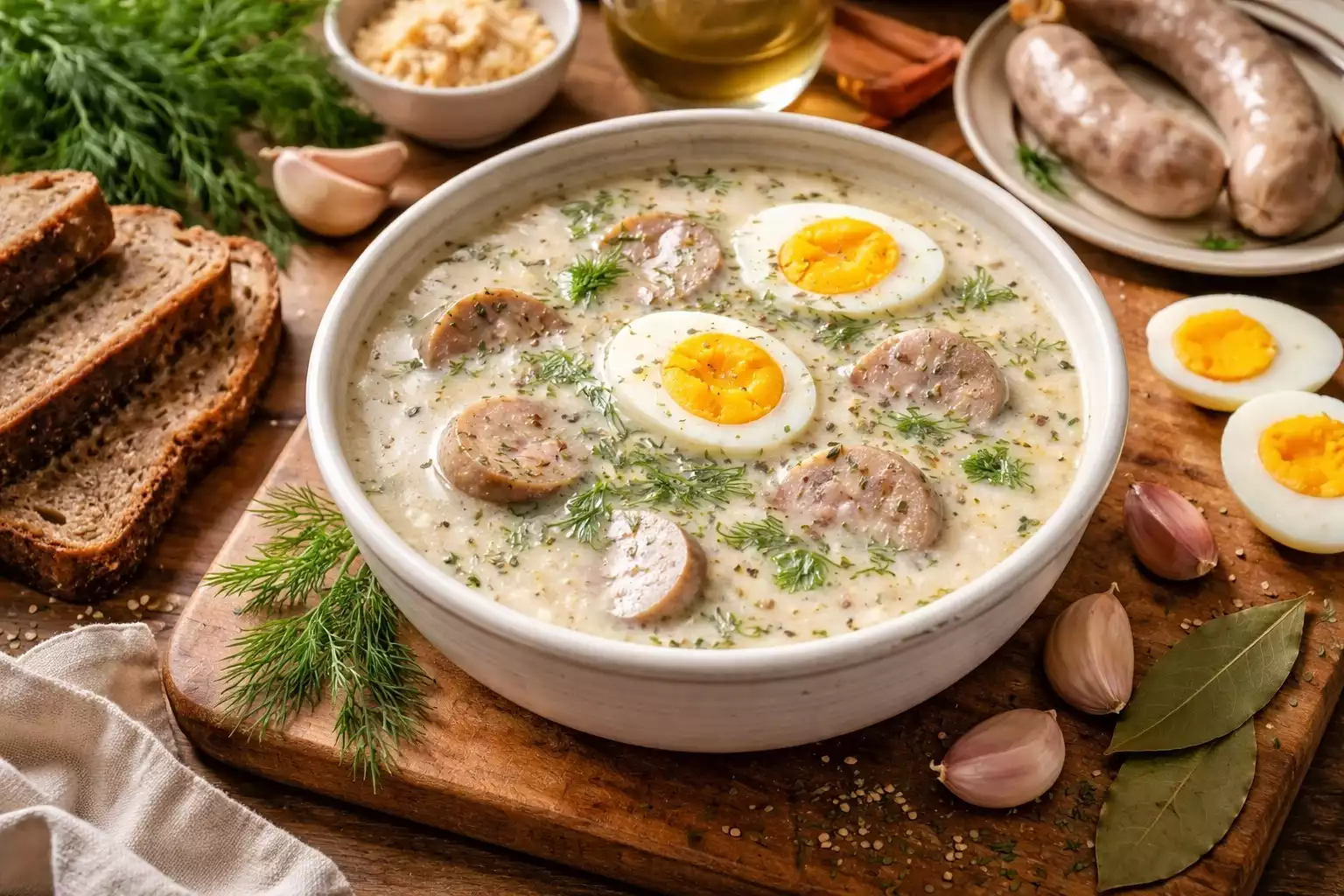
Biały Barszcz — Poland’s Other Easter Soup
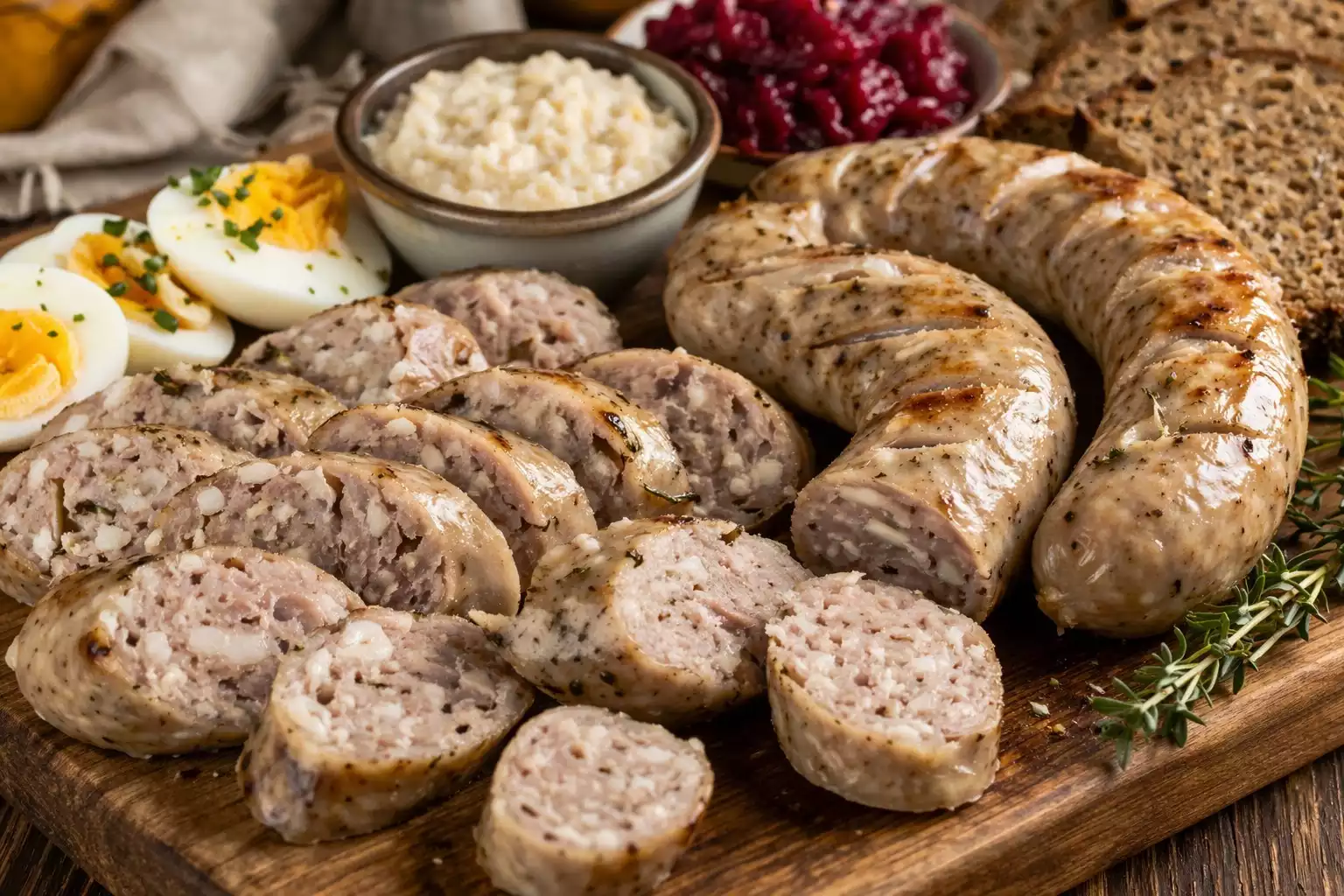
Biała Kiełbasa — The Easter Sausage Every Polish Table Needs
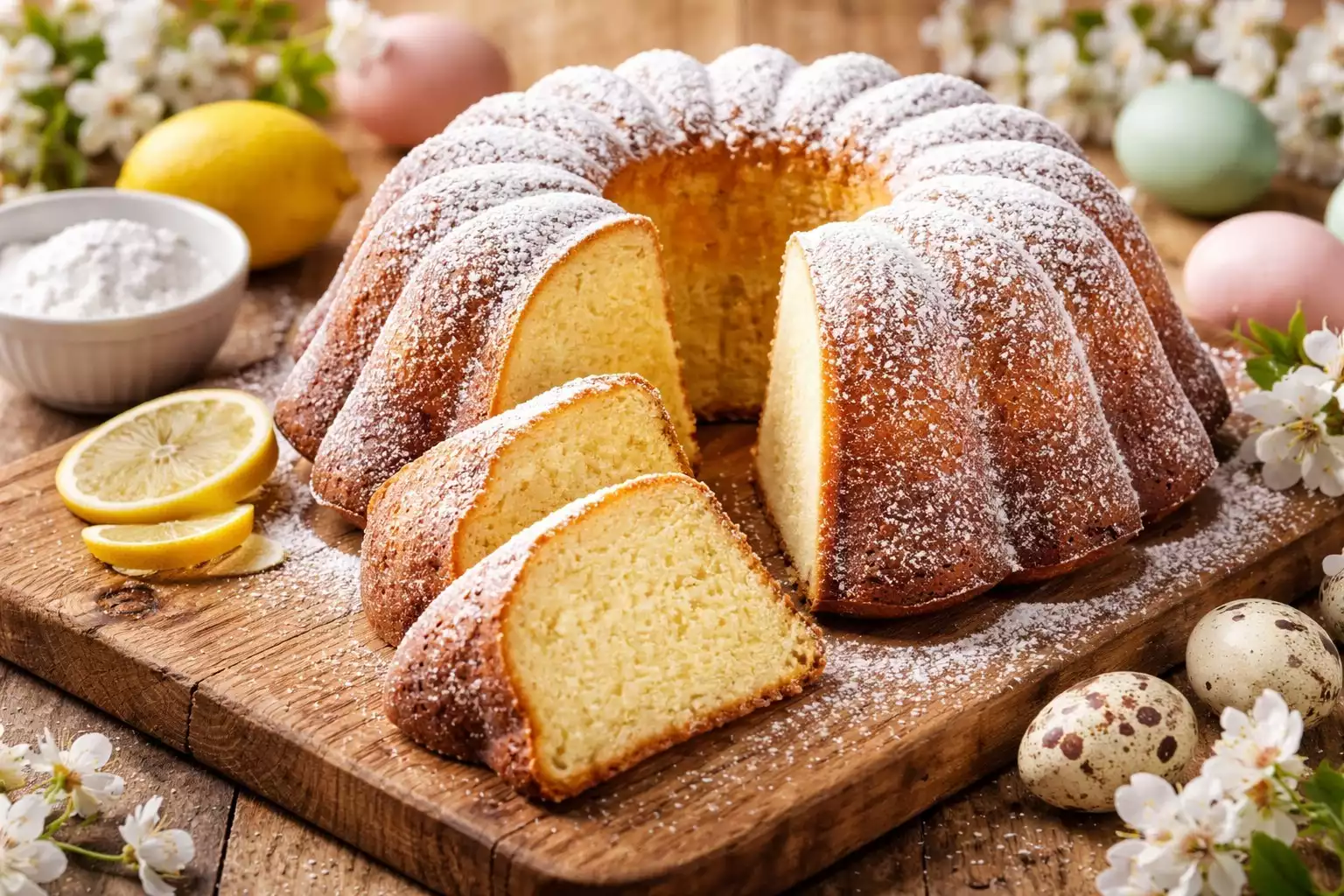
Babka Piaskowa — The Foolproof Polish Easter Cake
Makowiec — Polish Poppy Seed Roll for Every Holiday