Kasia Polish Mom
Polish-born, Chicago-raised, feeding a family of six with babcia’s recipes and a global pantry. I grew up folding pierogi at my grandmother’s kitchen table and never stopped — 15+ years of cooking from scratch, one Sunday dinner at a time. Everything here is tested on four kids, a hungry husband, and the memory of a woman who never measured anything but always got it right.
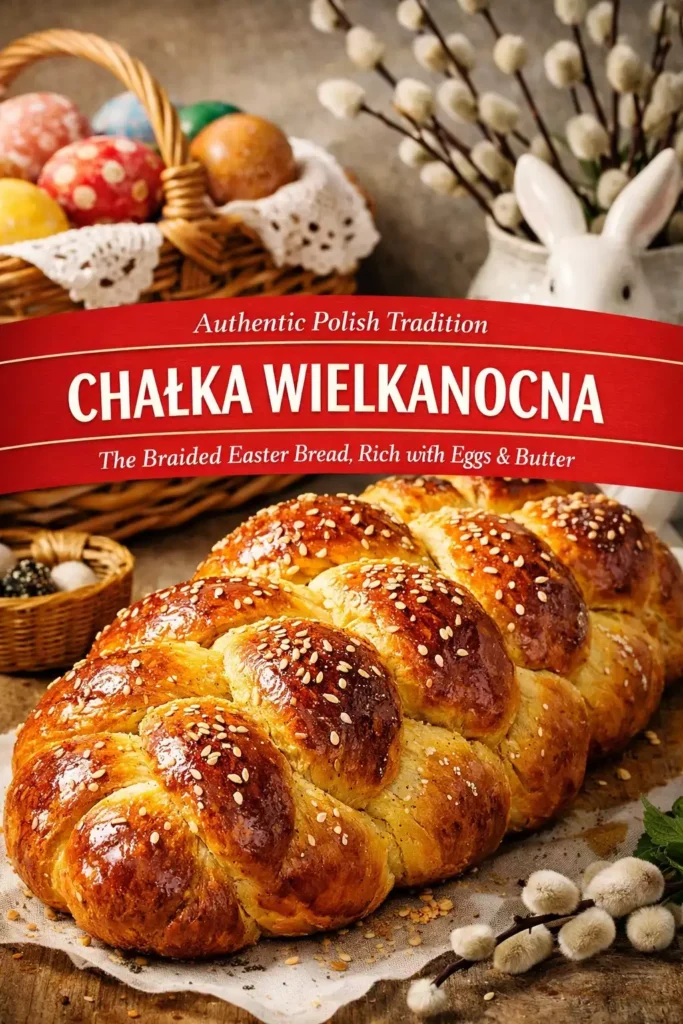
Chałka Wielkanocna — The Braided Easter Bread
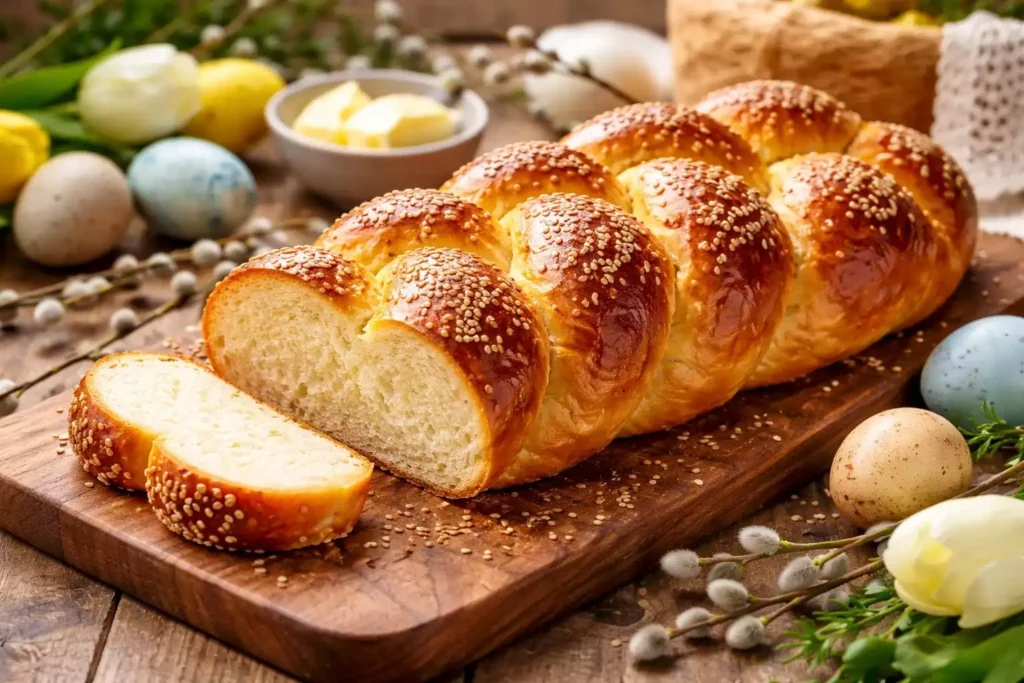
The święconka basket is not complete without the bread. And not just any bread — the golden, egg-rich, beautifully braided chałka wielkanocna that sits in the center of the basket like a crown, its surface glossy from an egg wash, its crumb soft and slightly sweet from the eggs and butter woven through every strand. My babcia braided hers on Good Friday. I help my kids braid theirs now. The kitchen smells identical. Some things do not change, and I am extremely grateful for that.
Chałka wielkanocna is Poland’s Easter challah — a braided yeast bread enriched with eggs, butter, and a touch of sugar. It is similar to Jewish challah (the name is actually derived from it, via centuries of cultural exchange in Poland), but the Polish version leans slightly more buttery and is often less sweet than its American counterpart. It goes in the Easter basket for Saturday blessing and on the breakfast table on Sunday morning.
Making braided bread at home sounds intimidating. It is not. If you can make a regular yeasted loaf, you can make chałka. The braid is just three ropes of dough pressed together and folded over each other. I’ve watched my youngest do it, and he is eight and has no patience for anything. If he can braid chałka, so can you.
Why This Chałka Recipe Works
The enriched dough — eggs, butter, sugar, milk — creates a bread with a tender, almost cake-like crumb that is distinct from a lean white bread. The fat slows the gluten development and produces a bread that stays soft for days after baking, which is exactly what you want for a loaf that sits in a basket on Saturday and gets eaten on Sunday and Monday.
The double egg wash (applied before and after the second rise) gives the exterior its characteristic lacquered, deep golden color. The inside will be pale and pillowy. The contrast is part of what makes chałka so beautiful at the Easter table.
Ingredients
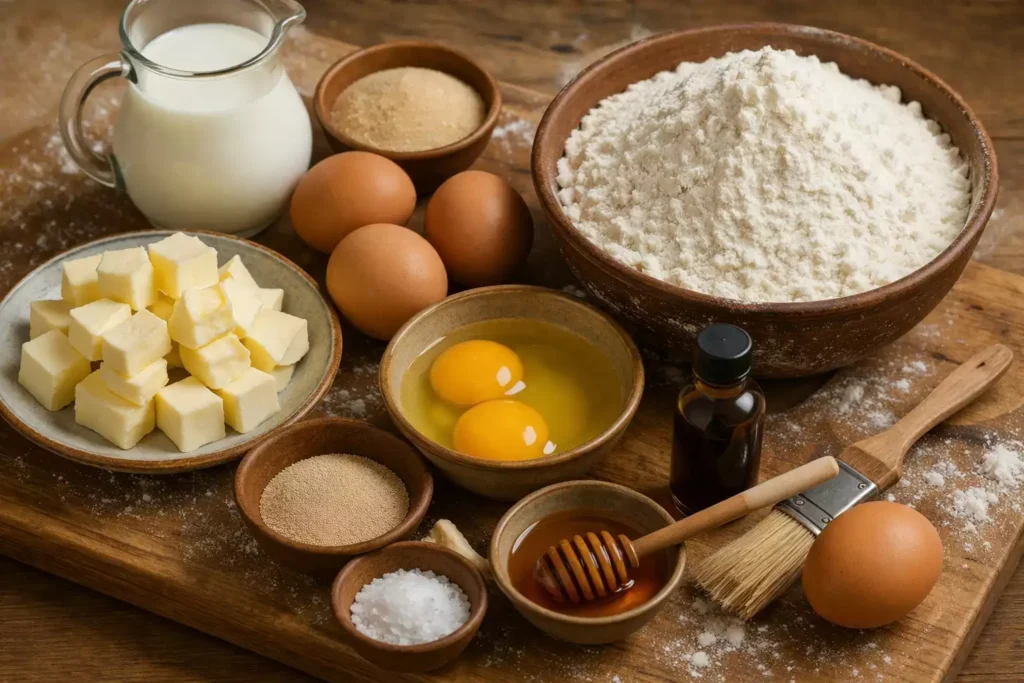
For the Dough
- 500g (4 cups) strong white bread flour, plus extra for dusting
- 7g (1 sachet) instant yeast or 14g fresh yeast
- 2 tsp sugar
- 1 tsp salt
- 3 large eggs (2 for the dough, 1 for egg wash)
- 150ml (⅔ cup) warm whole milk
- 80g (6 tbsp) unsalted butter, softened and cubed
- 2 tbsp honey
- 1 tsp vanilla extract (optional but lovely)
For Finishing
- 1 egg beaten with 1 tbsp milk (egg wash)
- 1 tbsp sesame or poppy seeds (optional)
How to Make It
1
1Make the Dough
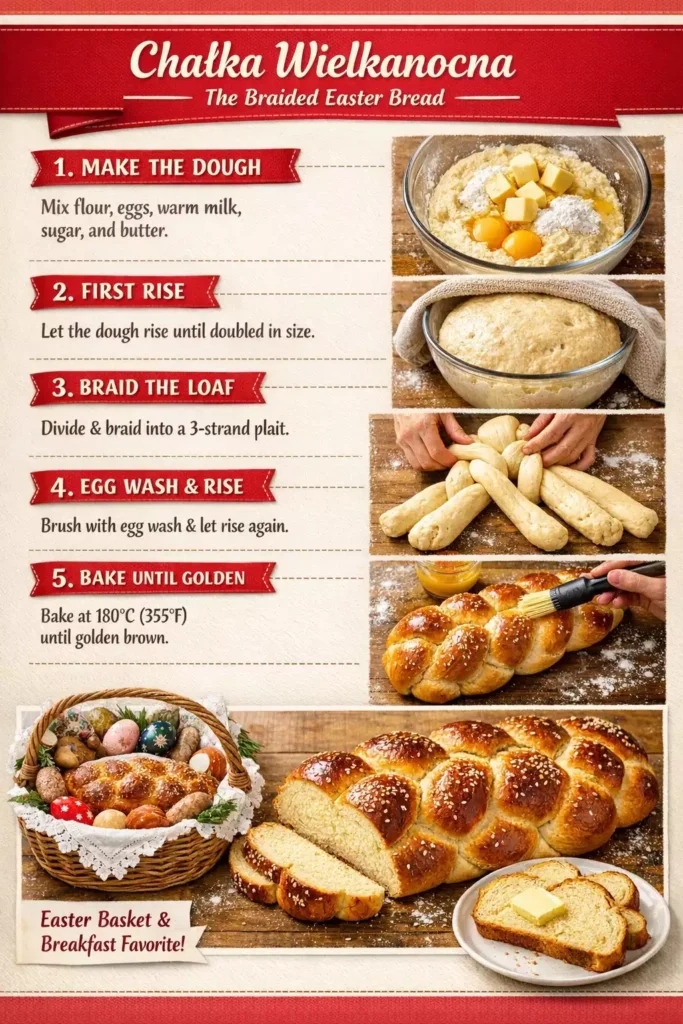
Combine the flour, instant yeast, sugar, and salt in a large bowl (or stand mixer bowl). In a separate jug, whisk together the warm milk, 2 eggs, honey, and vanilla. Pour the wet ingredients into the dry and mix until a shaggy dough forms. Knead for 8–10 minutes by hand on a floured surface (or 6 minutes with a dough hook) until the dough is smooth and slightly tacky. Add the softened butter a few cubes at a time, continuing to knead after each addition. The dough will become glossy and very soft. This is correct.
2
2First Rise
Place the dough in a lightly oiled bowl, cover with cling film, and leave in a warm place for 1–1.5 hours until doubled in size. If your kitchen is cold, put the bowl in an oven with just the light on (no heat), or over a bowl of warm water. Enriched doughs rise more slowly than lean doughs — do not rush this step.
3
3Divide and Braid
Turn the dough onto a lightly floured surface and divide into 3 equal pieces. Roll each piece into a rope approximately 50cm (20 inches) long. Line them up parallel, press the top ends together, then braid them by passing the right strand over the center, then the left strand over the center, repeating until you reach the bottom. Press the ends together and tuck both ends under the loaf.
4
4Second Rise and First Egg Wash
Transfer the braid to a baking sheet lined with parchment. Brush generously with egg wash. Cover loosely with cling film and leave for 45–60 minutes until puffed and pillowy. Do not rush the second rise — an under-proofed chałka will crack during baking.
5
5Bake
Preheat the oven to 180°C / 355°F. Just before baking, brush the loaf again with a second coat of egg wash — this double coat is what gives chałka its deep mahogany color. Sprinkle with sesame or poppy seeds if using. Bake for 28–35 minutes until deep golden brown. Tap the base — it should sound hollow. Cool on a wire rack before slicing.
Chałka Tips for a Perfect Braid
Room temperature eggs and butter. Cold eggs and cold butter make a lumpy, difficult dough. Pull them from the fridge an hour before baking. This one small thing makes the dough significantly easier to work with.
Do not add too much flour. An enriched dough should be soft and slightly tacky — it should stick very lightly to your hands but not your work surface after kneading. If you keep adding flour until it feels firm and smooth, you will have a dense, dry loaf. Resist the urge.
The double egg wash. One coat before the second rise, one coat immediately before baking. The first coat gives the crust color; the second coat gives it gloss. Both coats together produce that deep, golden, lacquered appearance that makes chałka look so beautiful.
Tuck the ends under. After braiding, always tuck both ends under the loaf before the second rise. This prevents the braid from opening up at the ends during baking and gives a neat, professional finish.
Chałka in the Easter Basket and at the Table
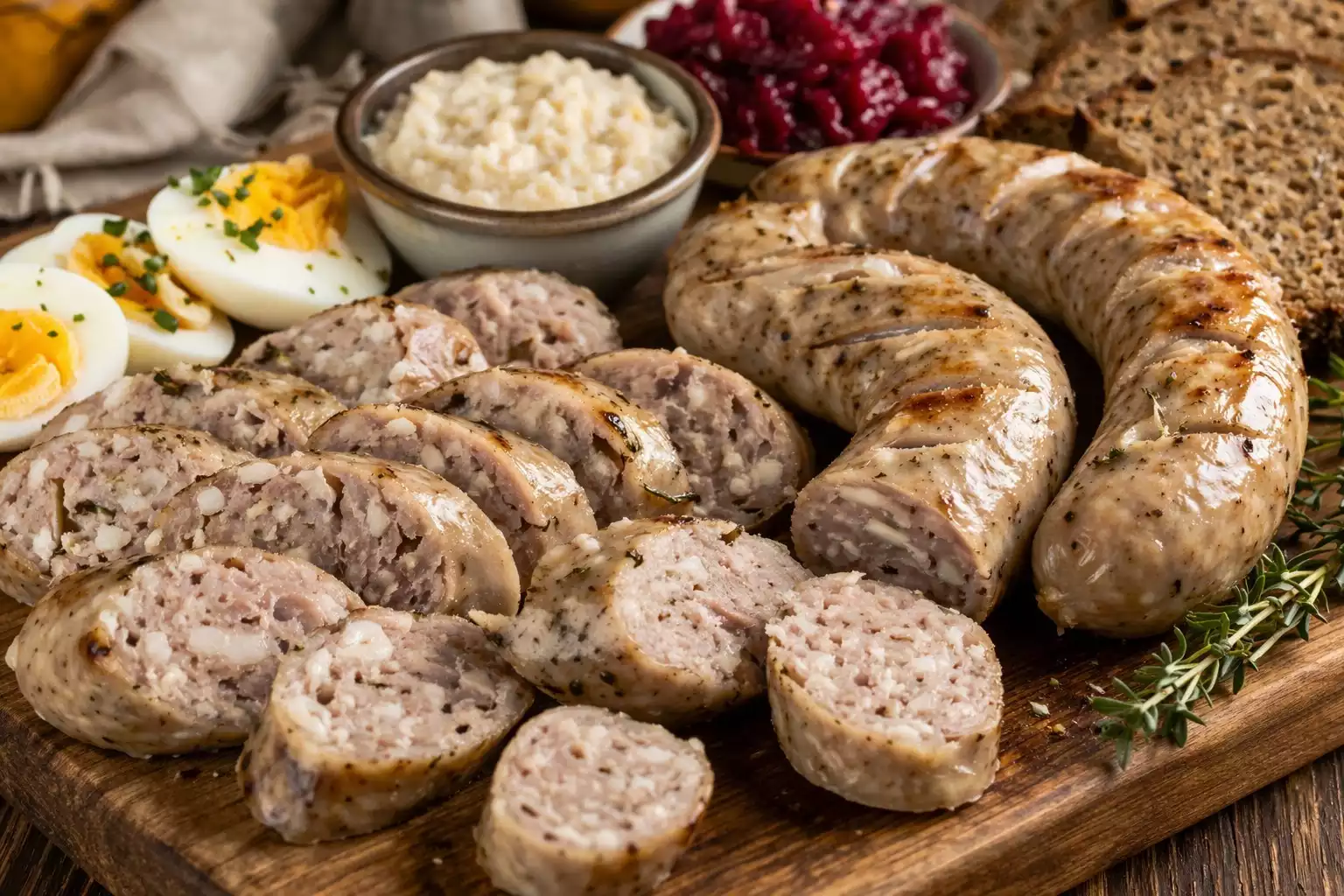
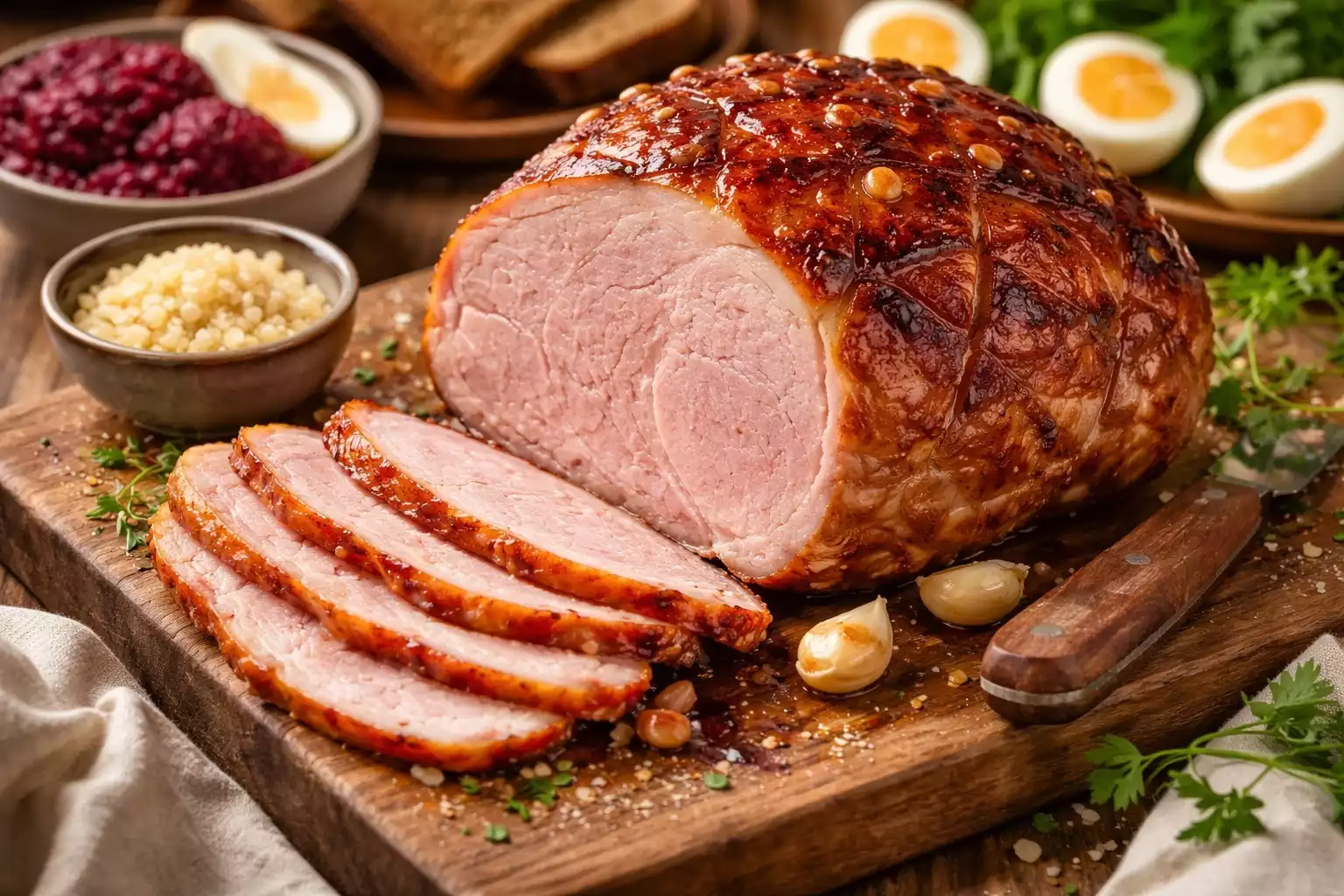
In the święconka basket, chałka represents the bread that ends the Lenten fast. A small decorative loaf or even a section of the braid goes into the basket alongside the white sausage, ham, eggs, and horseradish. After the Saturday evening blessing at church, the basket comes home, and the bread is the first thing many families taste on Easter Sunday morning.
At the Easter breakfast table, chałka sits alongside the savory dishes as the bread component — sliced thickly and spread with cold butter, eaten alongside the soup and cold meats. It also makes extraordinary French toast with leftover slices the next day. My kids consider Easter Monday French toast made from leftover chałka to be one of life’s great rewards. I tend to agree.
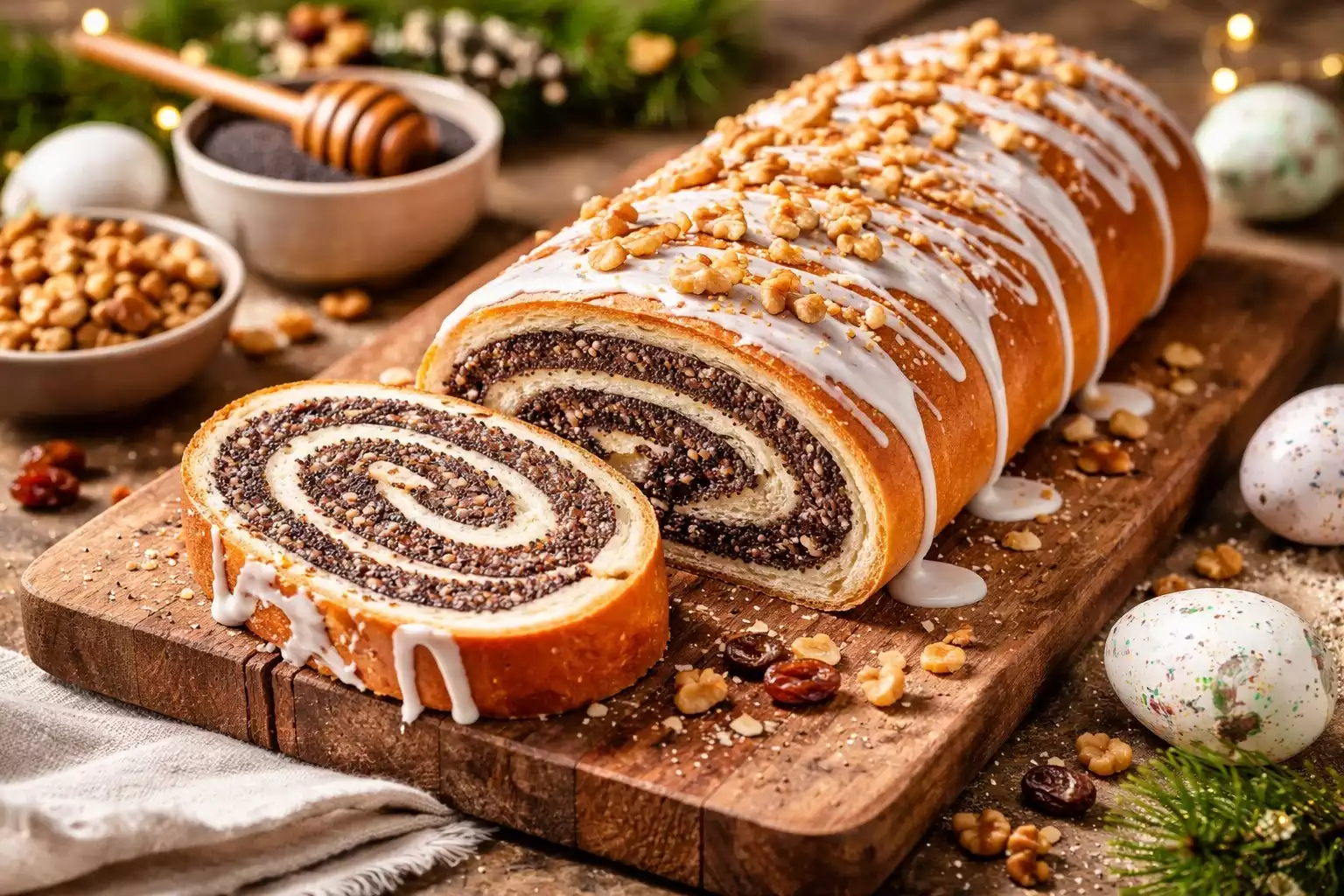
If you are baking for the holiday, also consider making baba wielkanocna for the full Easter baking experience.
Variations Worth Trying
Five-strand braid. For a more complex, bakery-style appearance, divide the dough into five ropes and use a five-strand braid. It requires watching a YouTube tutorial the first time, but the result is genuinely stunning on the Easter table. Instructions are visual — I cannot do it justice in text.
With raisins. Mix 100g of raisins soaked in rum or orange juice into the dough after the first rise. Fold them in gently, re-braid, and proceed. The raisins add sweetness and give the loaf a slightly more festive, cake-like quality.
Mini chałki. Divide the dough into six portions and make two smaller loaves instead of one large braid. Smaller loaves make better gifts and bake slightly faster (20–25 minutes instead of 30–35).
Storage and Reheating
Chałka keeps at room temperature, wrapped in a clean cloth or beeswax wrap, for 3–4 days. It dries out faster than lean bread because of the egg and butter content — do not store in plastic, which makes the crust soggy. Freeze whole or in thick slices for up to 3 months. Defrost at room temperature and toast briefly before serving if using frozen. Day-old chałka makes the best French toast of your life.
FAQ
Can I make chałka with active dry yeast instead of instant?
Yes. Activate the active dry yeast first by mixing it with the warm milk, a pinch of sugar, and a tablespoon of flour. Leave for 10 minutes until foamy and active, then proceed with the recipe. Instant yeast can go straight into the dry ingredients without this activation step.
Why did my chałka braid come apart during baking?
Two likely causes: the braid was too loose and the strands separated during oven spring, or the ends were not properly tucked under and sealed. Press the strands together firmly at the top before braiding, tuck and press the ends firmly under the loaf, and make sure the second rise is full before baking. A well-proofed chałka expands evenly without splitting.
Is chałka the same as Jewish challah?
They are closely related. Polish chałka has Jewish origins — Poland had a large Jewish population for centuries, and the braided egg bread entered Polish Easter traditions through this cultural exchange. The Polish version is typically made with butter (making it non-kosher) rather than oil, and is often slightly less sweet than American Ashkenazi challah. The braiding technique and enriched dough are essentially the same.
Kasia Polish Mom
Polish-born, Chicago-raised, feeding a family of six with babcia’s recipes and a global pantry. I grew up folding pierogi at my grandmother’s kitchen table and never stopped — 15+ years of cooking from scratch, one Sunday dinner at a time. Everything here is tested on four kids, a hungry husband, and the memory of a woman who never measured anything but always got it right.