



Kasia Polish Mom
Polish-born, Chicago-raised, feeding a family of six with babcia’s recipes and a global pantry. I grew up folding pierogi at my grandmother’s kitchen table and never stopped — 15+ years of cooking from scratch, one Sunday dinner at a time. Everything here is tested on four kids, a hungry husband, and the memory of a woman who never measured anything but always got it right.
Ćwikła — The Magenta Relish That Goes With Everything
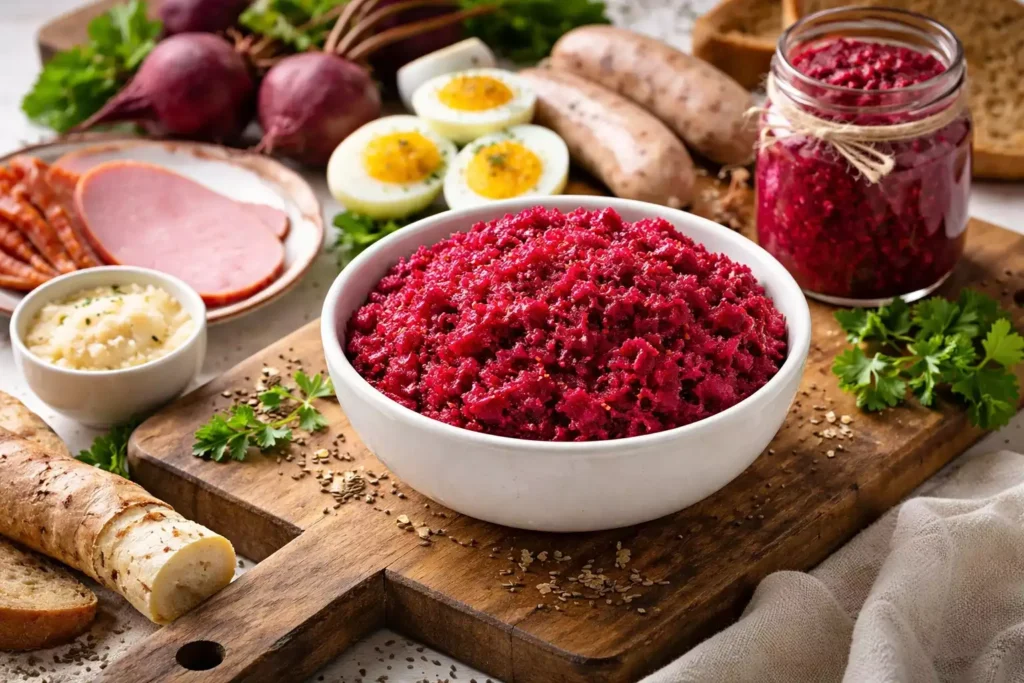
Ćwikła stains everything it touches. The cutting board, the cloth, your fingers, the white tablecloth you specifically said no one was allowed to use. It is the most vibrantly magenta food on the Easter table, and it does not apologize for itself. Neither should you for making it, because ćwikła is one of the great condiments of Polish cuisine and it goes with absolutely everything at Easter.
Beetroot and horseradish is a combination so fundamentally correct that it appears in cuisines across Central and Eastern Europe. The Poles call their version ćwikła. The beets bring sweetness and earthiness; the horseradish brings fire and pungency. The vinegar pulls it all together. The result is something that turns the richest, fattiest Easter food into something you want to keep eating.
My babcia made her ćwikła in large jars and kept them in the cellar throughout winter. The jar would come out for every holiday, every Sunday roast, every cold cuts platter. It was there for Christmas and there for Easter and there whenever you needed something to make a good piece of bread extraordinary. I have never had a better ćwikła than hers, but this recipe comes close.
Why This Ćwikła Works
The key to great ćwikła is the beetroot prep. Roasting the beets rather than boiling them concentrates their flavor and produces a deeper, more complex sweetness. Boiled beets are waterlogged and mild; roasted beets are intense and earthy. The difference in the final condiment is significant.
Fresh horseradish delivers heat that prepared horseradish cannot match — more volatile, more immediate, more alive. But this is one recipe where well-drained prepared horseradish can substitute in a pinch without the final result being embarrassing. The beets provide enough character to carry the condiment even when the horseradish is not peak-fresh.
Ingredients
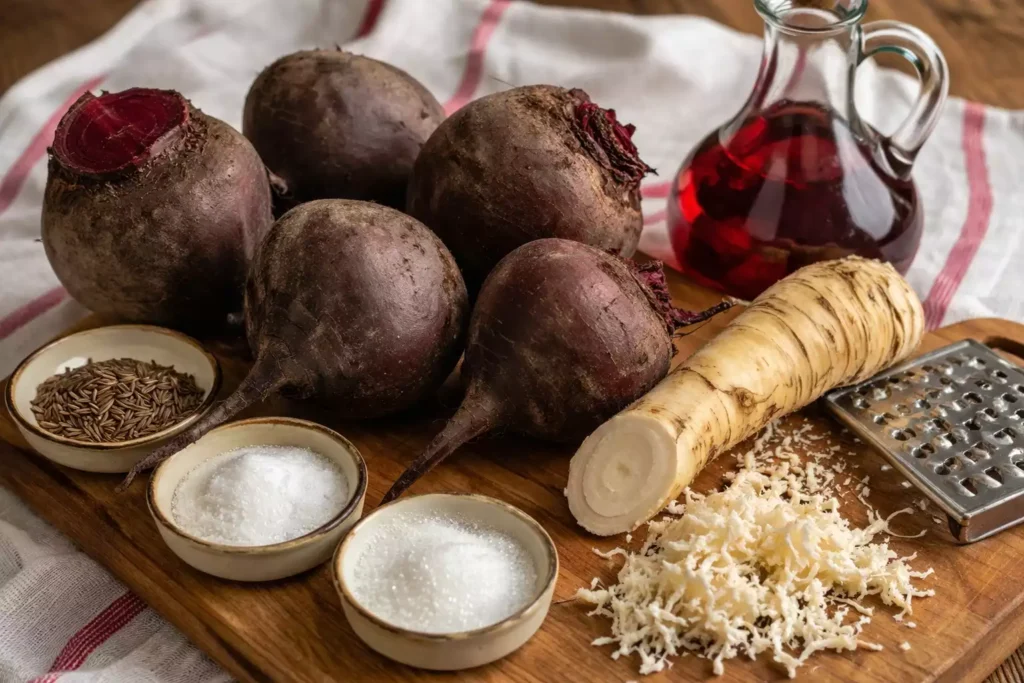
For Classic Ćwikła
- 600g (1.3 lbs) raw beetroot (about 4 medium beets), scrubbed
- 80–100g (3–3.5oz) fresh horseradish root, peeled and grated
- 2 tbsp red wine vinegar or apple cider vinegar
- 1 tsp sugar
- 1 tsp salt
- 1 tsp caraway seeds (optional but traditional)
How to Make It
1
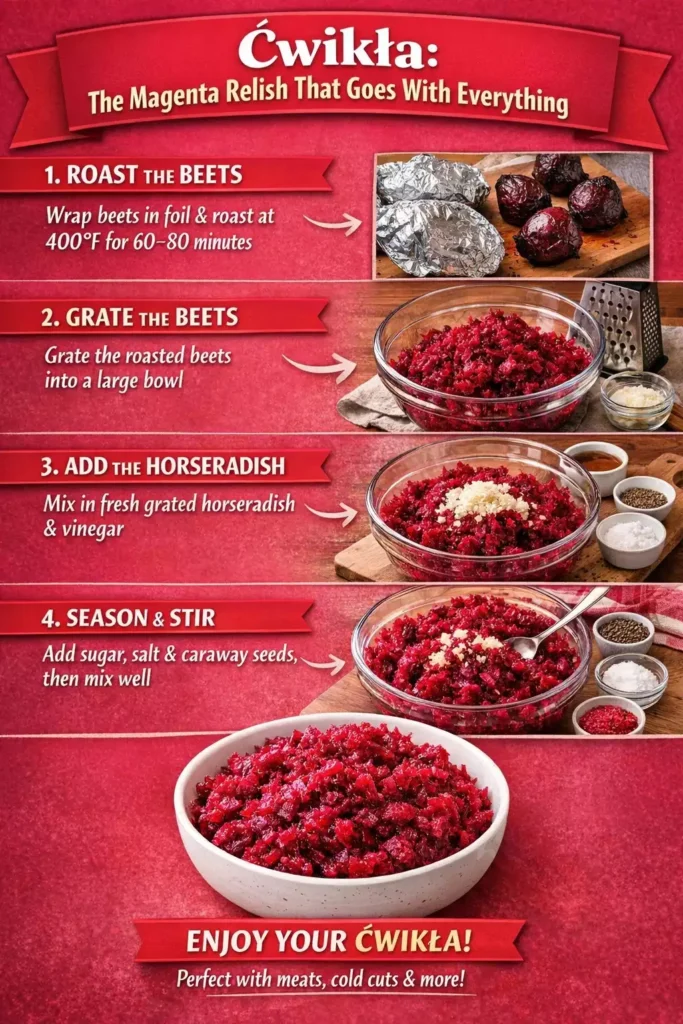
1Roast the Beets
Preheat the oven to 200°C / 400°F. Wrap each beet individually in foil (a splash of water inside each foil packet helps steam them). Roast for 60–80 minutes until tender all the way through when pierced with a skewer. The larger the beet, the longer it takes. Let cool in the foil — the skin will slip off easily once cool. Rub the skin off with a paper towel or cloth that you do not mind staining permanently.
2
2Grate the Beets
Grate the peeled, cooled beets on the coarse side of a box grater into a large bowl. Work carefully — beet juice stains countertops and cutting boards. A sheet of baking paper under the grater prevents most mess. You should have about 400–450g of grated roasted beet.
3
3Grate the Horseradish
Open a window. Grate the fresh horseradish root on the fine side of the grater. Add it to the beets immediately along with the vinegar to fix the heat compounds. Start with 80g and taste — you can always add more horseradish but you cannot take it out. The heat level of fresh horseradish varies significantly by root freshness and season.
4
4Season and Rest
Add the sugar, salt, and caraway seeds if using. Mix thoroughly. Taste and adjust — it should be sweet from the beets, hot from the horseradish, and bright from the vinegar. Pack into a clean glass jar. Refrigerate for at least 2 hours before serving to let the flavors meld. It will be better the next day.
Ćwikła Tips Worth Knowing
Wear gloves or accept the consequences. Beet stains skin for 24–48 hours. Nitrile kitchen gloves for the grating step save you from looking like you committed a crime for the rest of the Easter weekend.
Roasting beats boiling. I know boiling is faster. But the flavor difference between roasted and boiled beetroot in ćwikła is substantial. Roasted beets have 30–40% more concentrated flavor. Boil only if you are genuinely pressed for time.
The caraway is optional but traditional. In my babcia’s version, a teaspoon of caraway seeds added an earthy, slightly anise note that I now find completely characteristic of ćwikła. If you have never tried it, add the caraway. If you hate caraway, leave it out. Both versions exist in Poland.
Balance is everything. The ratio of beetroot to horseradish determines whether this is a sweet condiment with some heat or a horseradish bomb with some sweetness. Start at a 5:1 ratio of beet to horseradish and adjust from there based on how much heat you want.
Serving Ćwikła at Easter
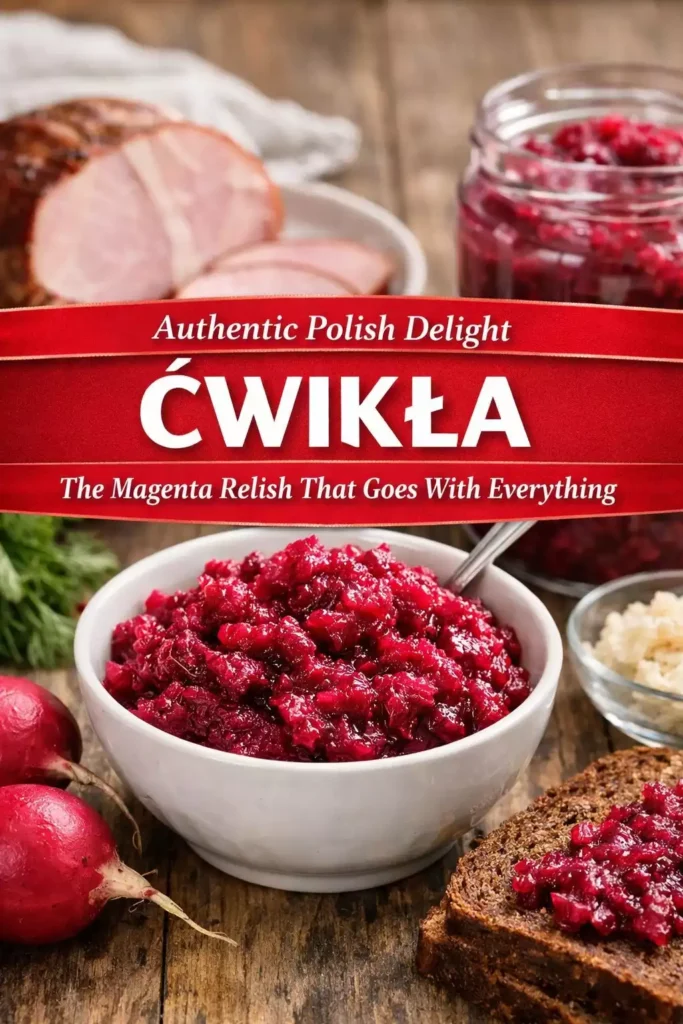
Ćwikła belongs at every Polish Easter table. It goes with szynka wielkanocna (the combination is basically mandatory), alongside biała kiełbasa, and next to the cold cuts platter in its own small bowl. It is also excellent with roast pork, beef, and — controversially but correctly — on dark bread with a fried egg.
The magenta color means ćwikła makes everything around it look more festive. Put it in a white ceramic bowl and it becomes a centerpiece. It is the condiment that photographs best and tastes even better than it looks.
Serve alongside fresh chrzan for a complete horseradish pairing on the Easter table.
Variations Worth Trying
Ćwikła with apple. Add one grated tart apple (Granny Smith works well) along with the horseradish. The apple sweetness and acidity play beautifully with the beet. This is a slightly milder, more complex version that is excellent with rich meats.
Smoked beet ćwikła. For a more contemporary take, smoke the beets over wood chips before roasting — or add a few drops of liquid smoke to the finished relish. The smoky depth against the horseradish fire is a remarkable combination.
With fresh dill. Add a small handful of chopped fresh dill to the finished ćwikła. This is not traditional, but dill is Poland’s most beloved herb and its freshness cuts through the intensity of both the beet and horseradish beautifully.
Storage and Reheating
Ćwikła keeps in a sealed glass jar in the refrigerator for up to 2 weeks. The horseradish heat gradually diminishes over time, which some people prefer. For longer storage, the beetroot only version (without horseradish) can be preserved with vinegar and water-bath canned. Do not freeze ćwikła — the texture of both the beet and horseradish degrades on freezing.
FAQ
Can I use ready-cooked vacuum-packed beets?
Yes — they are a perfectly acceptable shortcut and widely available. Skip the roasting step and grate the pre-cooked beets directly. The flavor will be slightly milder and less complex than roasted beets, but the condiment will still be delicious. Drain them well to prevent a watery ćwikła.
Can I use prepared horseradish instead of fresh?
You can. Drain well (press out excess liquid through a sieve), use the same quantity, and reduce the vinegar slightly since prepared horseradish is already acidified. The heat will be milder and less complex than fresh, but the result is still very good. Check the label — use plain white horseradish, not the horseradish cream or horseradish sauce versions, which contain too many other ingredients.
Is ćwikła the same as the Ashkenazi beet-horseradish (chrein)?
Very similar. Both use beetroot and horseradish with vinegar and sugar as the basic formula. Polish ćwikła and Jewish Ashkenazi chrein are parallel traditions that developed in the same geography (historical Polish-Jewish communities). The proportions and balance differ between families and regions, but the fundamental concept is identical. Another example of the deep food culture overlap in Central European culinary history.
Kasia Polish Mom
Polish-born, Chicago-raised, feeding a family of six with babcia’s recipes and a global pantry. I grew up folding pierogi at my grandmother’s kitchen table and never stopped — 15+ years of cooking from scratch, one Sunday dinner at a time. Everything here is tested on four kids, a hungry husband, and the memory of a woman who never measured anything but always got it right.