
Kasia Polish Mom
Polish-born, Chicago-raised, feeding a family of six with babcia’s recipes and a global pantry. I grew up folding pierogi at my grandmother’s kitchen table and never stopped — 15+ years of cooking from scratch, one Sunday dinner at a time. Everything here is tested on four kids, a hungry husband, and the memory of a woman who never measured anything but always got it right.
Baba Wielkanocna — The Polish Easter Cake That Must Rise
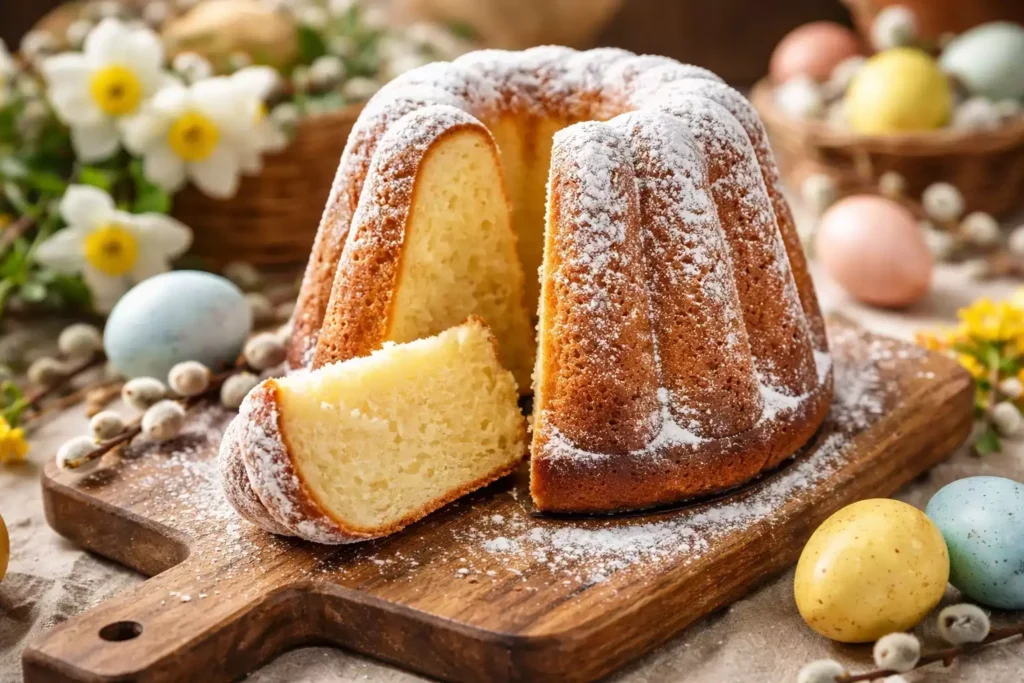
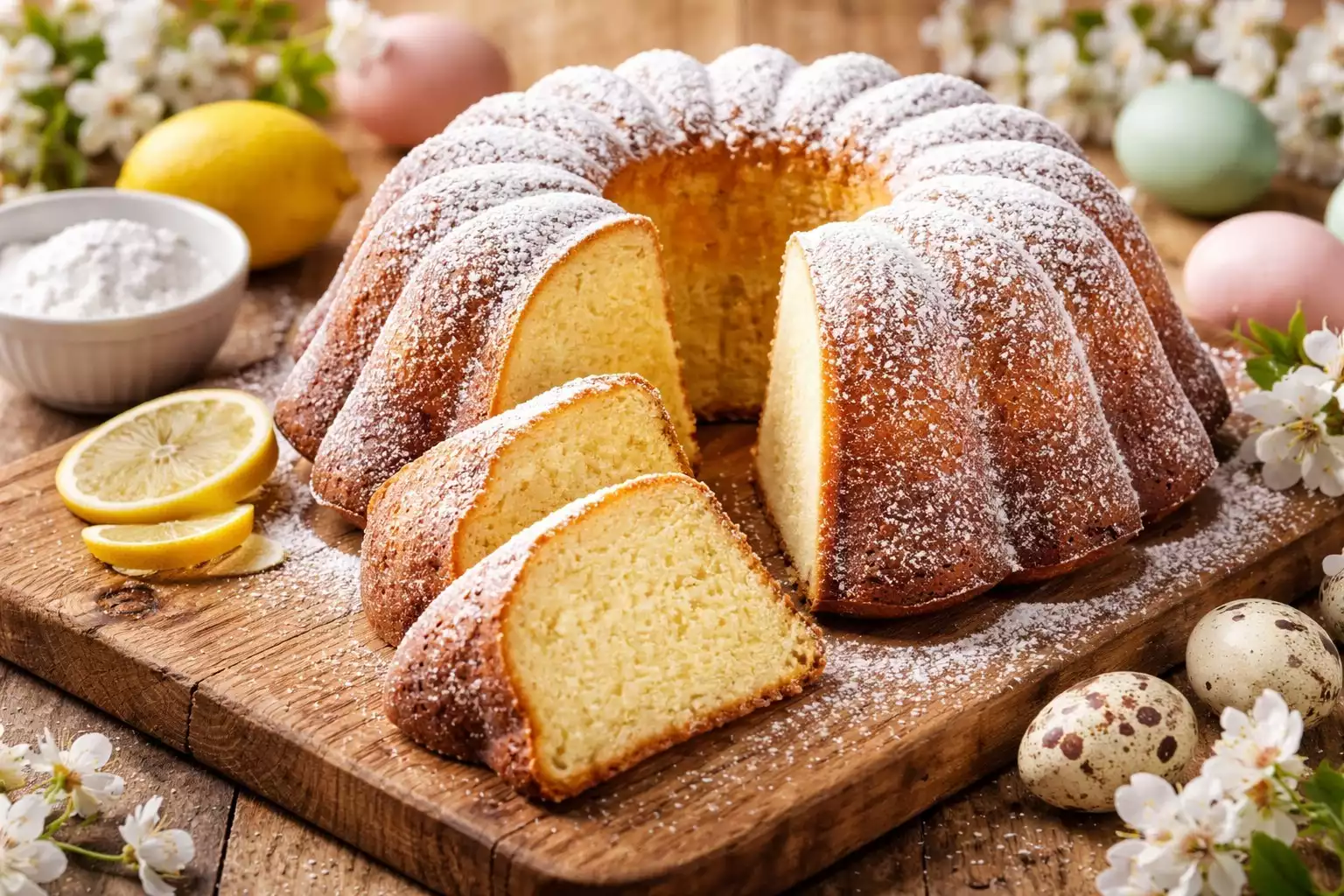
If your baba falls, you cry. If it rises, Easter is saved. This is not an exaggeration. This is the emotional reality of baking baba wielkanocna — the tall, golden, yeast-risen Easter cake that is the crown of the Polish Easter baking season. Every Polish family has a story about a baba that collapsed. It is a formative experience. A tragedy. A lesson in the relationship between yeast and hubris.
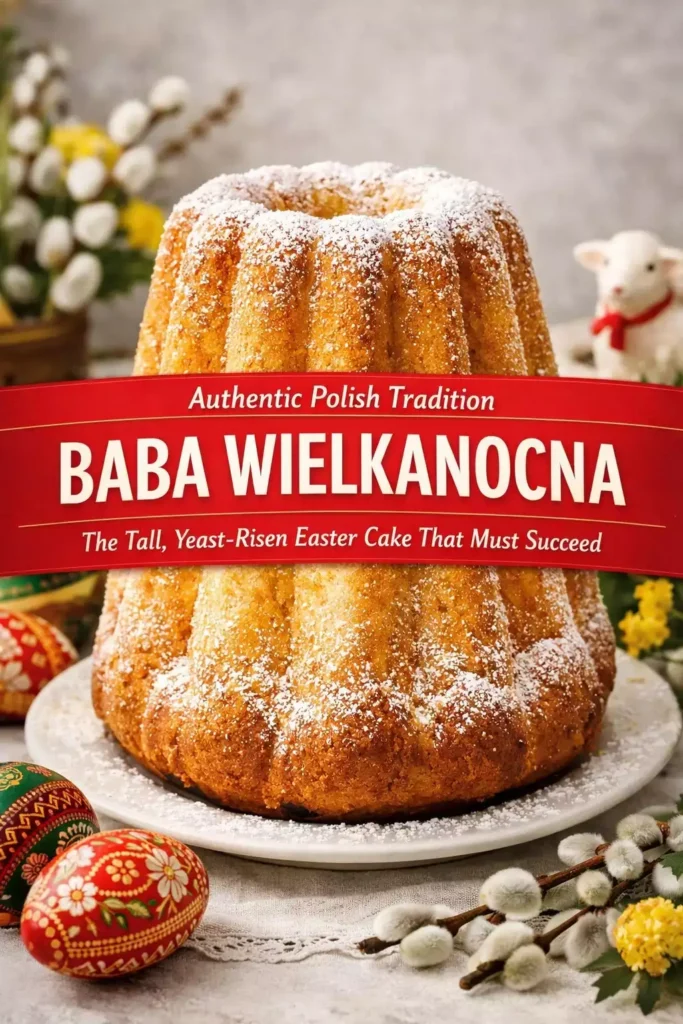
Baba wielkanocna is a enriched yeast cake — eggs, butter, sugar, yeast, flour — baked in a tall fluted tin and destined for the święconka blessed Easter basket. It should be golden-crusted, extremely light inside, slightly sweet, and perfumed with vanilla and lemon zest. A good baba has a crumb that tears into long, silky threads when you pull a piece. A bad baba is dense, gummy, and tastes like failure. The difference is in the technique.
My babcia’s baba was the kind of legendary that gets discussed at family gatherings decades later. Mine is a work in progress, but it is good. Better every year. I have included every tip I have learned from ten years of baba attempts, including the ones that taught me what not to do.
Why This Baba Wielkanocna Works
The key to a baba that rises and stays risen is patience and warm eggs. Cold eggs in an enriched yeast dough slow the rise dramatically and produce a dense result. All wet ingredients should be genuinely warm, not room temperature — especially the eggs. Beating the eggs with sugar to a thick, pale foam before adding them aerates the batter and creates the light structure the baba needs.
The second key is not rushing the kneading. A properly developed gluten network is what holds the baba upright as it cools. Under-kneaded dough cannot support the structure when the leavening gas cools and contracts. Knead until the dough passes the windowpane test — stretch a small piece thin enough to see light through without it tearing.
Ingredients
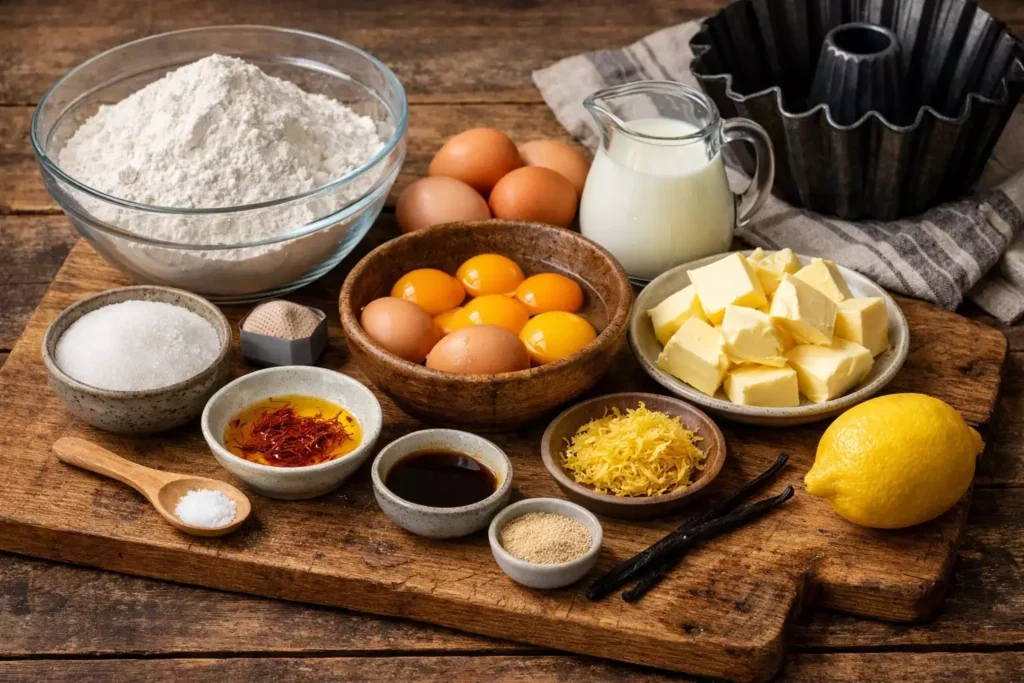
For Baba Wielkanocna (one large baba, serves 10–12)
- 500g (4 cups) strong white bread flour, sifted
- 14g (2 sachets) instant yeast
- 150g (¾ cup) caster sugar
- 1 tsp salt
- 6 egg yolks (warm, not cold)
- 2 whole eggs (warm)
- 150ml (⅔ cup) warm whole milk
- 150g (10.5 tbsp) unsalted butter, softened
- 2 tsp vanilla extract
- Zest of 1 lemon
- Pinch of saffron dissolved in 2 tbsp warm water (optional, for color)
For Finishing
- Powdered sugar for dusting, OR
- 100g (3.5oz) white chocolate, melted, for glazing
How to Make It
1
1Prepare the Sponge
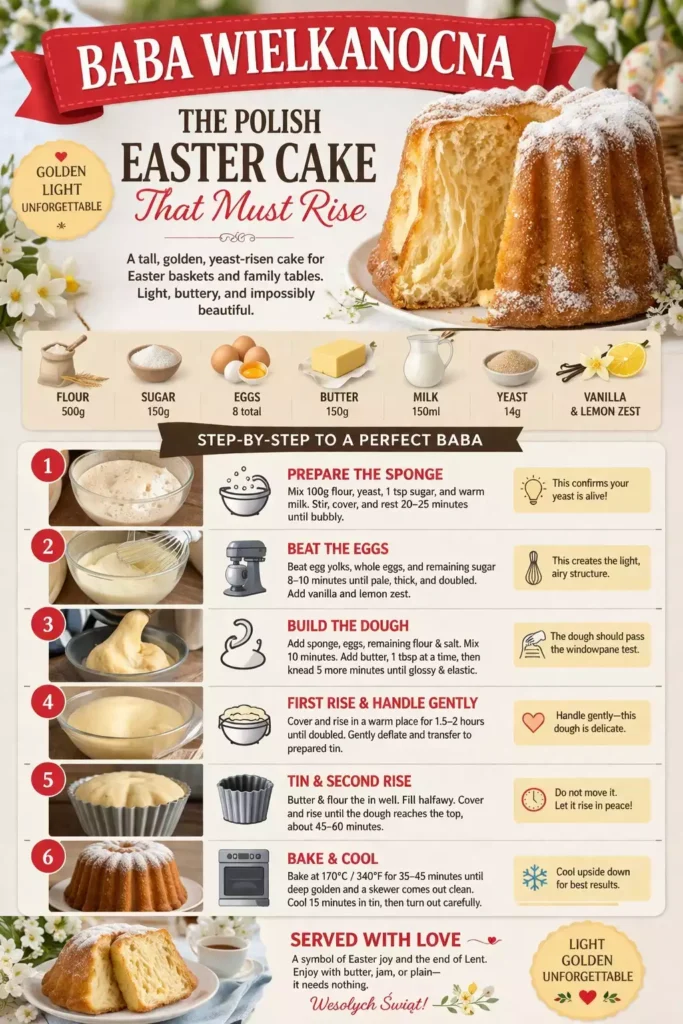
Mix 100g of the flour with the yeast, 1 tsp of the sugar, and the warm milk in a large bowl. Stir to combine, cover, and leave for 20–25 minutes until bubbly and active. This sponge starter ensures the yeast is fully alive before you build the full dough. Do not skip this step — it tells you early if your yeast is viable.
2
2Beat the Eggs
Beat the egg yolks, whole eggs, and remaining sugar in a stand mixer (or with an electric hand whisk) for 8–10 minutes until pale, thick, and doubled in volume. Add the vanilla and lemon zest. This step is responsible for the baba’s lightness. It cannot be rushed and cannot be done by hand effectively. An electric mixer is required.
3
3Build the Dough
Add the sponge and the beaten egg mixture to the remaining flour and salt. Mix with a dough hook on medium speed for 10 minutes. The dough will be very soft and sticky — this is correct for baba, do not add more flour. Add the saffron water if using. Then add the softened butter a tablespoon at a time, kneading continuously. After all the butter is incorporated, knead for another 5 minutes until the dough is glossy and elastic.
4
4First Rise and Handle Gently
Cover the bowl with cling film and leave in a warm place for 1.5–2 hours until doubled. This dough is more delicate than bread dough — handle it as little as possible after this point. Do not punch it down vigorously. Instead, gently deflate it with your hand and transfer carefully to the prepared tin.
5
5Tin and Second Rise
Butter and flour a tall baba or Bundt tin (or a tall cylindrical tin) generously — every groove and crevice. Fill no more than halfway with dough. Cover loosely and leave to rise until the dough reaches the top of the tin — about 45–60 minutes. Do not move the tin during this stage. Do not open the door repeatedly to check. Just let it rise in peace.
6
6Bake and Cool
Preheat the oven to 170°C / 340°F well in advance — the oven must be at temperature before the baba goes in. Bake for 35–45 minutes until deep golden and a skewer inserted in the center comes out clean. Cool in the tin for 15 minutes, then turn out VERY carefully onto a wire rack. The baba is fragile when warm. Let it cool completely before dusting with sugar or glazing.
Baba Wielkanocna: Tips From Tears and Triumphs
Warm everything. Eggs, milk, bowl. A cold environment is the enemy of a well-risen baba. In Poland in April, kitchens can be cool. Heat the bowl with hot water before using it, warm the eggs in a bowl of warm water for 10 minutes, and keep the dough somewhere genuinely warm during both rises.
Do not open the oven in the first 30 minutes. The temperature drop from an open oven door can cause the baba to fall. Resist the urge. Trust the timer. Look through the oven window if you must, but keep the door closed.
Butter and flour the tin generously. Baba sticks. Every tiny un-buttered groove will be the place your baba clings to when you try to unmold it. Use soft butter applied with a pastry brush and then dust with flour, tapping out any excess. Do this twice if the tin has fine details.
Cool upside down. Many bakers cool tall yeast cakes inverted — the tin placed upside down so the cake hangs — to prevent collapsing under its own weight. If you have a tin with a central tube (Bundt style), set it over a bottle to cool inverted.
Baba at the Easter Basket and Table
Baba wielkanocna is one of the most important items in the święconka basket — placed upright, golden, majestic, it represents the sweet richness of Easter and the end of Lenten fasting. After blessing at church on Saturday evening, the baba comes home and is displayed on the Easter table Sunday morning.
Sliced baba is served throughout the Easter weekend, usually with butter, sometimes with jam, sometimes completely plain because it needs nothing. It pairs naturally with a cup of strong tea or black coffee. My youngest eats his plain, in increasingly large pieces, with the look of someone who cannot believe this is allowed.
Also consider baking a babka piaskowa as a reliable backup if baba wielkanocna feels ambitious this year. And mazurek wielkanocny for the complete Easter baking set.
Variations Worth Trying
Baba with rum. Add 2 tablespoons of good rum to the dough and brush the warm baba with a rum syrup (50g sugar dissolved in 100ml water with 50ml rum) immediately after baking. This is the babka au rhum tradition, very popular in Polish and French baking, and it produces a more intense, adult version of the cake.
With raisins and orange zest. Soak 100g raisins in hot water for 20 minutes, drain, and fold into the dough after the butter incorporation. Add orange zest in addition to or instead of the lemon zest. The raisins add sweetness and bursts of flavor throughout the crumb.
Smaller individual babas. Divide the dough between greased muffin tins or small cylindrical ramekins and bake for 18–22 minutes. Individual babas are charming, make perfect gifts, and cool much faster than a large single cake.
Storage and Reheating
Baba wielkanocna keeps at room temperature, covered with a clean cloth, for 4–5 days. Do not refrigerate — the cold dries out the crumb. For longer storage, wrap tightly in cling film and freeze for up to 2 months. Defrost at room temperature for several hours. Day-old baba is excellent toasted in slices and spread with butter — the exterior crisps and the inside warms through beautifully.
FAQ
Why did my baba fall after baking?
The most common causes: oven door opened too early, under-proofed dough (rise not complete before baking), dough was too cold during the rises, or the tin was too large and the dough spread instead of rising upward. Check all these factors and address the most likely culprit for next year’s baba.
My baba is very dense. What went wrong?
Dense baba usually means the yeast was not fully active (check the sponge step — it should be bubbly), the eggs were not beaten long enough (needs 8–10 full minutes), or the rises were too short in a cold environment. An enriched dough needs genuinely warm conditions to rise properly.
Can I make baba wielkanocna the day before Easter?
Yes, and this is recommended. A baba baked on Holy Saturday and rested overnight is at its best on Easter Sunday morning — the crust softens slightly and the crumb settles into its ideal texture. Dust with sugar just before serving to keep the surface fresh-looking.
Kasia Polish Mom
Polish-born, Chicago-raised, feeding a family of six with babcia’s recipes and a global pantry. I grew up folding pierogi at my grandmother’s kitchen table and never stopped — 15+ years of cooking from scratch, one Sunday dinner at a time. Everything here is tested on four kids, a hungry husband, and the memory of a woman who never measured anything but always got it right.