Kasia Polish Mom
Polish-born, Chicago-raised, feeding a family of six with babcia’s recipes and a global pantry. I grew up folding pierogi at my grandmother’s kitchen table and never stopped — 15+ years of cooking from scratch, one Sunday dinner at a time. Everything here is tested on four kids, a hungry husband, and the memory of a woman who never measured anything but always got it right.
Mazurek Wielkanocny — The Easter Cake You Decorate Like Art
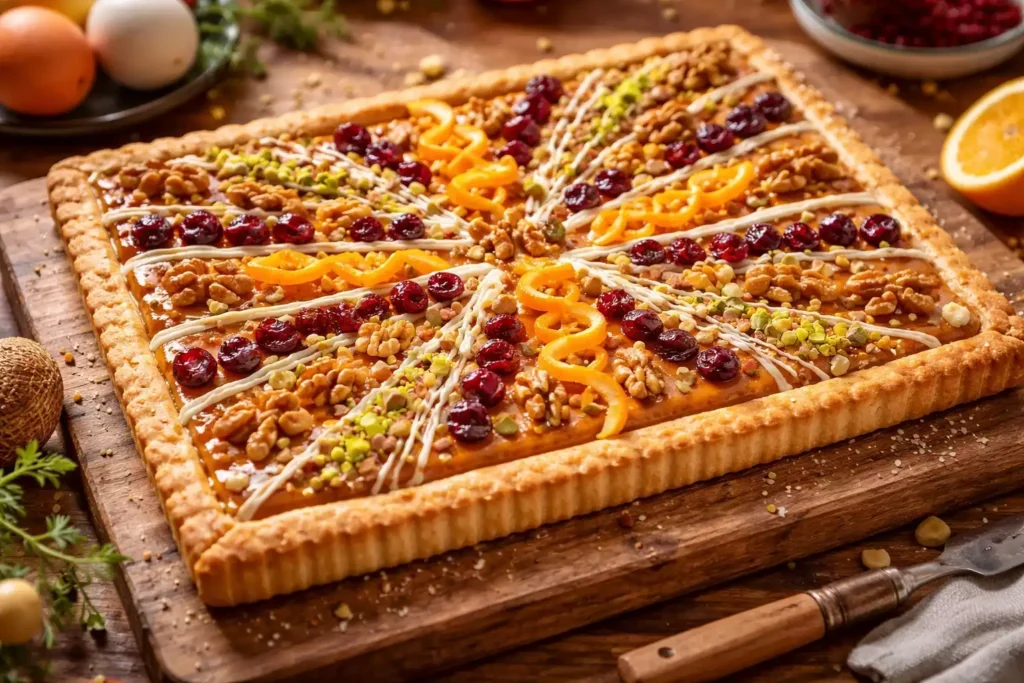
Mazurek wielkanocny is not a cake you eat. It is a cake you photograph first. Then you eat it. Then you feel briefly guilty about eating something that beautiful, then you eat a second piece. This is the correct sequence of events and I will not be taking criticism.
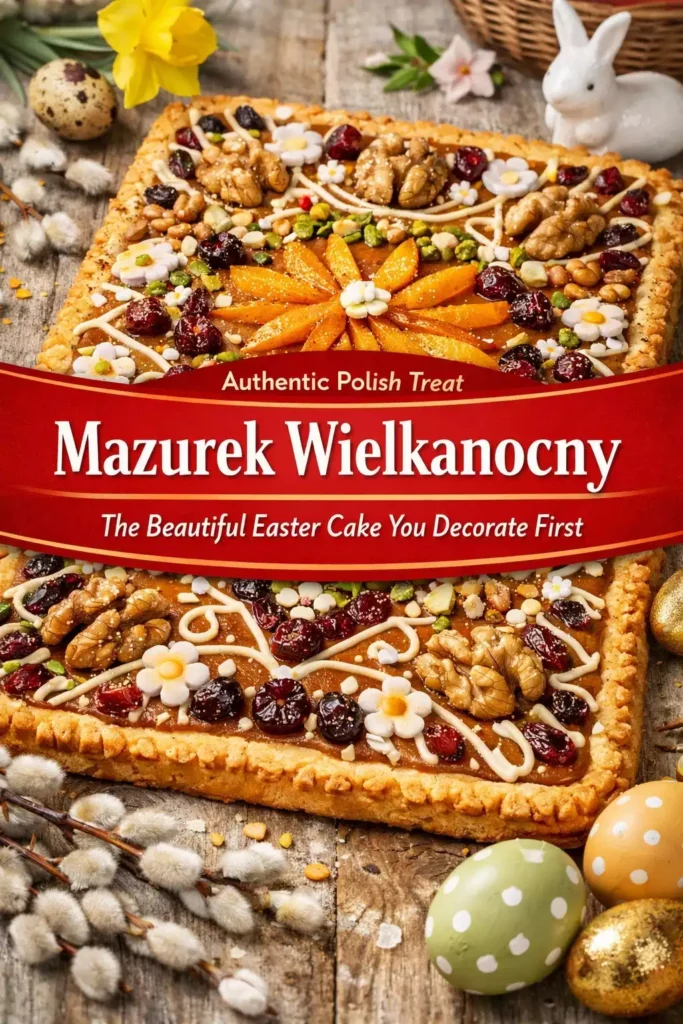
Mazurek is Poland’s most spectacular Easter baking project — a thin, crisp shortcrust base topped with any combination of caramel, chocolate, dried fruit, nuts, and candied peel, decorated with intricate patterns that Polish grandmothers apparently have the patience and talent to execute perfectly. My first mazurek looked like a kindergartener’s art project. My current mazurek looks like something I intended. Improvement is possible with practice.
The base itself is simple — a standard shortcrust that bakes flat and crisp. The topping is where you express yourself. Traditional mazurek can be topped with kajmak (a thick Polish caramel), chocolate ganache, fruit jam, or a combination. It is decorated with whatever you have: walnut halves, dried cranberries, orange peel, pistachios, white chocolate drizzle. The more elaborate the decoration, the more authentic. Restraint is not a Polish Easter baking value.
Why This Mazurek Works
The shortcrust base for mazurek is richer and more crumbly than a standard pie crust — more butter, more egg yolk, and often a small amount of sour cream for extra tenderness. It should snap when you break it, not bend. The crisp texture is the contrast to the rich, sticky topping and is what makes mazurek texturally interesting rather than just another sweet cake.
The kajmak topping — made from condensed milk or from cream and sugar — is the traditional Polish choice. It is essentially a thick, cooked caramel that sets to a spreadable consistency when cooled. Made properly, it will not run or drip when sliced. It is the most forgiving topping for first-time mazurek bakers because it looks intentional even when imperfectly applied.
Ingredients
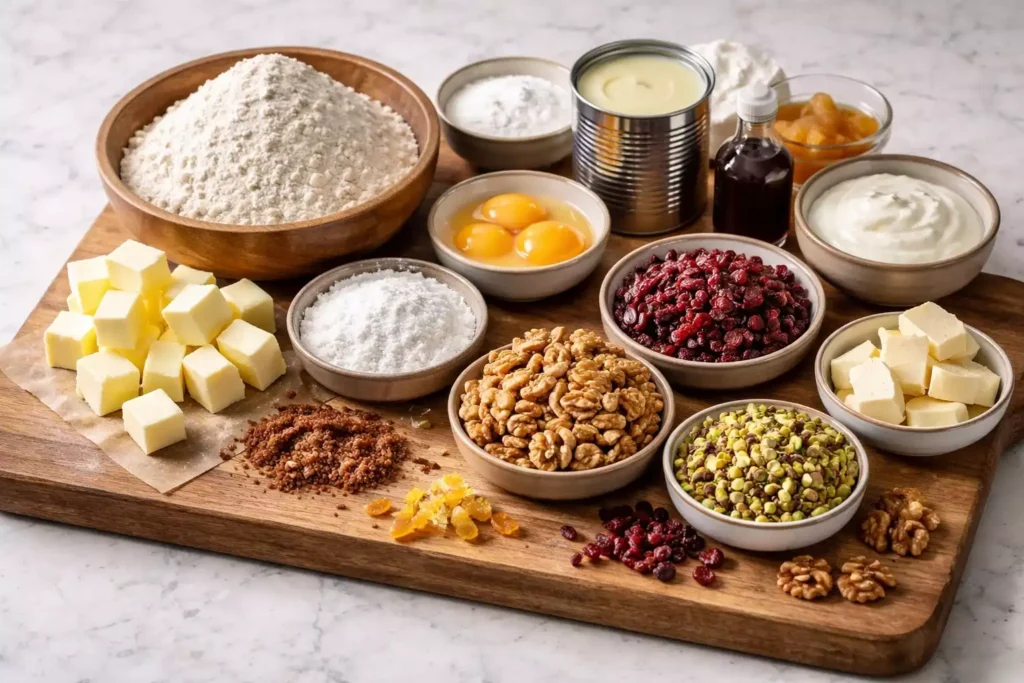
For the Shortcrust Base
- 300g (2.4 cups) plain flour
- 150g (10.5 tbsp) cold unsalted butter, cubed
- 80g (6 tbsp) powdered sugar, sifted
- 2 egg yolks
- 2 tbsp sour cream
- 1 tsp vanilla extract
- Pinch of salt
For the Kajmak Topping (Classic)
- 1 tin (397g) sweetened condensed milk, still sealed
For Decoration
- 50g walnut or pecan halves
- 50g dried cranberries or sour cherries
- 30g chopped pistachios
- Candied orange or lemon peel, thinly sliced
- White chocolate, melted, for piping (optional)
How to Make It
1
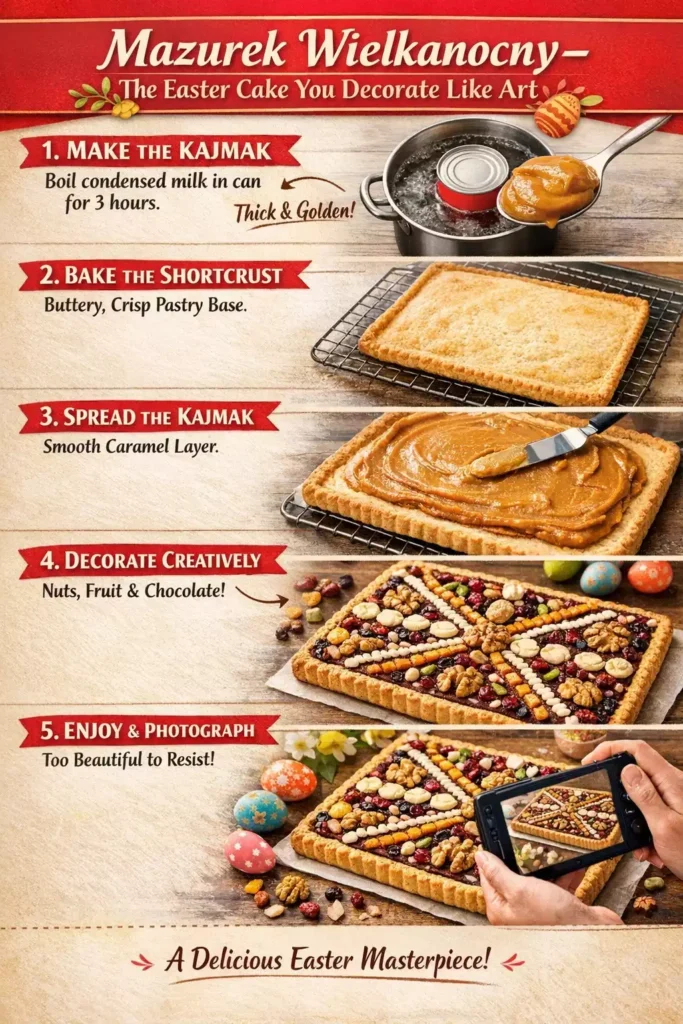
1Make the Kajmak (Day Before or Many Hours Before)
The easiest kajmak method: place the unopened tin of condensed milk in a pot, cover with water by at least 5cm, and boil for 3 hours, maintaining the water level throughout. Remove, cool completely — minimum 2 hours, overnight is safest. Do not open a warm tin. When cool, open and you will find thick, golden, spreadable caramel. This is kajmak. Alternative: buy dulce de leche, which is essentially the same product.
2
2Make the Shortcrust
Combine the flour, powdered sugar, and salt in a bowl. Add the cold cubed butter and rub in quickly with your fingertips until the mixture resembles fine breadcrumbs. Add the egg yolks, sour cream, and vanilla, and bring together quickly into a dough — do not overwork. The dough should just come together. Wrap in cling film and refrigerate for 1 hour minimum.
3
3Roll and Bake the Base
Preheat the oven to 180°C / 355°F. Roll the dough out on a lightly floured surface to a rectangle about 25x35cm and about 5mm thick. Transfer to a baking sheet lined with parchment. Prick all over with a fork (this prevents puffing). Optionally, press a thin rope of dough around the perimeter to create a border. Bake for 18–22 minutes until golden and crisp. Cool completely on the tray before topping.
4
4Spread the Kajmak
Spread the cooled kajmak in an even layer over the cooled pastry base, staying within the border if you made one. Kajmak at room temperature spreads easily; chilled kajmak is too stiff. If it seems thick, warm it slightly in a microwave for 10–15 seconds and stir before spreading.
5
5Decorate
This is the artistic portion of the program. Arrange nuts, dried fruits, and candied peel over the kajmak in a pattern — concentric rows, a geometric design, scattered artfully, or any arrangement that appeals. Drizzle with melted white chocolate using a fork or piping bag for additional decoration. Traditional mazurek often includes a written word in Polish (“Alleluja” or “Wielkanoc” — Happy Easter) piped in chocolate. This is ambitious and impressive and I encourage you to try.
Mazurek Tips for a Successful Easter Showpiece
The base must be completely cold before topping. Kajmak spread on a warm base will soften it and potentially make it soggy. Wait until the pastry is genuinely cold — room temperature minimum, refrigerator temperature ideally.
Have your decorations ready before opening the kajmak. Kajmak starts to set once it hits the cool pastry. You have a limited window to arrange your decorations before the surface becomes too firm to press things into. Organize everything in bowls before you start spreading.
Slice with a sharp, thin blade. Mazurek is a crisp pastry with a sticky topping — a dull knife will drag and ruin the edge. A serrated knife or a thin-bladed chef’s knife, wiped clean between cuts, gives clean slices. Cut into rectangles or squares rather than pie-shaped wedges.
Make it the day before. Mazurek improves dramatically overnight — the pastry softens very slightly from the topping moisture while remaining crisp, and the kajmak firms up to ideal slicing consistency. Day-of mazurek is sticky and unwieldy. Next-day mazurek is perfect.
Mazurek at the Easter Table
Mazurek is a dessert cake at the Easter table — it comes out after the main feast, alongside baba wielkanocna and babka piaskowa. In Polish households where multiple cakes are baked for Easter, mazurek is the showpiece: the one placed in the center of the dessert table, the one people photograph before cutting, the one where the quality of the decoration signals how serious a baker lives here.
My babcia made two mazurki every Easter — one with kajmak and walnuts for the family, and one smaller, more elaborately decorated one specifically for the Easter table display. The display mazurek lasted exactly as long as it took for my dziadek to declare it too beautiful to eat and then eat it anyway.
Variations Worth Trying
Chocolate mazurek. Replace the kajmak with a layer of thick chocolate ganache (200ml cream heated with 200g dark chocolate, cooled until spreadable). Top with chocolate-covered almonds, hazelnuts, or candied orange peel. Dramatically beautiful and arguably the best-tasting mazurek variation.
Rose petal mazurek. Spread the base with rose petal jam (which is sold at Polish delis and online) instead of kajmak. Top with toasted almonds and white chocolate. A more elegant, fragrant version with a pastel pink color that is stunning on the Easter table.
Lemon curd mazurek. Use a thick lemon curd as the topping. Finish with candied lemon peel and a dusting of powdered sugar. Tart, bright, and refreshing after the rich Easter feast — a palate cleanser in cake form.
Storage
Mazurek keeps at room temperature, loosely covered, for up to 5 days. It does not need refrigeration unless the topping contains fresh cream. The pastry base actually improves slightly over the first 2 days as the kajmak softens it very marginally. Do not stack slices — the toppings will stick together. Mazurek does not freeze well due to the pastry base becoming soggy on thawing.
FAQ
Can I use store-bought shortcrust pastry?
Yes, in a time crunch. Roll it slightly thinner than usual (about 4mm) and proceed with the recipe. Homemade shortcrust has a richer, more tender character that is worth the effort for Easter, but ready-made is a perfectly reasonable shortcut for a first attempt or a busy week.
My kajmak is too thick to spread smoothly. What do I do?
Warm it slightly — 10–15 seconds in the microwave, stir well, test consistency. Repeat in 5-second increments until it is spreadable. Do not overheat or it will become too runny. If it is boiled dulce de leche and was chilled, bring it to room temperature before spreading.
Is it safe to boil an unopened tin of condensed milk?
Yes, as long as the tin is fully submerged in water at all times and you never open it while it is warm. The danger with the boiling method is a dry pot — the tin can build pressure and burst if the water boils away. Keep it fully covered and check regularly. Many Polish grandmothers have made kajmak this way for decades without incident. An alternative is making dulce de leche in an Instant Pot (20 minutes at high pressure), which is completely safe and produces identical results.
Kasia Polish Mom
Polish-born, Chicago-raised, feeding a family of six with babcia’s recipes and a global pantry. I grew up folding pierogi at my grandmother’s kitchen table and never stopped — 15+ years of cooking from scratch, one Sunday dinner at a time. Everything here is tested on four kids, a hungry husband, and the memory of a woman who never measured anything but always got it right.