
Kasia Polish Mom
Polish-born, Chicago-raised, feeding a family of six with babcia’s recipes and a global pantry. I grew up folding pierogi at my grandmother’s kitchen table and never stopped — 15+ years of cooking from scratch, one Sunday dinner at a time. Everything here is tested on four kids, a hungry husband, and the memory of a woman who never measured anything but always got it right.
Śmigus-Dyngus — Why Poland Throws Water on Easter Monday
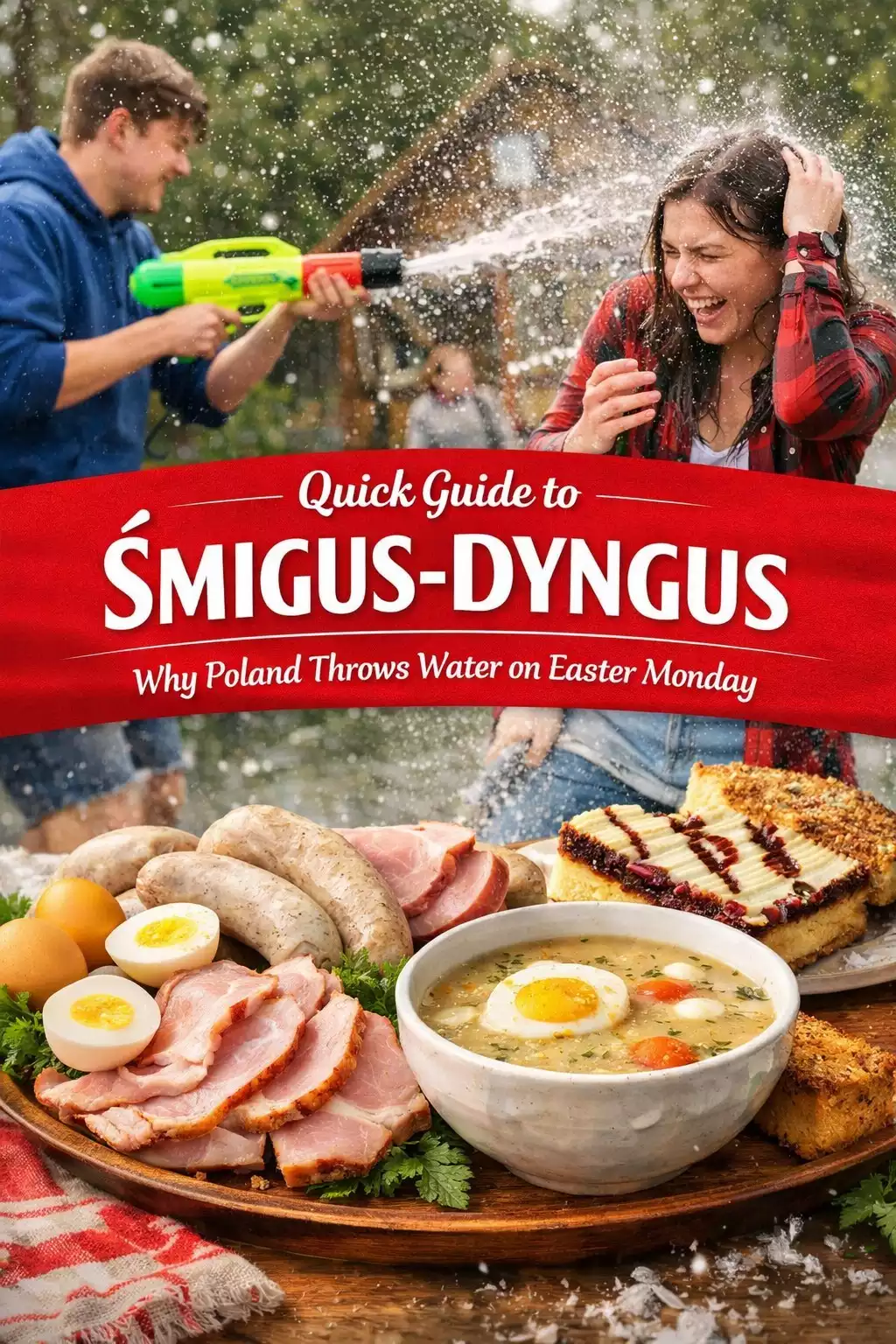
The day after Easter, Poland throws water at each other. This is not a metaphor. This is Lany Poniedzialek — Wet Monday — and it has been happening in Poland since the tenth century. Boys wake up early and lie in wait with buckets, water guns, squirt bottles, and in some rural regions still, live streams. Girls have traditionally reciprocated on Tuesday. In contemporary Poland, everyone just throws water at everyone on Monday and nobody waits for Tuesday because life is short and Śmigus-Dyngus is only once a year.
I grew up being doused with cold water on Easter Monday by my brother, who took this tradition far more seriously than any tradition had any right to expect from a ten-year-old. He planned for it. He had multiple containers. He had a strategy. I woke up dry and went to bed having experienced Śmigus-Dyngus comprehensively. He was not wrong to take it seriously — this is one of Poland’s oldest and most joyfully chaotic traditions, and it deserves that kind of commitment.
Beyond the water, Śmigus-Dyngus is also a food holiday — Easter Monday means eating the leftovers from Sunday’s feast, and in some Polish communities, it means making specific dishes associated with the day. This guide covers the tradition, the food, and how to observe both without getting completely soaked in the process.
Why Śmigus-Dyngus Exists
Śmigus-Dyngus has pre-Christian origins connected to spring fertility rites — water representing purification, rainfall, and the coming of spring. When Poland was Christianized in 966 CE, the water-throwing custom was absorbed into Easter Monday celebrations. The name itself may come from two separate older customs: Śmigus (a light whipping with pussy willow branches) and Dyngus (paying a ransom to avoid being doused). Over centuries they merged into the single water-throwing tradition we have today.
In Polish-American communities, the tradition continues. Dyngus Day celebrations take place in Buffalo, New York — home to one of the largest Polish-American communities in the US — with parades, polka music, pierogi eating contests, and enthusiastic water gun usage. It has become both a Polish heritage event and a genuinely beloved local tradition.
The Food of Easter Monday
Traditional Śmigus-Dyngus Foods
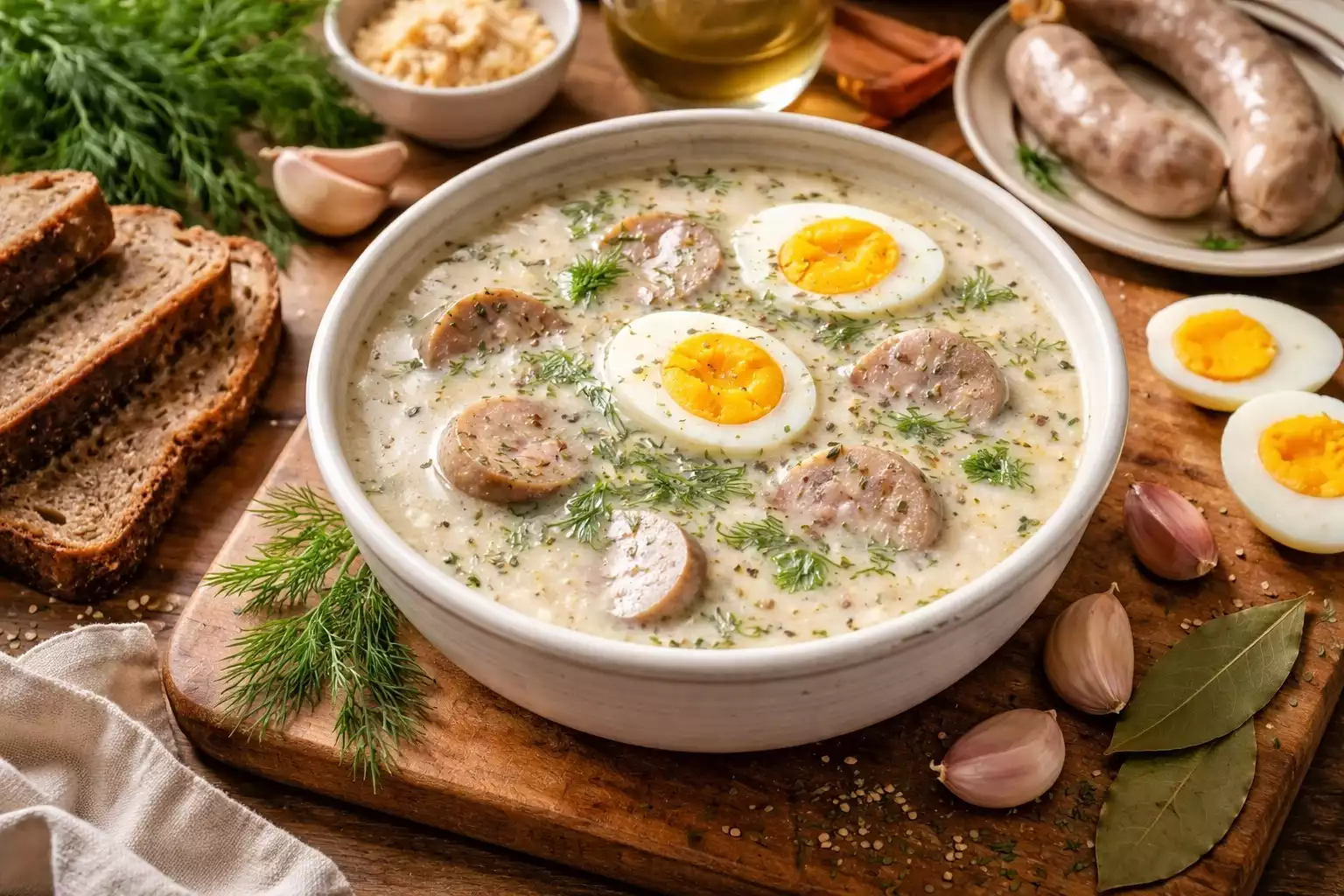
- Sunday’s żurek leftovers, reheated — considered even better on day two
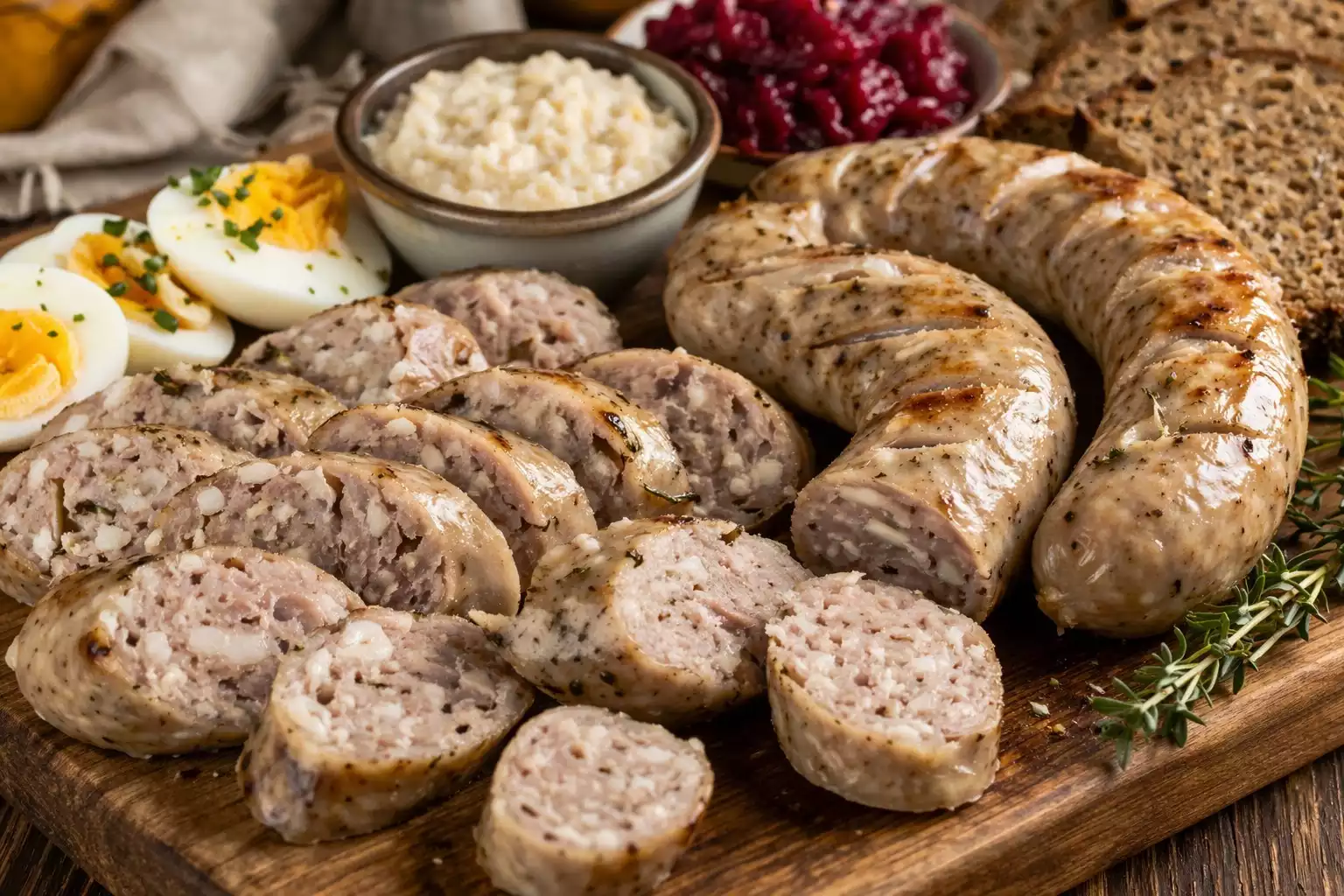
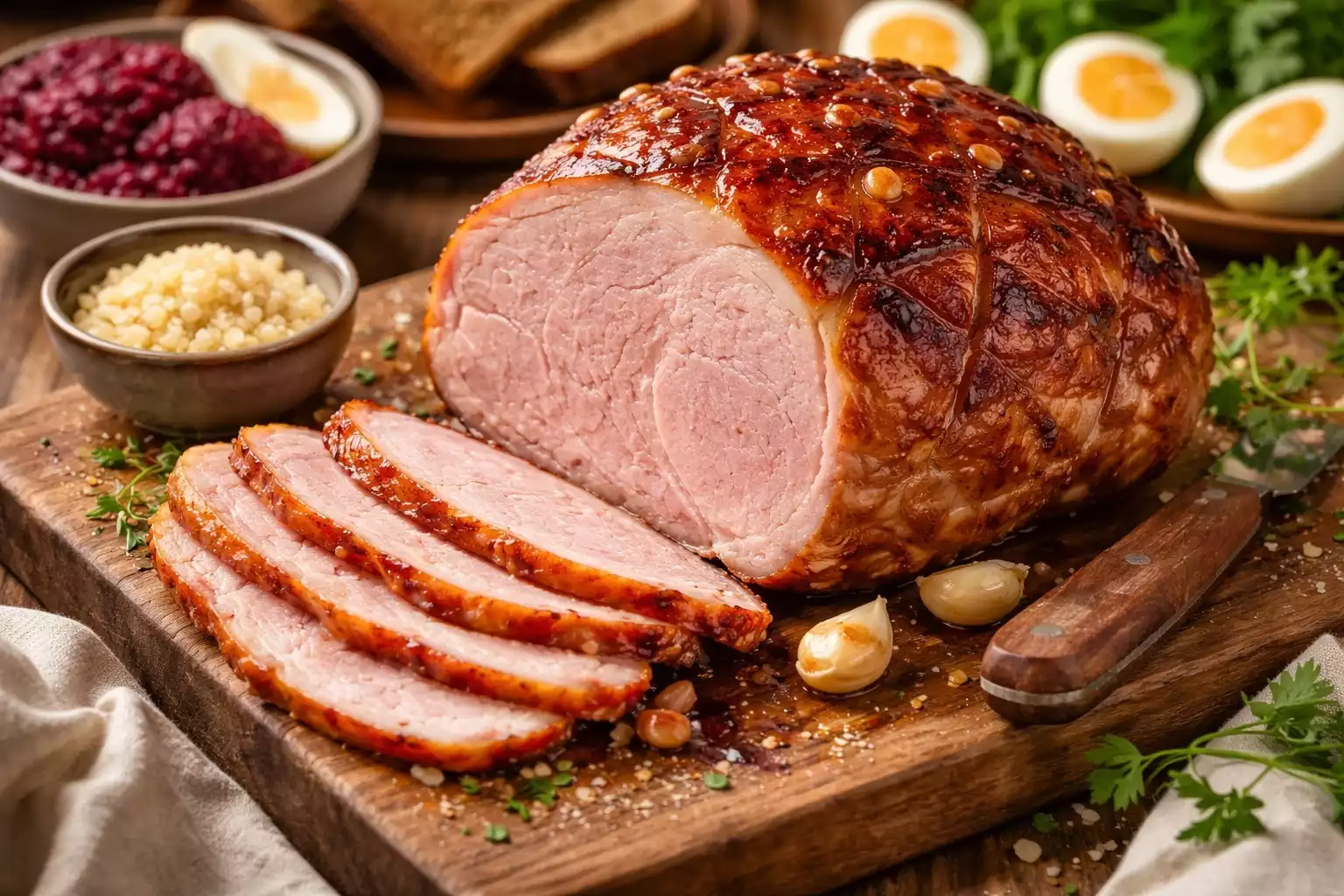
- Cold platter of leftover szynka, pasztet, and biała kiełbasa
- Egg salad sandwiches on dark rye bread
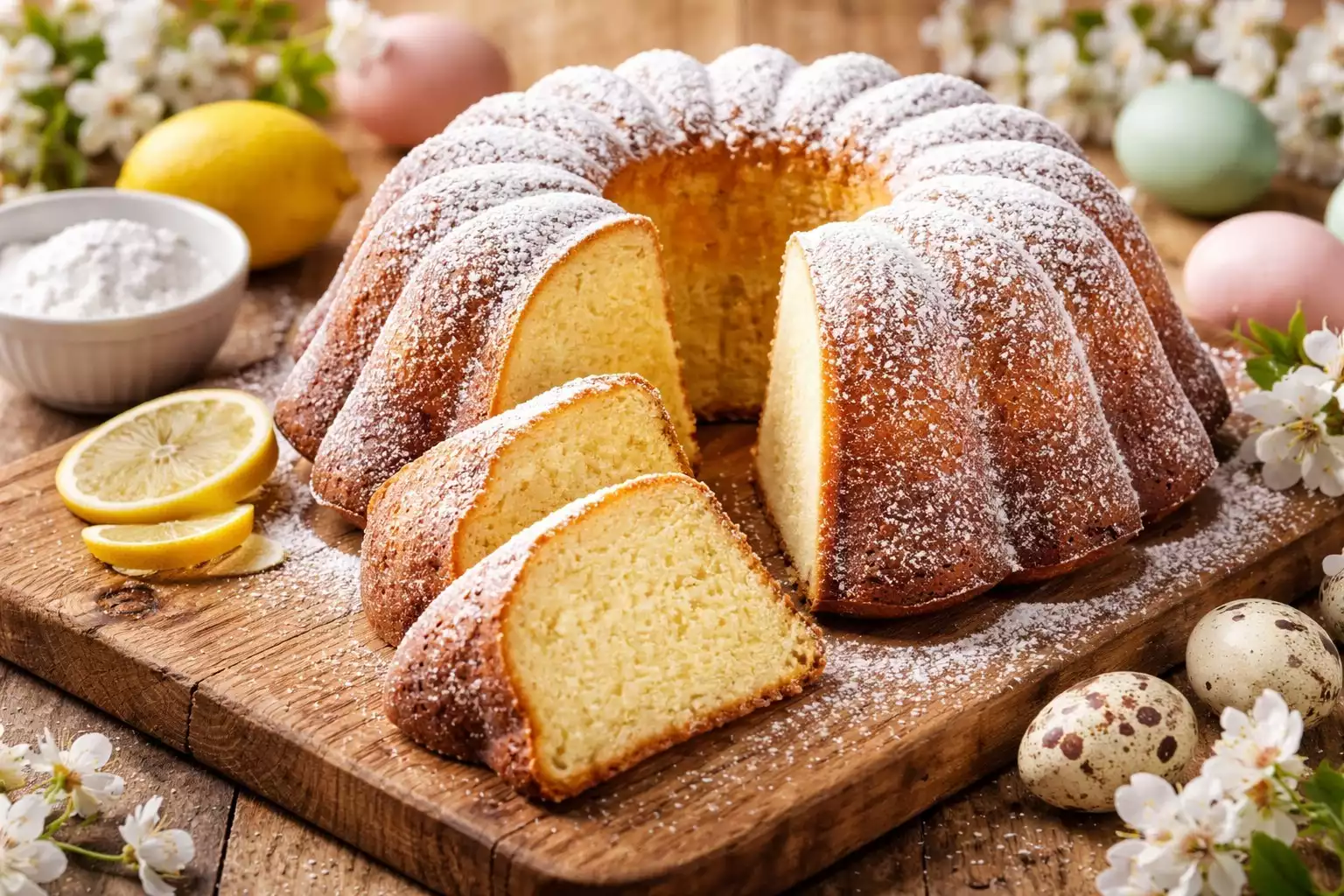
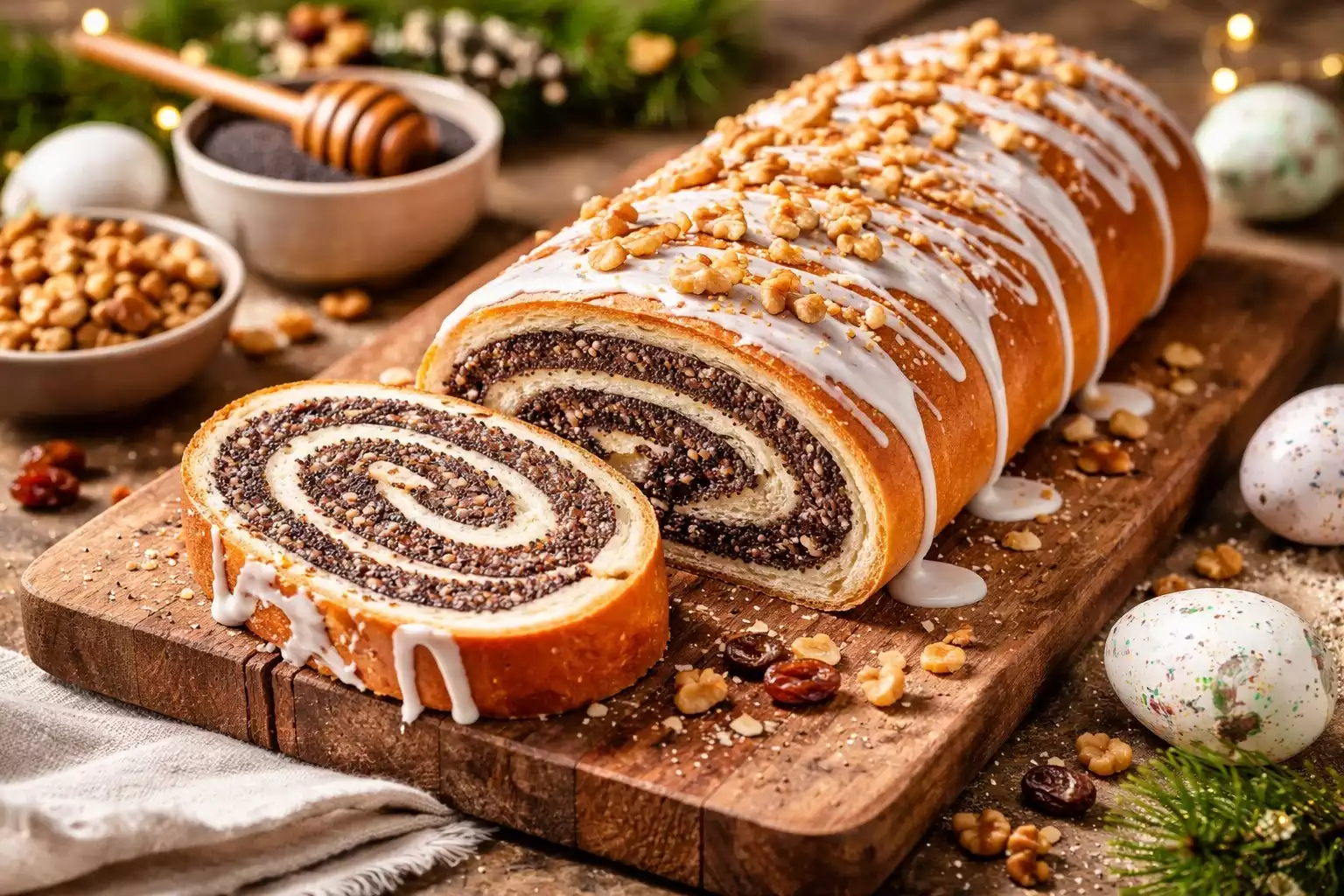
- Cake leftovers — baba, mazurek, sernik, all still good on Monday
- Flaki (tripe soup) in some regions — a traditional Monday restorative
- Bigos (hunter’s stew) — made with Easter leftover meats, perfect on Monday
How to Observe Śmigus-Dyngus
1
1Acquire Your Water Delivery System
Any container works: a cup, a bucket, a water gun, a squirt bottle, a garden hose if you are fully committed. Traditional areas of Poland use hand-pumped wooden water guns (sikawki) that have been in families for generations. In suburban Chicago, my brother used a Super Soaker 500 that he saved up for specifically. Both approaches honor the spirit of the tradition.
2
2Choose Your Moment (Polish Rules)
In the traditional rules of Śmigus-Dyngus, boys doused girls on Monday. Girls could get revenge on Tuesday (Wtorek Dyngus). In contemporary Poland, the gender rules have dissolved and Monday is an open water warfare day regardless of who is doing the throwing. The only protection is paying a ransom — historically a colored egg (pisanka) or a coin, now more commonly candy or humor.
3
3Reheat the Easter Leftover Feast
While (or after) the water throwing, the Easter Monday meal is assembled from Sunday’s leftovers. Reheat the żurek gently on low heat — it is better the second day as the flavors have deepened overnight. Set out the cold meats platter again. Make egg salad sandwiches with leftover hard-boiled eggs on dark rye. Cut the remaining cakes. Easter Monday eating is comfortable, familiar, and exactly as abundant as Sunday, just without the ceremony.
4
4Make Monday Bigos if You Are Ambitious
If you want to cook something new on Easter Monday, bigos — the Polish hunter’s stew — is the traditional choice for using up Easter leftover meats. Slice the remaining biała kiełbasa and szynka, add to a pot of sauerkraut and fresh cabbage with mushrooms, bay leaves, allspice, and a splash of red wine or beer. Simmer for at least an hour. Bigos improves with reheating, so make it Monday, eat it Tuesday. This is the correct application of Easter leftover meats.
Śmigus-Dyngus Survival Tips (Practical and Culinary)
Wear clothes you do not mind getting wet. If you are celebrating with children or enthusiastic family members, dress for the occasion from the moment you wake up on Easter Monday. There is no such thing as a dry morning when Śmigus-Dyngus is being properly observed.
Protect the cakes. This is important. The remaining mazurek, baba, and sernik should be stored in a closed kitchen away from the water warfare zone. Wet cake is a tragedy. The cakes have survived Easter Sunday and deserve a dignified Monday.
Easter Monday leftovers are the best version of everything. Żurek on day two has settled and deepened. Cold ham on dark bread with horseradish is one of the great simple lunches. Day-two baba sliced thick and toasted is extraordinary. Do not rush the Monday eating. Take your time with the leftovers. They have earned your attention.
Change out of wet clothes before eating. This should go without saying. It still needs saying when children are involved.
Śmigus-Dyngus in Polish-American Communities
Buffalo, New York hosts the largest public Dyngus Day celebration in the United States every Easter Monday. The celebration began in Polish-American churches and community halls and has grown into a citywide event with parades, music, food vendors, and considerable civic enthusiasm. Buffalo takes Dyngus Day with the same seriousness that New Orleans takes Mardi Gras. If you are within driving distance, it is worth experiencing at least once.
Other Polish-American communities across the Midwest celebrate with church events, community hall gatherings, and family traditions. The water throwing is often scaled back for adult celebrations (though children’s events keep it fully alive), but the food, the polka music, and the holiday atmosphere remain entirely intact.
Pair the Easter Monday spread with leftover śniadanie wielkanocne dishes from Sunday’s feast, and observe the full święconka tradition leading up to it.
Easter Monday Food Ideas
Eggs benedict z białą kiełbasą. Use leftover white sausage sliced as the base instead of Canadian bacon under a poached egg with hollandaise. A fusion Easter Monday brunch that is ridiculous and wonderful in equal measure. Polish Easter meets American Sunday brunch. The combination works.
Ham and ćwikła panini. Press leftover szynka and a smear of ćwikła between two slices of chałka in a panini press or heavy skillet. The ćwikła heats up and mellows slightly, the ham warms through, and you have one of the better sandwiches of the Easter weekend.
Leftover żurek with extra egg. Reheat the żurek with a newly hard-boiled egg. The soup gets better every day and is an excellent Monday lunch that requires minimal effort and produces maximum satisfaction.
Easter Leftovers Storage Guide
Żurek: keeps refrigerated 3 days. Reheat gently, do not boil. Meats: ham and sausage keep 4–5 days refrigerated. Pasztet: 4–5 days well wrapped. Sałatka jarzynowa: 3 days. Egg salad: 2 days. Cakes: baba and babka piaskowa at room temperature 4–5 days. Mazurek at room temperature 4–5 days. Sernik refrigerated 4–5 days. Easter Monday food security is one of the side benefits of the Polish tradition of cooking significant quantities.
FAQ
Is Śmigus-Dyngus still a legal holiday in Poland?
Yes — Easter Monday (Poniedzialek Wielkanocny) is an official public holiday in Poland, meaning businesses, schools, and government offices are closed. It is the second day of Easter and carries the same holiday status as Easter Sunday itself. The water throwing is unofficial but culturally embedded.
How do you say Śmigus-Dyngus?
Roughly: Shmi-goos Din-goos. The Ś is the Polish sh sound. The gus endings rhyme with “goose.” Once you have said it correctly in front of a Polish person and watched their expression change from skepticism to approval, you will remember the pronunciation forever.
Can you celebrate Śmigus-Dyngus without water throwing?
Absolutely. The food, music, and gathering aspects of Easter Monday can be fully observed without anyone getting wet. Many modern Polish families observe the day as a relaxed family meal and celebration without the water tradition, especially in households with older family members or in climates where April is genuinely cold. The spirit of the holiday is joyful communal celebration, not specifically hydraulic aggression.
Kasia Polish Mom
Polish-born, Chicago-raised, feeding a family of six with babcia’s recipes and a global pantry. I grew up folding pierogi at my grandmother’s kitchen table and never stopped — 15+ years of cooking from scratch, one Sunday dinner at a time. Everything here is tested on four kids, a hungry husband, and the memory of a woman who never measured anything but always got it right.