






Kasia Polish Mom
Polish-born, Chicago-raised, feeding a family of six with babcia’s recipes and a global pantry. I grew up folding pierogi at my grandmother’s kitchen table and never stopped — 15+ years of cooking from scratch, one Sunday dinner at a time. Everything here is tested on four kids, a hungry husband, and the memory of a woman who never measured anything but always got it right.
Śledź — Polish Herring Two Ways (Cream & Oil)
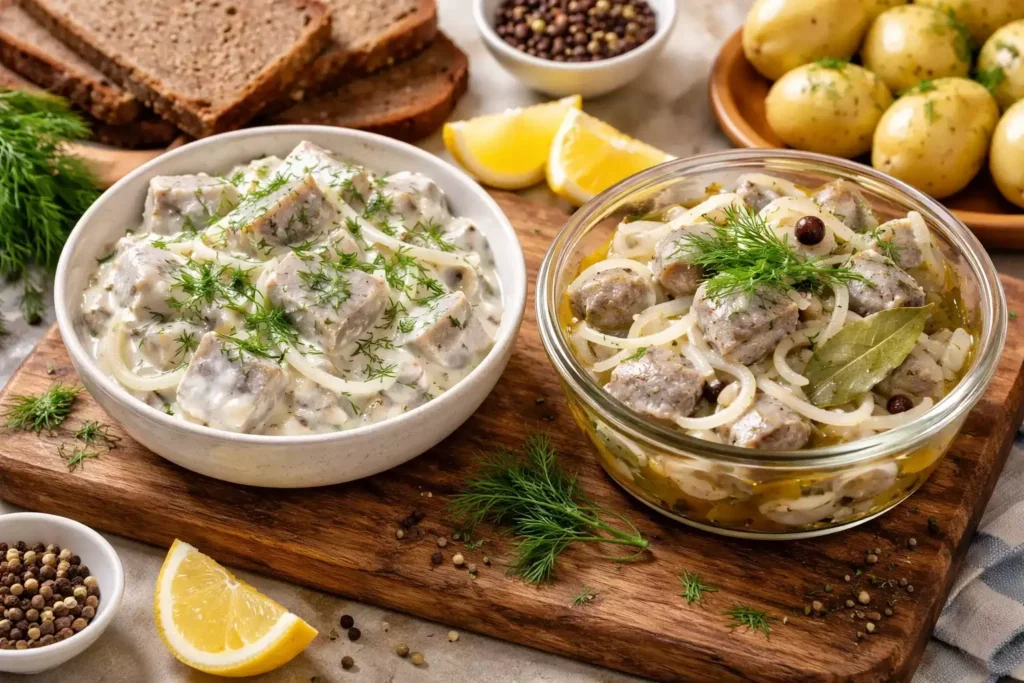
Herring during Lent is mandatory. How you serve it is where Polish families fight. Cream or oil? This is not a small question. It is a generations-long divide that has been the source of more table debate in Polish households than politics. Team cream says: śledź w śmietanie is the only civilized way to serve herring, the cream mellows the saltiness, the herring becomes something tender and beautiful. Team oil says: śledź w oleju with onion is pure and clean and the herring speaks for itself. I grew up in a house divided. My babcia was cream. My dziadek was oil. The solution was to make both. This is the solution I recommend.
śledź — Polish herring — is one of the defining flavors of Lent in Poland. It appears every Friday during wielki post, and most prominently on Good Friday when it is often the only protein on the table. Properly prepared from salt-cured matias herring, desalted, and dressed in either a cream sauce or an oil-and-onion marinade, it is one of those foods that people outside Poland often encounter with skepticism and leave with a genuine conversion.
This recipe covers both the cream and oil versions — the two essential preparations of Polish Lenten herring. Make both. Serve both. Let your family have the argument. There is no wrong answer.
Why Polish Herring Works
The secret of Polish herring is the matias cut — young Atlantic herring caught before the first spawn, mild-flavored and tender compared to older fish. Salt-cured matias is the traditional Polish preparation: preserved in salt brine without smoking or vinegar curing. After proper desalting (a critical step), the herring is smooth, silky, and ready to absorb dressing flavors completely.
The cream dressing tames the natural fishiness and produces a rich, almost potato-salad adjacent experience. The oil and onion version intensifies the fish flavor while the onion sweetness provides contrast. Both are entirely different taste experiences from the same base ingredient, which is part of what makes Polish herring such an interesting cooking subject.
Ingredients
For Both Versions
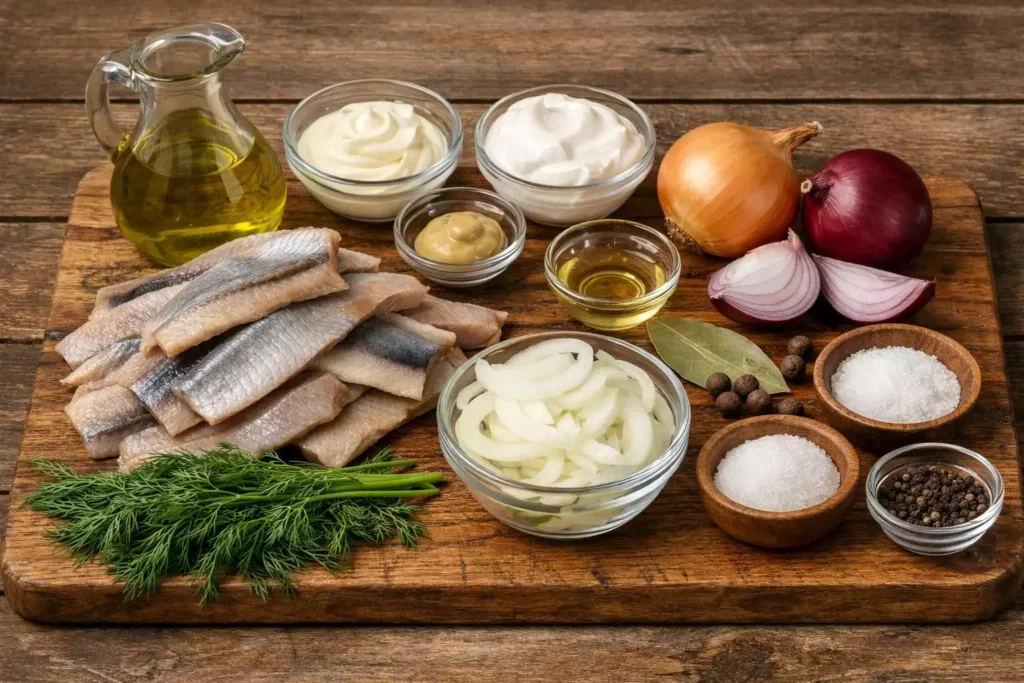
- 500g (1.1 lbs) salt-cured matias herring fillets (from a Polish deli)
- Cold water or milk for desalting (enough to submerge the fish)
For śledź w Śmietanie (Herring in Cream)
- 200ml (¾ cup) thick sour cream (18% fat minimum)
- 1 tbsp mayonnaise
- 1 tsp mild mustard
- 1 tsp white wine vinegar
- 1 tsp sugar
- 1 medium onion, thinly sliced into half-rings
- 2 tbsp fresh dill, chopped
- White pepper to taste
For śledź w Oleju (Herring in Oil)
- 150ml (⅔ cup) neutral oil (sunflower or light olive oil)
- 2 medium onions, thinly sliced
- 1 tsp sugar
- 1 tsp white wine vinegar
- 1 bay leaf
- 4 allspice berries
- Fresh dill or parsley to finish
How to Make It

1
1Desalt the Herring (8–12 Hours Ahead)
Place the herring fillets in a bowl or container. Cover with cold water or milk (milk produces a milder result; water is traditional). Refrigerate for 8–12 hours, changing the liquid once at the halfway point. Taste a small piece after 8 hours — it should be pleasantly salty but not overwhelming. If still very salty, continue soaking. Pat the fillets completely dry with paper towels before using. Cut into bite-sized pieces, approximately 3–4cm wide.
2
2For the Cream Version: Make the Dressing
Whisk together the sour cream, mayonnaise, mustard, vinegar, and sugar until smooth. Season with white pepper — no added salt until you taste with the herring, as the fish will still be mildly salty. Toss the sliced onion in a small amount of the dressing to begin softening it. Add the herring pieces and fold gently to coat. Add the dill. Taste and adjust — the balance should be creamy, mildly tangy, and savory. Refrigerate for at least 2 hours before serving.
3
3For the Oil Version: Build the Marinade
Place the herring pieces in a clean jar or container, alternating layers with the sliced onion. Dissolve the sugar in the vinegar and add to the oil with the bay leaf and allspice berries. Pour over the herring and onion, ensuring everything is submerged. The oil should cover the fish completely. Seal and refrigerate for at least 24 hours before serving. The longer it marinates (up to 5 days), the better the flavor integration.
4
4Serve at the Lenten Table
Both versions are served cold, straight from the refrigerator, on a platter with dark rye bread on the side. The cream version looks white and creamy with flecks of green dill; the oil version looks glossy and amber with softened onion rings around the fish pieces. Both benefit from a garnish of fresh dill and a side of boiled potatoes if you want something more substantial than bread.
Śledź Tips From Two Generations of Herring Debate
Matias herring is specific and important. Matias (or maatjes) herring is young, uncured-except-for-salt herring with a specific mildness and texture. Pickled herring in vinegar brine is a completely different product that does not work for these recipes — do not substitute. Polish delis carry salt-cured matias loose in brine or in vacuum packs. That is the correct ingredient.
Do not skip the desalting. This is the most commonly skipped step and the cause of most herring disasters. Under-desalted herring is aggressively salty and overwhelms every other flavor in the dressing. Taste at the 8-hour mark and continue if needed. Properly desalted herring is pleasantly salty — not overwhelmingly so.
The oil version takes patience. śledź w oleju made 24 hours early is good. Made 48 hours early it is better. Made 72 hours early it is excellent. The onion softens gradually in the oil, the fish absorbs the bay and allspice, and the whole thing mellows and deepens. If you are serving this for Good Friday, start on Tuesday or Wednesday.
Onion matters in both versions. Thinly sliced mild white or yellow onion is traditional. Red onion adds color and a slightly sharper note. For the cream version, the onion should be sliced very thin so it softens in the dressing. For the oil version, the onion is the flavor vehicle and should be present in generous quantity.
Śledź at the Lenten Table and Beyond
śledź is the signature dish of Polish Lent, appearing every Friday of wielki post and forming the centerpiece of the Good Friday table alongside boiled potatoes and perhaps a simple salad. It also appears at every Polish Christmas Eve dinner (Wigilia) as part of the twelve traditional dishes — making it a double-holiday food with the same crossover logic as makowiec.
Outside of Polish contexts, herring in cream and herring in oil are simply excellent cold dishes that benefit from advance preparation and pair beautifully with dark bread and boiled potatoes. They transport well, keep for days, and are genuinely impressive to guests who have never encountered Polish herring before.
Serve as part of the Polish Lenten meal spread alongside pierogi z kapustą i grzybami.
Variations Worth Trying
śledź z jabłkiem (herring with apple). Add one grated or finely diced tart apple to the cream version. The apple’s sweetness and acidity play beautifully against the herring’s saltiness and the cream’s richness. This is a widely loved Polish variation and one of the most approachable herring preparations for people new to Polish śledź.
Rollmópsy. Wrap desalted herring fillets around a piece of pickled gherkin and onion, securing with a toothpick. Marinate in the oil-based marinade with allspice and bay. Traditional Polish rollmópsy are served cold as a starter. They look impressive and take about 20 minutes of actual work.
śledź na kanapce (herring open sandwich). Thick dark rye bread, cold butter, a layer of thinly sliced boiled potato, a piece of marinated herring, and a pickled gherkin on top. This is a complete Lenten lunch in three bites. One of the great sandwiches of Polish cuisine.
Storage
Herring in cream keeps for 3–4 days refrigerated — the cream remains safe and the flavor develops well. Herring in oil keeps for up to 7 days refrigerated and actually improves over the first 3 days as the onion and spices meld into the oil. Both must be kept cold and sealed. Do not freeze — the texture of herring degrades on freezing and thawing. Make in batches sized for the week; daily fresh herring is not practical and also not necessary, since both preparations keep beautifully.
FAQ
Where do I find matias herring in the United States?
Polish specialty grocery stores are the most reliable source, especially in cities with significant Polish-American communities. In Chicago, New York, Detroit, and Milwaukee, Polish delis stock salt-cured matias herring year-round. Scandinavian grocery stores also carry it. Some international grocery sections of large supermarkets stock vacuum-packed matias herring. Online Polish food retailers ship it refrigerated. It is worth seeking out.
Can I use jarred pickled herring instead of salt-cured matias?
Jarred herring in vinegar is a different product — already acidified and flavored. You can make cream and oil preparations with it, but the result will be tangier, less silky, and noticeably different from proper matias herring. It is a compromise, not a substitution. If matias is genuinely unavailable, proceed — but reduce any added vinegar in the recipe to compensate for the existing acidity in the jarred product.
How do I know if the herring has been desalted enough?
Cut off a small piece and eat it plain. Properly desalted herring should taste pleasantly salty — the way a well-seasoned dish tastes salty, not the way ocean water tastes salty. If it makes you want to reach for a glass of water immediately, it needs more soaking. Continue in fresh water until the salt level is correct. Erring on the side of more desalting is always better than under-desalting.

Kasia Polish Mom
Polish-born, Chicago-raised, feeding a family of six with babcia’s recipes and a global pantry. I grew up folding pierogi at my grandmother’s kitchen table and never stopped — 15+ years of cooking from scratch, one Sunday dinner at a time. Everything here is tested on four kids, a hungry husband, and the memory of a woman who never measured anything but always got it right.