
Kasia Polish Mom
Polish-born, Chicago-raised, feeding a family of six with babcia’s recipes and a global pantry. I grew up folding pierogi at my grandmother’s kitchen table and never stopped — 15+ years of cooking from scratch, one Sunday dinner at a time. Everything here is tested on four kids, a hungry husband, and the memory of a woman who never measured anything but always got it right.
Kung Pao Chicken That Beats Every Takeout Box
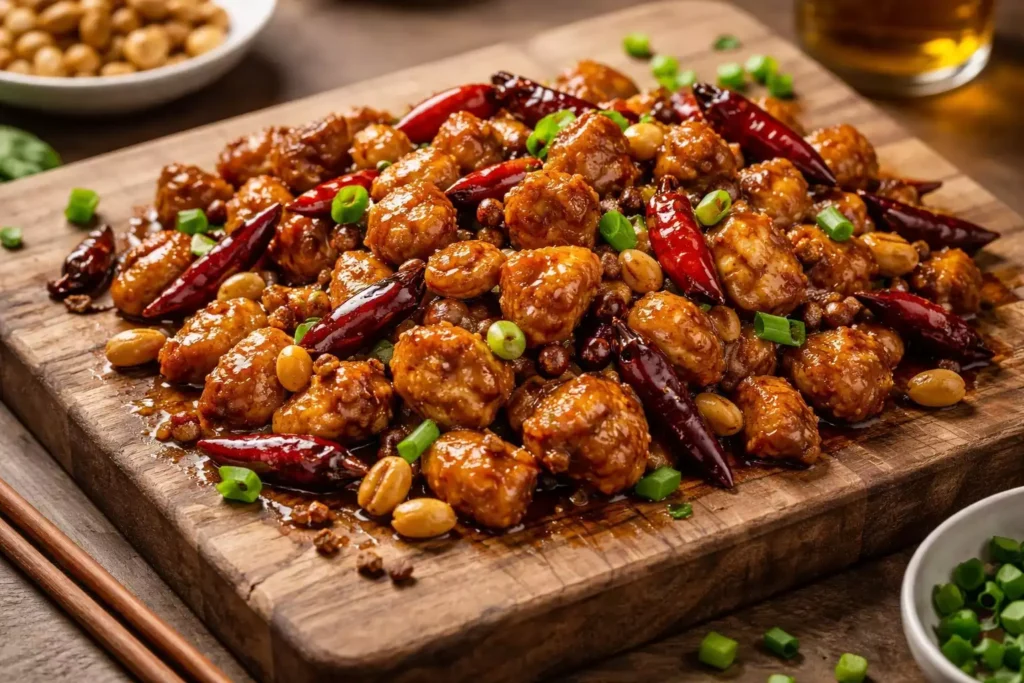
The day I discovered Szechuan peppercorns, my entire spice philosophy shifted. I had been cooking Chinese food for years — or what I thought was Chinese food, which was really an approximation of takeout with reasonable results — and then I added Szechuan peppercorns to a batch of kung pao chicken and experienced the ma la sensation for the first time. The numbing tingle. The way it makes everything taste simultaneously more intense and more electric. My spice cabinet filed a noise complaint. My family had questions. I bought more peppercorns.
Kung pao chicken is the dish that converted me to proper Szechuan cooking. Real kung pao — not the thick, sweet, orange-sauced version that most American takeout menus sell under that name — is bold, fragrant, numbing, and spicy in equal measure. Dried chilies for heat. Szechuan peppercorns for the ma (numbing) sensation. A sauce that is salty, slightly sweet, and sharply vinegary. Crunchy peanuts for texture. Chicken that has been velvet-fried to stay impossibly tender.
This recipe beats every takeout box I have ever ordered. I know this because I have made it at least forty times and tested it against takeout at least six times. The takeout wins on convenience. This wins on everything else.
Why This Kung Pao Chicken Works
The velveting technique — marinating the chicken in cornstarch and egg white before cooking — is the single biggest difference between restaurant kung pao and home kung pao. Velveted chicken stays tender under high heat because the starch coating protects the exterior while the interior steams gently. Without it, the chicken toughens in a hot wok and you have chewy pieces rather than silky ones.
The sauce ratio matters: equal parts soy sauce and Chinese black vinegar (Zhenjiang vinegar), with sugar to round and cornstarch to thicken. The black vinegar is not optional — it is what gives kung pao its characteristic sharp, slightly smoky depth that regular rice vinegar or rice wine does not provide.
Ingredients
For the Chicken and Marinade
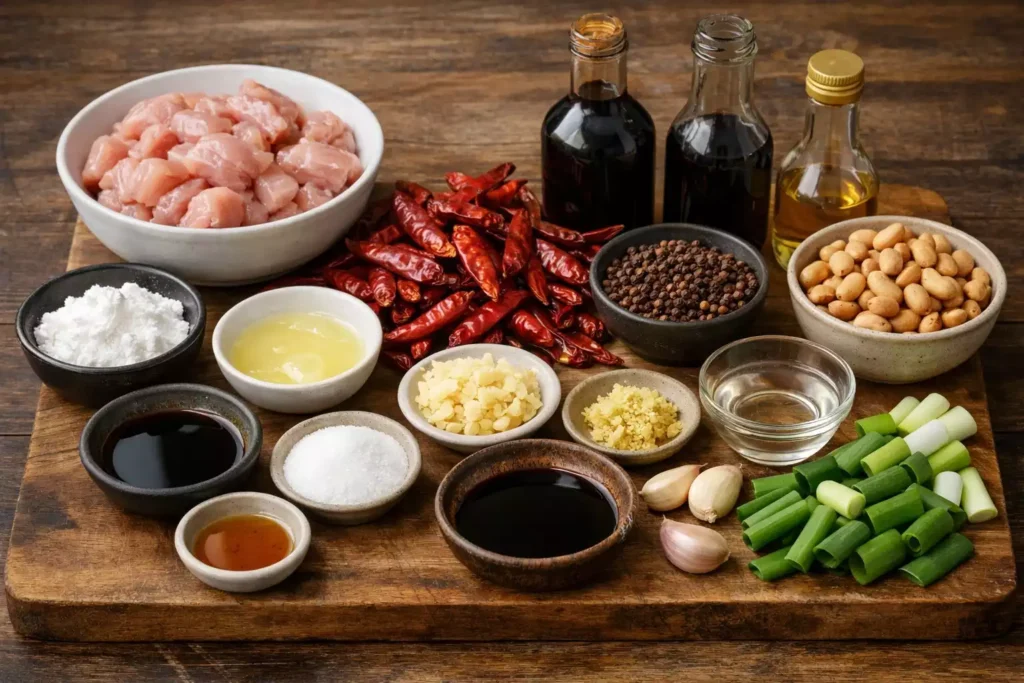
- 600g (1.3 lbs) boneless, skinless chicken thighs, cut into 2cm cubes
- 1 tbsp cornstarch
- 1 tbsp soy sauce
- 1 tsp sesame oil
- 1 egg white
For the Kung Pao Sauce
- 2 tbsp soy sauce
- 2 tbsp Chinese black vinegar (Zhenjiang)
- 1 tbsp sugar
- 1 tbsp Shaoxing rice wine
- 1 tbsp cornstarch
- 1 tsp sesame oil
- 3 tbsp water
For the Stir Fry
- 3 tbsp neutral oil
- 10–15 dried red chilies (adjust to heat preference), cut in half
- 1 tsp Szechuan peppercorns
- 6 cloves garlic, minced
- 2 tsp fresh ginger, grated
- 4 spring onions, cut into 2cm pieces
- 100g (¾ cup) roasted peanuts, unsalted
How to Make It
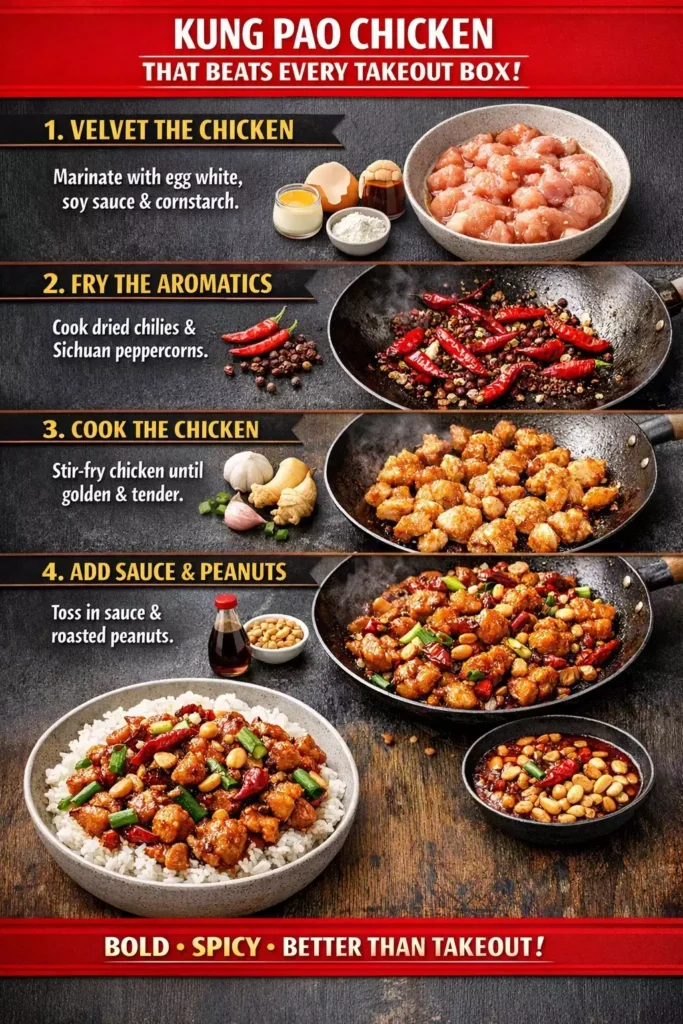
1
1Velvet the Chicken
Combine the chicken pieces with cornstarch, soy sauce, sesame oil, and egg white. Mix well and marinate for 20 minutes minimum (30–45 is better). The egg white-cornstarch coating creates the protective layer that keeps the chicken tender. Do not skip this step — it is the most important technique in the recipe.
2
2Mix the Sauce
Whisk together all sauce ingredients until the cornstarch and sugar are dissolved. Taste: it should be tangy, salty, and slightly sweet. Set aside next to the stove — once the wok gets going, there is no time to measure and mix.
3
3Fry the Aromatics
Heat a wok (or large skillet) over highest heat until smoking. Add 2 tablespoons of oil. Add the dried chilies and Szechuan peppercorns. Stir-fry for 30 seconds until fragrant and the chilies begin to darken slightly — this infuses the oil with their flavor. Do not burn. The kitchen will smell aggressively of chili and numbing peppercorn. This is correct.
4
4Cook the Chicken
Add the remaining tablespoon of oil and the marinated chicken. Spread in a single layer and leave untouched for 60–90 seconds for initial searing — resist the urge to stir. Then stir-fry for 2–3 minutes until the chicken is cooked through and golden in patches. Add the garlic and ginger and stir-fry for 30 more seconds.
5
5Sauce and Finish
Add the spring onions and stir briefly. Pour in the sauce and toss everything together over high heat for 60–90 seconds until the sauce thickens and coats every piece. Add the peanuts, toss once more. Serve immediately over steamed rice. Kung pao waits for no one.
Kung Pao Tips That Make the Difference
Szechuan peppercorns are not optional. They are what makes kung pao kung pao. Without them, you have spicy garlic chicken. With them, you have the electric, numbing, complex dish that has made Szechuan cuisine famous worldwide. Find them at Asian grocery stores or order online. They are inexpensive and last a long time.
Toast the peppercorns. For maximum flavor, dry-toast the Szechuan peppercorns in the wok for 30 seconds before adding them to the oil. The heat activates the volatile compounds and makes the numbing sensation significantly more pronounced.
Chinese black vinegar is the secret ingredient. Zhenjiang black vinegar is a wheat-and-sorghum vinegar with a deep, smoky, complex flavor. Do not substitute balsamic (too sweet and heavy), regular wine vinegar (too sharp), or rice vinegar (too mild). Black vinegar is the ingredient that makes kung pao taste like the restaurant version.
Do not move the chicken immediately. Letting the velveted chicken sit in the hot wok without stirring for the first 90 seconds creates a proper sear. Moving it too early prevents browning and produces steam-cooked, pale chicken instead of golden-edged, fragrant pieces.
Serving Kung Pao Chicken
Kung pao chicken is a complete dish served over plain steamed jasmine rice — the rice absorbs the sauce and provides the neutral base that balances the bold flavors. Serve immediately after cooking; kung pao does not wait gracefully. If serving a family of four, make a double batch because single-batch kung pao disappears before everyone has had enough.
For a full Chinese meal, pair with fried rice and a simple vegetable stir fry. Also excellent next to egg drop soup as a starter.
Variations Worth Trying
Kung Pao shrimp. Swap the chicken for large shrimp (peeled and deveined) and reduce the cooking time to 90 seconds per side. Kung pao shrimp uses the same sauce and aromatics and cooks in about half the time. Equally excellent, different protein.
Cashews instead of peanuts. Toasted cashews add a creamier, slightly sweeter crunch that works differently than peanuts. Not traditional, but a good variation for peanut-allergy households.
Extra numbing version. Double the Szechuan peppercorns for a full ma la experience. Also add a tablespoon of doubanjiang (Szechuan chili bean paste) to the sauce for more depth. This version is not for the faint of palate but is, in my opinion, the best version.
Storage and Reheating
Kung pao chicken keeps in the refrigerator for up to 3 days. Reheat in a hot wok or skillet with a splash of water to loosen the sauce. The peanuts will soften after refrigeration — if you prefer crunchy peanuts, add fresh ones when reheating. Freezes adequately for up to 2 months but the texture of the chicken changes slightly. Best eaten fresh.
FAQ
How spicy is this kung pao chicken?
With 10–15 dried chilies, this is medium-spicy — noticeably hot but manageable for most adults. Reduce to 6–8 dried chilies for mild. Increase to 20+ for genuinely hot. The Szechuan peppercorns add a numbing sensation distinct from chili heat. Together they create a complex spicy experience rather than straightforward burning. My kids think this is too spicy. My husband considers it a challenge. I think it is correct.
Can I use chicken breast instead of thighs?
Yes, but thighs are strongly recommended. Breast meat dries out faster under wok heat and produces a tougher result despite velveting. Thighs have more fat and collagen and stay tender and juicy in the high heat stir fry. The velveting technique helps both cuts, but helps thighs less because they need less help to begin with.
What is the ma la sensation?
Ma la translates from Chinese as “numbing (ma) and spicy (la).” The Szechuan peppercorn component causes a mild electrical tingling sensation on the lips and tongue — a brief, pleasant numbness from the hydroxy-alpha-sanshool compounds in the peppercorns. The chili heat comes on simultaneously. Together they create a combined sensation that is complex, addictive, and completely specific to Szechuan cuisine.
Kasia Polish Mom
Polish-born, Chicago-raised, feeding a family of six with babcia’s recipes and a global pantry. I grew up folding pierogi at my grandmother’s kitchen table and never stopped — 15+ years of cooking from scratch, one Sunday dinner at a time. Everything here is tested on four kids, a hungry husband, and the memory of a woman who never measured anything but always got it right.