
Kasia Polish Mom
Polish-born, Chicago-raised, feeding a family of six with babcia’s recipes and a global pantry. I grew up folding pierogi at my grandmother’s kitchen table and never stopped — 15+ years of cooking from scratch, one Sunday dinner at a time. Everything here is tested on four kids, a hungry husband, and the memory of a woman who never measured anything but always got it right.
Kung Pao Shrimp — The Kung Pao Treatment Shrimp Deserves
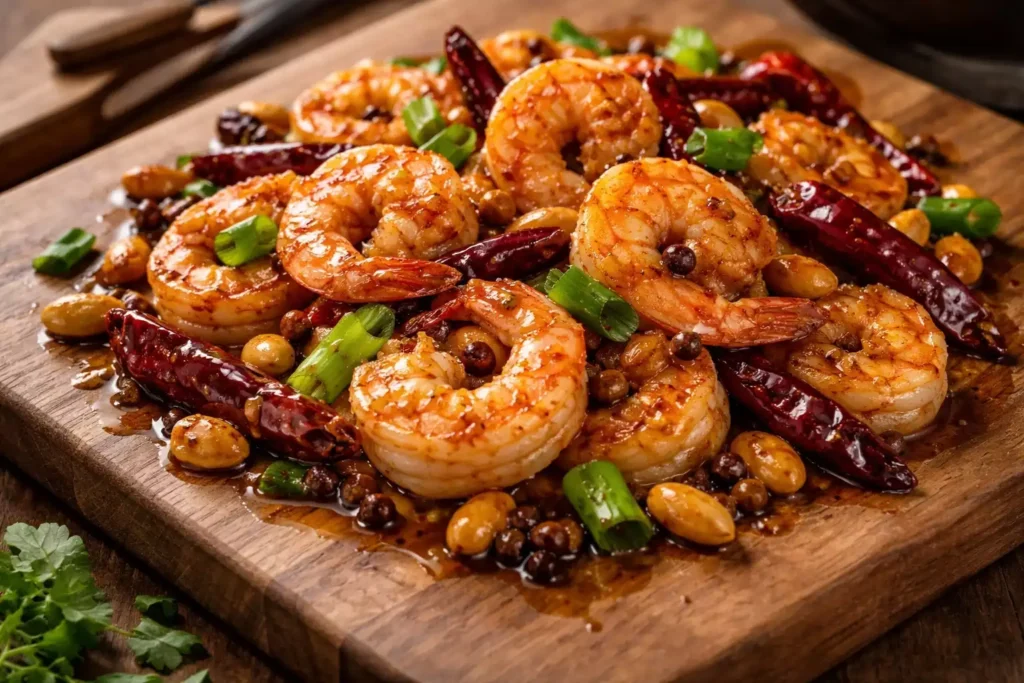
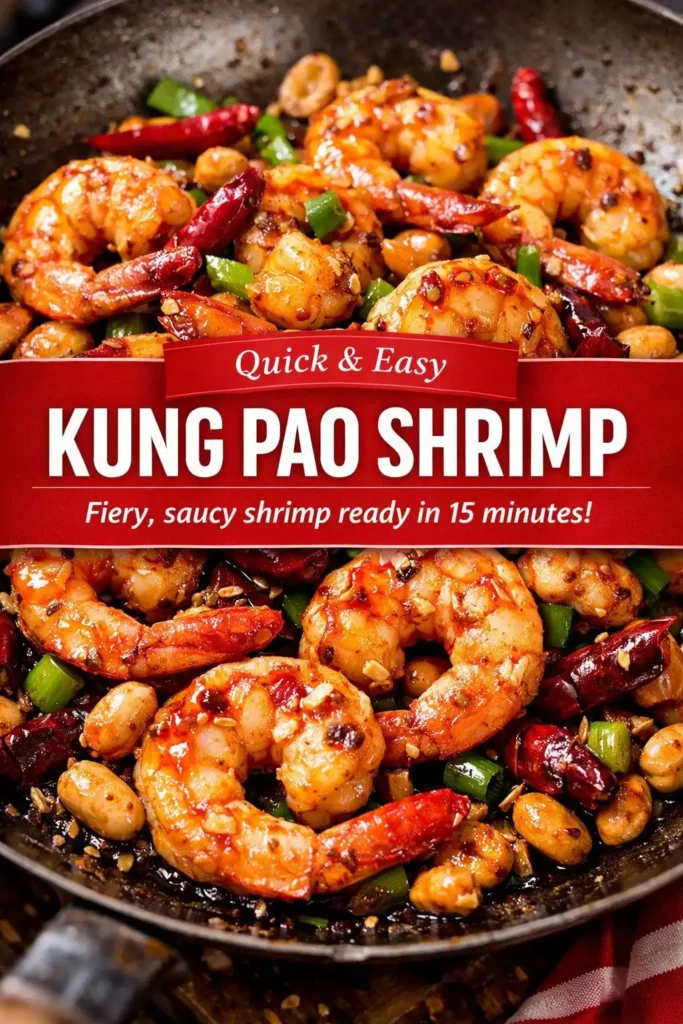
Everything that makes kung pao chicken great, except with shrimp that cook in three minutes. That is the whole pitch for kung pao shrimp and it needs no elaboration because the case is already strong: same fiery Szechuan peppercorn aromatics, same bold soy-vinegar sauce, same crunchy peanuts, but with large sweet shrimp instead of chicken that turn golden and plump in ninety seconds per side. It is kung pao for a Tuesday night when you need dinner in fifteen minutes and you are not apologizing for how good it is.
I have a confession: I made kung pao shrimp before I perfected kung pao chicken. The faster cook time is forgiving to the learning process. Shrimp announces when it is done with very little ambiguity — they curl into a C shape and turn pink and opaque, which gives you maybe thirty seconds of grace time before they overcook. Chicken has no such clear visual indicator. For learning wok technique, shrimp is the training ground.
This recipe uses the same aromatics and sauce as the classic chicken version, adjusted slightly for the shorter cook time and the slightly sweeter flavor profile of good shrimp. The result is a restaurant-quality dish that takes less time to make than it takes to wait for delivery.
Why This Kung Pao Shrimp Works
Shrimp in a stir fry do not need the velveting treatment that chicken requires — their natural texture is already tender and they cook so quickly that the high heat does not have time to toughen them. Instead, the key technique is pat-dry: shrimp must be completely dry before hitting the wok or they will steam in their own moisture rather than sear. Dry shrimp = golden edges. Wet shrimp = pale, rubbery result.
The sauce is adjusted from the chicken version: slightly less vinegar to let the shrimp’s natural sweetness come through, and a touch more sugar to complement it. The Szechuan peppercorn and dried chili aromatics are identical — these are the soul of kung pao regardless of protein.
Ingredients
For the Shrimp
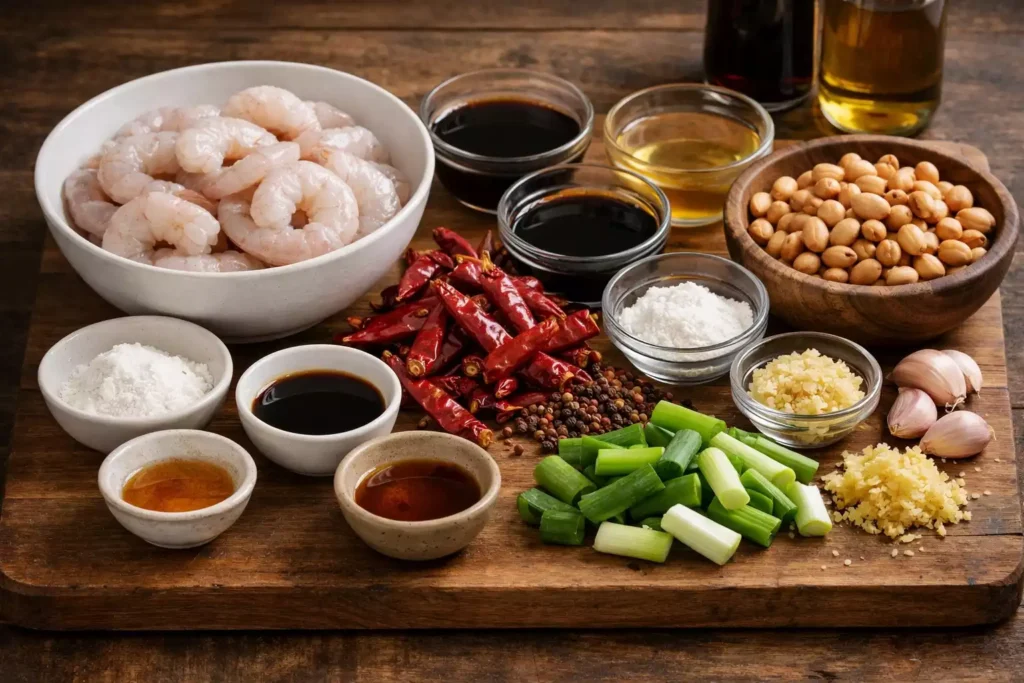
- 600g (1.3 lbs) large raw shrimp, peeled and deveined (16/20 size)
- 1 tsp cornstarch
- 1 tsp soy sauce
- ½ tsp sesame oil
For the Kung Pao Sauce
- 2 tbsp soy sauce
- 1½ tbsp Chinese black vinegar
- 1½ tbsp sugar
- 1 tbsp Shaoxing rice wine
- 1 tbsp cornstarch
- 1 tsp sesame oil
- 3 tbsp water
For the Stir Fry
- 3 tbsp neutral oil
- 10 dried red chilies, halved
- 1 tsp Szechuan peppercorns
- 5 cloves garlic, minced
- 1½ tsp fresh ginger, grated
- 4 spring onions, cut into 2cm pieces
- 100g (¾ cup) roasted peanuts
How to Make It
1
1Prepare the Shrimp
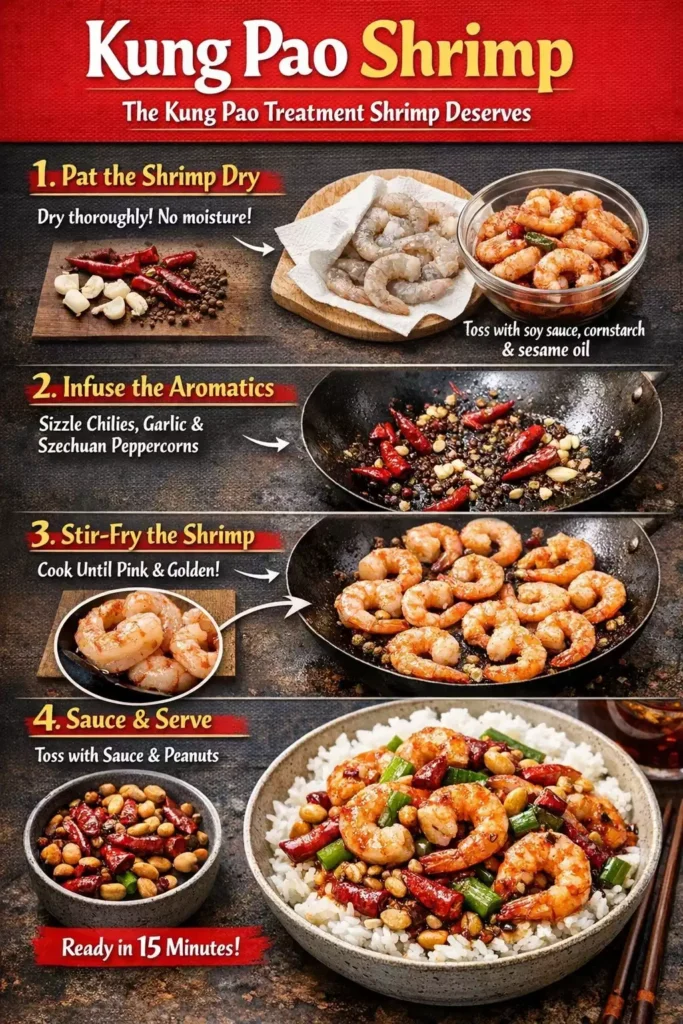
Pat the shrimp completely dry with paper towels. Completely. No residual moisture. Toss with the cornstarch, soy sauce, and sesame oil. Set aside. Mix the sauce in a small bowl and place near the stove. Organize all the stir-fry ingredients within arm’s reach. Wok cooking happens fast and requires no trips to the pantry once you start.
2
2Infuse the Oil
Heat the wok over highest possible heat until smoking. Add 2 tablespoons of oil. Add the dried chilies and Szechuan peppercorns and stir-fry for 20–30 seconds until the chilies darken and the peppercorns become fragrant. The oil should be deep red and intensely aromatic. Add the garlic and ginger and stir for another 20 seconds.
3
3Cook the Shrimp Fast
Add the remaining oil and the shrimp. Spread in a single layer. Cook 60–90 seconds until pink and golden on the bottom. Flip and cook 30–60 seconds more. Shrimp should be pink, slightly curled, and have golden edges. They are done. Do not cook further — overcooked shrimp are rubbery and this is a tragedy that is entirely avoidable.
4
4Sauce and Serve
Add the spring onions and stir briefly. Pour in the sauce and toss everything together over high heat for 45–60 seconds until the sauce bubbles and thickens. Add the peanuts, toss once, and serve immediately over steamed jasmine rice. Total active cooking time from wok to table: approximately 6 minutes.
Kung Pao Shrimp Tips
Dry shrimp is the non-negotiable rule. Moisture on shrimp creates steam, steam prevents searing, unseared shrimp is pale and rubbery. Pat dry after peeling and again after the brief marinade. The paper towels are your best tool here.
Size of shrimp matters. Large (16/20 count) shrimp hold up better in the wok and give you a proper bite of shrimp flavor. Small shrimp overcook almost instantly and can get lost among the peanuts and chilies. Go large.
Serve immediately. Unlike chicken kung pao, which can sit for a minute before serving, kung pao shrimp must be eaten the moment it comes off the heat. Shrimp continue cooking from residual heat in the sauce and become rubbery within minutes of overcooking. Plate it, sit down, eat it.
Watch the chilies. Dried chilies can go from fragrant to burnt in seconds at high heat. They should darken but not blacken. If they start turning black, remove from heat briefly and lower slightly before continuing.
Serving Kung Pao Shrimp
Serve immediately over steamed jasmine rice with the sauce pooled at the base of each bowl. This is a complete weeknight dinner that also impresses at dinner parties because it looks and tastes more complex than the effort it requires. Pair with a simple stir-fried vegetable — bok choy or Chinese broccoli — and you have a full restaurant-quality Chinese dinner at home.
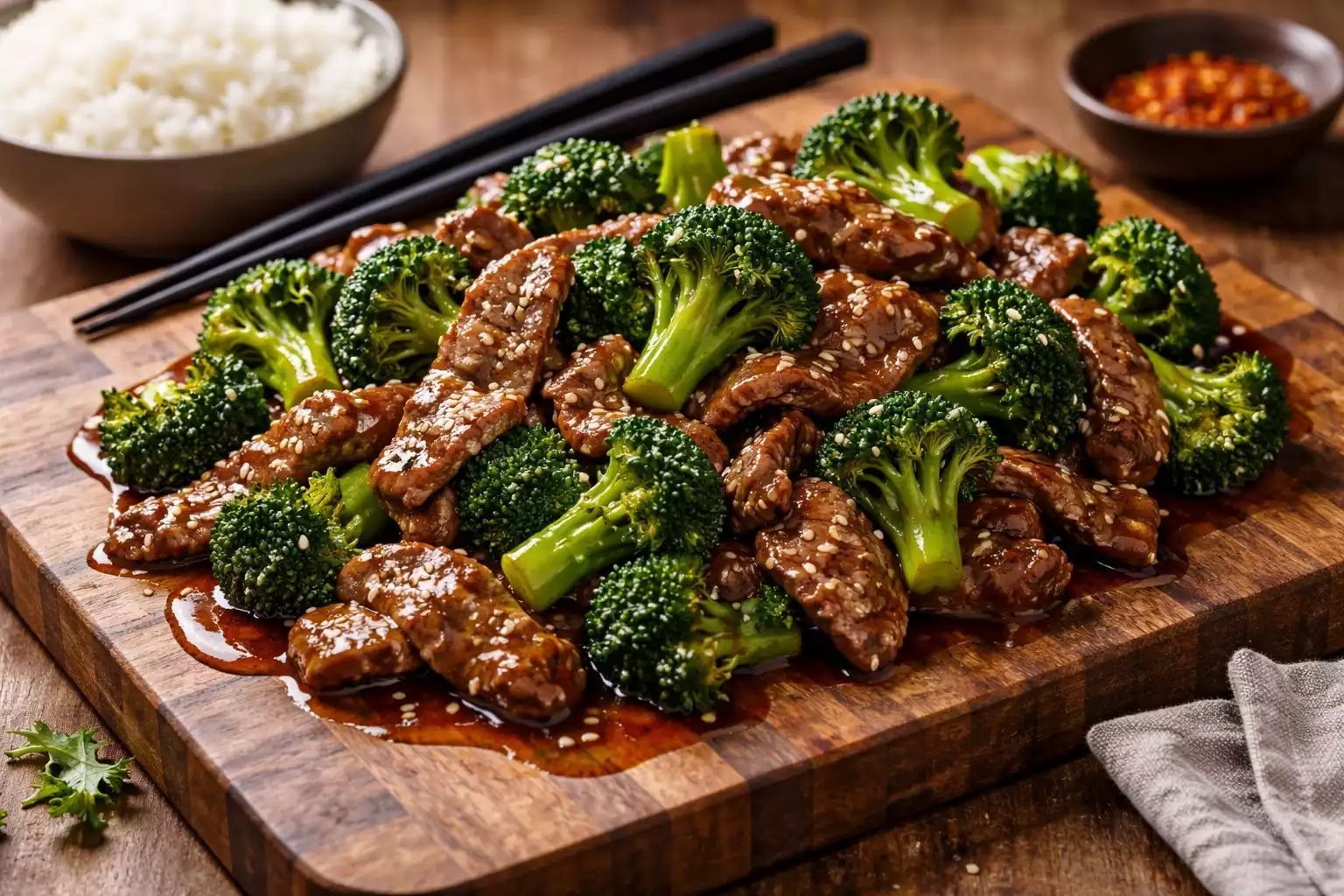
For a bigger spread, add lo mein and beef and broccoli to serve the whole family.
Variations Worth Trying
Kung pao with mixed seafood. Use a combination of shrimp and scallops. Scallops sear beautifully in a hot wok and their slight sweetness pairs excellently with the numbing-spicy kung pao sauce. Cook scallops first (2 minutes per side) and remove before cooking the shrimp, then combine at the sauce stage.
With water chestnuts. Add a small can of drained, sliced water chestnuts with the spring onions for extra crunch. The water chestnut’s crisp, slightly sweet character contrasts well with the soft shrimp and the crunch of peanuts in a different way from the nuts.
With cashews instead of peanuts. Toasted cashews add a different texture and slightly creamy richness. For a peanut-free version, cashews are the best substitute and work well with the shrimp’s sweetness.
Storage
Kung pao shrimp is best eaten fresh. Refrigerate leftovers for up to 2 days. Reheat in a hot wok with a splash of water. Expect the shrimp to be firmer after reheating — they will be edible but not at their best. For meal prep purposes, make the sauce and prep all aromatics in advance; cook the shrimp fresh when ready to eat. That way the active cooking is still only 6 minutes with most of the work done.
FAQ
Can I use frozen shrimp?
Yes — thaw completely, then dry very thoroughly before cooking. Frozen shrimp often have more residual water than fresh. Pat dry, then let them sit on paper towels for 5 minutes before cooking. The drying step is even more important with previously frozen shrimp.
What if I cannot find Chinese black vinegar?
Balsamic vinegar is the closest widely available substitute, used in half the quantity (it is stronger and sweeter). Rice vinegar with a pinch of extra sugar also works in a pinch. The flavor profile will be slightly different but still very good. Black vinegar is worth seeking at an Asian grocery store — it is inexpensive and used in many Chinese recipes.
How do I know when shrimp are perfectly cooked?
Perfectly cooked shrimp are pink and opaque throughout, curled into a C shape. Slightly undercooked shrimp are translucent in the center and curl loosely. Overcooked shrimp are rubbery and curl into a tight O shape. The window between perfect and overcooked is about 30 seconds at high heat. Watch closely and pull from heat the moment they hit C-shape and full opacity.
Kasia Polish Mom
Polish-born, Chicago-raised, feeding a family of six with babcia’s recipes and a global pantry. I grew up folding pierogi at my grandmother’s kitchen table and never stopped — 15+ years of cooking from scratch, one Sunday dinner at a time. Everything here is tested on four kids, a hungry husband, and the memory of a woman who never measured anything but always got it right.