
Kasia Polish Mom
Polish-born, Chicago-raised, feeding a family of six with babcia’s recipes and a global pantry. I grew up folding pierogi at my grandmother’s kitchen table and never stopped — 15+ years of cooking from scratch, one Sunday dinner at a time. Everything here is tested on four kids, a hungry husband, and the memory of a woman who never measured anything but always got it right.
Orange Chicken Better Than the Mall Food Court
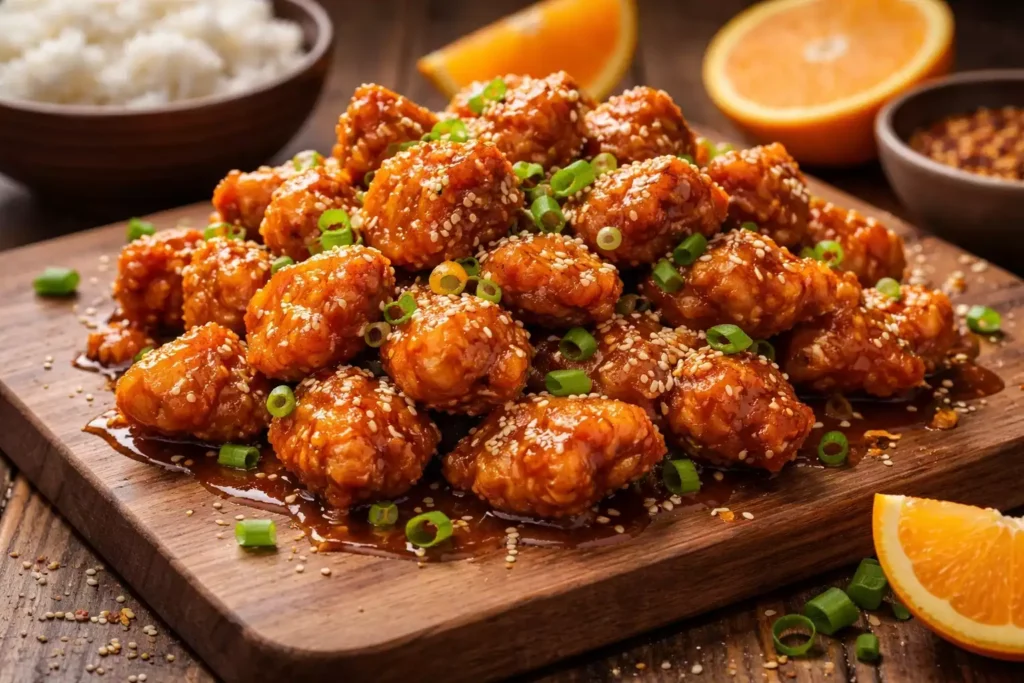
We used to get this at the mall. Now we make it at home and it is embarrassingly better. That sentence is the entire arc of how orange chicken entered my household and stayed there permanently. My kids requested it every week for months after the first time I made it. My husband declared the mall version “irrelevant.” I still make it weekly. The mall has noticed nothing and carries on without us.
Orange chicken — the real version, not the pale imitation that arrives in a styrofoam container — is crispy fried chicken pieces tossed in a glossy, intensely orange-forward sauce that balances sweet, sour, and slightly spicy in a way that is aggressively satisfying. The crispy coating should stay crispy even after the sauce goes on. The orange flavor should taste like actual orange, not orange-flavored candy. The whole thing should take about thirty minutes and make your kitchen smell incredible.
This recipe does all of that. The double-fry technique keeps the coating shatteringly crisp under the glaze. The fresh orange zest and juice in the sauce taste like food, not flavoring. My family has not returned to mall orange chicken and I consider this a personal victory.
Why This Orange Chicken Works
The double-fry is the key. First fry at 160°C sets the coating and partially cooks the chicken. Second fry at 190°C crisps the outside to a golden shatter. This is the technique used in every Chinese restaurant that serves good fried chicken — the second hot fry drives out residual moisture from the coating and creates the crunch that survives sauce application.
The sauce uses both fresh orange juice (flavor and acidity) and orange zest (aromatic oils). Zest is what makes the sauce taste like real orange rather than artificial orange candy. Many takeout versions use only juice concentrate; zest is the difference between a sauce that tastes like fruit and one that tastes like chemistry.
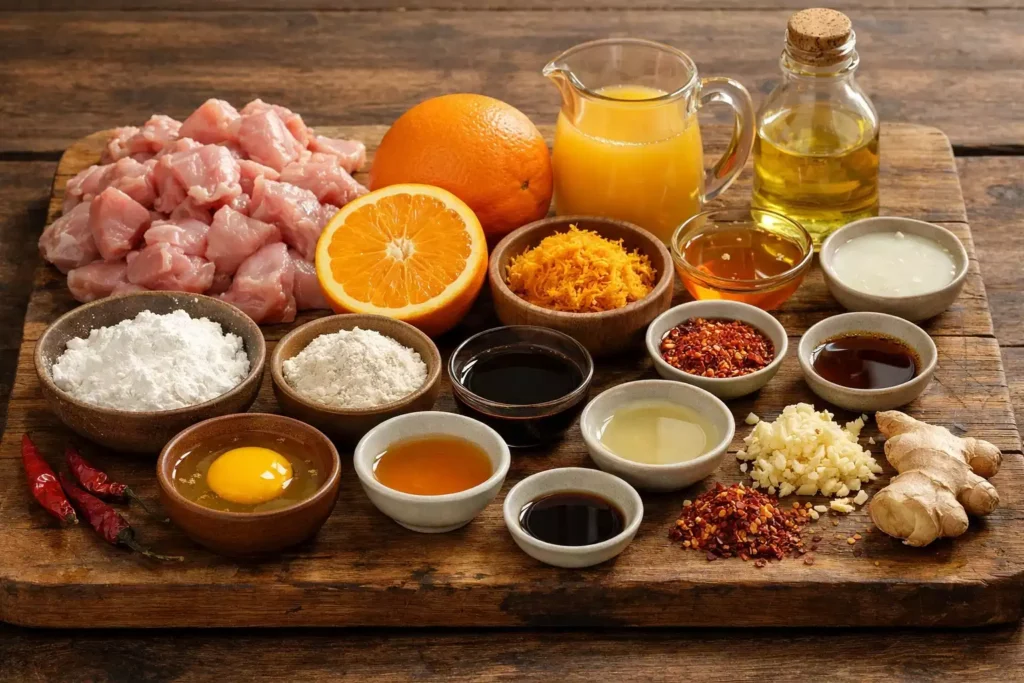
Ingredients
For the Chicken
- 700g (1.5 lbs) boneless, skinless chicken thighs, cut into 4cm pieces
- 1 tsp soy sauce
- 1 tsp Shaoxing rice wine
- 1 egg
- 100g (¾ cup) cornstarch
- 50g (½ cup) plain flour
- Oil for deep frying
For the Orange Sauce
- Zest and juice of 2 large oranges (about 150ml juice)
- 3 tbsp soy sauce
- 3 tbsp sugar or honey
- 2 tbsp rice vinegar
- 1 tbsp cornstarch dissolved in 2 tbsp water
- 1 tsp sesame oil
- 1 tsp chili flakes or dried chili (optional)
- 4 cloves garlic, minced
- 1 tsp fresh ginger, grated
How to Make It
1
1Marinate the Chicken
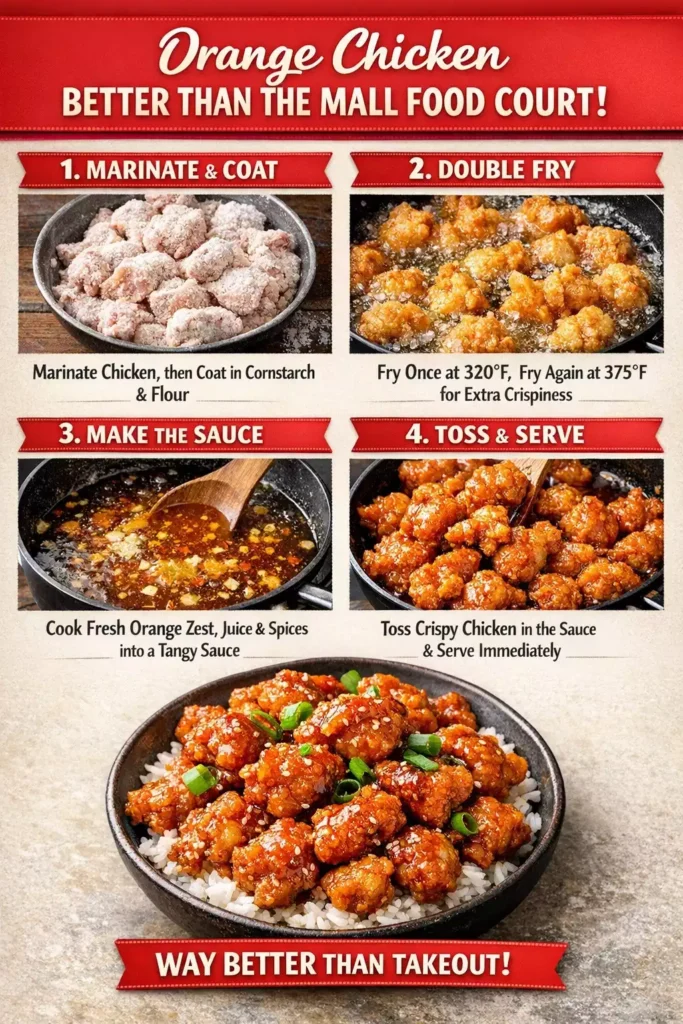
Toss the chicken pieces with soy sauce and Shaoxing wine. Marinate for 15 minutes minimum. Add the egg and mix well. Combine the cornstarch and flour in a bowl. Dredge each chicken piece in the cornstarch-flour mixture, pressing firmly to adhere. Shake off excess. Set on a wire rack for 5 minutes — this helps the coating stick before frying.
2
2Make the Sauce
Combine orange zest, orange juice, soy sauce, sugar, rice vinegar, garlic, ginger, and chili flakes in a small saucepan. Bring to a simmer over medium heat. Add the cornstarch slurry and stir until the sauce thickens and becomes glossy — about 2 minutes. Add sesame oil. Taste: it should be bright, tangy-sweet, and clearly orange. Adjust with more vinegar for tanginess or sugar for sweetness. Keep warm.
3
3First Fry at Low Temperature
Heat oil to 160°C (320°F) in a heavy pot or wok. Fry the chicken in batches for 3–4 minutes until cooked through but only lightly golden. Do not overcrowd. Remove and drain on a wire rack or paper towels. Let the oil return to temperature between batches.
4
4Second Fry at High Temperature
Increase oil temperature to 190°C (375°F). Fry all the chicken again for 60–90 seconds until deep golden and shatteringly crisp. This second fry is fast — the chicken is already cooked from the first fry. You are only crisping the exterior now. Drain immediately on a wire rack.
5
5Toss and Serve
Pour the warm sauce over the crispy chicken and toss immediately. Serve within 5 minutes of saucing — the coating absorbs the sauce and the crispness diminishes over time. Garnish with sesame seeds and thinly sliced spring onions. Serve over steamed rice.
Orange Chicken Tips for Maximum Crispness
The wire rack, not paper towels. Rest fried chicken on a wire rack rather than paper towels. Paper towels trap steam and soften the bottom of the coating. A wire rack allows air circulation around the whole piece. This one change makes the coating stay crispier for longer.
Cornstarch is the crunch ingredient. The cornstarch-heavy coating is what produces the light, glassy, Chinese-restaurant-style crunch rather than a heavy bread coating. Do not substitute a breadcrumb or all-flour coating — the texture will be entirely different.
Two oranges, not orange juice from a carton. Fresh-squeezed orange juice and fresh zest produce a sauce that tastes genuinely like orange. Carton juice produces a thinner, less aromatic sauce. Use real oranges. The difference justifies the thirty seconds of squeezing.
Sauce separately, toss at serving. Make the sauce in advance and toss with the chicken only when ready to eat. Sauce sitting on crispy chicken dissolves the coating. Toss, plate, serve, eat. This sequence is the one.
Serving Orange Chicken
Serve over steamed jasmine rice with a garnish of sesame seeds and spring onions. Orange chicken is a complete one-dish meal and does not need accompaniment beyond rice, though it pairs very nicely with a simple cucumber salad or steamed broccoli if you want vegetables at the table. For the full takeout recreation experience at home, add fried rice and egg drop soup.
Variations Worth Trying
Spicier orange chicken. Add 1–2 tablespoons of sambal oelek or chili garlic sauce to the orange sauce for a version with genuine heat behind the sweetness. The orange-chili combination is excellent and produces a more complex flavor profile than either element alone.
With sesame. Add 2 tablespoons of toasted sesame seeds to the sauce and press extra sesame seeds into the coating before frying. Closer to sesame chicken territory but with the orange note. My kids call this “the fancy version.”
Baked version. Bake the coated chicken on a wire rack over a baking sheet at 220°C for 18–22 minutes instead of frying. The coating will not be as crispy as the fried version, but it is a legitimate weeknight shortcut and still delicious. Toss with the same sauce.
Storage
Leftover orange chicken keeps in the refrigerator for up to 3 days. The coating will soften overnight. Reheat in a 200°C oven for 8–10 minutes to re-crisp, or in an air fryer for 4–5 minutes. Do not microwave — microwaving makes the coating permanently soggy. The sauce can be made up to 3 days ahead and refrigerated. Make the sauce ahead and fry the chicken fresh for the best result.
FAQ
Can I use an air fryer instead of deep frying?
Yes. Spray the coated chicken pieces with oil and air-fry at 200°C for 12–15 minutes, flipping halfway. The result will be less crispy than deep-fried but still very good — the cornstarch coating does most of the work. Skip the double-fry and do one air-fry cycle at high heat.
What makes this different from General Tso’s chicken?
General Tso’s is darker, spicier, and uses a ginger-garlic-chili sauce with less orange character. Orange chicken uses fresh orange juice and zest as the primary flavor note. Both use fried chicken with a similar coating technique. They are related dishes but distinctly different flavor profiles. If you love one, you will likely enjoy the other.
Why does my orange sauce taste bland?
Likely causes: not enough orange zest (zest contains the aromatic oils), too much water diluting the sauce, or under-seasoned soy sauce. Add more orange zest, reduce the sauce to concentrate the flavors, and taste with added soy sauce. The sauce should taste quite bold before it hits the fried chicken — the chicken itself is relatively neutral and needs an assertive sauce to carry the dish.
Kasia Polish Mom
Polish-born, Chicago-raised, feeding a family of six with babcia’s recipes and a global pantry. I grew up folding pierogi at my grandmother’s kitchen table and never stopped — 15+ years of cooking from scratch, one Sunday dinner at a time. Everything here is tested on four kids, a hungry husband, and the memory of a woman who never measured anything but always got it right.