
Kasia Polish Mom
Polish-born, Chicago-raised, feeding a family of six with babcia’s recipes and a global pantry. I grew up folding pierogi at my grandmother’s kitchen table and never stopped — 15+ years of cooking from scratch, one Sunday dinner at a time. Everything here is tested on four kids, a hungry husband, and the memory of a woman who never measured anything but always got it right.
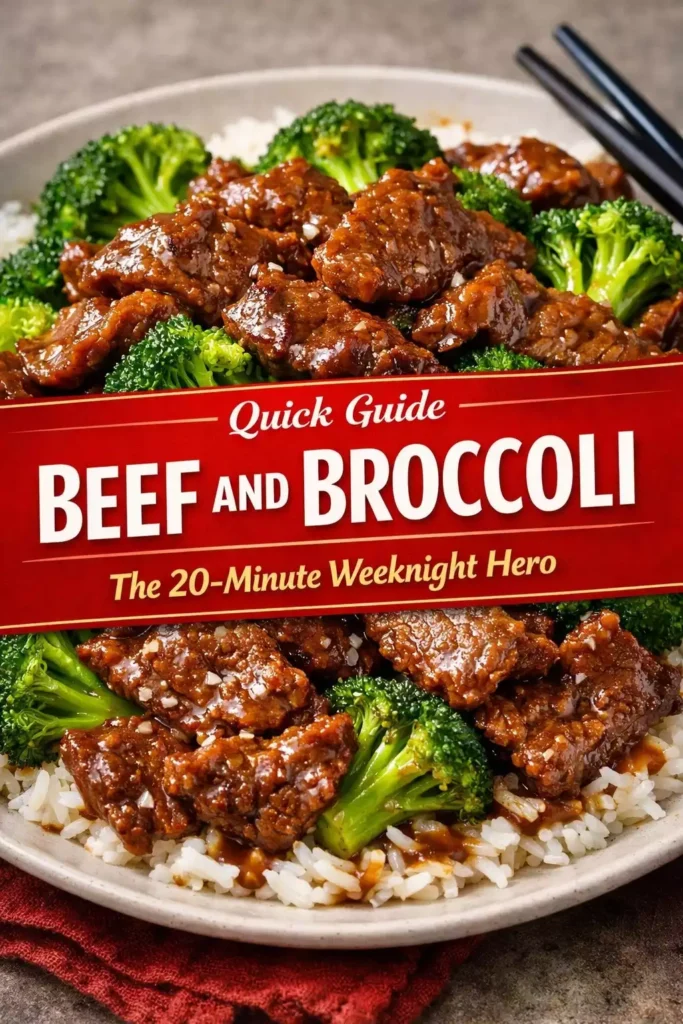
Beef and Broccoli — The 20-Minute Weeknight Hero
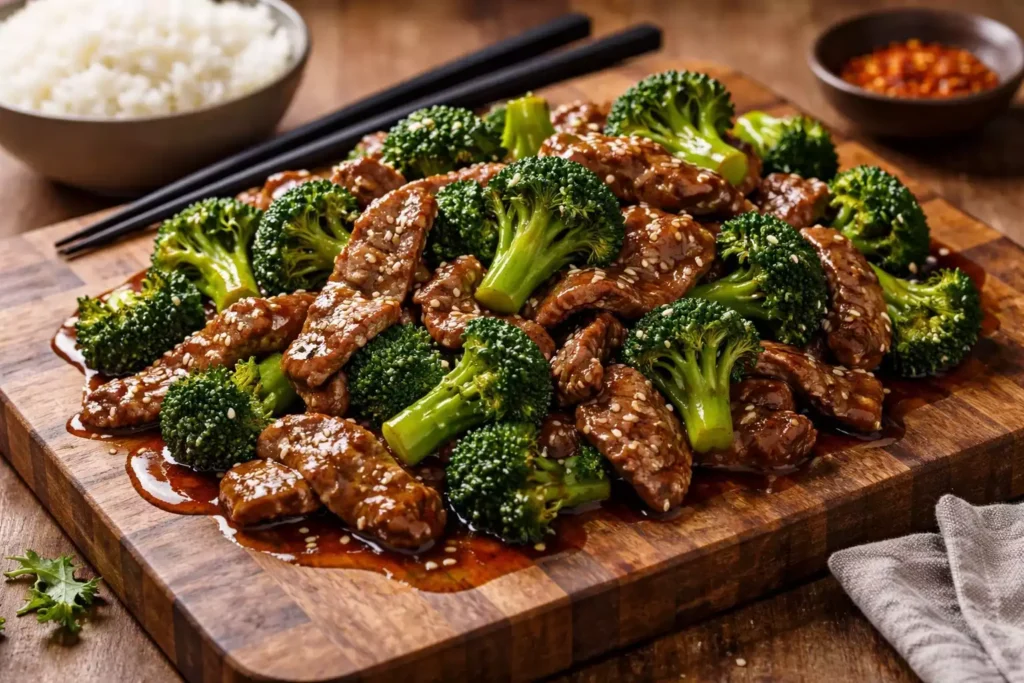
This is what I make on Tuesdays when I have exactly 20 minutes and four hungry humans to feed. Beef and broccoli — a 20-minute weeknight hero that looks and tastes like you ordered from somewhere good. The beef is velvet-tender, the broccoli is crisp-bright, and the sauce coats everything in a glossy, savory-sweet film that you will absolutely use bread to mop up from the plate. I know this because every person at my table does exactly that.
Chinese-American beef and broccoli is deceptively simple: thinly sliced beef, blanched broccoli, a soy-oyster-garlic sauce thickened with cornstarch. The technique that makes it restaurant-quality — the velveting of the beef — is a five-minute marinade step that most home cooks skip. Do not skip it. It is the difference between silky, tender beef and tough, chewy beef, and it takes no more effort than mixing a few things in a bowl.
This recipe is in my permanent Tuesday rotation and has been for two years. My family has never complained about Tuesday since I added it to the menu. That is a meaningful data point.
Why This Beef and Broccoli Works
Velveting is the restaurant secret that most home cooks do not know about. A brief marinade of baking soda, cornstarch, and soy sauce alters the surface proteins of the beef, keeping it tender under high heat. The baking soda raises the pH slightly, preventing the proteins from seizing. The cornstarch forms a protective coating. The result is beef that stays silky and tender in a hot wok rather than turning tough and chewy.
The broccoli is blanched briefly before stir-frying — this sets the brilliant green color and par-cooks it so it needs only 30 seconds in the hot wok to finish. Stir-frying raw broccoli in a home kitchen (where the heat is lower than a restaurant wok) produces pale, tough, half-cooked florets. Blanching first gives you bright, tender-crisp results every time.
Ingredients
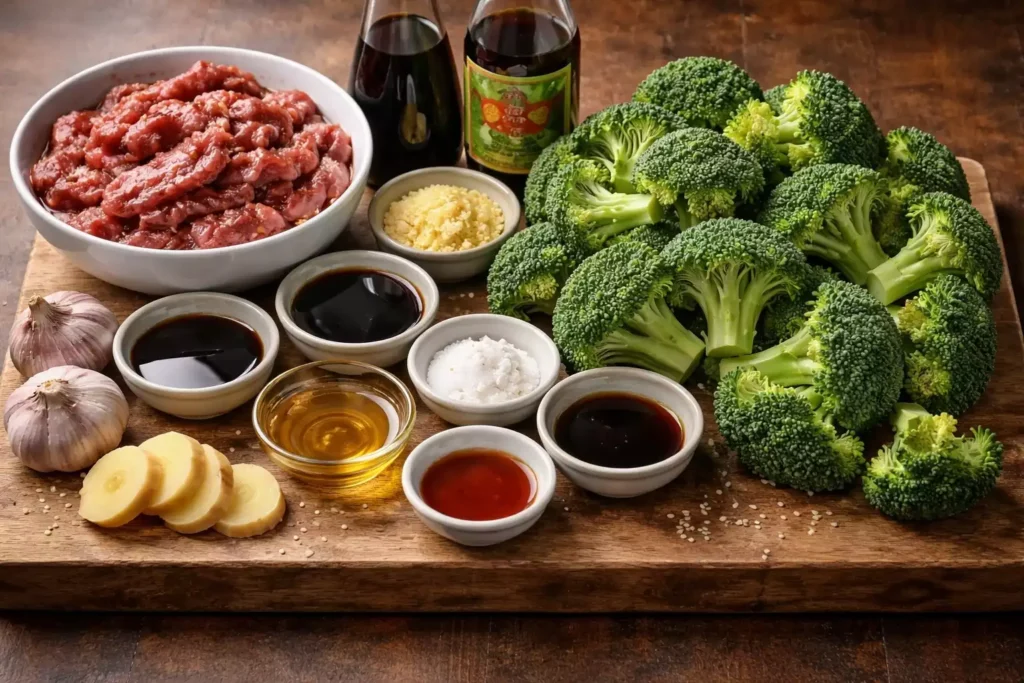
For the Beef and Velvet Marinade
- 500g (1.1 lbs) beef flank steak or sirloin, thinly sliced against the grain
- ¼ tsp baking soda
- 1 tbsp cornstarch
- 1 tbsp soy sauce
- 1 tbsp Shaoxing rice wine
- 1 tsp sesame oil
For the Broccoli
- 1 large head broccoli (about 500g), cut into medium florets
- Salted boiling water for blanching
For the Stir Fry Sauce
- 3 tbsp oyster sauce
- 2 tbsp soy sauce
- 1 tbsp Shaoxing rice wine
- 1 tsp sugar
- 1 tbsp cornstarch dissolved in 3 tbsp water
- 1 tsp sesame oil
- 5 cloves garlic, minced
- 1 tsp fresh ginger, grated
- 3 tbsp neutral oil for cooking
How to Make It
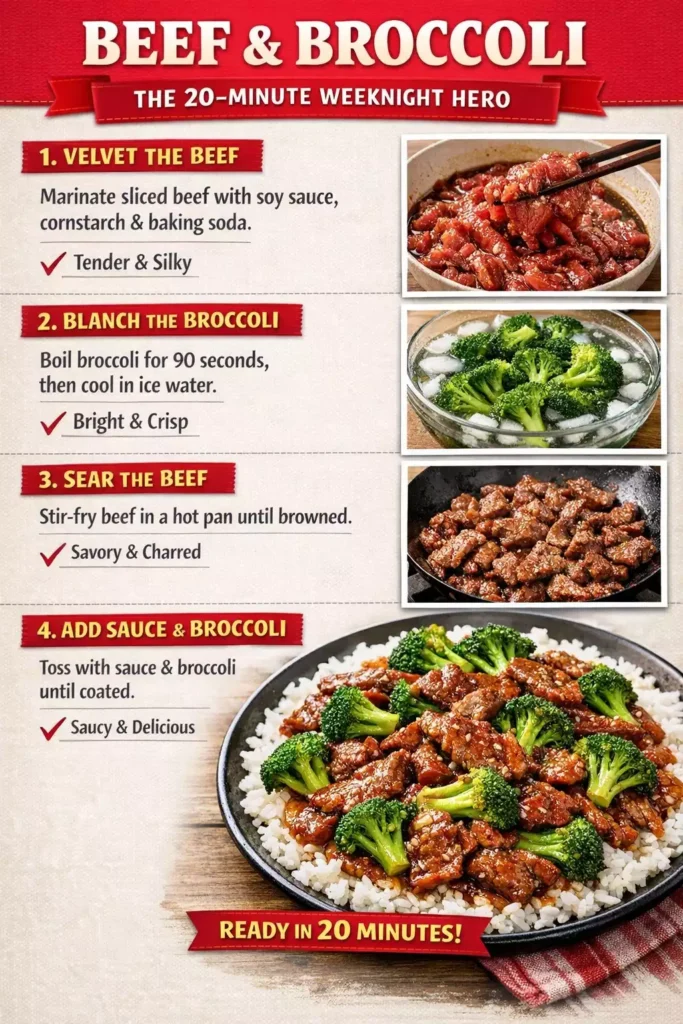
1
1Velvet the Beef
Slice the beef very thinly against the grain — about 3mm thick. Partially freezing the beef for 20 minutes makes slicing much easier and more precise. Combine with baking soda, cornstarch, soy sauce, Shaoxing wine, and sesame oil. Mix well and marinate for 15–20 minutes. Do not marinate longer than 30 minutes with baking soda — longer starts to affect the flavor of the beef.
2
2Blanch the Broccoli
Blanch the broccoli florets in well-salted boiling water for exactly 90 seconds. Drain and rinse immediately under cold water to stop cooking and set the green color. The broccoli should be bright green and just slightly tender but still firm. Pat dry.
3
3Sear the Beef
Heat a wok or large skillet over highest heat until smoking. Add 2 tablespoons of oil. Add the beef in a single layer, do not stir for 45–60 seconds until seared on the bottom. Then stir-fry for another 60 seconds until just cooked through with golden edges. Remove from the wok and set aside.
4
4Finish and Sauce
Add remaining oil to the wok. Stir-fry the garlic and ginger for 30 seconds. Add the broccoli and toss for 30 seconds. Return the beef to the wok. Pour in the sauce and toss everything together over high heat for 60–90 seconds until the sauce thickens and coats everything. Finish with sesame oil. Serve immediately over steamed rice.
Beef and Broccoli Tips
Against the grain is critical. Cutting with the grain produces long tough fibers that are chewy. Cutting against the grain cuts those fibers short, making every slice tender. Look at the meat, identify which way the muscle fibers run, and cut perpendicular to them. This is a lifetime technique, not just for this recipe.
Freeze the beef briefly. 20 minutes in the freezer firms the beef just enough to slice very thin without it slipping around. Partially frozen beef slices clean and even. This is the easiest way to get restaurant-thin slices at home without special equipment.
High heat is non-negotiable. Wok cooking at low heat produces steamed, grey meat. The wok must be smoking hot before the beef goes in. If your stove has a high-BTU burner, use it. For electric stoves, heat the wok empty for 3–4 minutes before adding oil.
Serving Beef and Broccoli
Over steamed white rice for the classic presentation. For a more filling meal, serve alongside fried rice or lo mein. Pairs naturally with Mongolian beef if you are making a larger Chinese feast at home.
Variations Worth Trying
With snow peas instead of broccoli. Skip the blanching step entirely (snow peas need only 30 seconds in the wok) and use snow peas for a faster, crunchier variation. The sauce and beef are identical.
With chicken. Substitute boneless chicken thigh, velveted the same way (use egg white instead of baking soda for chicken). The resulting chicken and broccoli is equally excellent and slightly more kid-friendly.
Spicy version. Add 1–2 tablespoons of chili garlic sauce or doubanjiang to the sauce for a Szechuan-style beef and broccoli with real heat. Add Szechuan peppercorns to the oil infusing step for the full ma la experience.
Storage
Refrigerate for up to 3 days. Reheat in a hot wok with a splash of water to loosen the sauce. The beef will be slightly firmer after refrigeration but still tender. Freezes adequately but the texture of both beef and broccoli changes; best fresh.
FAQ
What cut of beef is best for beef and broccoli?
Flank steak is the classic choice — flavorful, affordable, and slices thin easily. Sirloin is slightly more tender and slightly more expensive. Skirt steak works well. Avoid stew beef or chuck cuts — they need much longer cooking to become tender than a quick stir-fry can provide. Whatever cut you use, slice against the grain and thin.
Can I use frozen broccoli?
Yes — thaw completely and pat very dry before using. Skip the blanching step. Frozen broccoli is already partially cooked and needs only 30–60 seconds in the wok. The texture will be slightly softer than fresh blanched broccoli, but perfectly acceptable for weeknight cooking.
My beef is tough and chewy. What went wrong?
Three possible causes: sliced with the grain instead of against it (most common), skipped or shortened the velveting marinade, or cooked on insufficient heat. Fix: slice against the grain, velvet for the full 15–20 minutes, and get the wok smoking hot before the beef goes in.
Kasia Polish Mom
Polish-born, Chicago-raised, feeding a family of six with babcia’s recipes and a global pantry. I grew up folding pierogi at my grandmother’s kitchen table and never stopped — 15+ years of cooking from scratch, one Sunday dinner at a time. Everything here is tested on four kids, a hungry husband, and the memory of a woman who never measured anything but always got it right.
Biały Barszcz — Poland’s Other Easter Soup
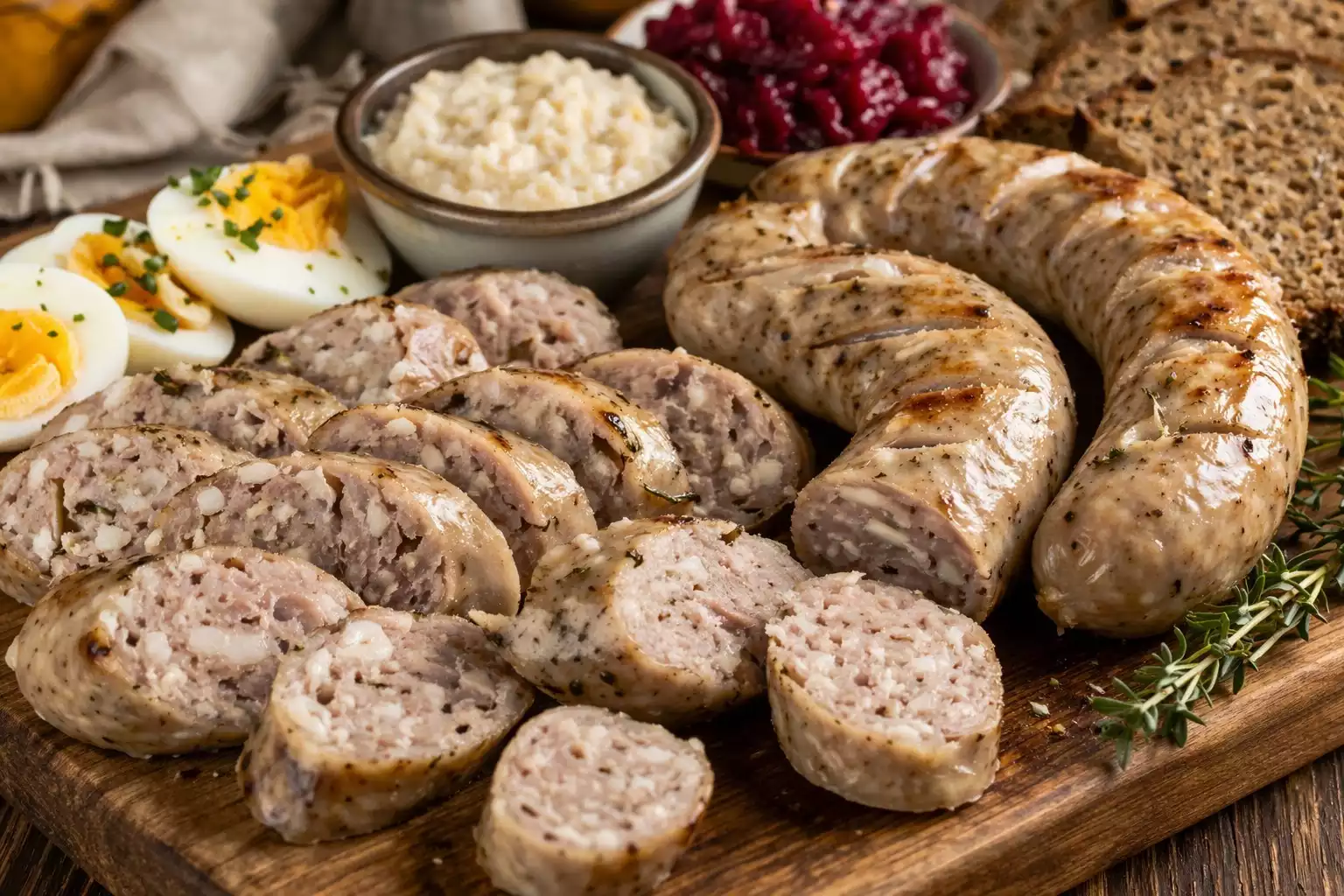
Biała Kiełbasa — The Easter Sausage Every Polish Table Needs
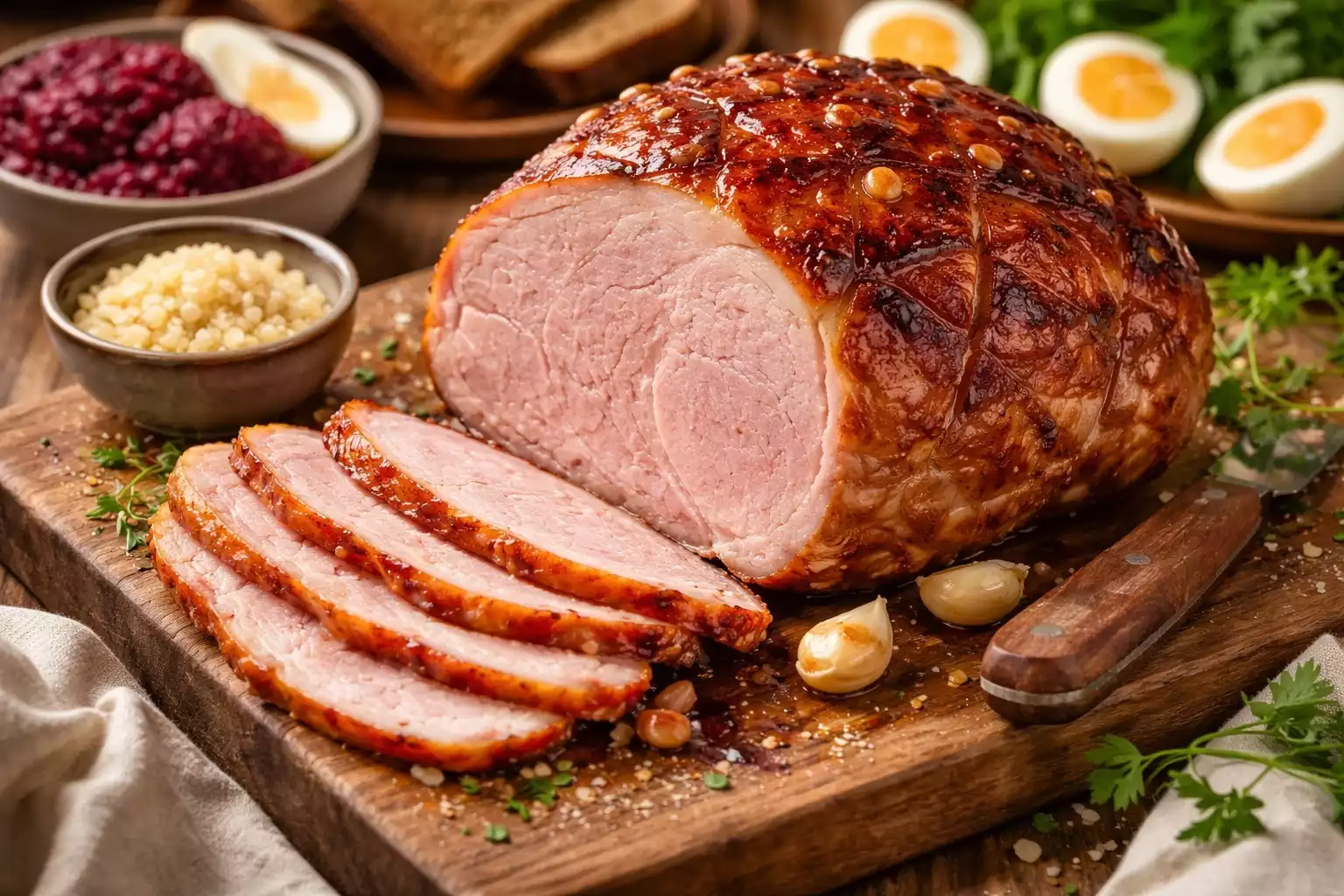
Szynka Wielkanocna — Polish Easter Ham Done Right
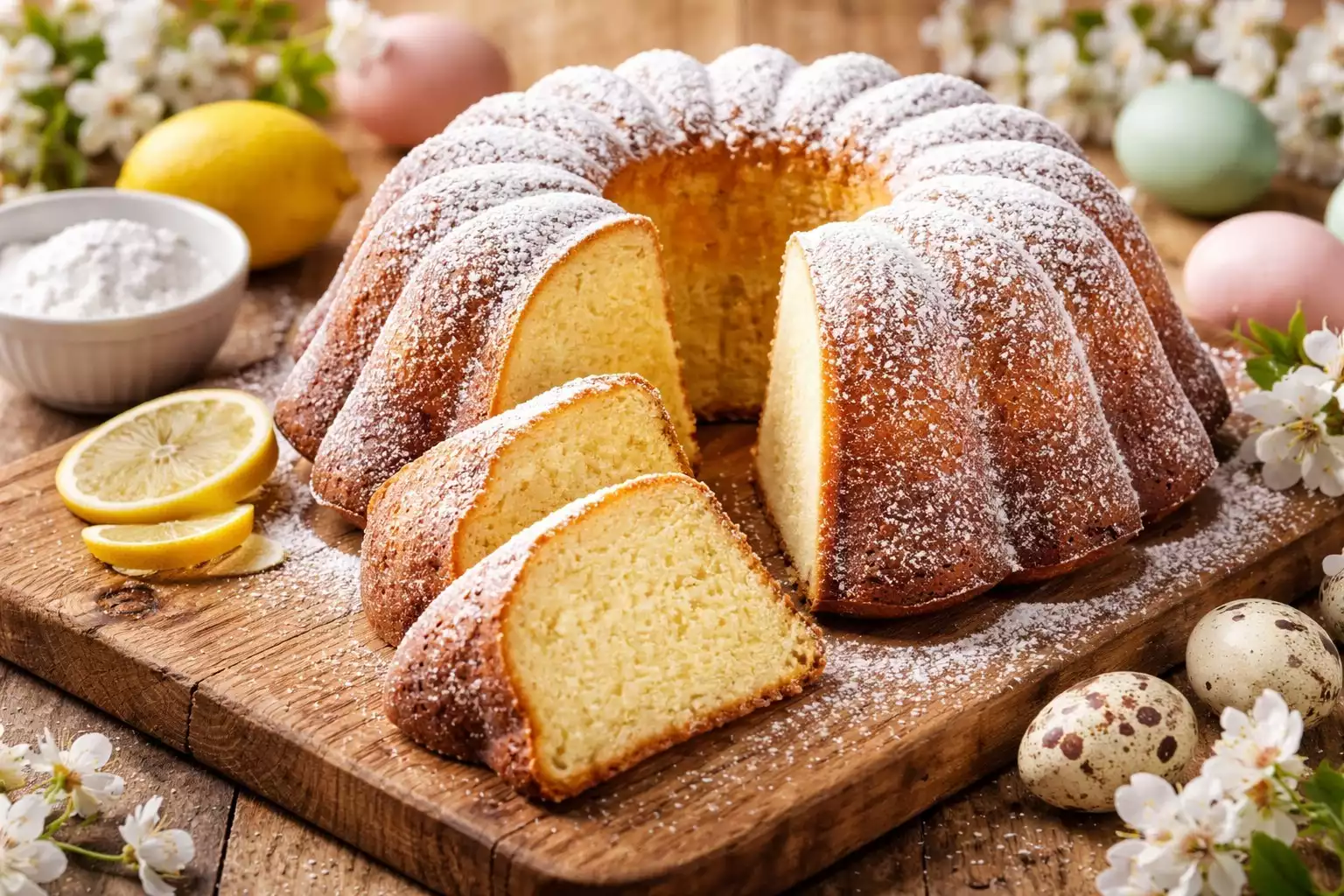
Babka Piaskowa — The Foolproof Polish Easter Cake
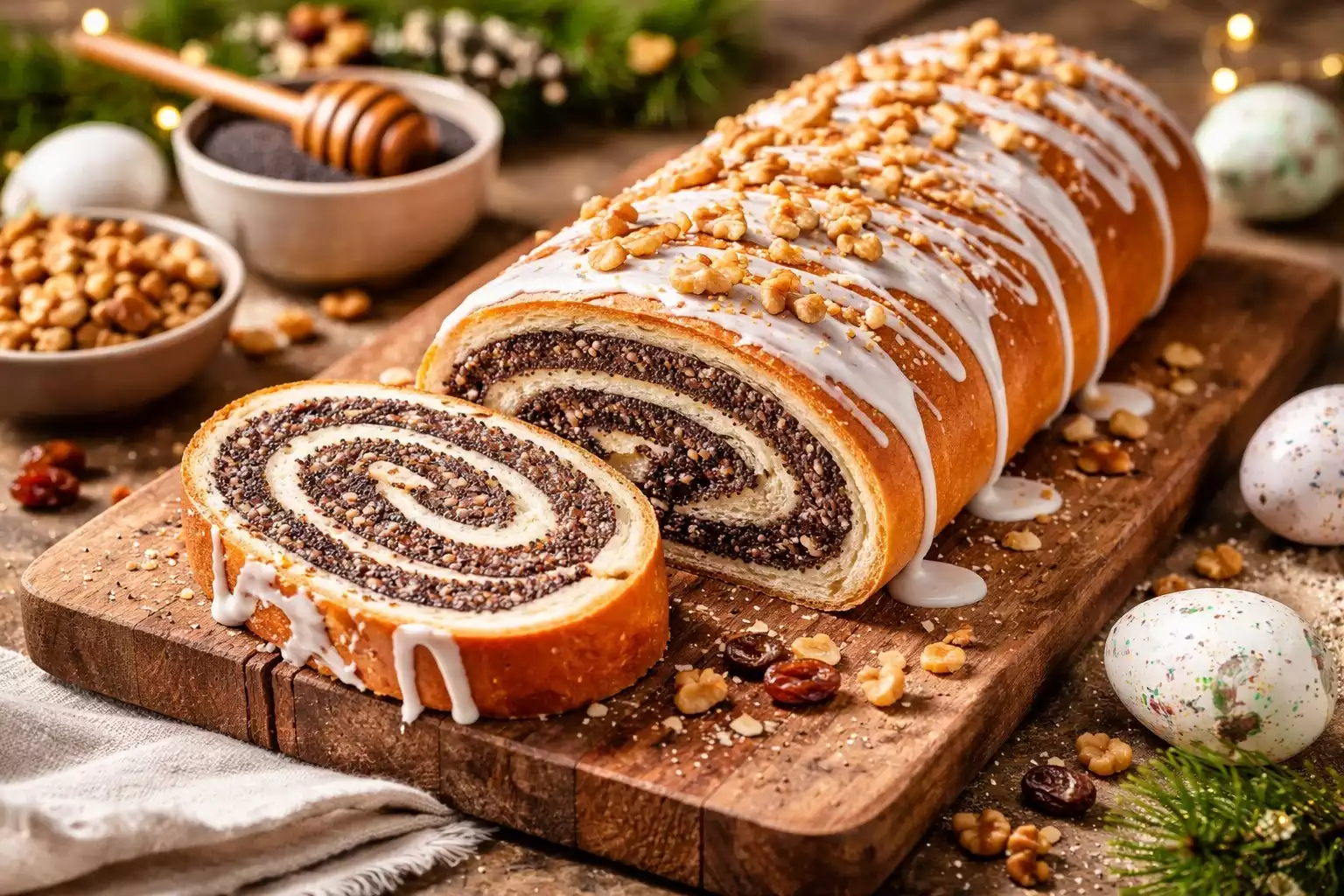
Makowiec — Polish Poppy Seed Roll for Every Holiday