
Kasia Polish Mom
Polish-born, Chicago-raised, feeding a family of six with babcia’s recipes and a global pantry. I grew up folding pierogi at my grandmother’s kitchen table and never stopped — 15+ years of cooking from scratch, one Sunday dinner at a time. Everything here is tested on four kids, a hungry husband, and the memory of a woman who never measured anything but always got it right.
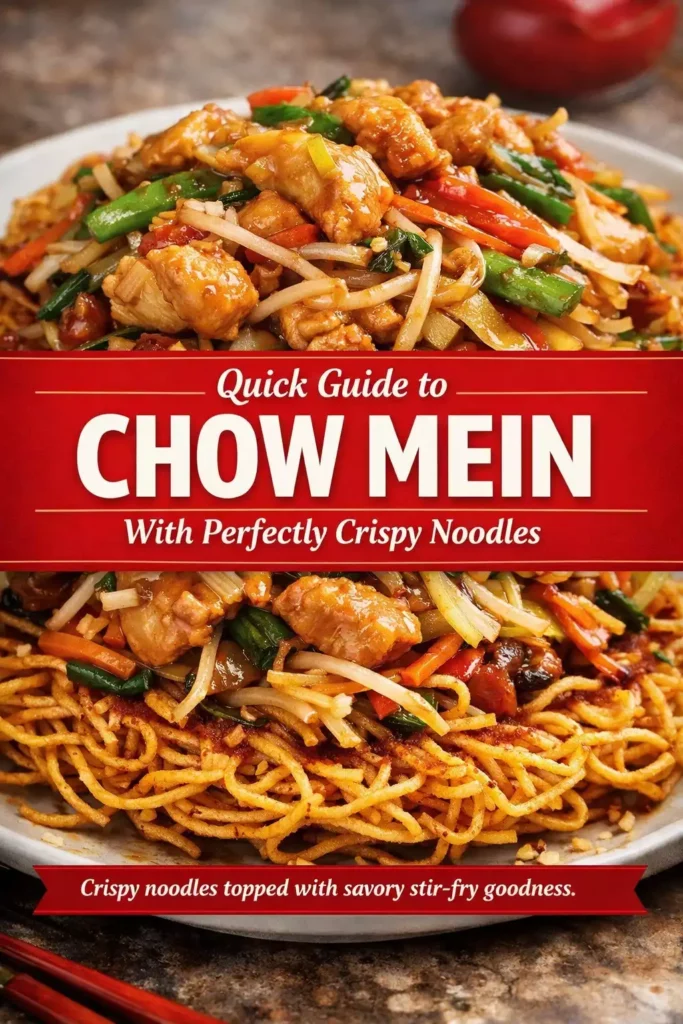
Chow Mein With Perfectly Crispy Noodles
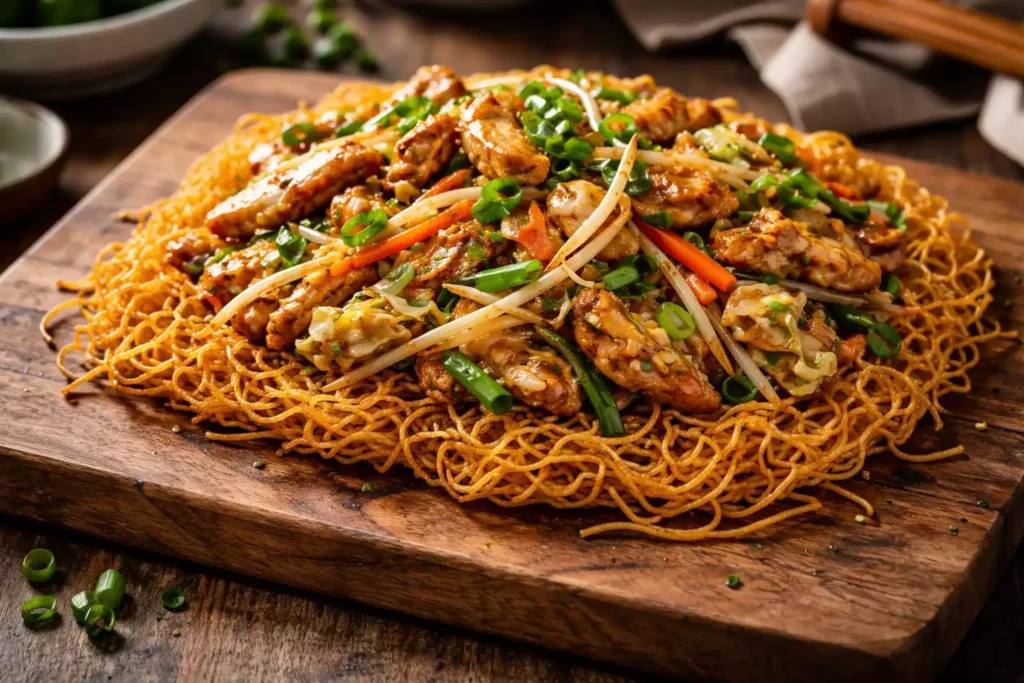
Six batches of soggy noodles before I cracked the crispy code. Batch seven was perfection. I consider this a reasonable price to pay for knowledge that I now get to share with you, so your first batch is already batch seven. You are welcome.
Chow mein — the Chinese noodle dish that most Americans know but rarely order correctly — is not the same as lo mein. The critical difference is the noodle treatment: lo mein noodles are boiled and tossed in sauce while still soft. Chow mein noodles are boiled, spread in a pan, and pan-fried until the bottom layer is shatteringly crispy, then the sauced ingredients are poured on top. The crispy-saucy contrast is the entire point of chow mein and it is spectacular when done correctly.
The trick I discovered on batch four: the noodles need to be dry before they hit the pan. Really dry. This is where batches one through six went wrong. Wet noodles steam in the pan and never develop the crust. Dry noodles — drained well, spread on a towel, left to dry for ten minutes — hit the hot oil and crisp up within 3 minutes. That is the entire secret. Now you know it on batch one.
The Crispy Noodle Technique
Crispy chow mein noodles require two things: dry noodles and a hot pan with adequate oil. After boiling, the noodles must be thoroughly drained and ideally dried briefly to remove surface moisture. They go into hot oil in a flat layer and must not be disturbed for at least 2–3 minutes — premature stirring prevents crust formation. The bottom layer crisps. Then the whole cake flips. Then the top layer crisps. Then the sauce goes on top.
Ingredients
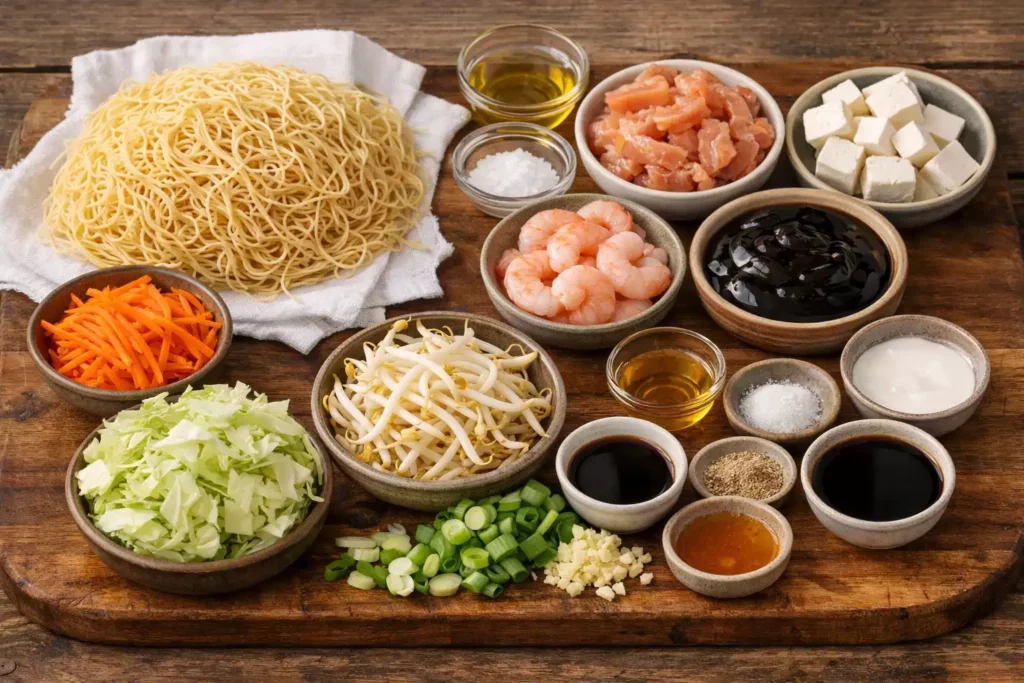
For the Crispy Noodle Base
- 300g (10 oz) fresh or dried thin egg noodles
- 3 tbsp neutral oil for pan-frying
- Salt for boiling water
For the Stir Fry Topping
- 300g protein of choice (chicken, beef, shrimp, or firm tofu), sliced
- 2 cups (150g) bean sprouts
- 1 medium carrot, julienned
- 1 cup (80g) cabbage, shredded
- 4 spring onions, sliced
- 3 cloves garlic, minced
For the Sauce
- 3 tbsp oyster sauce
- 2 tbsp soy sauce
- 1 tsp dark soy sauce
- 1 tsp sesame oil
- 1 tsp sugar
- 1 tbsp cornstarch dissolved in 4 tbsp water
- White pepper to taste
How to Make It
1
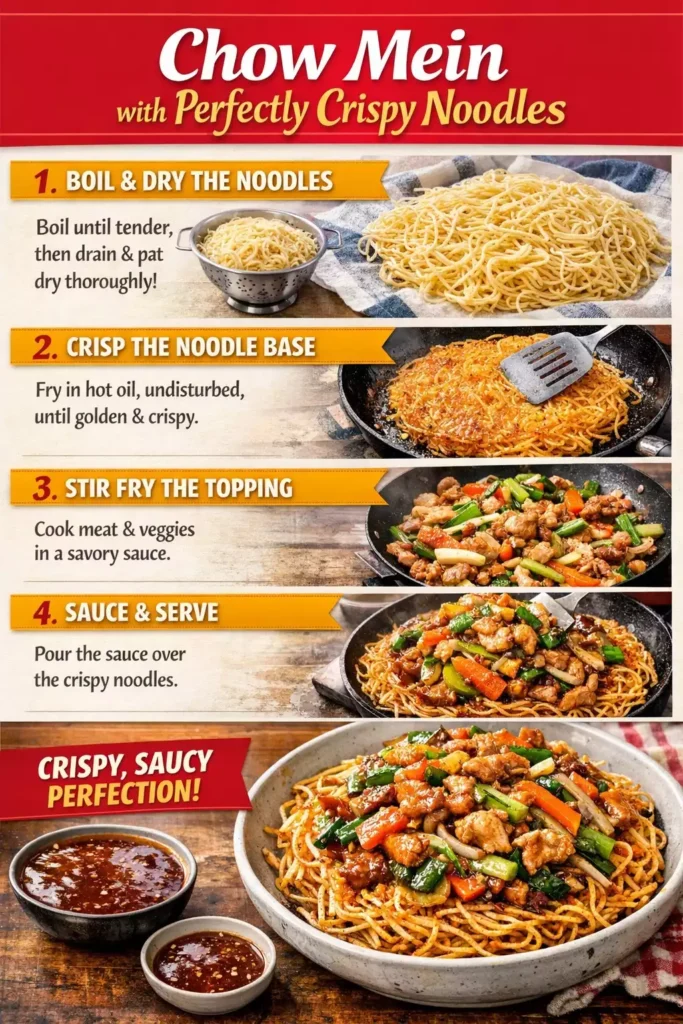
1Boil and Dry the Noodles
Cook noodles in well-salted boiling water until just cooked through but still firm — they will cook more in the pan. Drain very thoroughly. Spread on a clean kitchen towel or paper towels and pat dry. Allow to air-dry for 10 minutes. This step is mandatory. Wet noodles will not crisp.
2
2Crisp the Noodle Base
Heat 2 tablespoons of oil in a large non-stick pan or wok over high heat until shimmering. Add the dry noodles and press into a flat cake. Cook undisturbed for 3 minutes — the bottom should be golden-crispy when you peek. Flip carefully in sections if needed. Cook the other side for 2–3 minutes until crispy. Slide onto a serving plate.
3
3Stir Fry the Topping
In the same pan, heat remaining oil. Add garlic and stir 30 seconds. Add protein and cook until done — about 3–4 minutes for chicken, 2 minutes for shrimp. Add the harder vegetables (carrot, cabbage) and stir-fry 2 minutes. Add bean sprouts and spring onions and toss for 30 seconds.
4
4Sauce and Serve
Pour the sauce over the vegetables and toss. The sauce should thicken quickly from the cornstarch and coat everything in a glossy layer. Pour the sauced topping over the crispy noodle base. Serve immediately — the contrast between crispy noodles and saucy topping is best within the first few minutes of serving.
Chow Mein Tips
The drying step is the entire secret. I cannot overstate this. Boil the noodles, drain them, and then dry them. Wet noodles steam in the pan and become sticky and soft instead of forming a crispy crust. Paper towels, a kitchen towel, a drying rack — any method works. Just remove the moisture.
Do not move the noodles. Once the noodle cake is in the pan, leave it alone for 3 minutes. The urge to stir is strong. Resist. You are building a crust and that requires patience and stillness. Move them and you break the crust. Leave them and you get the crunch.
A flat noodle cake, not a pile. Press the noodles into an even, flat layer before the crisping stage. An uneven pile crisp unevenly. A flat pressed cake crisp uniformly and flips cleanly.
Serving Chow Mein
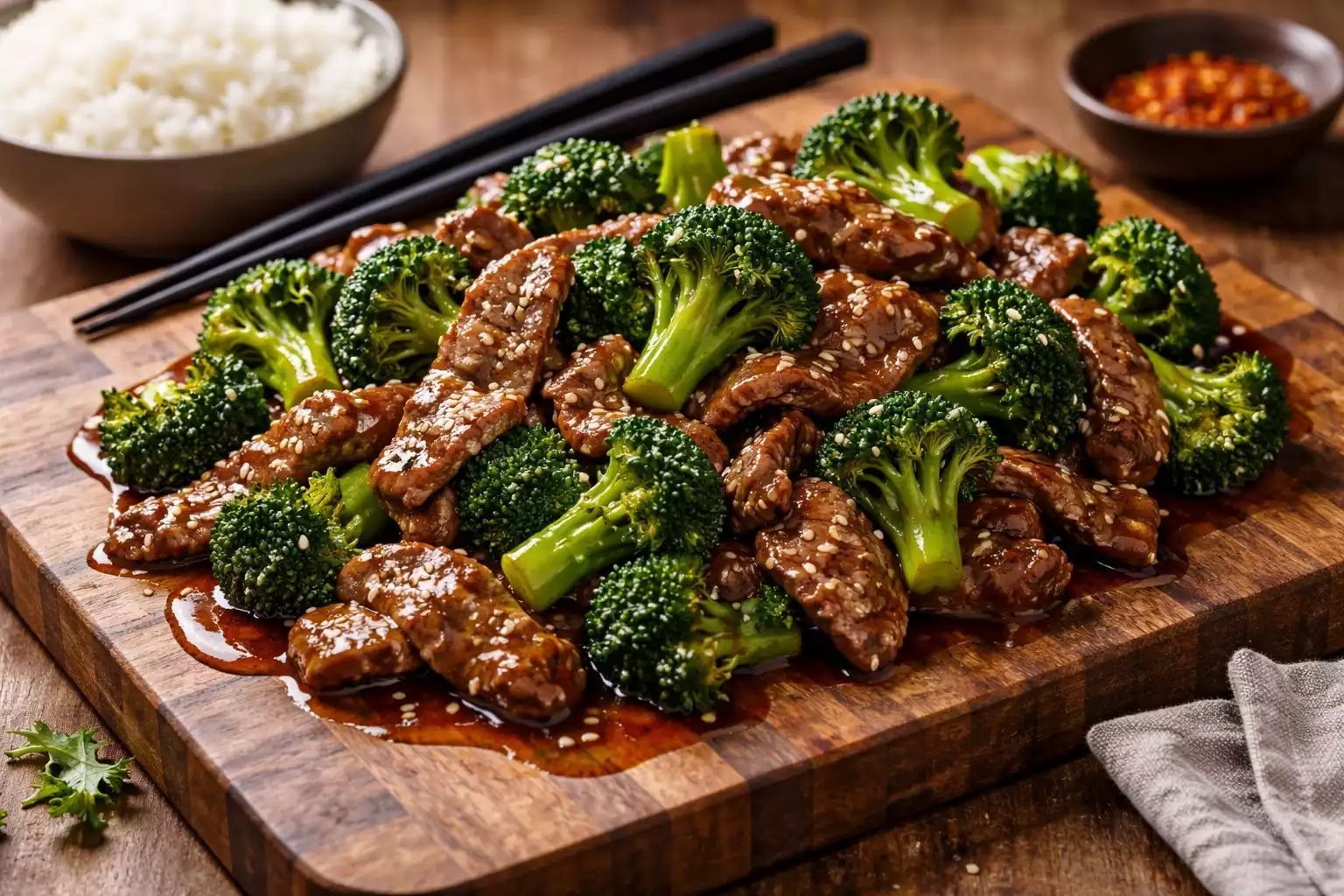
Serve immediately after saucing the crispy base — the contrast of textures is the whole experience and diminishes after 10 minutes as the crispy noodles absorb the sauce. For a full spread, pair with kung pao chicken or beef and broccoli.
Variations Worth Trying
Hong Kong crispy chow mein. Use very thin egg noodles (the kind sold as “Hong Kong noodles”) and deep-fry instead of pan-fry for an ultra-crispy noodle nest. The noodles become almost like a fried noodle cracker under the sauce. This is the version served in Cantonese restaurants and it is spectacular.
Vegetable chow mein. Load the topping with five or six different vegetables — bok choy, snow peas, shiitake mushrooms, bell pepper, zucchini. Use vegetable broth in the sauce. A vegetarian version that is genuinely satisfying.
Storage
Best eaten fresh — the crispy noodles absorb the sauce and soften completely within a few hours. If storing leftovers, the noodles will be soft but the flavors remain excellent. Reheat in a hot pan for 3–4 minutes to restore some texture. For make-ahead situations, prepare the sauce and stir-fry topping ahead and crisp the noodles fresh at serving time.
FAQ
What noodles work best for crispy chow mein?
Thin, fresh egg noodles produce the best crust. Dried thin egg noodles also work well. Thicker noodles take longer to dry and crisp and may have a doughy center. Look for noodles labeled “chow mein noodles” or “Hong Kong style noodles” at Asian grocery stores for the best result.
My noodles are soft, not crispy. What went wrong?
Causes in order of likelihood: noodles were not dry enough before pan-frying (most common), pan was not hot enough before the noodles went in, or the noodles were moved before the crust formed. Fix for next time: dry the noodles completely, heat the pan until the oil shimmers, and then do not touch for a full 3 minutes.
Kasia Polish Mom
Polish-born, Chicago-raised, feeding a family of six with babcia’s recipes and a global pantry. I grew up folding pierogi at my grandmother’s kitchen table and never stopped — 15+ years of cooking from scratch, one Sunday dinner at a time. Everything here is tested on four kids, a hungry husband, and the memory of a woman who never measured anything but always got it right.