
Kasia Polish Mom
Polish-born, Chicago-raised, feeding a family of six with babcia’s recipes and a global pantry. I grew up folding pierogi at my grandmother’s kitchen table and never stopped — 15+ years of cooking from scratch, one Sunday dinner at a time. Everything here is tested on four kids, a hungry husband, and the memory of a woman who never measured anything but always got it right.
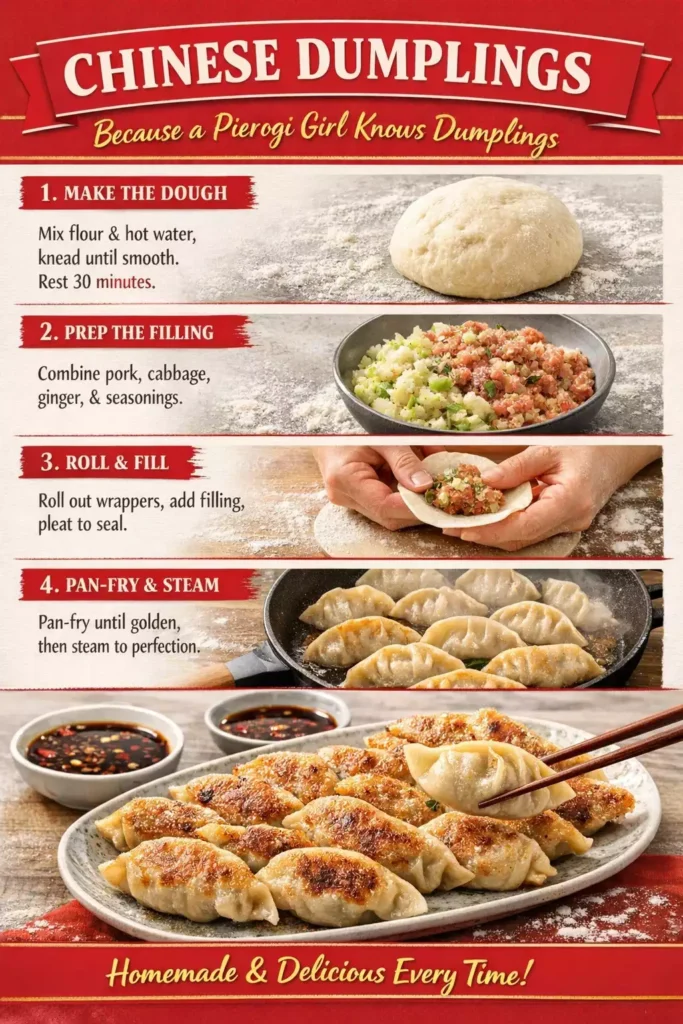
Chinese Dumplings — Because a Pierogi Girl Knows Dumplings
A pierogi girl and a dumpling girl are the same girl. Just different wrappers. I grew up making pierogi with my babcia in Wrocław and the first time I pleated a Chinese jiaozi I felt the same fold-and-seal satisfaction that I have known since I was six years old. The fillings are different. The technique is different. The communal ritual of making them together is identical. Dumplings are a universal human experience and I am here for all of them.
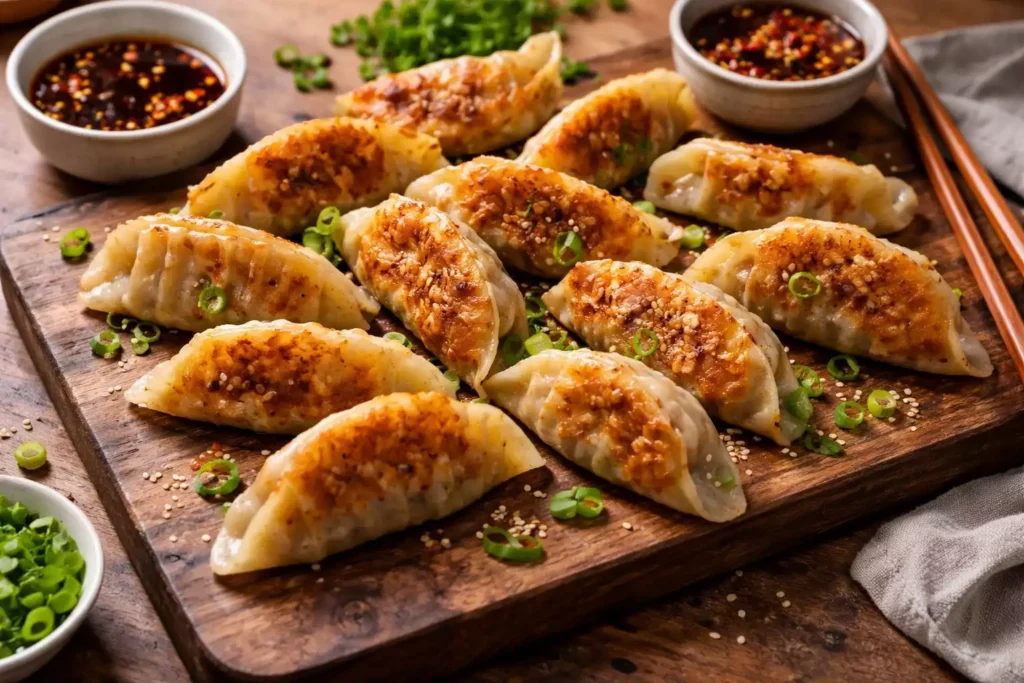
Chinese jiaozi — dumplings filled with pork and ginger, pan-fried to crispy on the bottom and steamed to tender on top — are one of the most satisfying things you can make at home. They require patience and a little skill in the pleating (which you will develop quickly), but the reward is a food that is genuinely better made at home than anything you can buy pre-made. The pork and ginger filling is fragrant and juicy. The wrappers are chewy. The crispy bottom from the pan-fry is the textural triumph.
These are my kids’ favorite “make together” dinner. Everyone pleats. Nobody is good at it at first. Everyone gets better. The imperfect dumplings taste as good as the perfect ones. I consider this a lesson in life as much as a recipe.
The Pleating Technique (Do Not Fear It)
Pleating jiaozi looks intimidating but requires only one fold technique: put filling in the center, fold the wrapper in half, and press 4–5 small pleats along the edge while pressing the other side smooth. Watch one video demonstration and practice on the first five dumplings — by dumpling ten you will have the motion and by dumpling twenty it will be automatic. Your first few will be ugly. They will still taste excellent.
Ingredients
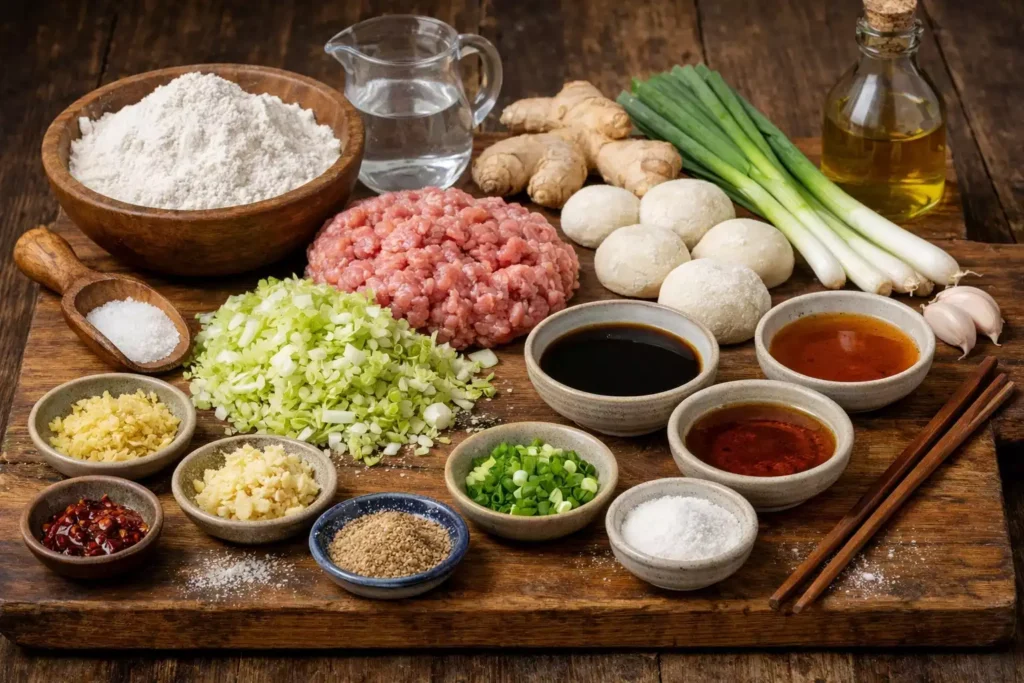
For the Dough (makes ~40 wrappers)
- 300g (2.5 cups) plain flour, plus more for dusting
- 150ml (2/3 cup) just-boiled water
- Pinch of salt
For the Pork and Ginger Filling
- 400g (14 oz) ground pork
- 200g (7 oz) Napa cabbage, finely chopped and salted to remove moisture
- 2 tbsp soy sauce
- 1 tbsp sesame oil
- 1 tbsp Shaoxing rice wine
- 1 tbsp fresh ginger, grated
- 3 cloves garlic, minced
- 3 spring onions, finely chopped
- 1 tsp white pepper
- 1 tsp sugar
For the Dipping Sauce
- 3 tbsp soy sauce
- 2 tbsp rice vinegar
- 1 tsp sesame oil
- 1 tsp chili oil (optional)
- 1 tsp finely grated ginger
How to Make It
1
1Make the Dough
Combine flour and salt. Add just-boiled (not boiling) water gradually, mixing with a fork or chopsticks until a shaggy dough forms. Turn onto a lightly floured surface and knead for 8–10 minutes until smooth and slightly elastic. Cover with a damp cloth and rest for 30 minutes — the rest makes the dough much easier to roll.
2
2Make the Filling
Salt the chopped cabbage with 1 teaspoon of salt and let sit for 10 minutes. Squeeze out as much moisture as possible — this is important; wet filling makes wet dumplings. Combine squeezed cabbage with all other filling ingredients. Mix well until slightly sticky. Refrigerate while you make the wrappers.
3
3Roll and Fill the Dumplings
Divide the rested dough into 4 portions. Roll each into a long rope and cut into 10 equal pieces. Roll each piece into a 9cm circle, slightly thinner at the edges than the center. Place 1 heaped teaspoon of filling in the center. Fold in half and pleat the edge to seal. Place sealed dumplings on a floured surface. Make all dumplings before cooking.
4
4Pan-Fry (Potsticker Method)
Heat 1 tablespoon of oil in a large non-stick pan over medium-high heat. Add dumplings flat-side down in a single layer. Fry undisturbed for 2–3 minutes until the bases are golden. Add 60ml (1/4 cup) of water and immediately cover with a lid — the water will splatter. Steam for 4–5 minutes until the water evaporates and the wrappers are cooked through. Remove the lid and cook 60 more seconds to re-crisp the bottoms. Serve immediately with dipping sauce.
Dumpling Tips From a Pierogi Expert
Squeeze the cabbage dry. Water in the filling makes the wrappers soggy and the dumplings will burst during cooking. The salting-and-squeezing step removes the water from the cabbage before it can get into the filling. Do not skip this step and do not rush it. Really squeeze. You will be surprised how much water comes out.
The filling should be slightly sticky. Well-seasoned pork filling should have a slightly sticky, almost paste-like quality from the mixing. This means it has enough protein development to hold together in the dumpling rather than crumbling. Mix the filling longer than feels necessary.
Do not overfill. One heaped teaspoon of filling per dumpling — no more. Overfilled dumplings burst. The first time I made dumplings I overfilled every single one. They all burst. Learn from my experience.
Water depth for steaming matters. Add exactly 60ml (1/4 cup) of water to the pan for the steaming step. Too much water and the dumplings boil rather than steam; too little and they burn before the wrappers cook through. This amount is calibrated for a standard 12-inch (30cm) pan with about 20 dumplings.
Serving Chinese Dumplings
With the soy-vinegar dipping sauce and, if available, chili oil on the side. Dumplings as part of a dim sum spread pair with congee and egg drop soup. For a noodle-and-dumpling combination, serve alongside wonton soup.
Variations Worth Trying
Boiled dumplings (shui jiao). Boil the dumplings in a large pot of simmering (not boiling) water for 6–8 minutes until the wrappers are tender and the filling is cooked. The boiled version has a different, more yielding texture than the pan-fried version. Traditional Chinese families eat boiled dumplings for the filling-to-wrapper ratio and pan-fried for the crispy base. Both are correct.
Shrimp and pork filling. Replace half the ground pork with finely chopped raw shrimp. The shrimp adds a sweet, oceanic note and a slightly springy texture. This is the most common dim sum variation and one of the great fillings in Chinese cooking.
Using store-bought wrappers. Gyoza or dumpling wrappers from Asian grocery stores work perfectly and save significant time. The homemade wrappers are chewier and more flavorful, but store-bought is an excellent weeknight shortcut. I use both depending on available time.
Storage
Uncooked dumplings freeze beautifully. Lay them flat on a floured baking sheet, freeze until solid (about 1 hour), then transfer to freezer bags. Cook directly from frozen in a covered pan with an extra 2 minutes of steam time. Homemade frozen dumplings are one of the best things you can have in your freezer. We always make a double batch specifically to freeze half.
FAQ
What is the difference between jiaozi and gyoza?
Gyoza is the Japanese evolution of jiaozi, brought to Japan by Chinese immigrants. Gyoza wrappers are slightly thinner and the filling tends to be more garlic-forward and less ginger-heavy. The pan-fry technique is virtually identical. If you buy gyoza wrappers instead of Chinese dumpling wrappers, your jiaozi will still be excellent and nobody at your table will argue about nomenclature.
My dumplings burst open during cooking. What went wrong?
Overfilling is the most common cause — reduce the filling to one heaped teaspoon. The second cause is insufficient sealing of the edges — press firmly and make sure there is no filling trapped in the sealed edge. Third cause is wet filling — squeeze the cabbage thoroughly before mixing. Fix all three and burst dumplings become a thing of the past.
Can I make the dough ahead?
Yes. The dough can rest at room temperature for up to 2 hours under a damp cloth. For longer ahead, refrigerate for up to 24 hours in a sealed bag. Bring to room temperature before rolling. The rested dough is actually easier to work with than freshly made dough, so making it a few hours ahead is a genuine advantage.

Kasia Polish Mom
Polish-born, Chicago-raised, feeding a family of six with babcia’s recipes and a global pantry. I grew up folding pierogi at my grandmother’s kitchen table and never stopped — 15+ years of cooking from scratch, one Sunday dinner at a time. Everything here is tested on four kids, a hungry husband, and the memory of a woman who never measured anything but always got it right.