

Kasia Polish Mom
Polish-born, Chicago-raised, feeding a family of six with babcia’s recipes and a global pantry. I grew up folding pierogi at my grandmother’s kitchen table and never stopped — 15+ years of cooking from scratch, one Sunday dinner at a time. Everything here is tested on four kids, a hungry husband, and the memory of a woman who never measured anything but always got it right.
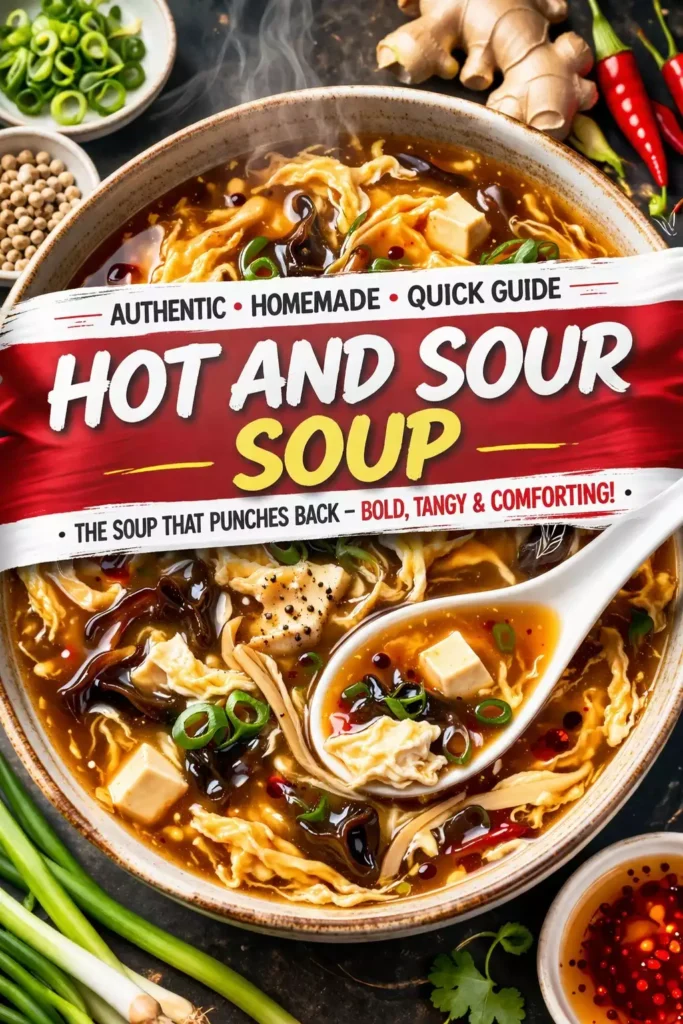
Hot and Sour Soup — The Soup That Punches Back
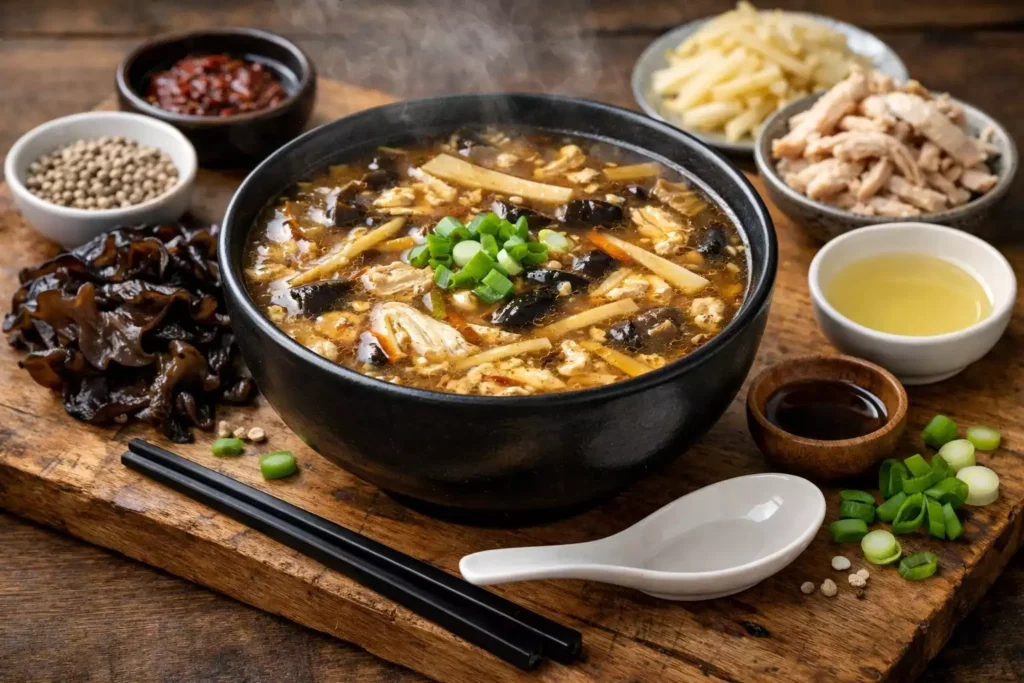
If egg drop soup is a hug, hot and sour soup is a hug from someone who also slaps you awake. That is not a criticism. That is the whole point. Hot and sour soup — with its assertive vinegar punch, white pepper heat, earthy mushrooms, and silky tofu — is the soup that wakes you up when you need waking. It clears a stuffy nose. It enlivens a sluggish appetite. It makes you feel genuinely better in a way that is both physiological (vinegar, pepper, steam) and emotional (hot broth, good food, someone made this).
Chinese hot and sour soup (suan la tang) is one of the most popular Chinese restaurant orders in America, which means most people have had a bad version of it. The bad version is gloopy, one-note, and uses generic ingredients. The good version — this one — has a clear balance between the hot (white pepper, not chili) and sour (rice vinegar, not lemon), loaded with wood ear mushrooms, bamboo shoots, tofu, and a beaten-egg swirl that creates the characteristic silky threads.
This is my sick-day soup with attitude. My husband says it is too aggressive. My kids say it fixes whatever is wrong with them. My kids are correct.
Hot vs. Sour: The Balance Is Everything
In authentic hot and sour soup, the heat comes from white pepper — not chili. White pepper provides a building, lingering warmth that is different from chili heat. The sour comes from rice vinegar added toward the end — not from the broth itself. Adding vinegar late preserves its bright acidity rather than cooking it into submission. The ratio of hot to sour is personal and adjustable; start with equal amounts and tune to your preference.
Ingredients
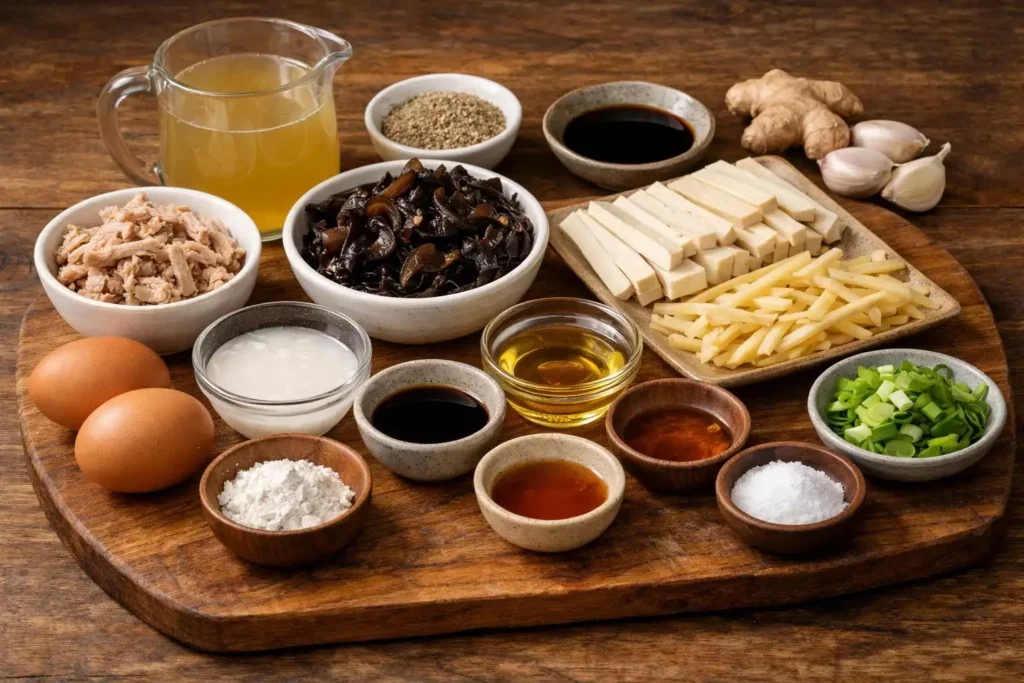
Hot and Sour Soup (serves 4)
- 1 liter (4 cups) chicken or pork stock
- 200g (7 oz) firm tofu, cut into thin strips
- 100g dried wood ear mushrooms, rehydrated and sliced (or fresh shiitake)
- 100g bamboo shoots, julienned
- 100g cooked pork or chicken, shredded (optional)
- 2 eggs, beaten
- 3 tbsp rice vinegar (adjust to taste)
- 2 tbsp soy sauce
- 1.5 tsp white pepper (adjust to taste — this is the heat source)
- 2 tbsp cornstarch dissolved in 4 tbsp cold water
- 1 tsp sesame oil
- 3 spring onions, sliced
- Salt to taste
How to Make It
1
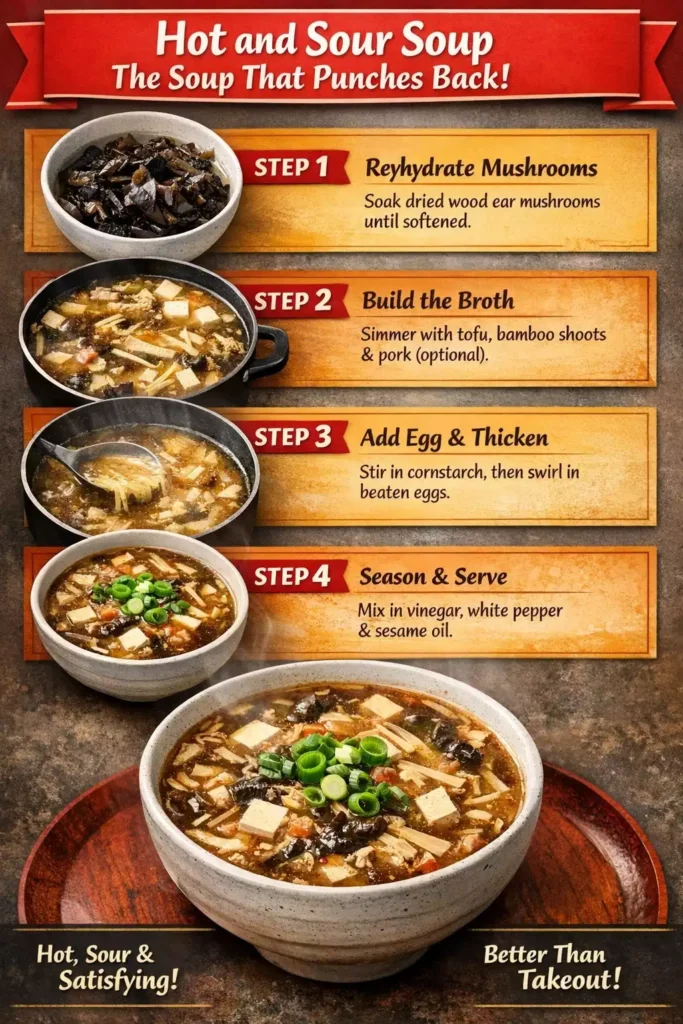
1Rehydrate Mushrooms and Prep Ingredients
Soak dried wood ear mushrooms in hot water for 20–30 minutes until fully soft and expanded. Drain, rinse, and slice thinly. If using shiitake, slice the caps. Have all other ingredients prepped and ready — this soup comes together quickly once you start.
2
2Build the Broth
Bring the stock to a gentle boil in a large pot. Add the mushrooms, bamboo shoots, and tofu. Add soy sauce and half the white pepper. Simmer for 5 minutes. Taste: the broth should be savory and starting to have warmth from the pepper.
3
3Thicken and Add the Egg
Add the cornstarch slurry and stir until the soup thickens to a glossy consistency — about 2 minutes. Reduce heat slightly. Drizzle in the beaten eggs in a thin stream while stirring slowly (same technique as egg drop soup). The egg will form silky ribbons throughout the soup.
4
4Season and Serve
Remove from heat. Add the rice vinegar, remaining white pepper, and sesame oil. Stir gently. Taste and adjust: more vinegar for more sour, more white pepper for more heat. Season with salt. Ladle into bowls and top with spring onions. Serve immediately — the balance of hot and sour is most vivid when the soup is freshly made and piping hot.
Hot and Sour Soup Tips
Add vinegar at the end. Rice vinegar loses its bright acidity if cooked for a long time. Add it at the very end, after the heat is off, for the sharpest, cleanest sour note. Early addition produces a more mellow, cooked-vinegar flavor. Both are good; late addition is the traditional technique.
White pepper is the heat ingredient. This is not chili-hot soup. The heat comes from white pepper, which has a different quality from both black pepper and chili — it is more penetrating and builds slowly. Start with 1 teaspoon and add more to taste. The full 1.5 teaspoons produces genuine warmth throughout the soup.
Wood ear mushrooms for authenticity. The dried black fungus (wood ear mushrooms, muk yee) provides the characteristic slippery-chewy texture of authentic hot and sour soup and mild earthy flavor. They are inexpensive and widely available at Asian groceries. Shiitake is an adequate substitute but the texture is different. Wood ear mushrooms are worth buying if you make this soup regularly.
Consistency check. The soup should be lightly thickened — the cornstarch gives it a slightly viscous quality that is characteristic of the dish and helps the egg ribbons suspend. If it is too thick, add a splash of stock. If it is too thin, mix an additional teaspoon of cornstarch with a tablespoon of cold water and add slowly while stirring.
Serving Hot and Sour Soup
As a starter or as a complete light meal. Hot and sour soup before mapo tofu is an extraordinary Szechuan-inspired dinner at home. Serves as a satisfying contrast alongside the milder egg drop soup. For sick days, serve in a large mug with the steam rising — the vapors themselves are useful.
Variations Worth Trying
Vegetarian hot and sour soup. Use vegetable stock and omit the meat. Add extra mushrooms and tofu for substance. The mushroom variety in the vegetarian version can be increased to include shiitake, wood ear, and oyster mushrooms together for a deeply complex umami flavor without any meat.
Spicy hot and sour (with chili). Add a tablespoon of doubanjiang or chili garlic paste with the aromatics for a version that has both the white-pepper warmth and chili heat. More complex than the traditional version and excellent if you want more assertive heat.
Storage
Refrigerate for up to 3 days. The thickening may separate slightly; stir well while reheating and it will return to the right consistency. Add a splash of fresh rice vinegar when reheating — the vinegar flavor fades in the refrigerator and a small addition restores the sour balance. Reheat on the stove, not in the microwave, for the best result.
FAQ
What makes hot and sour soup “hot”?
White pepper, primarily. The “hot” in hot and sour soup refers to the warmth of white pepper, not to chili heat. This distinguishes it from Szechuan ma la dishes where the heat is chili-based. Some regional variations add chili oil as well, but in the classic Mandarin version (which is what most Chinese-American restaurants serve), white pepper is the heat ingredient.
What are bamboo shoots and can I substitute them?
Bamboo shoots are young bamboo sprouts sold in cans (already cooked) at any Asian grocery and many regular supermarkets. They have a mild, slightly crisp texture and earthy flavor that provides good textural contrast in the soup. If unavailable, substitute water chestnuts (similar texture, slightly sweeter) or omit entirely — the soup remains excellent without them.
Kasia Polish Mom
Polish-born, Chicago-raised, feeding a family of six with babcia’s recipes and a global pantry. I grew up folding pierogi at my grandmother’s kitchen table and never stopped — 15+ years of cooking from scratch, one Sunday dinner at a time. Everything here is tested on four kids, a hungry husband, and the memory of a woman who never measured anything but always got it right.