
Kasia Polish Mom
Polish-born, Chicago-raised, feeding a family of six with babcia’s recipes and a global pantry. I grew up folding pierogi at my grandmother’s kitchen table and never stopped — 15+ years of cooking from scratch, one Sunday dinner at a time. Everything here is tested on four kids, a hungry husband, and the memory of a woman who never measured anything but always got it right.
Dan Dan Noodles — Spicy, Nutty, and Completely Obsession-Worthy
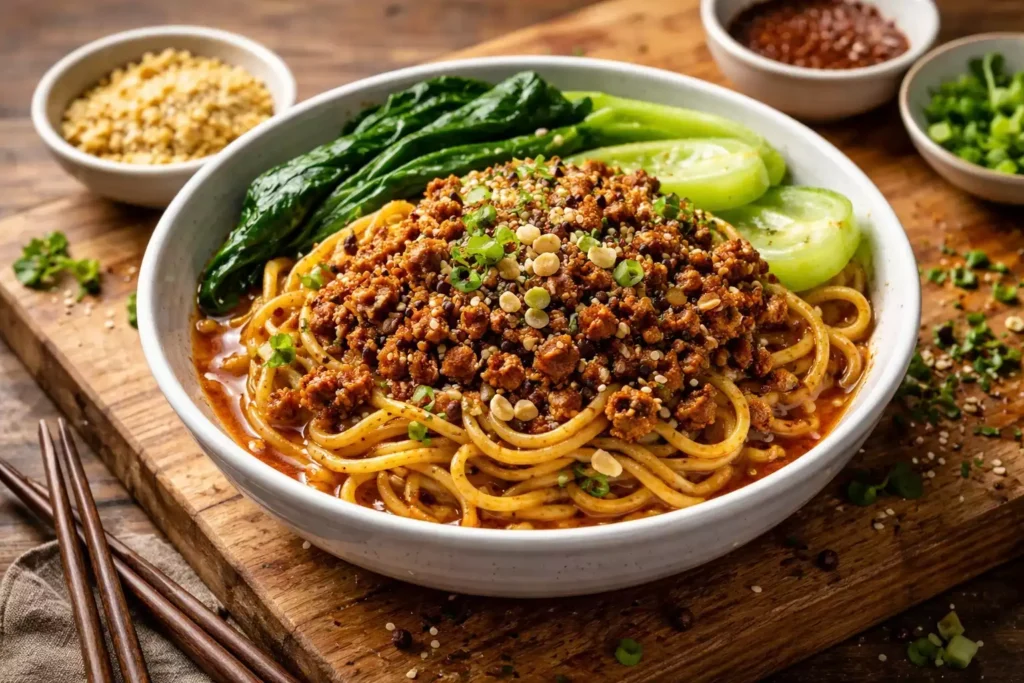
I ate these in a tiny restaurant in Chinatown and spent six months trying to recreate them. This is attempt number fourteen. It is the one. Dan dan noodles — chewy noodles in a complex sauce of sesame paste, chili oil, Szechuan peppercorns, and crispy ground pork — are one of the most layered, interesting flavor experiences in Chinese street food. Every component contributes something: the sesame paste brings rich nuttiness, the chili oil brings heat and color, the Szechuan peppercorns bring the ma tingle, the pork brings salt and crunch, the noodles carry everything. It is a full composition, not just a sauce on noodles.
My six months of attempts taught me three things: the sesame paste ratio is the most critical variable, the chili oil quality matters enormously, and the Szechuan peppercorn must be freshly ground. The failures — thirteen of them — were each instructive. Attempt two was too thick. Attempt five was not numbing enough. Attempt nine had the wrong noodle. Attempt fourteen is what you get at that tiny restaurant, reproduced in a kitchen in suburban Chicago by a Polish woman who has opinions about Szechuan cuisine. These are my credentials. This is the recipe.
Dan Dan Noodles Anatomy
Authentic dan dan noodles have four distinct components that are assembled at serving: the seasoned noodle base (noodles tossed with sauce), the spicy sesame sauce, the crispy pork topping, and the aromatics and garnishes. Each component is made separately and combined at the table. The resulting bowl has layers of temperature, texture, and flavor that mix as you eat. This is the technique that makes the dish interesting — not a premixed bowl, but an assembled one.
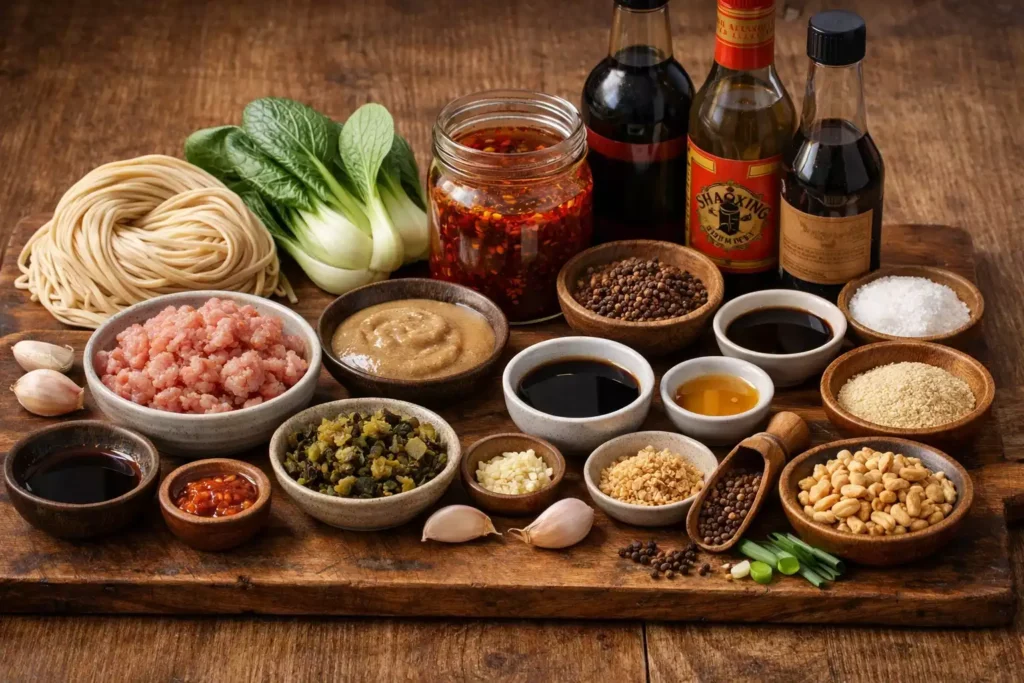
Ingredients
For the Noodles
- 400g (14 oz) fresh thin egg noodles or dried Chinese wheat noodles
- Blanched greens to serve (baby bok choy or spinach)
For the Crispy Pork (Suimi Yaocai)
- 200g (7 oz) ground pork
- 2 tbsp Yibin yacai (preserved Szechuan vegetables) or regular pickled mustard greens, chopped
- 2 cloves garlic, minced
- 1 tbsp soy sauce
- 1 tsp Shaoxing rice wine
- 1 tbsp oil for frying
For the Dan Dan Sauce (per bowl)
- 2 tbsp Chinese sesame paste (zhima jiang) or tahini
- 1 tbsp soy sauce
- 1.5 tbsp chili oil with sediment (homemade preferred or Lao Gan Ma brand)
- 1 tsp dark soy sauce
- 1 tsp rice vinegar
- 1 tsp sugar
- 1 tsp freshly ground Szechuan peppercorn
- 2–3 tbsp warm water or noodle cooking water to thin
- 2 cloves garlic, minced fine
How to Make It
1
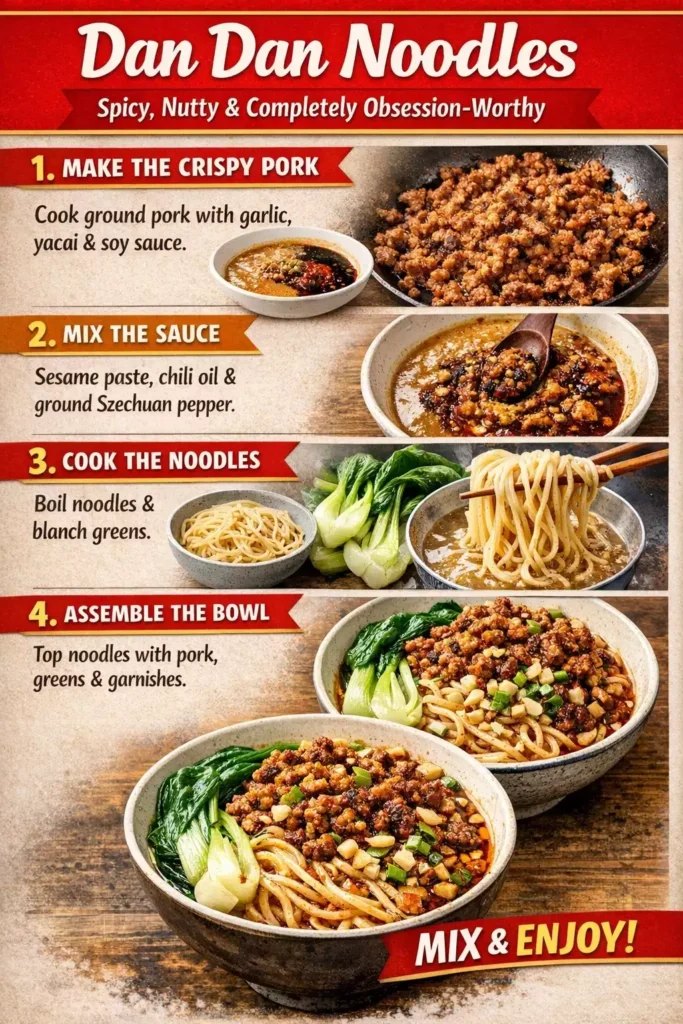
1Make the Crispy Pork
Heat oil in a wok over high heat. Add garlic and stir 20 seconds. Add the ground pork and stir-fry, breaking it into very small pieces, for 4–5 minutes until well-browned and developing crispy, caramelized bits. Add yacai, soy sauce, and Shaoxing wine. Toss until combined. The pork should be dry and slightly crispy, not wet. Remove and set aside. This pork topping can be made ahead and kept warm.
2
2Make the Sauce
In each bowl, combine the sesame paste, soy sauce, chili oil, dark soy, rice vinegar, sugar, and garlic. Thin with warm water or noodle cooking water until the sauce is a pourable but still-thick consistency — about the thickness of heavy cream. Taste: the sauce should be deeply savory, nutty, spicy, and slightly sour. Add more chili oil for heat, more sesame paste for nuttiness, more vinegar for brightness. The sauce is made directly in the serving bowl so the heat of the noodles loosens it slightly during assembly.
3
3Cook the Noodles
Cook the noodles in well-salted boiling water until just cooked through. Save a cup of noodle cooking water before draining — this starchy water is essential for thinning the sauce. Blanch the greens in the same water for 30 seconds and drain. Drain the noodles well but do not rinse.
4
4Assemble the Bowl
Place the hot noodles directly into the bowl with the sauce. Do not mix yet. Arrange the blanched greens on top. Add a large scoop of the crispy pork. Dust generously with freshly ground Szechuan peppercorn. Scatter sliced spring onions and crushed roasted peanuts. Bring to the table and mix thoroughly when eating — the mixing is the first act of eating dan dan noodles.
Dan Dan Noodles Tips From Attempt Fourteen
Chinese sesame paste is not tahini. Chinese sesame paste (zhima jiang) is made from roasted sesame seeds and has a much deeper, more intense flavor than Middle Eastern tahini. They are not interchangeable in dan dan noodles — the roasted character of the Chinese paste is the flavor foundation of the sauce. You can use tahini in an emergency but the dish will be milder. Find Chinese sesame paste at Asian grocery stores.
Chili oil with sediment. The sediment at the bottom of a chili oil jar — the chili flakes and spices that have infused the oil — is where most of the flavor lives. Spoon the sediment along with the oil when measuring. A good Lao Gan Ma chili oil is an excellent shortcut. Even better: make your own by infusing neutral oil with dried chilies, star anise, and Szechuan peppercorns.
Freshly ground Szechuan peppercorn. Pre-ground or old Szechuan peppercorn loses its numbing character significantly. Toast fresh peppercorns in a dry pan for 2 minutes, then grind in a spice grinder or with a mortar and pestle. The resulting powder should be fragrant, citrusy, and electric. If it is not tingling your fingers slightly as you handle it, it is old and needs replacing.
Mix the bowl completely before eating. The sauce pools at the bottom of the bowl and is not distributed in the arranged presentation. Mixing with chopsticks or a fork before the first bite is mandatory for the full flavor experience. This is how dan dan noodles are eaten.
Serving Dan Dan Noodles
As the centerpiece of a Szechuan dinner alongside mapo tofu and Szechuan beef. Also excellent as a standalone noodle dinner for two. Cool, unseasoned accompaniments — sliced cucumber, blanched broccoli — provide contrast to the intense bowl. Do not serve alongside other spicy dishes without considering the cumulative heat load on your guests.
Variations Worth Trying
Vegetarian dan dan noodles. Replace the pork with finely crumbled firm tofu, dry-fried until crispy and golden. The texture is different but equally satisfying. Use vegetable-based chili oil and add extra yacai for complexity.
Without the numbing (for the uninitiated). If you are serving guests who are new to Szechuan flavors, reduce or omit the Szechuan peppercorn on their bowls and increase chili oil slightly. This produces a spicier-but-not-numbing version that eases people into the flavor profile. Then make the full version for yourself.
Soupy dan dan noodles. The Sichuan original and the version more commonly found in Chengdu: add 100–150ml of hot chicken stock over the assembled bowl. The sauce emulsifies with the stock into a rich broth. Some consider this the authentic version; the dry version without added stock is more commonly known outside China.
Storage
The crispy pork keeps in the refrigerator for 3 days and in the freezer for a month. The sauce can be made ahead (without the water addition) and refrigerated for 3 days — add noodle cooking water at serving time. Cooked noodles deteriorate quickly; make them fresh at serving for the best result. With make-ahead pork and sauce, a dan dan noodle bowl can come together in 10 minutes.
FAQ
What does “dan dan” mean?
Dan dan (担担) refers to the shoulder pole that street vendors used to carry their cooking equipment and ingredients through the streets of Chengdu, balanced across both shoulders. Dan dan mian literally means “noodles sold from a carrying pole.” This is street food that originated with itinerant vendors in Szechuan province and spread from there to become one of the most beloved Chinese noodle dishes internationally.
Is this dish authentically from Szechuan or is it Chinese-American?
Dan dan mian is an authentic Szechuan dish with a documented history in Chengdu street food culture. Unlike many dishes on this Chinese section (which are Chinese-American inventions or adaptations), dan dan noodles are the real thing. The version outside China is often adapted — more sauce, sometimes with peanut butter instead of sesame paste, milder heat — but the original is Szechuan through and through. This recipe aims for the Szechuan original.
Kasia Polish Mom
Polish-born, Chicago-raised, feeding a family of six with babcia’s recipes and a global pantry. I grew up folding pierogi at my grandmother’s kitchen table and never stopped — 15+ years of cooking from scratch, one Sunday dinner at a time. Everything here is tested on four kids, a hungry husband, and the memory of a woman who never measured anything but always got it right.