
Kasia Polish Mom
Polish-born, Chicago-raised, feeding a family of six with babcia’s recipes and a global pantry. I grew up folding pierogi at my grandmother’s kitchen table and never stopped — 15+ years of cooking from scratch, one Sunday dinner at a time. Everything here is tested on four kids, a hungry husband, and the memory of a woman who never measured anything but always got it right.
Red Braised Pork Belly (Hong Shao Rou)
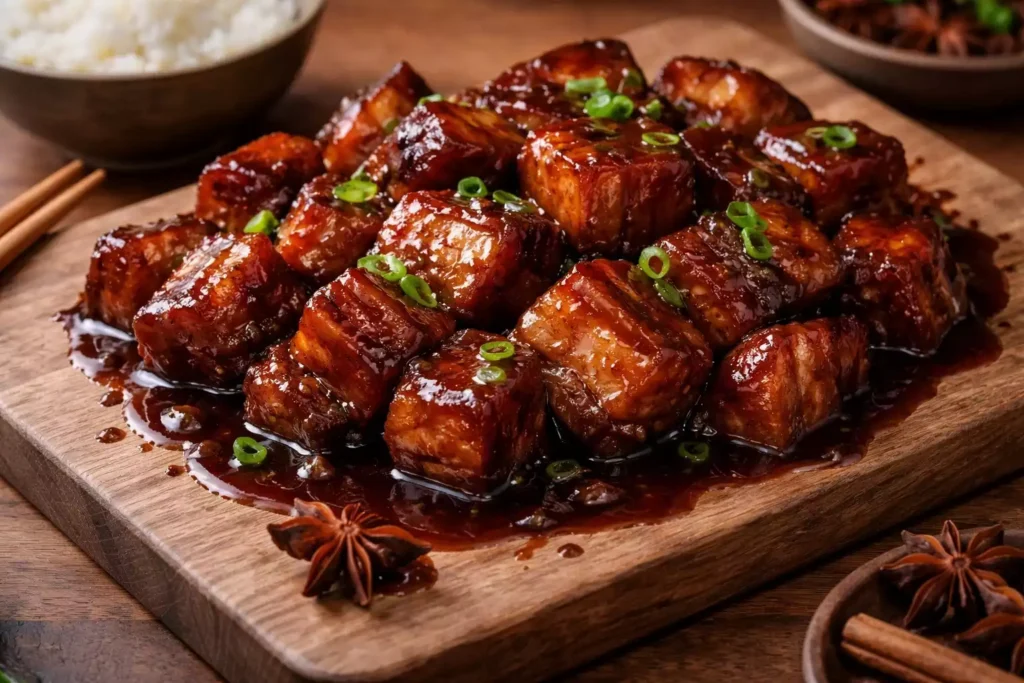
This pork belly melts on your tongue and my kids literally fight over the last piece. Literally. There was an incident at the dinner table involving two children and a single piece of pork that I will not recount in detail except to say that it ended with me making a strict “one extra piece each” rule that requires me to make a larger quantity. I now make more pork belly. This is the correct outcome.
Hong shao rou — red-braised pork belly — is considered one of the great Chinese dishes by people who know things about Chinese food. It is the favorite dish of Mao Zedong, which is irrelevant to how it tastes but is a piece of information that impressed my husband and so I include it. What matters is this: pork belly, braised low and slow in soy sauce, Shaoxing wine, sugar, and spices until the fat has rendered completely and the meat is falling-apart tender, coated in a thick, caramel-dark, sweet-savory glaze. It is a special occasion dish that requires almost no skill — just time, patience, and a willingness to let the pot do the work.
This takes two to three hours. Every minute is worth it. Start it on a Sunday morning and by early afternoon your house smells extraordinary and there is nothing left to do except prepare rice and wait.
Why Low and Slow Matters for Pork Belly
Pork belly contains both lean meat and a significant amount of fat and collagen. High heat renders the fat quickly but does not convert the collagen to gelatin, producing a fatty but not melting result. Low, slow braising converts the collagen fully to gelatin (which thickens the braising liquid and gives it body) and renders the fat gradually until it becomes almost translucent and yielding. The result, after 2–3 hours, is pork belly that melts on the tongue rather than requiring chewing.
Ingredients
Red Braised Pork Belly (serves 4)
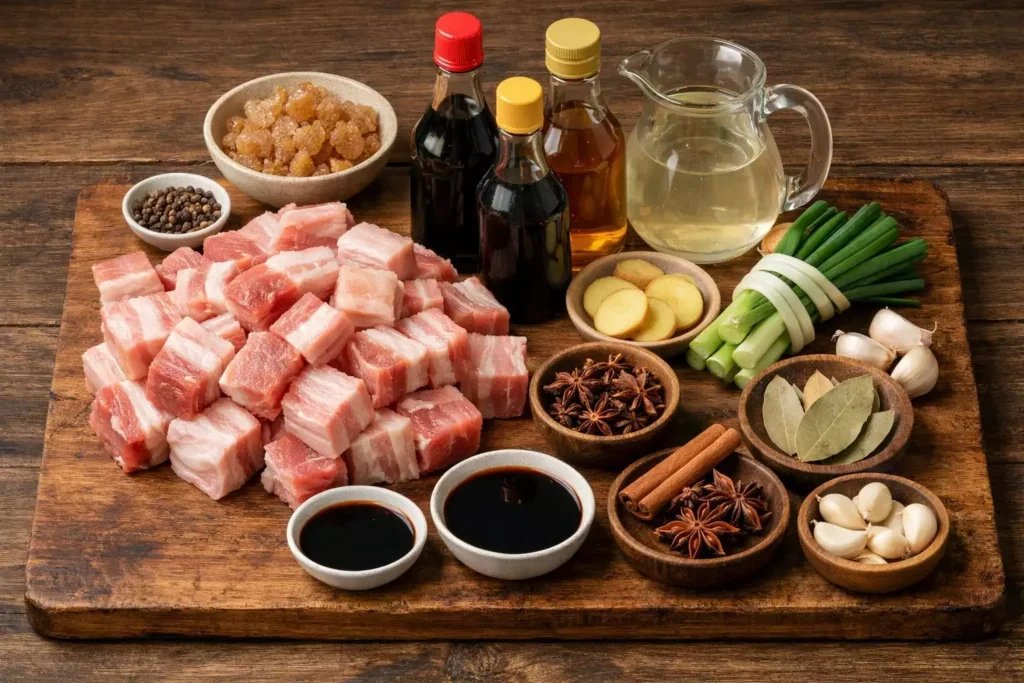
- 1 kg (2.2 lbs) pork belly, cut into 4cm cubes
- 3 tbsp rock sugar or brown sugar
- 3 tbsp dark soy sauce
- 3 tbsp regular soy sauce
- 100ml (6 tbsp) Shaoxing rice wine
- 500ml (2 cups) water or stock
- 4 cloves garlic
- 4 slices fresh ginger
- 2 spring onions, tied in a knot
- 2 star anise
- 1 cinnamon stick
- 2 bay leaves
- 1 tsp Szechuan peppercorns (optional)
How to Make It
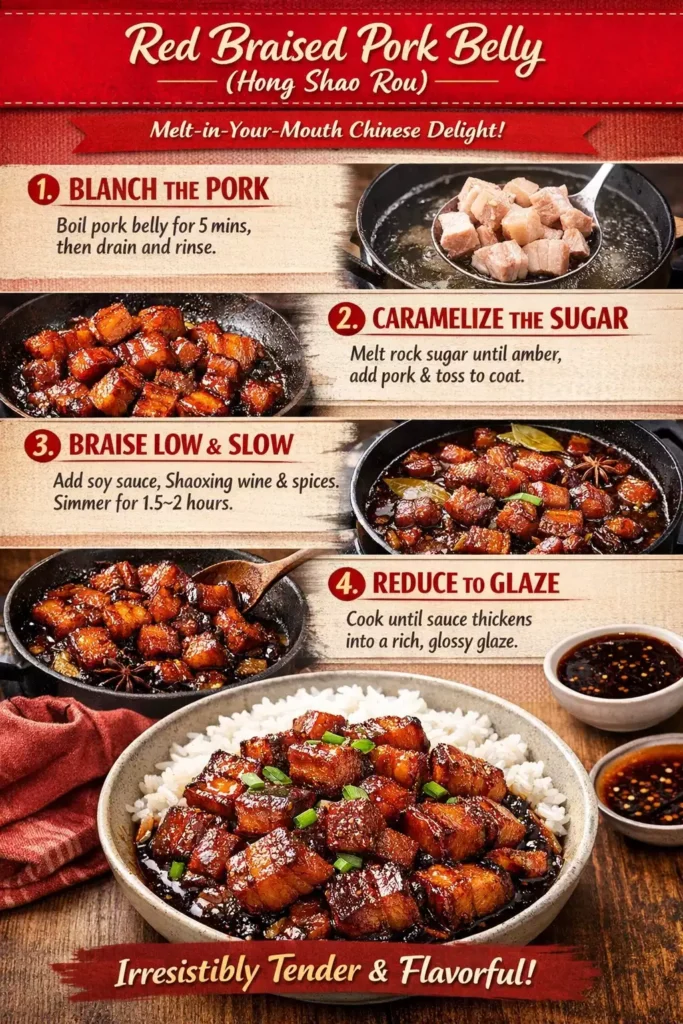
1
1Blanch the Pork Belly
Place the pork belly cubes in a pot of cold water. Bring to a boil and blanch for 5 minutes. Drain and rinse under cold water. This removes impurities and excess fat from the surface, producing a cleaner braise without scum on the surface. Dry the pork pieces with paper towels.
2
2Caramelize the Sugar
Heat a heavy pot or wok over medium heat. Add the rock sugar and 1 tablespoon of oil. Stir gently until the sugar melts and turns amber-caramel — watch carefully, this happens fast and burns quickly. Do not let it go past deep amber. Add the pork belly pieces immediately and toss to coat in the caramel. The caramel creates the characteristic deep color and adds complexity to the braise.
3
3Braise Low and Slow
Add both soy sauces and Shaoxing wine. Stir to coat the pork. Add water or stock, garlic, ginger, spring onions, star anise, cinnamon, bay leaves, and Szechuan peppercorns. Bring to a boil, then reduce to the lowest possible simmer. Cover and braise for 1.5–2 hours until the pork is very tender when pierced with a chopstick. Check occasionally and add a splash of water if the liquid reduces too much.
4
4Reduce the Glaze
Once the pork is meltingly tender, remove the lid and increase heat to medium. Continue cooking, stirring occasionally, for 15–20 minutes as the braising liquid reduces to a thick, glossy glaze that coats the pork. The glaze should be dark, syrupy, and coat the back of a spoon. Plate over steamed rice and spoon the glaze generously over everything.
Red Braised Pork Belly Tips
Do not rush the braise. The difference between 1.5 hours and 2.5 hours of braising time is the difference between tender and meltingly tender. The collagen-to-gelatin conversion is complete only with sufficient time at low temperature. If you have the time, let it braise for the full 2.5 hours. The fat will be virtually translucent and the meat will require no cutting.
Rock sugar produces better results than white sugar. Rock sugar (bing tang, available at Asian grocery stores) melts more slowly and produces a thicker, more complex caramel that adds depth to the glaze. Brown sugar is the best substitute. White sugar works but produces a slightly flatter, less rich result.
The blanching step is not optional. Skipping the blanching step produces a braise with a layer of grey scum on the surface and a slightly less clean flavor. The five minutes of blanching and rinsing make a visible difference in the finished dish. It is worth the small extra effort.
Watch the reduction carefully. The final reduction from braising liquid to glaze is where the dish can burn. The high sugar content makes the glaze prone to caramelizing quickly into burnt territory at the end. Stir frequently, watch closely, and remove from heat when the glaze is thick and glossy but before it becomes sticky-burnt.
Serving Red Braised Pork Belly
Over plain steamed white rice with the dark glaze spooned over everything. The rice is essential for absorbing the intensely flavored glaze. Blanched baby bok choy or steamed broccoli alongside cuts through the richness. For a complete Chinese feast, serve as the centerpiece alongside egg drop soup and a simple vegetable stir fry. This dish feeds four people who will be extremely happy. Or two people who will be extremely, extremely happy.
Variations Worth Trying
With eggs (Hong Shao Rou with Eggs). Add 4–6 hard-boiled eggs (peeled) to the braise in the last 30 minutes of cooking. The eggs absorb the braise and develop a beautiful brown exterior and complex, soy-caramel flavor. This is a classic enrichment of the dish and one of the best uses of a hard-boiled egg in any cuisine.
Pressure cooker version. Pressure cook at high pressure for 35–40 minutes after the caramelization step. The result is nearly as good as the slow-braise version in a fraction of the time. Reduce the braising liquid on the stovetop afterward to form the glaze. An excellent weeknight adaptation of a traditionally weekend dish.
Storage
Refrigerate for up to 4 days. Skim the solidified fat from the top after refrigeration for a lighter result. Reheat gently on the stove with a splash of water to loosen the glaze. The flavor deepens significantly after 24 hours in the refrigerator — day two hong shao rou is, controversially, even better than day one. Freezes well for up to 3 months. This is a dish worth making in quantity.
FAQ
Is pork belly unhealthy?
Pork belly is high in fat, particularly saturated fat. It is not everyday food. As an occasional special dinner, braised pork belly provides significant protein alongside its fat content. The braising process renders much of the fat out of the pork and into the braising liquid, which can be skimmed before serving. Eaten in reasonable portions over rice, it is a deeply satisfying and special dish rather than a daily protein. Everything in moderation, as my babcia used to say about absolutely everything.
What cut should I use? Does it need skin on?
Pork belly with skin is traditional and correct. The skin becomes gelatinous during braising and is one of the best textures in the dish. Skinless pork belly is fine but loses this element. Ask your butcher for pork belly with skin on, cut into a block. Cut into cubes yourself at home — uniform 4cm cubes cook evenly and produce uniform texture throughout the dish.

Kasia Polish Mom
Polish-born, Chicago-raised, feeding a family of six with babcia’s recipes and a global pantry. I grew up folding pierogi at my grandmother’s kitchen table and never stopped — 15+ years of cooking from scratch, one Sunday dinner at a time. Everything here is tested on four kids, a hungry husband, and the memory of a woman who never measured anything but always got it right.