
Kasia Polish Mom
Polish-born, Chicago-raised, feeding a family of six with babcia’s recipes and a global pantry. I grew up folding pierogi at my grandmother’s kitchen table and never stopped — 15+ years of cooking from scratch, one Sunday dinner at a time. Everything here is tested on four kids, a hungry husband, and the memory of a woman who never measured anything but always got it right.
Southern Fried Chicken — Crispy Enough to Hear Across the Room
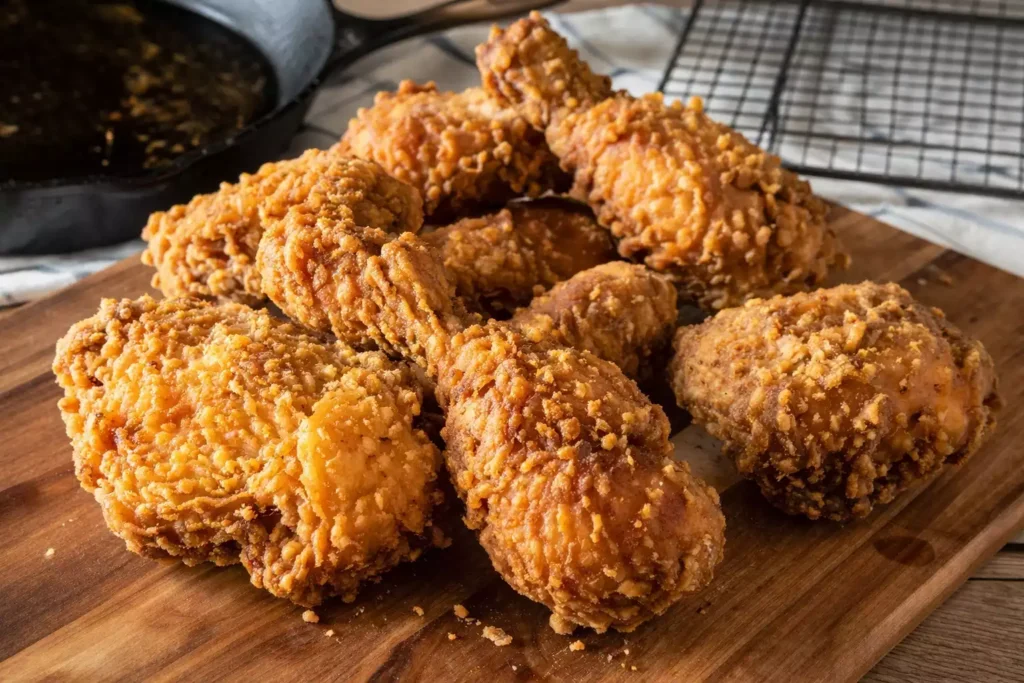
I am Polish. I married into a family that takes fried chicken personally. I learned fast. My mother-in-law has been making fried chicken for forty years and she has opinions. I observed her technique, compared it to a dozen other methods, ran my own experiments, and arrived at this recipe: buttermilk-brined, double-dredged, cast-iron fried. It produces chicken that is shatteringly crispy — audibly crispy, the kind where people in another room ask what that sound was — juicy inside, seasoned throughout, and golden enough to be proud of. My mother-in-law has acknowledged that it is “very good.” In her scoring system, this is equivalent to a standing ovation.
Southern fried chicken is one of the great American foods and one of the most technical. The buttermilk brine does two things: the acid tenderizes the chicken and the proteins in the buttermilk help the coating adhere and brown. The double dredge creates a thick, craggy crust with more surface area for crispness. The cast iron maintains consistent oil temperature, which is the single most important factor in great fried chicken at home.
This recipe works. Trust the process. The brine time is mandatory. The oil temperature monitoring is mandatory. Everything else is technique, and technique comes with practice.
Why the Buttermilk Brine Matters
Buttermilk brine — a soak of 4–8 hours in buttermilk, salt, and seasoning — performs three functions. First, the lactic acid in buttermilk gently breaks down the outer layer of the chicken, producing noticeably more tender meat. Second, the salt penetrates the meat and seasons throughout, not just on the surface. Third, the proteins in the buttermilk create a sticky surface that helps the dredging adhere and brown. Skip the brine and you get fried chicken. Do the brine and you get the fried chicken that people remember.
Ingredients
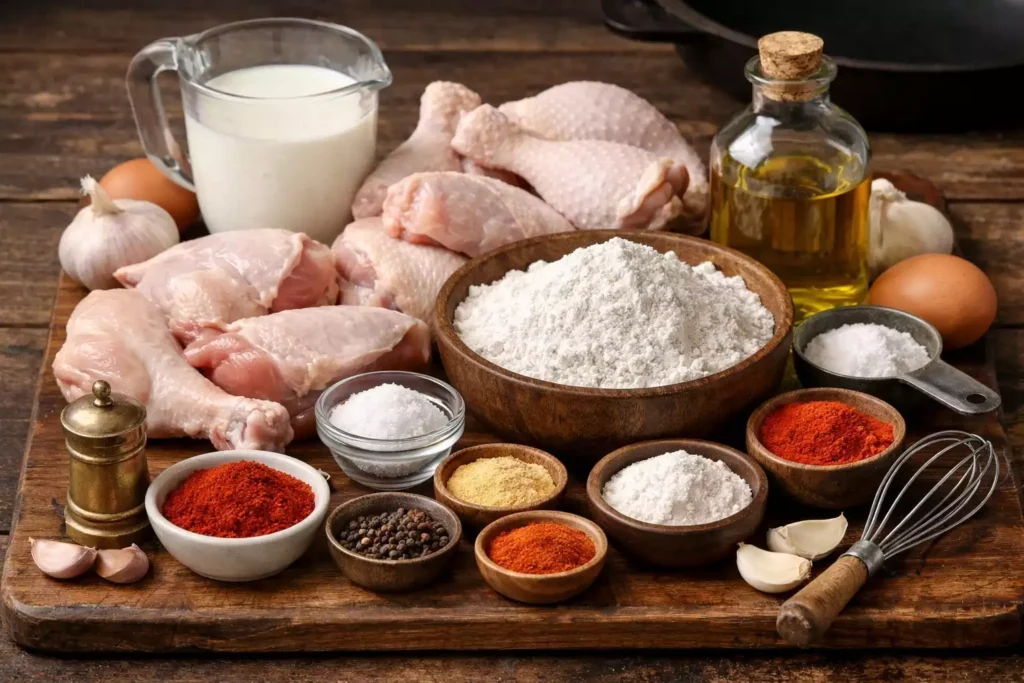
For the Buttermilk Brine
- 1 whole chicken, cut into 8 pieces (or equivalent bone-in pieces)
- 480ml (2 cups) buttermilk
- 2 tsp salt
- 1 tsp black pepper
- 1 tsp paprika
- 1 tsp garlic powder
- ½ tsp cayenne
For the Double Dredge
- 300g (2.5 cups) plain flour
- 2 tsp salt
- 2 tsp black pepper
- 1 tsp paprika
- 1 tsp garlic powder
- 1 tsp onion powder
- ½ tsp cayenne
- 1 tsp baking powder (adds crispness)
- Oil for deep frying (peanut oil preferred, or neutral vegetable oil)
How to Make It
1
1Brine the Chicken
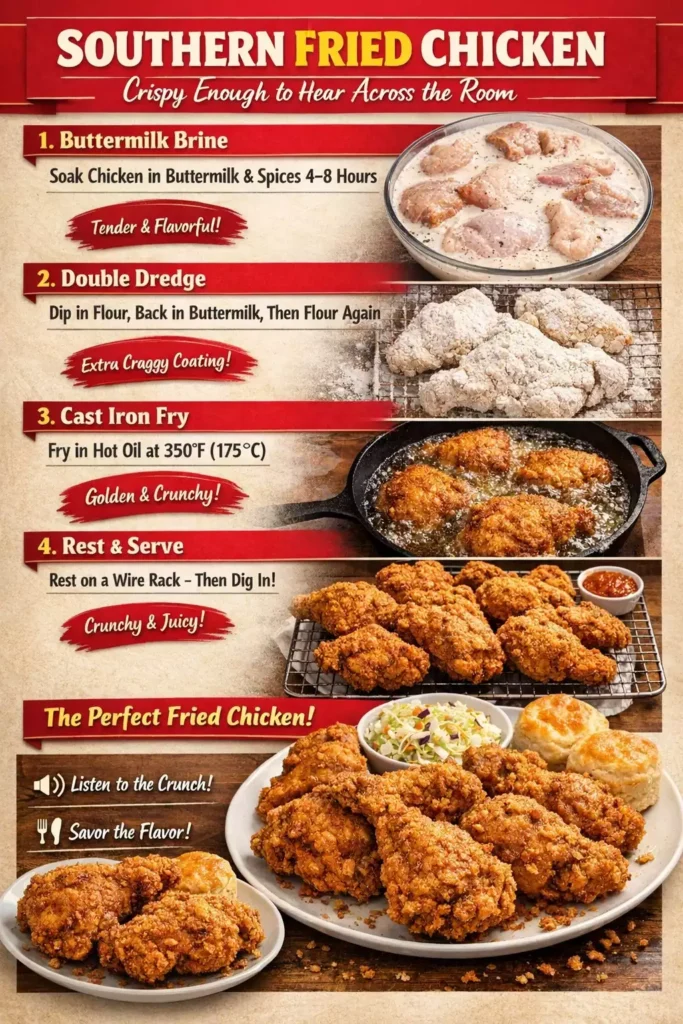
Combine the buttermilk with all seasonings. Add the chicken pieces, ensure they are fully submerged (a sealed zip bag works well). Refrigerate for a minimum of 4 hours, ideally overnight or up to 24 hours. Do not brine longer than 24 hours — the acid will begin to affect the texture negatively after that point.
2
2Set Up the Double Dredge
Combine all dredge ingredients in a large, shallow dish. Remove chicken pieces from the brine — do not shake off all the buttermilk. Dredge each piece in the seasoned flour, pressing firmly to adhere. Return to the buttermilk for a second dip. Dredge in flour a second time, pressing firmly again. Set on a wire rack for 10 minutes to allow the coating to set before frying.
3
3Fry in Cast Iron
Heat 4–5cm of oil in a cast iron pan to 175°C (350°F). Maintain this temperature throughout — this is critical. Too hot and the coating burns before the interior cooks; too cool and the coating absorbs oil and becomes greasy. Fry in batches without crowding: chicken breasts and wings for 12–15 minutes, thighs and drumsticks for 15–18 minutes. Turn once halfway. Internal temperature of the thickest part should reach 74°C (165°F).
4
4Rest and Serve
Remove fried chicken to a wire rack over a baking sheet — never to paper towels. Rest for 5 minutes before serving. The resting allows the coating to set and the internal juices to redistribute. Serve hot, with the crust fully intact and crackling.
Fried Chicken Tips
Oil temperature is everything. Invest in a thermometer. Fried chicken cooked at the wrong temperature is either burnt or greasy. 175°C (350°F) is the correct temperature. Monitor it between batches and allow it to return to temperature before adding the next batch — cold chicken drops the oil temperature significantly.
The double dredge creates the crust. One dredge produces a thin coating. Two dredges — with a return to buttermilk between them — produce a thick, craggy crust with the surface area that makes truly great fried chicken. Do not skip the second dredge.
Wire rack, not paper towels. Fried chicken rested on paper towels steams on the bottom. Wire rack allows circulation around the entire piece and the coating stays crispy. This applies to all fried foods. The wire rack is one of the most important pieces of equipment in a frying kitchen.
The pieces cook at different rates. Wings and breasts are done before thighs and drumsticks. Fry similar-sized pieces together or stagger them in the oil, adding thighs and drumsticks a few minutes before wings. A thermometer in the thickest part of the thigh reads 74°C when fully done.
Serving Southern Fried Chicken
As the centerpiece of a Southern American spread with mac and cheese, coleslaw, and cornbread. The complete Southern table is one of the great American culinary traditions and fried chicken is its undisputed center. Honey drizzled over hot fried chicken is an optional but excellent addition that I discovered three years ago and have not stopped doing since.
Variations Worth Trying
Nashville hot chicken. After frying, brush the chicken with a sauce of lard, cayenne, brown sugar, paprika, and garlic powder. The classic ratio is extremely spicy but you can adjust to your heat tolerance. Serve on white bread with pickle chips — the bread absorbs the sauce and the pickles cut the heat. Nashville hot chicken has become a national phenomenon for legitimate reasons.
Honey butter fried chicken. Brush hot fried chicken with softened honey butter (equal parts honey and unsalted butter) while still hot from the fryer. The butter melts into the crust and the honey caramelizes slightly. Spectacular, indulgent, and the version my children request for birthdays.
Storage
Fried chicken is best eaten within 2 hours of frying while the crust is at peak crispness. Leftovers keep in the refrigerator for 3 days — reheat in a 200°C oven for 10–12 minutes, not in the microwave (which destroys the crust). Cold fried chicken directly from the refrigerator, eaten the next morning, is a secret pleasure that I document without shame.
FAQ
Can I air-fry this instead of deep-frying?
You can. Spray the double-dredged chicken with cooking oil and air-fry at 200°C for 20–25 minutes, flipping once. The result is significantly less crispy than deep-fried and lacks the depth of fried-in-fat flavor, but it is a real and viable option for weeknight cooking. The buttermilk brine still makes a significant difference to the texture of air-fried chicken.
What oil is best for frying chicken?
Peanut oil has the highest smoke point and the most neutral flavor among affordable frying oils. It is the traditional Southern choice and produces excellent results. Vegetable oil or canola oil are perfectly acceptable alternatives. Avoid olive oil (too low a smoke point and too assertive in flavor) and butter (burns). Whatever oil you use, there needs to be enough of it — the chicken must be at least two-thirds submerged for even cooking.
Kasia Polish Mom
Polish-born, Chicago-raised, feeding a family of six with babcia’s recipes and a global pantry. I grew up folding pierogi at my grandmother’s kitchen table and never stopped — 15+ years of cooking from scratch, one Sunday dinner at a time. Everything here is tested on four kids, a hungry husband, and the memory of a woman who never measured anything but always got it right.