
Kasia Polish Mom
Polish-born, Chicago-raised, feeding a family of six with babcia’s recipes and a global pantry. I grew up folding pierogi at my grandmother’s kitchen table and never stopped — 15+ years of cooking from scratch, one Sunday dinner at a time. Everything here is tested on four kids, a hungry husband, and the memory of a woman who never measured anything but always got it right.
Mashed Potatoes So Good They Do Not Need Gravy
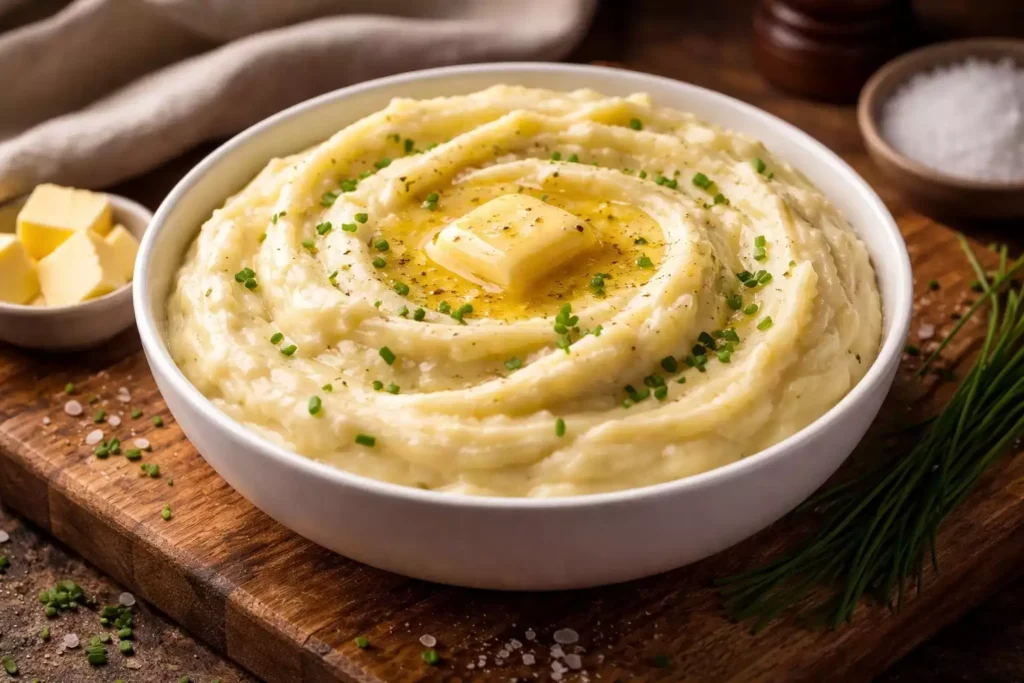
My kids would eat a bowl of these plain with a spoon. Honestly, so would I. Creamy mashed potatoes — made with enough butter to make a cardiologist look away, heated cream, and the right potato variety — are one of the most universally beloved foods on earth for good reason. There is nothing complicated about mashed potatoes and yet they are almost always made either wrong (lumpy, gluey, flavorless) or barely adequately. This recipe makes them right.
I am Polish. I grew up eating mashed potatoes. My babcia made them with a hand masher and a stick of butter and they were perfect. I have refined the technique since then — I use a ricer now, and I heat the cream — but the spirit is the same: good potatoes, plenty of butter, real cream, enough salt to taste the potato underneath, and the restraint not to overwork them. That last point is the technical critical failure point of mashed potatoes and the one most people get wrong.
The side dish that makes everything else optional. But also use gravy anyway.
The Two Rules of Mashed Potatoes
Rule one: do not overwork them. Overworking mashed potatoes after the starch has been released produces gluey, gummy potatoes. Mix just enough to combine the fat and season. Rule two: fat and liquid must be warm when they go in. Cold butter and cream added to hot potatoes drops the temperature and produces an inferior, slightly greasy result. Heat the butter and cream before adding them to the mashed potato base.
Ingredients
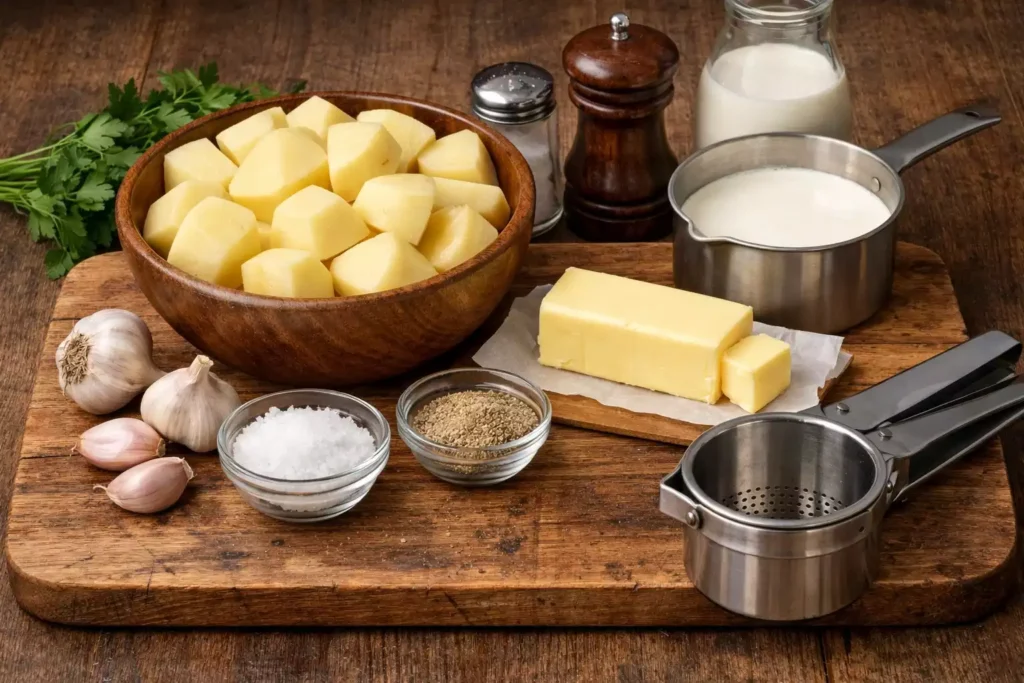
Creamy Mashed Potatoes (serves 4–6)
- 1.2 kg (2.6 lbs) starchy potatoes (Yukon Gold or Russet), peeled and cut into equal chunks
- 115g (1 stick / ½ cup) unsalted butter
- 150ml (¾ cup) double cream (heavy cream) or whole milk for a lighter result
- Salt (generously — the water and the potatoes both need it)
- White pepper (or black pepper) to taste
- Optional: 2 cloves garlic, simmered with the potatoes
How to Make It
1
1Cook the Potatoes
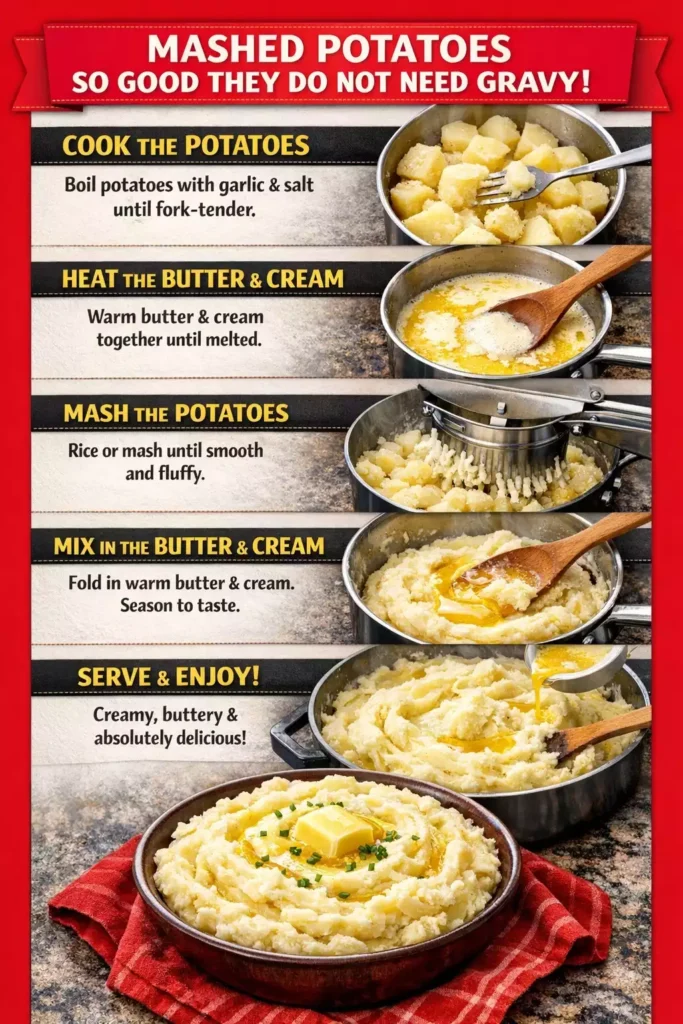
Place the potato chunks and garlic (if using) in a large pot. Cover with cold water — cold water, not hot; starting in cold water cooks the potato evenly throughout rather than cooking the outside before the inside. Add 1.5 teaspoons of salt. Bring to a boil, then reduce to a steady simmer. Cook for 15–20 minutes until the potatoes are completely tender when pierced with a knife. Drain thoroughly and return to the hot pot over medium heat for 1–2 minutes to drive off excess moisture.
2
2Heat the Fat
While the potatoes drain, melt the butter in a small saucepan with the cream (or milk) until hot but not boiling. The fat and liquid must be warm when added to the potatoes. Cold fat produces a less smooth result and cools the potatoes.
3
3Mash and Combine
Pass the hot potatoes through a ricer or food mill into the pot for the smoothest result. Alternatively, use a potato masher for a more rustic texture. Do not use a food processor or blender — both overwork the starch and produce gluey potatoes. Add the hot butter-cream mixture gradually, folding in with a spatula just until combined. Season generously with salt and white pepper. Stop mixing once combined.
4
4Taste and Adjust
Taste the finished mash. It should be well-seasoned, rich from the butter and cream, and taste clearly of potato. Under-salted mashed potatoes are a common failure — add salt incrementally and taste after each addition. For restaurant-style presentation, transfer to a warm serving dish and make a small well in the top; fill the well with a pat of butter that melts at the table.
Mashed Potato Tips
Yukon Gold for flavor, Russet for fluffiness. Yukon Gold potatoes have a natural buttery flavor and produce creamy, dense mashed potatoes. Russet potatoes are starchier, producing fluffier, lighter mashed potatoes that absorb more fat. Both are excellent. I use Yukon Gold most often for their flavor. For maximum fluffiness, use Russet.
Salt the water generously. The water should taste pleasantly salty — like a mild broth. Unsalted cooking water produces potatoes that taste flat regardless of how much salt you add afterward, because the salt cannot penetrate into already-cooked potato cells as effectively as it can while cooking.
The ricer is worth the drawer space. A potato ricer produces the smoothest mashed potatoes with the least effort and the least risk of overworking. Hand-mashing inevitably leaves lumps (which some people prefer, and that’s fine) and risks overworking. A ricer processes the potato perfectly in 30 seconds. It is a single-purpose tool that is genuinely worth having.
Do not add too much liquid at once. Add the cream and butter gradually — you may not need all of it, depending on the starchiness of your potatoes. The right consistency is creamy and slightly fluid when hot but holds shape when scooped. Too much cream produces watery potatoes; too little produces dry ones.
Serving Creamy Mashed Potatoes
The essential companion to meatloaf, fried chicken, pot roast, and any gravy-producing main course. For the definitive mashed potato experience, serve with homemade chicken gravy poured generously over the top. Mashed potatoes also work brilliantly as the base for shepherd’s pie or as a topping for a savory casserole.
Variations Worth Trying
Garlic mashed potatoes. Simmer 6–8 whole unpeeled garlic cloves with the potatoes, then peel and rice them along with the potato. The long cooking mellows the garlic into a sweet, nutty note that integrates beautifully. More subtle than roasted garlic but equally good.
With crème fraîche. Substitute crème fraîche for some or all of the cream. The slight tanginess of crème fraîche adds a brightness to the richness of the butter and lifts the overall flavor. Excellent with roasted chicken.
Champ (Irish mashed potatoes). Fold in a generous amount of sliced spring onions that have been briefly heated in the warm butter and cream. Champ — the Irish version — is one of the great potato preparations and uses the same base recipe with spring onion as the flavor addition.
Storage
Refrigerate for up to 3 days. Reheat gently in a saucepan over medium-low heat with a splash of cream and a pat of butter, stirring frequently. Mashed potatoes reheat better with added fat and liquid — they dry out during storage. Do not microwave without added moisture. Leftover mashed potatoes also make excellent croquettes: form into patties, coat in breadcrumbs, and pan-fry in butter until golden.
FAQ
Why are my mashed potatoes gluey?
Over-mixing after the starch has been released. Once you add fat and liquid to mashed potatoes and start mixing, work quickly and stop as soon as the ingredients are combined. Every additional stir after that point releases more starch and makes the potatoes gummier. A ricer helps because it pre-processes the potato into fine particles that need minimal mixing to incorporate the fat.
How much butter is too much butter?
Professionally, no limit has been agreed upon. Joel Robuchon’s famous pommes purée uses a 1:1 ratio of butter to potato by weight. My recipe is approximately 10% butter by weight. The answer to your question is somewhere between those two points and is ultimately a matter of personal philosophy rather than culinary science. My philosophy: more butter is generally better up to the point where it becomes butter with potato flavor, at which point you have crossed a line that is ultimately a matter of personal choice.
Kasia Polish Mom
Polish-born, Chicago-raised, feeding a family of six with babcia’s recipes and a global pantry. I grew up folding pierogi at my grandmother’s kitchen table and never stopped — 15+ years of cooking from scratch, one Sunday dinner at a time. Everything here is tested on four kids, a hungry husband, and the memory of a woman who never measured anything but always got it right.