
Kasia Polish Mom
Polish-born, Chicago-raised, feeding a family of six with babcia’s recipes and a global pantry. I grew up folding pierogi at my grandmother’s kitchen table and never stopped — 15+ years of cooking from scratch, one Sunday dinner at a time. Everything here is tested on four kids, a hungry husband, and the memory of a woman who never measured anything but always got it right.
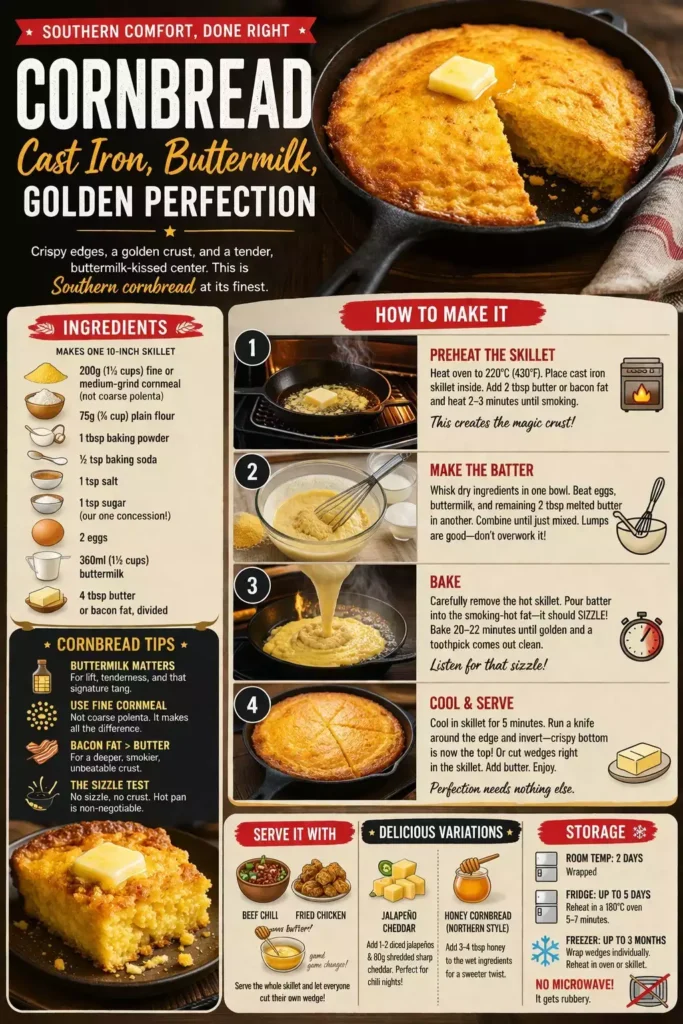
Cornbread — Cast Iron, Buttermilk, Golden Perfection
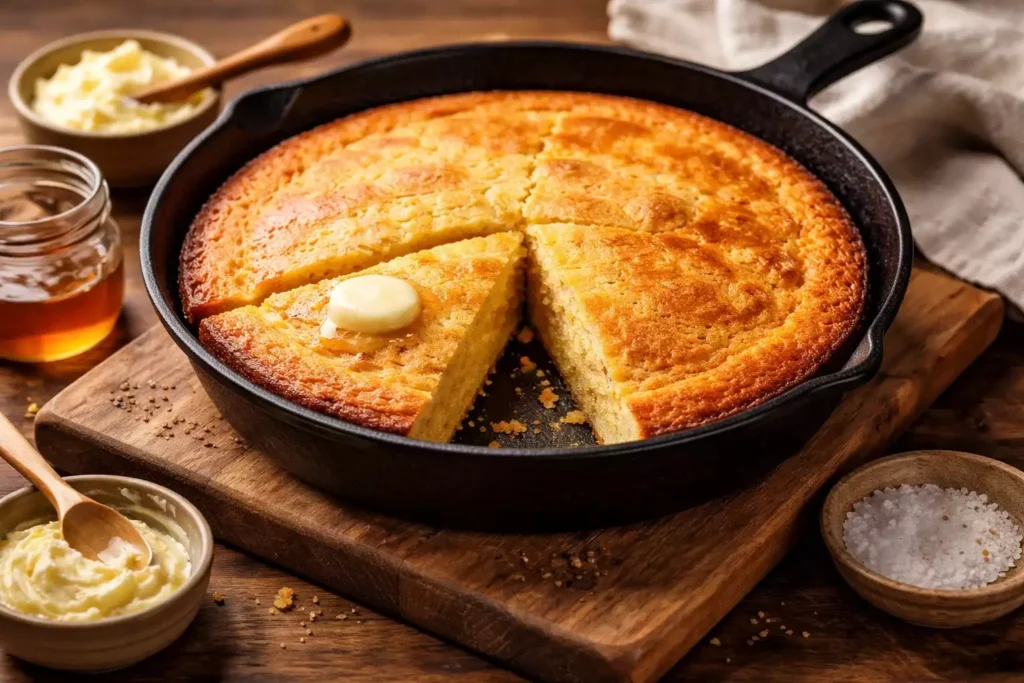
Sweet or savory cornbread is the debate that will outlive us all. I chose savory. Fight me. Northern-style sweet cornbread is a different and legitimate food, but Southern-style savory cornbread — made in a cast iron skillet with buttermilk, baked until the edges are crispy and caramelized and the interior is dense and tender — is the cornbread that earns its place on the table next to a bowl of chili or a plate of fried chicken. Sweet cornbread is a quick bread. Savory Southern cornbread is a side dish. They are different foods with different purposes and I have made my position clear.
The cast iron skillet is not optional. It is what produces the extraordinary crispy, almost seared bottom and edges that are the defining feature of good Southern cornbread. Preheat the skillet with butter or bacon fat in the oven, pour in the batter, and let the bottom crust form immediately on contact. The bottom of a skillet-baked cornbread is the best part and it is inaccessible without a cast iron pan.
I grew up on Polish bread. I came to cornbread late. I am making up for lost time.
Cast Iron: The Non-Negotiable Equipment
A preheated cast iron skillet creates the bottom crust that is the signature of Southern cornbread. The skillet is heated in the oven with butter or bacon fat until smoking, then the batter is poured directly into the hot fat. The bottom of the cornbread sets immediately on contact, creating a crispy, caramelized crust. A cold pan produces soft-bottomed cornbread that is technically fine but entirely different from the Southern version. Borrow a cast iron skillet if you do not own one. A 10-inch (25cm) skillet is ideal for this recipe.
Ingredients
Southern Cornbread (one 10-inch skillet)
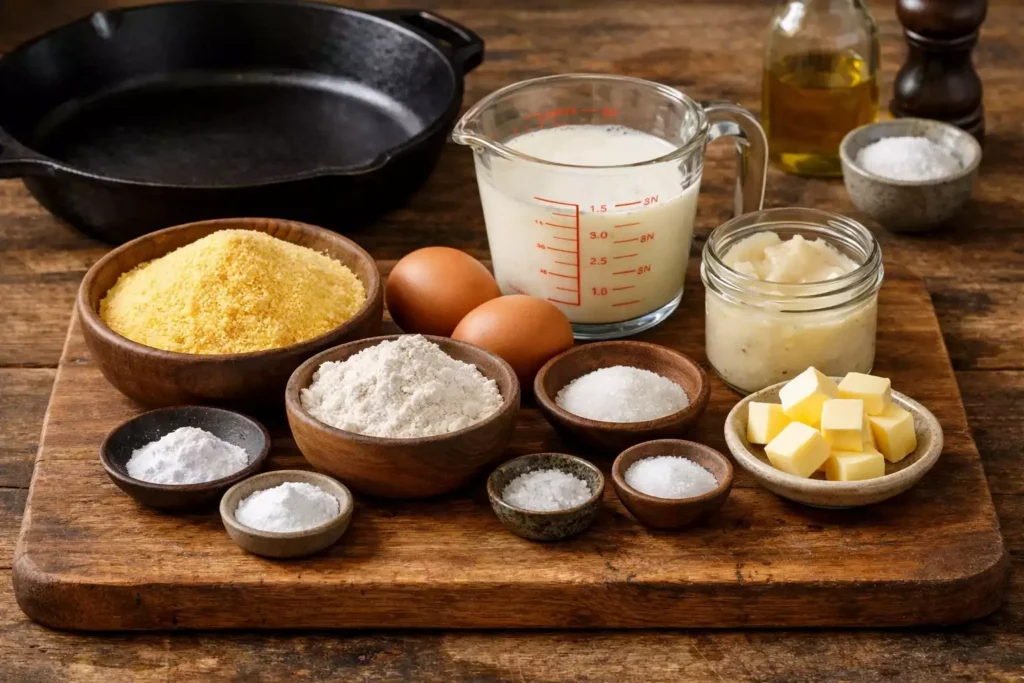
- 200g (1.5 cups) fine or medium-grind cornmeal (not coarse polenta)
- 75g (¾ cup) plain flour
- 1 tbsp baking powder
- ½ tsp baking soda
- 1 tsp salt
- 1 tsp sugar (the one concession I make to Northern tastes)
- 2 eggs
- 360ml (1.5 cups) buttermilk
- 4 tbsp butter or bacon fat, divided
How to Make It
1
1Preheat the Skillet
Preheat the oven to 220°C (430°F). Place the cast iron skillet in the oven while it preheats. When the oven is ready, add 2 tablespoons of butter or bacon fat to the hot skillet and return to the oven for 2–3 minutes until the fat is smoking. This step is the entire reason Southern cornbread has a crispy bottom. Do not skip it.
2
2Make the Batter
Combine cornmeal, flour, baking powder, baking soda, salt, and sugar in a large bowl. In a separate bowl, beat the eggs with the buttermilk and the remaining 2 tablespoons of melted butter. Add the wet ingredients to the dry and stir until just combined — some lumps are fine and overworking will make the cornbread tough. The batter will be fairly thick and pourable.
3
3Bake
Carefully remove the hot skillet from the oven (use heavy oven mitts). Pour the batter into the smoking-hot fat — it should sizzle immediately on contact. This sizzle is the sound of the bottom crust forming. Return the skillet to the oven and bake for 20–22 minutes until the top is golden and a toothpick inserted in the center comes out clean. The edges should be pulling away from the skillet sides slightly.
4
4Cool and Serve
Let the cornbread cool in the skillet for 5 minutes. Run a knife around the edge and invert onto a cutting board — the crispy bottom is now the top. Alternatively, cut wedges directly from the skillet. Serve warm with butter. A piece of good Southern cornbread warm from the skillet with a generous pat of butter needs nothing else.
Cornbread Tips
Buttermilk makes a better cornbread. The acidity in buttermilk reacts with the baking soda to provide lift and tenderness, and the slight tang balances the cornmeal’s natural earthiness. Substitute: add 1 tablespoon of white vinegar to regular milk and let sit 5 minutes. The result is slightly less tangy but works well.
Do not use coarse polenta. Fine or medium cornmeal produces the characteristic tender-crumbled texture of Southern cornbread. Coarse polenta or grits produce a grainier, denser result with large corn pieces. Check the label: cornmeal, finely ground, is the right product. Masa harina (treated corn flour) will also produce a different result — good but not Southern cornbread.
Bacon fat instead of butter. Bacon fat in the skillet (instead of butter) produces a more savory, smokier crust that is deeply traditional and exceptional. Save your bacon fat in a jar in the refrigerator for exactly this purpose. It is one of the best cooking fats for cast iron applications and produces a cornbread that cannot be matched with butter alone.
The sizzle test. When you pour the batter into the hot skillet, it must sizzle immediately and vigorously. No sizzle means the skillet was not hot enough and the bottom crust will not form. If the batter does not sizzle, your skillet was insufficiently preheated — preheat longer next time.
Serving Southern Cornbread
As the essential companion to beef chili — cornbread and chili is one of the great American food pairings. Also alongside fried chicken for the complete Southern table. For a crowd, serve the whole skillet at the table and let people cut their own wedges. Honey butter — equal parts honey and softened butter, mixed — served alongside cornbread is one of the better ideas in American cooking.
Variations Worth Trying
Jalapeño cheddar cornbread. Fold 1–2 diced jalapeños (seeded for milder heat, unseeded for full heat) and 80g shredded sharp cheddar into the batter before baking. The jalapeño-cheddar cornbread is the version I make for chili parties and it disappears faster than the plain version. A significant improvement over the base recipe if you have any heat tolerance at all.
Honey cornbread (Northern style). Add 3–4 tablespoons of honey to the wet ingredients. This produces the Northern-style sweet cornbread that I acknowledge is also delicious while maintaining my position that the savory version is the correct cornbread. Both are right. They are just different foods.
Storage
Cornbread keeps at room temperature for 2 days, wrapped. Refrigerate for up to 5 days. Reheat in a 180°C oven for 5–7 minutes or briefly in a dry skillet to restore some crispness. Do not microwave — microwaved cornbread becomes rubbery. Cornbread freezes well: cut into wedges, wrap individually, freeze up to 3 months.
FAQ
What is the difference between cornmeal and cornbread mix?
Cornbread mix (like Jiffy or Betty Crocker cornbread mix) contains cornmeal plus flour, leavening, salt, and often sugar — a complete dry mix that you add milk and egg to. It produces sweet, cake-like cornbread. Making from scratch with plain cornmeal as this recipe directs gives you complete control over sweetness, flavor, and texture. The from-scratch result is more authentic and can be calibrated to your preference.
Can I make cornbread without a cast iron skillet?
You can use an 8×8 inch baking pan or a muffin tin. Preheat the pan in the oven with the fat as directed — this step applies regardless of vessel and is what creates the bottom crust. The result in other pans will be slightly different but still very good. If making muffins, reduce baking time to 14–16 minutes.
Kasia Polish Mom
Polish-born, Chicago-raised, feeding a family of six with babcia’s recipes and a global pantry. I grew up folding pierogi at my grandmother’s kitchen table and never stopped — 15+ years of cooking from scratch, one Sunday dinner at a time. Everything here is tested on four kids, a hungry husband, and the memory of a woman who never measured anything but always got it right.