






Kasia Polish Mom
Polish-born, Chicago-raised, feeding a family of six with babcia’s recipes and a global pantry. I grew up folding pierogi at my grandmother’s kitchen table and never stopped — 15+ years of cooking from scratch, one Sunday dinner at a time. Everything here is tested on four kids, a hungry husband, and the memory of a woman who never measured anything but always got it right.
Creamy Coleslaw That Actually Has Flavor
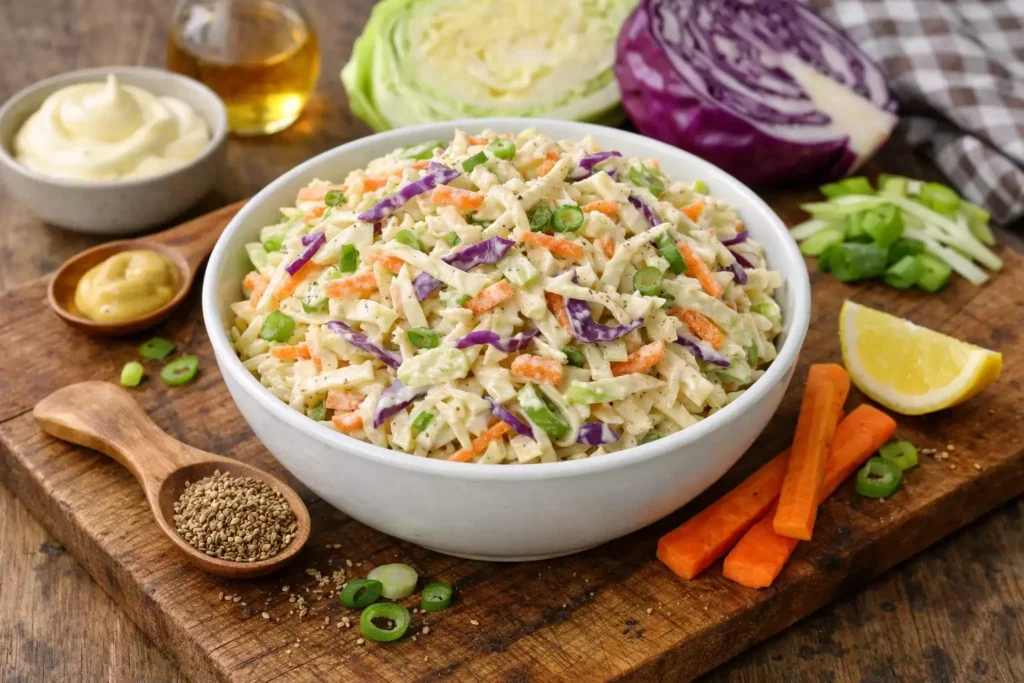
Most coleslaw is just wet cabbage pretending to be a side dish. This one earns its plate space. The failure mode of coleslaw is predictable and consistent: too much mayonnaise, applied too early, drawing moisture out of the cabbage and producing a watery, limp, flavorless mess. The coleslaw you find next to fried chicken at the deli counter. The coleslaw that sits in a puddle at the bottom of a paper container. That coleslaw is a missed opportunity and this recipe corrects it.
Good coleslaw has crunch, flavor, and a dressing that coats rather than drowns. The cabbage should retain texture even after an hour of sitting. The dressing should taste tangy, slightly sweet, and creamy in the right proportions. The whole thing should make you want a second helping rather than wondering why you took the first.
I serve this with every fried chicken, every pulled pork, every summer barbecue. It is the side dish that I make without consulting a recipe because it lives in my hands. This is that recipe, written down for anyone who wants it in their hands too.
The Anti-Watery Coleslaw Technique
The secret to coleslaw that does not turn watery is salting the cabbage and draining it before dressing. Salt draws moisture out of the cabbage cells through osmosis. Draining that moisture before the dressing goes on means the dressing stays on the surface rather than being diluted with released cabbage water. This is the same principle as salting eggplant or cucumber — removing the vegetable’s stored water first prevents a watery finished dish. The step takes 15 minutes and is the most impactful improvement over standard coleslaw recipes.
Ingredients

Creamy Coleslaw (serves 6–8 as a side)
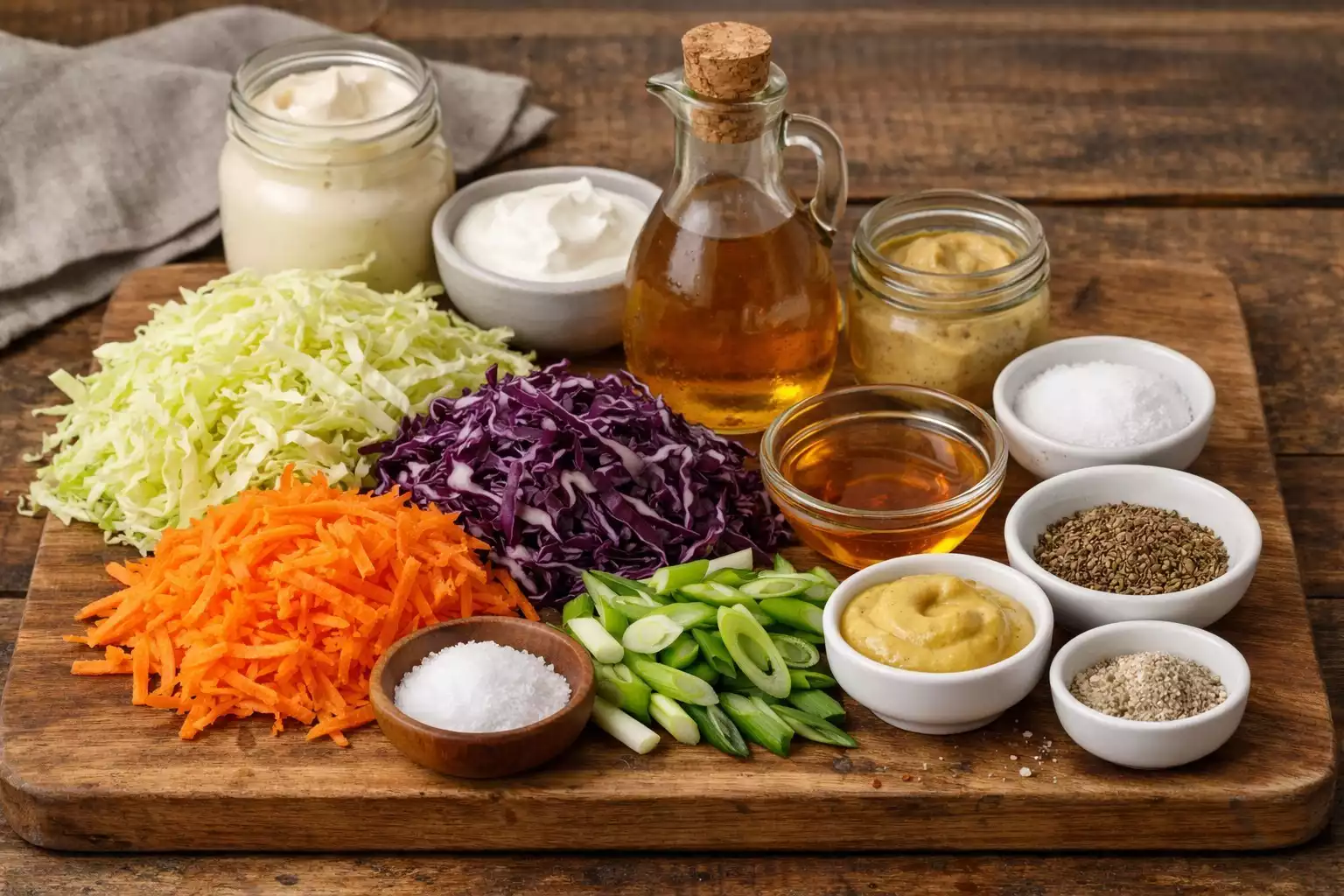
- 600g (1.3 lbs) cabbage (green, red, or a mix), very thinly sliced or shredded
- 2 medium carrots, grated
- 4 spring onions, thinly sliced
- 1.5 tsp salt (for drawing out moisture)
For the Creamy Dressing
- 120g (½ cup) good-quality mayonnaise
- 60g (¼ cup) sour cream or crème fraîche
- 2 tbsp apple cider vinegar
- 1 tbsp Dijon mustard
- 2 tbsp sugar (or 1 tbsp honey)
- Salt and white pepper to taste
- Optional: celery seeds (1 tsp) for authentic diner-style flavor
How to Make It
1
1Salt and Drain the Cabbage
Combine the shredded cabbage and carrots in a colander set over a bowl. Add the salt and toss to distribute. Leave for 15–20 minutes — you will see the liquid pool in the bowl below. After salting, rinse briefly under cold water to remove excess salt. Squeeze the cabbage firmly in handfuls over the sink to remove as much moisture as possible. Dry on a clean kitchen towel. The cabbage will have reduced in volume and should be significantly drier.
2
2Make the Dressing
Whisk together the mayonnaise, sour cream, apple cider vinegar, Dijon mustard, and sugar. Season with white pepper and a small amount of salt (taste first — the cabbage has residual salt). Add celery seeds if using. Taste the dressing before it goes on the cabbage: it should be creamy, tangy from the vinegar, slightly sweet, and well-seasoned. Adjust any of these elements to your preference.
3
3Dress and Rest
Combine the drained cabbage and carrots with the spring onions. Add the dressing and toss thoroughly. Refrigerate for at least 30 minutes before serving — the rest allows the flavors to meld and the cabbage to absorb the dressing. Taste again before serving and adjust seasoning. The coleslaw will have released minimal additional liquid thanks to the pre-salting step.
Coleslaw Tips
The salt-and-drain step is the whole technique. Everything else in this recipe is flexible and adjustable. This step is not. Skip it and your coleslaw will be watery within an hour. Do it and your coleslaw holds its texture for four to six hours at the table — through the whole meal and then through the next day.
Shred as thin as possible. Thinly shredded cabbage absorbs dressing better and has a more pleasant texture than thick chunks. A mandoline produces the most uniform thin shreds in the least time. A sharp knife and patience work equally well. The cabbage should be translucent and almost ribbon-like.
Apple cider vinegar is the right vinegar. Its mild fruitiness pairs well with both the mayonnaise richness and the cabbage’s slight bitterness. White wine vinegar is a good substitute. Distilled white vinegar is too sharp. Balsamic vinegar is wrong for creamy coleslaw.
Make it ahead. Coleslaw made 2–4 hours ahead is better than coleslaw made immediately before serving. The flavors meld and the cabbage softens just enough to be tender without losing crunch. Same-day advance preparation is not just acceptable — it is recommended.
Serving Creamy Coleslaw
The essential companion to Southern fried chicken, pulled pork, and any barbecue spread. Also excellent stuffed into a burger for a classic pairing. The crunch and tang of coleslaw is the perfect counterpoint to rich, fatty proteins. As a summer side dish at any outdoor gathering, coleslaw holds its temperature and texture better than other salads and feeds a crowd economically.
Variations Worth Trying
Vinegar coleslaw (no mayo). Replace the creamy dressing with a simple apple cider vinegar and oil dressing with sugar. The vinegar slaw is tangier, lighter, and more assertive in flavor. Traditional in parts of the American South and the preferred pairing with smoked meats. Add mustard seeds and celery seeds for a more complex vinegar slaw.
Asian coleslaw. Replace the creamy dressing with a sesame-ginger dressing: 2 tablespoons rice vinegar, 1 tablespoon sesame oil, 1 tablespoon soy sauce, 1 tablespoon honey, 1 teaspoon grated ginger. Add sliced napa cabbage, edamame, and sesame seeds. An excellent companion to any Chinese or Asian-inspired protein.
Storage
Keeps refrigerated for up to 3 days — the texture softens progressively but remains acceptable. Day-two coleslaw is often preferred for pulled pork sandwiches because the slightly softer texture integrates better with the meat. Beyond day three, the cabbage becomes too soft. The salting-and-draining step extends the refrigerator life significantly compared to undrained coleslaw.
FAQ
Why does my coleslaw get watery?
The cabbage releases moisture over time, diluting the dressing. The fix is the salt-and-drain step in this recipe: salting the cabbage draws the moisture out before the dressing goes on, so there is less residual moisture to release later. Alternatively, dress coleslaw immediately before serving and eat it quickly. But the salting method is better and more practical.
What is the ratio of mayo to vinegar for coleslaw dressing?
The right ratio varies with personal preference. This recipe uses roughly 3:1 mayo-to-vinegar by volume, which produces a creamy result with a clear tangy note. For a tangier coleslaw, increase vinegar. For a richer one, increase mayo. The Dijon and sugar balance the two components and can be adjusted in the same direction — more sugar for a sweeter result, more Dijon for more punch.

Kasia Polish Mom
Polish-born, Chicago-raised, feeding a family of six with babcia’s recipes and a global pantry. I grew up folding pierogi at my grandmother’s kitchen table and never stopped — 15+ years of cooking from scratch, one Sunday dinner at a time. Everything here is tested on four kids, a hungry husband, and the memory of a woman who never measured anything but always got it right.