Kasia Polish Mom
Polish-born, Chicago-raised, feeding a family of six with babcia’s recipes and a global pantry. I grew up folding pierogi at my grandmother’s kitchen table and never stopped — 15+ years of cooking from scratch, one Sunday dinner at a time. Everything here is tested on four kids, a hungry husband, and the memory of a woman who never measured anything but always got it right.
Polish Easter Recipes Your Babcia Would Be Proud Of
 Every year, right around March, my phone starts buzzing. My mama calls from the other side of Chicago asking if I’ve started my żurek starter yet. My babcia — rest her soul — would have already been three days into prep by now. And me? I’m standing in my kitchen at 11pm, googling “where to buy fresh horseradish root in bulk” while my kids sleep. That’s Polish Easter for you. It’s not a meal. It’s a multi-day operation that ends with the most spectacular breakfast spread you’ve ever seen.
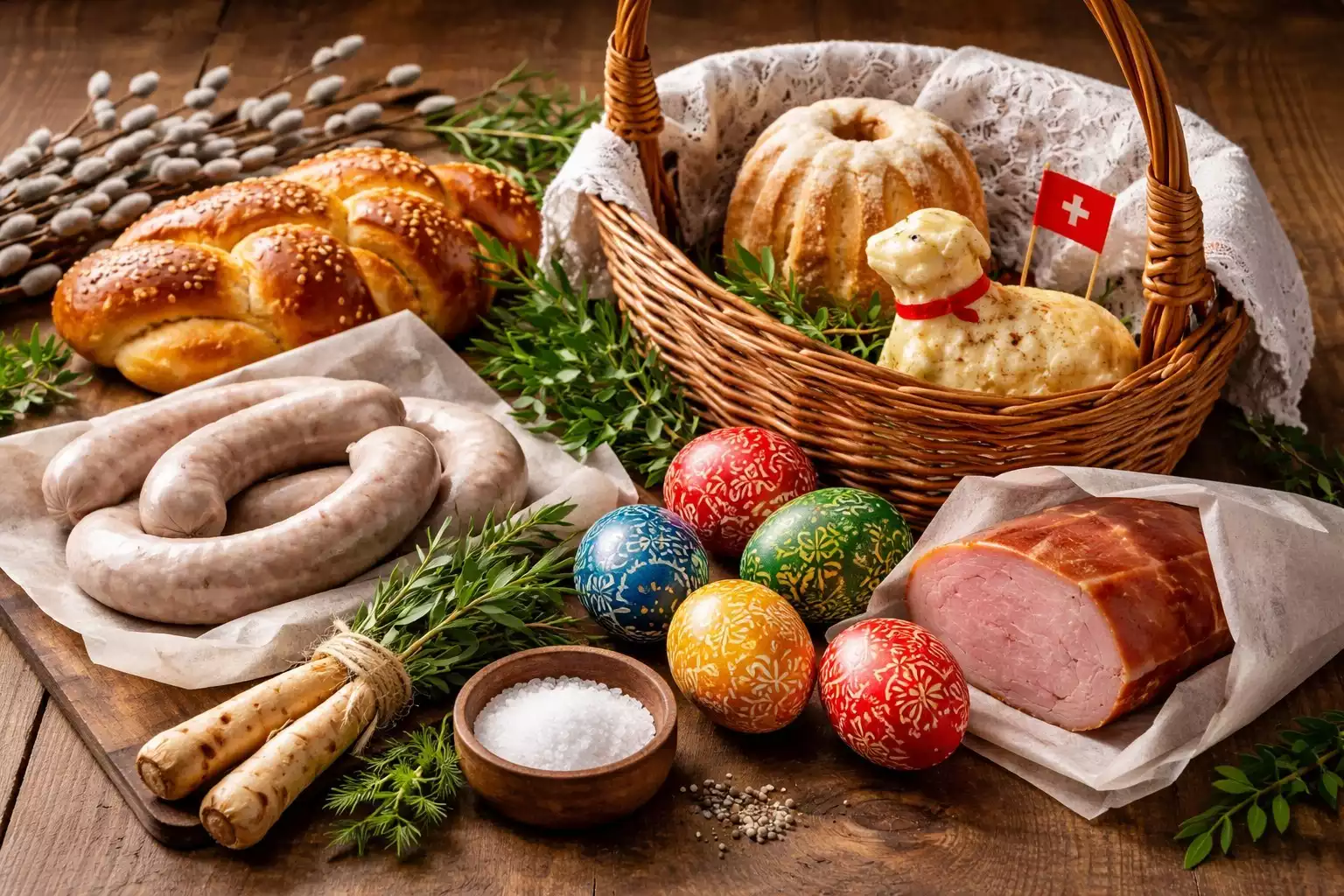
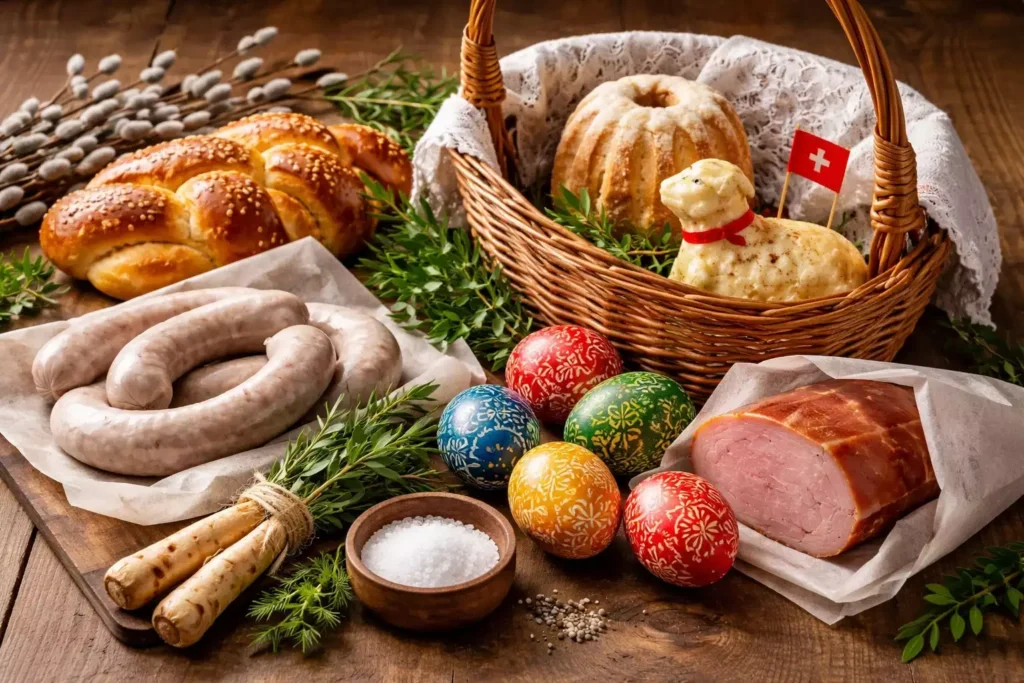
Wielkanoc (that’s Easter in Polish) is hands-down the biggest food holiday in Polish culture. Bigger than Christmas Eve for some families — and that’s saying something, because Wigilia is no joke either. The whole thing revolves around one moment: Saturday afternoon, when you pack the koszyczek (Easter basket) with a sample of every food that’ll be on Sunday’s table, walk it to church, and have it blessed by the priest. Święconka, we call it. And when you get that basket home? Nobody touches it until Easter morning breakfast.
I grew up watching my babcia and mama turn the kitchen into a factory the week before Easter. Baba wielkanocna rising in the warm oven. Pasztet cooling on the counter. The smell of freshly grated chrzan making everyone’s eyes water. And me, sneaking bites of ćwikła with bread when nobody was looking. Now I’m the one running the operation — except my version includes texting my husband frantic grocery lists and bribing my kids to help peel eggs.
This is everything. Every recipe, every tradition, every dish that belongs on a Polish Easter table — from the żurek that starts your morning to the mazurek you’re still picking at by evening. I’ve organized it the way my family does it: soups first, then meats and mains, sides and condiments, all the baking, and the traditions that tie it all together. Smacznego — and happy Wielkanoc.
Wielkanocne Zupy (Easter Soups)
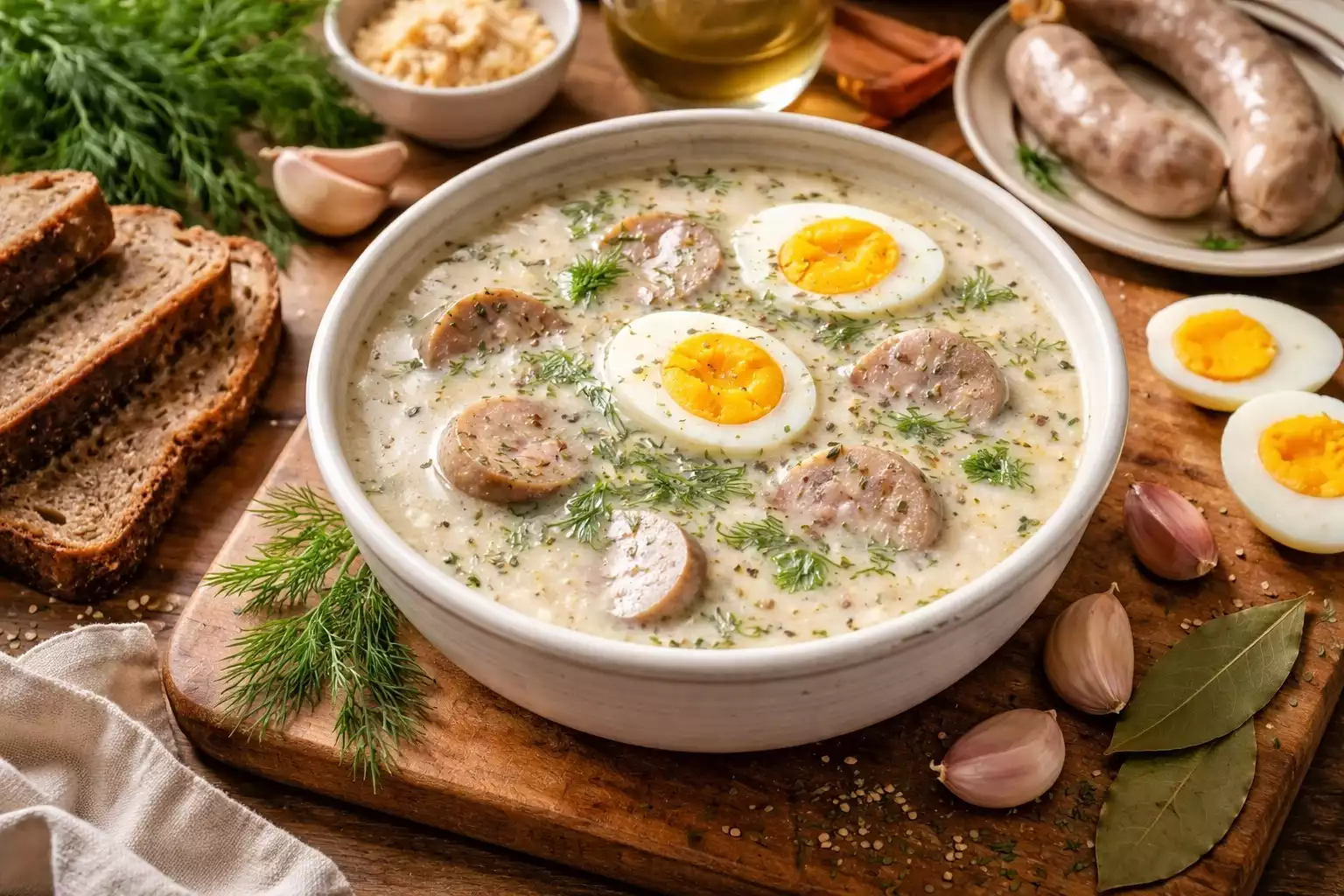
Easter morning in Poland starts with soup. Not coffee, not eggs — soup. Specifically żurek or biały barszcz, depending on which part of Poland your family comes from. My family? Żurek people. Always. But I’ve learned to make both because my husband’s family is a biały barszcz household, and marriage is about compromise. (Mostly.)
Żurek — Polish Sour Rye Soup
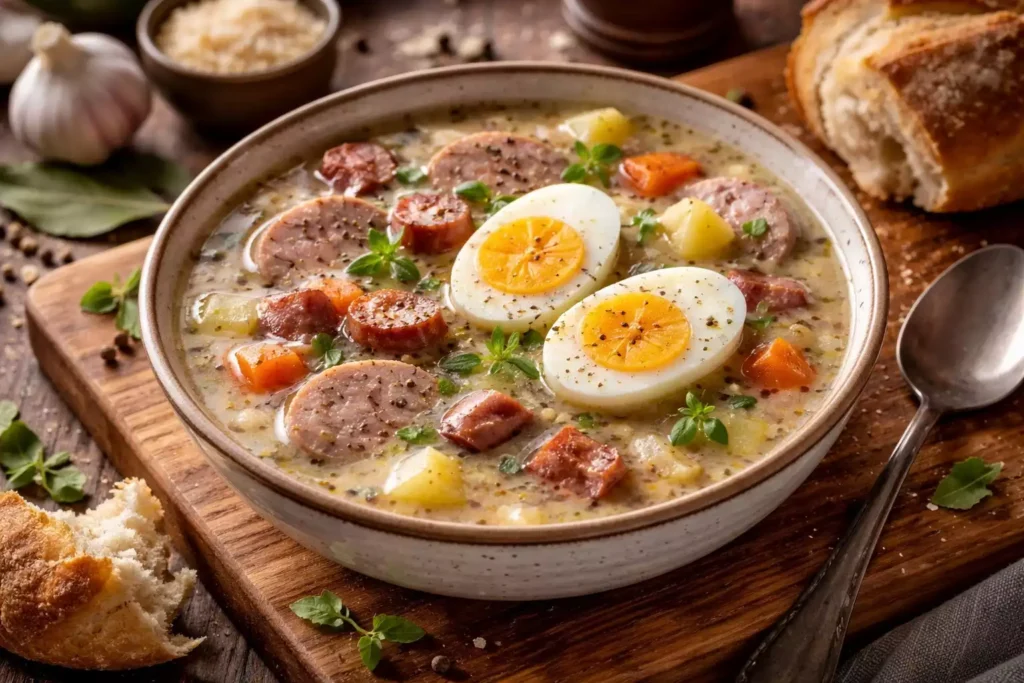
The soup that IS Easter morning. Fermented rye starter, white sausage, hard-boiled egg, and that tangy, earthy flavor that nothing else on earth tastes like. My babcia’s version — the one I grew up on.
Biały Barszcz — White Borscht
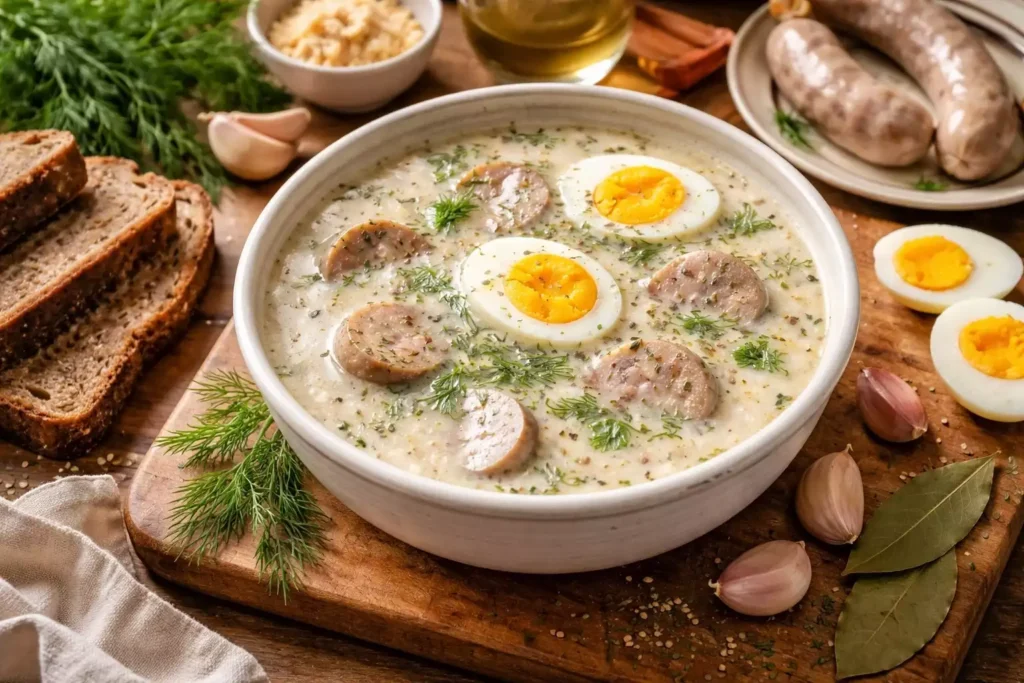
The creamier, milder cousin of żurek. Same white sausage, same hard-boiled egg, but a gentler sourness and a richer broth. If your family argues about which Easter soup is better — this is the other side of that argument.
Dania Główne (Main Dishes)
The Easter table isn’t a sit-down-and-eat-one-plate kind of deal. It’s a spread. Cold meats, warm sausage, pasztet sliced thin, maybe a glazed ham if your family goes big. Everything gets put out at once, and everyone grazes for approximately three hours while arguing about politics and who makes the best bigos. Standard Polish holiday behavior.
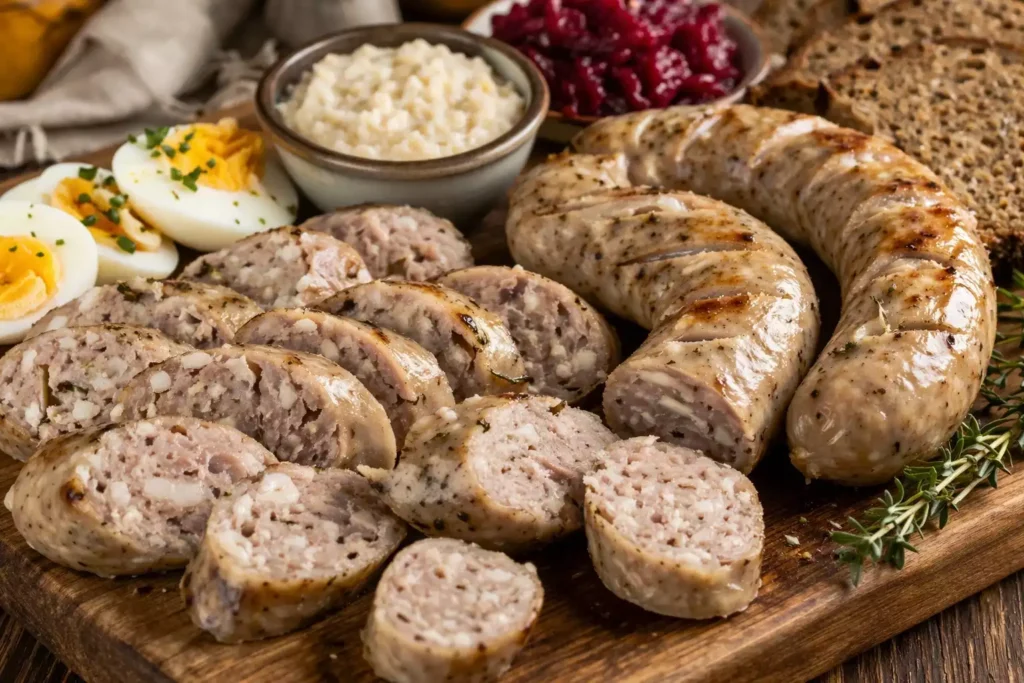
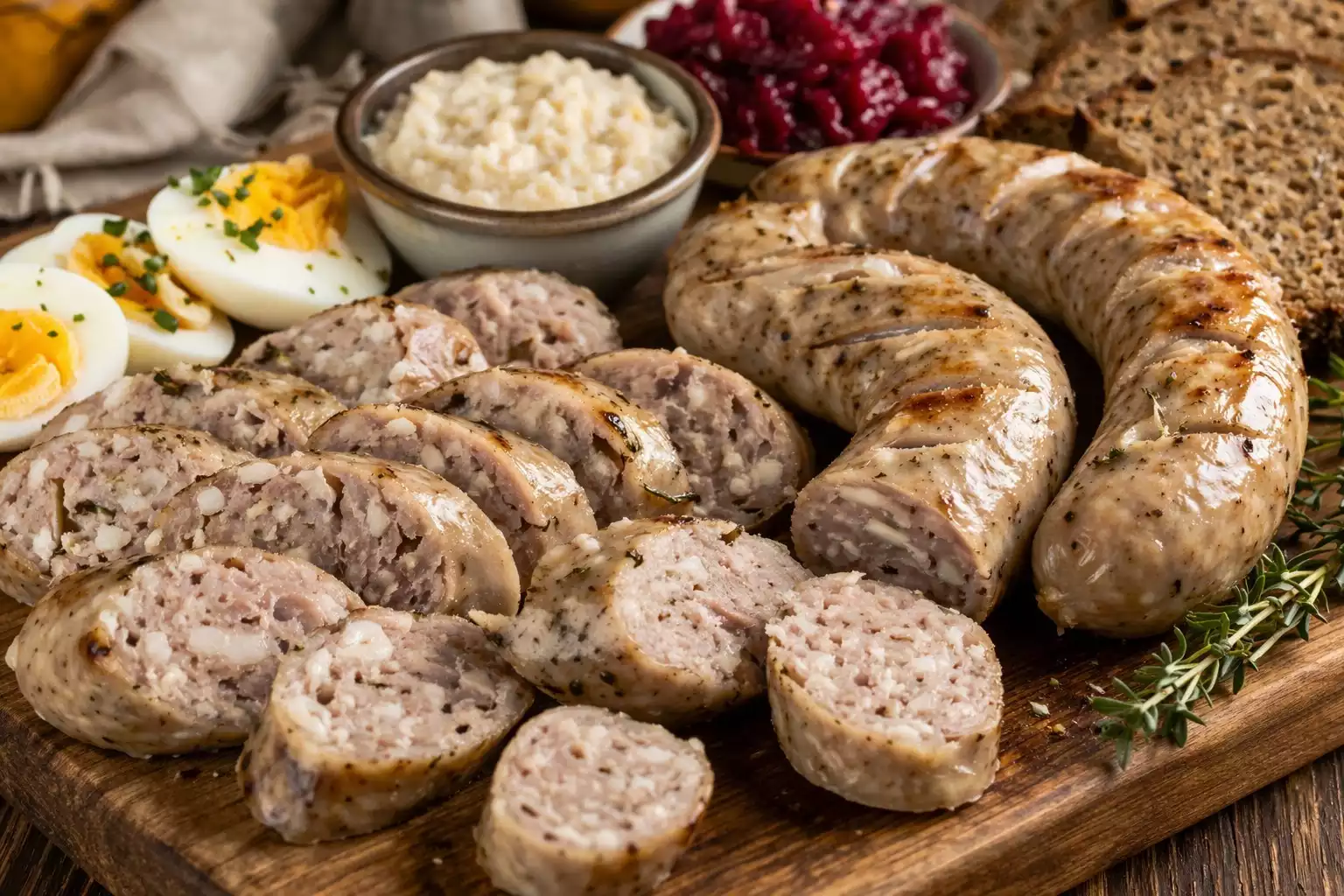
Biała Kiełbasa — White Easter Sausage
The fresh, unsmoked sausage that goes in the żurek, in the basket, and on the plate next to chrzan. Every Polish deli has a line out the door the week before Easter because of this sausage.
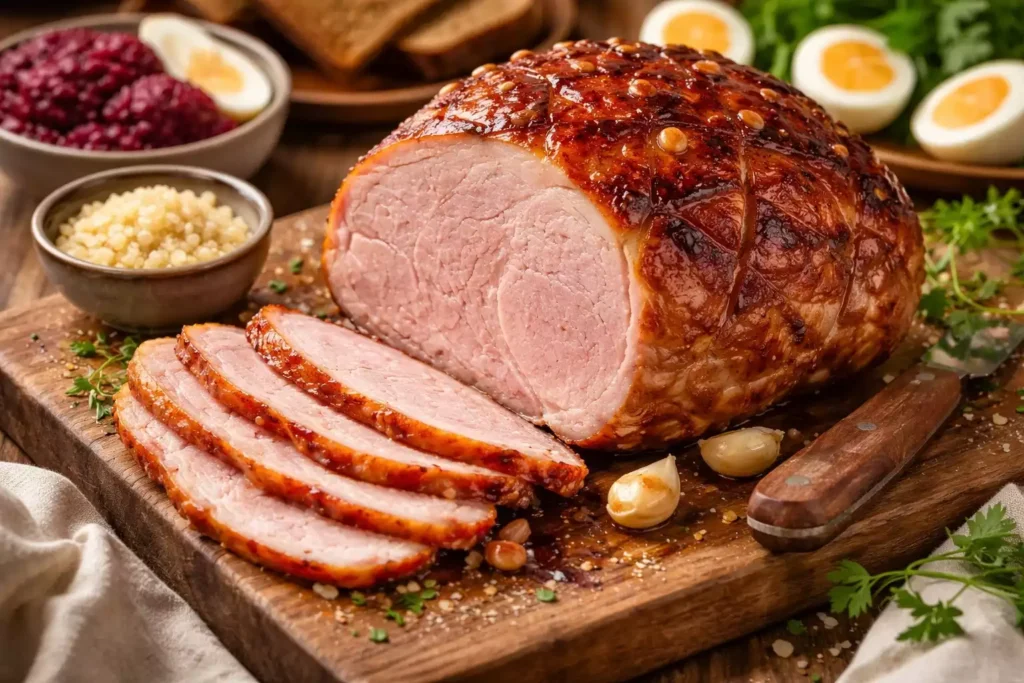
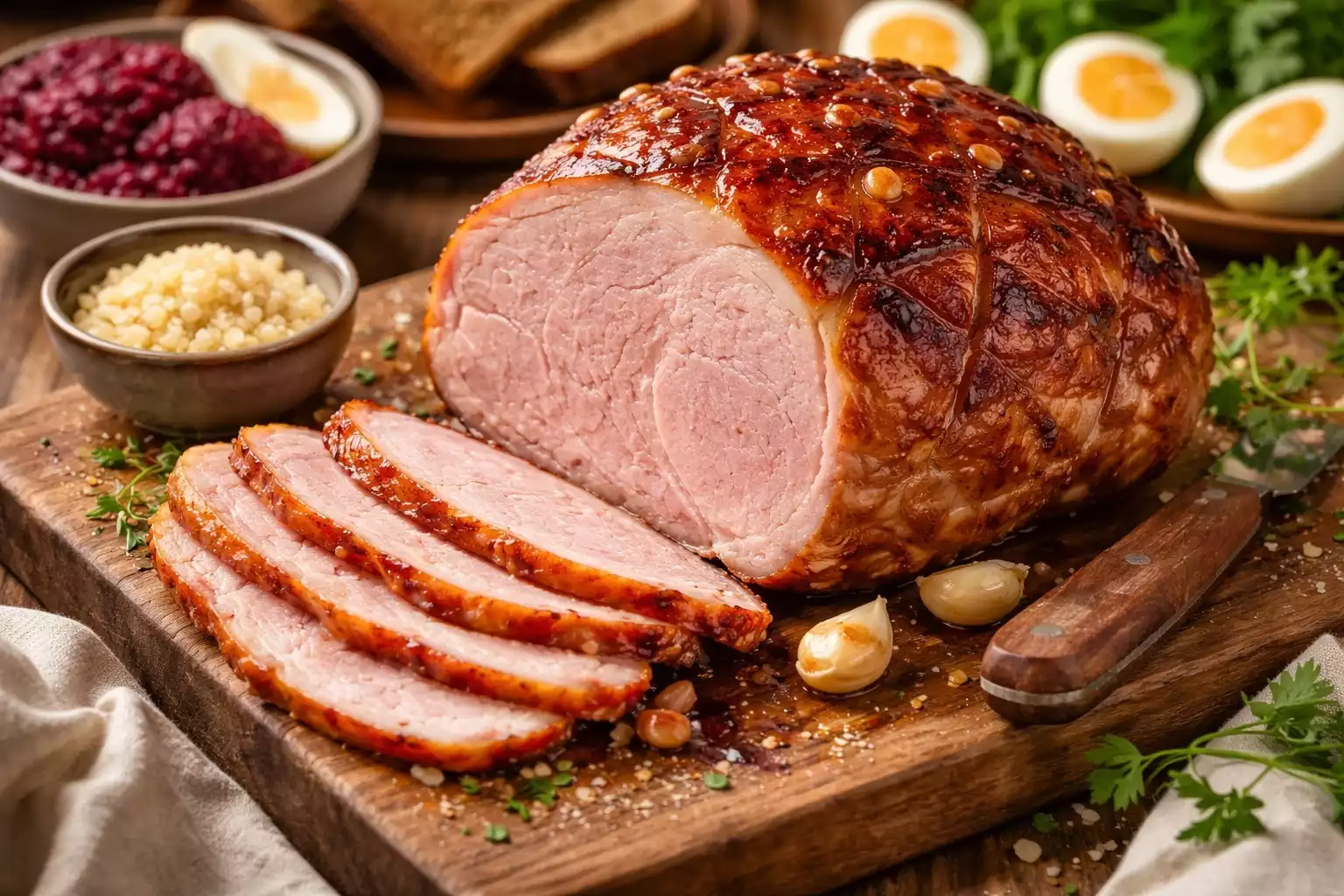
Szynka Wielkanocna — Polish Easter Ham
Glazed, baked, sliced thin, served cold with chrzan and mustard. The ham is the centerpiece — the thing everyone reaches for first after the basket is opened.
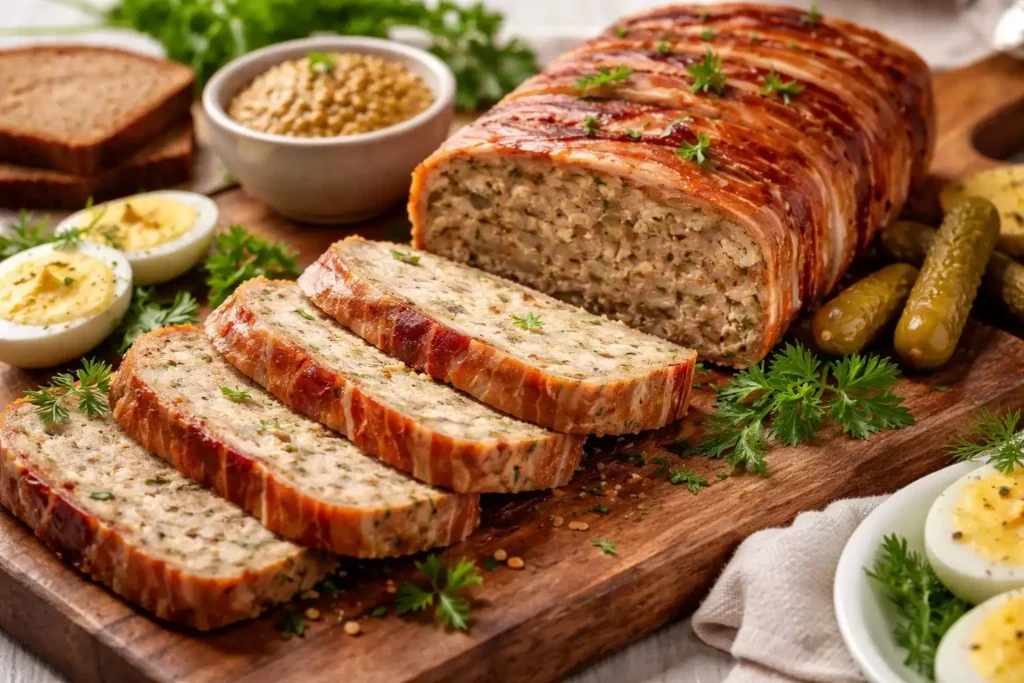
Pasztet Wielkanocny — Easter Pâté
Baked meat pâté, served cold in thick slices. This is the thing that disappears from the table first — before the ham, before the sausage, before anything. My family fights over the last slice every single year.
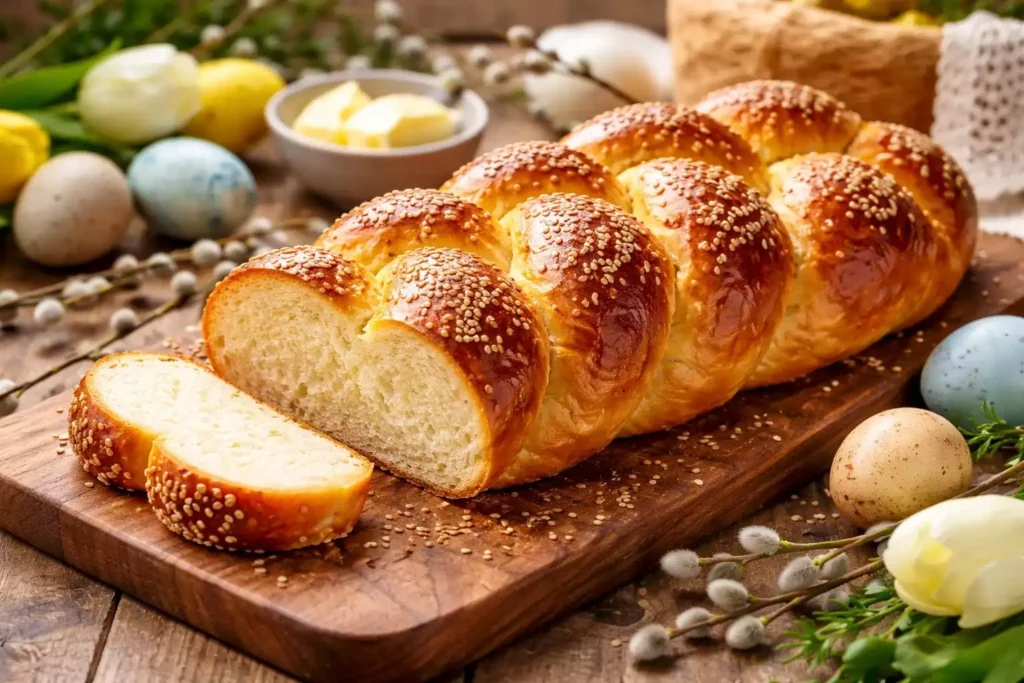
Chałka Wielkanocna — Easter Braided Bread
Golden, eggy, slightly sweet braided bread. It goes in the święconka basket and it anchors the breakfast table. Tear it apart while it’s still warm. Trust me.
Dodatki i Sosy (Sides & Condiments)
If the meats are the stars of the Easter table, the condiments are the supporting cast that makes everything work. Chrzan (horseradish) is non-negotiable — you cannot have Easter without it. Ćwikła adds color and a sweeter kick. Sałatka jarzynowa is the mayo-loaded vegetable salad that shows up at literally every Polish gathering. And the eggs? They’re everywhere — deviled, in salad, sliced on top of everything.
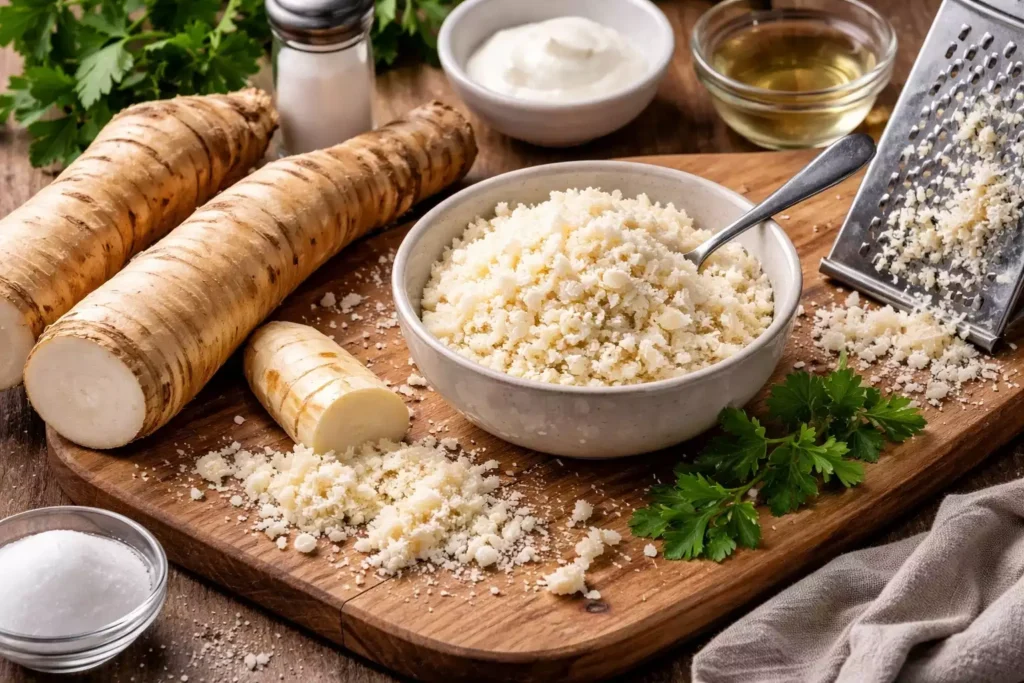
Chrzan — Fresh Horseradish Sauce
The condiment that makes everyone cry — literally. Fresh grated horseradish, vinegar, a pinch of sugar. It clears your sinuses and makes every bite of ham and kiełbasa ten times better.
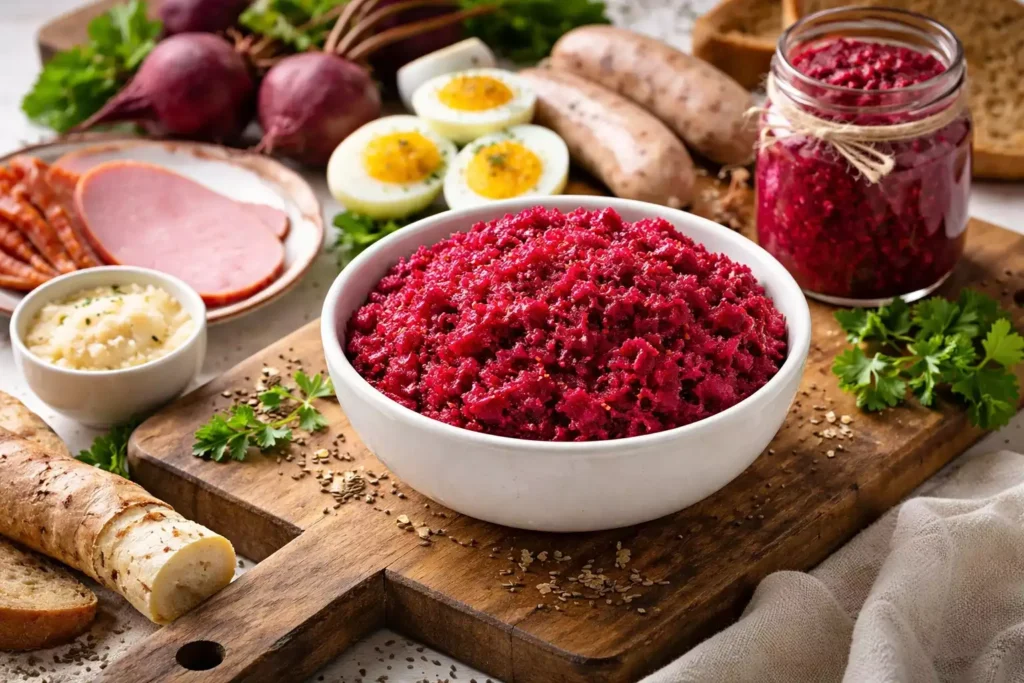
Ćwikła — Beetroot Horseradish Relish
Bright magenta, sweet from the beets, spicy from the horseradish. It stains everything it touches — your cutting board, your fingers, your shirt. Worth it every time.
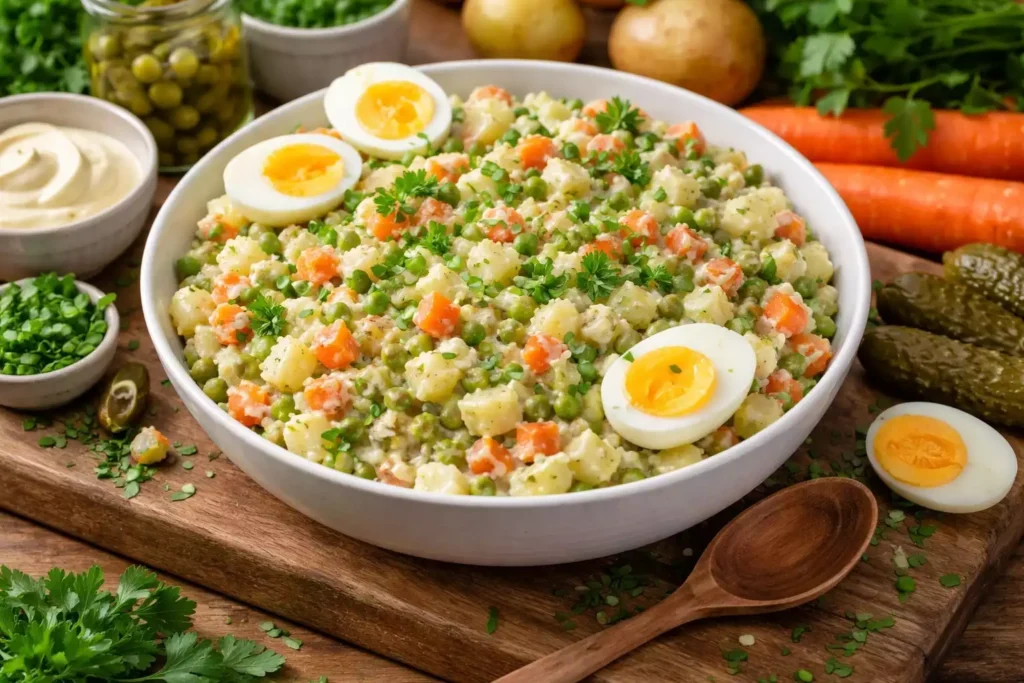
Sałatka Jarzynowa — Polish Vegetable Salad
Diced potatoes, carrots, peas, pickles, hard-boiled eggs, and enough mayo to make a cardiologist nervous. It’s on every Polish holiday table. Every birthday party. Every name day. It’s the side dish that never takes a day off.
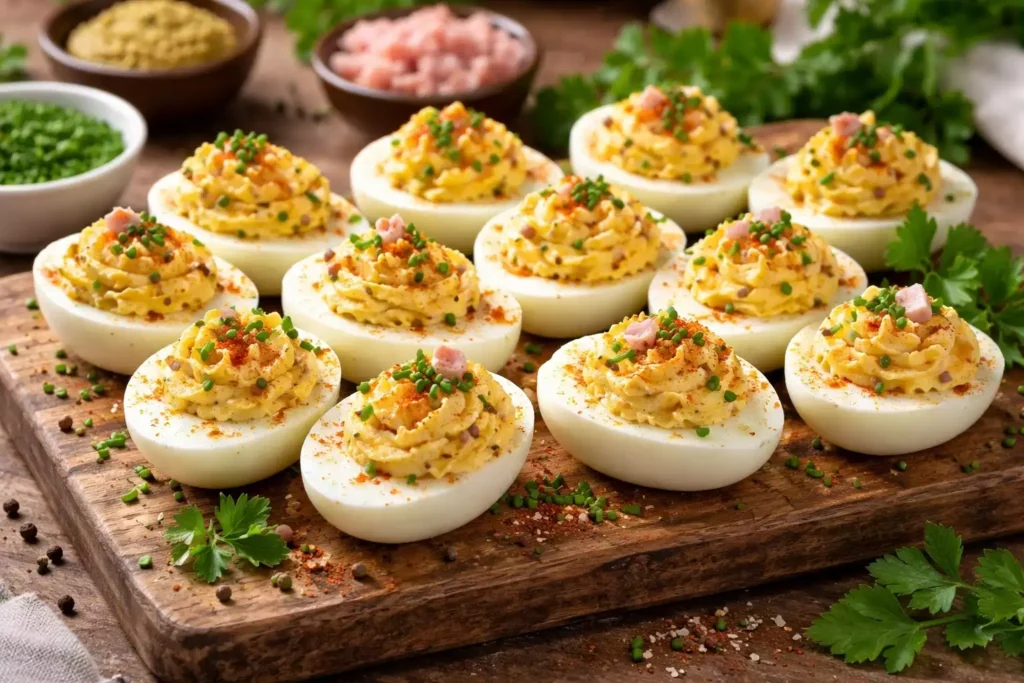
Jajka Faszerowane — Polish Deviled Eggs
Polish deviled eggs with way more mustard than the American version. Topped with chives, sometimes a bit of ham mixed into the filling. Gone in five minutes flat.
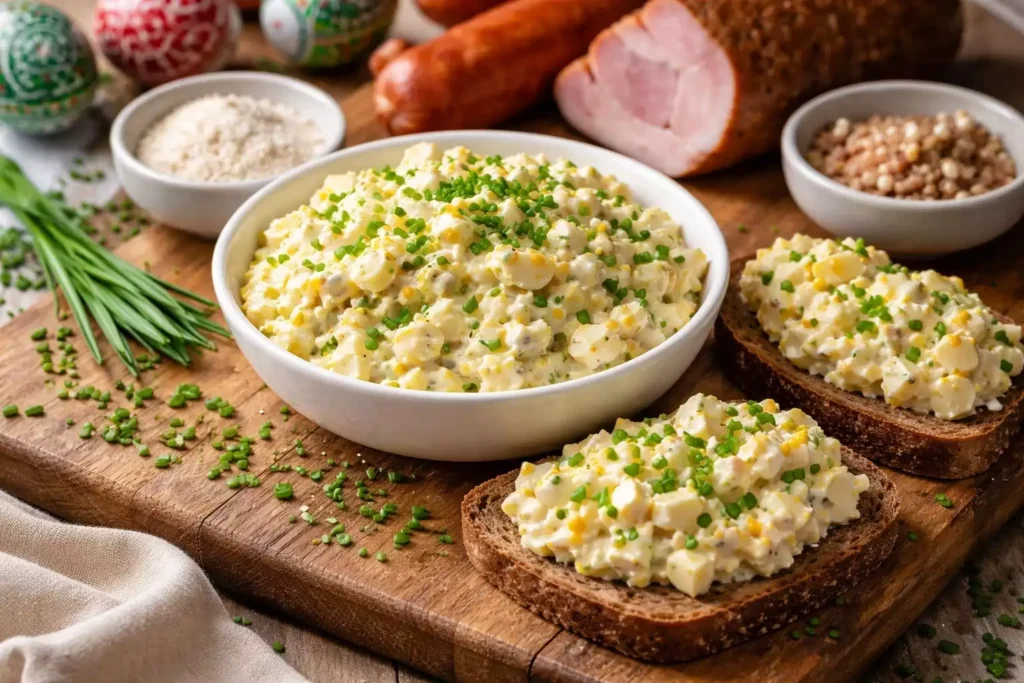
Polish Easter Egg Salad
What happens to the dozen hard-boiled eggs from the święconka basket. Chopped, mixed with mayo, mustard, and fresh chives. Simple, satisfying, and gone by lunch.
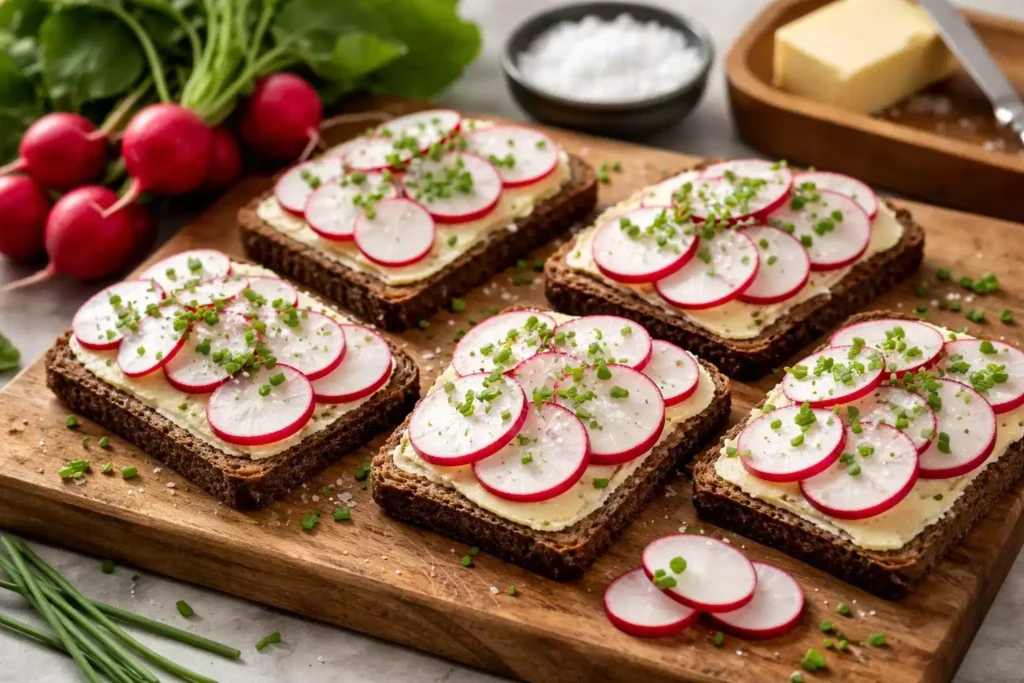
Rzodkiewka z Masłem — Radishes With Butter
Crunchy spring radishes, good salted butter, dark rye bread. Three ingredients. Zero cooking. The simplest thing on the table and somehow one of the best.
Ciasta i Desery (Baking & Desserts)
Polish Easter baking is serious business. My babcia started baking a full week before Wielkanoc — baba wielkanocna on Monday, mazurek on Tuesday, makowiec on Wednesday, babka piaskowa “just in case the baba falls.” (It fell maybe once in 40 years, but she always had a backup.) The dessert table at Easter is not a single cake. It’s a buffet. And if you show up to the family gathering without something homemade, prepare for The Look.
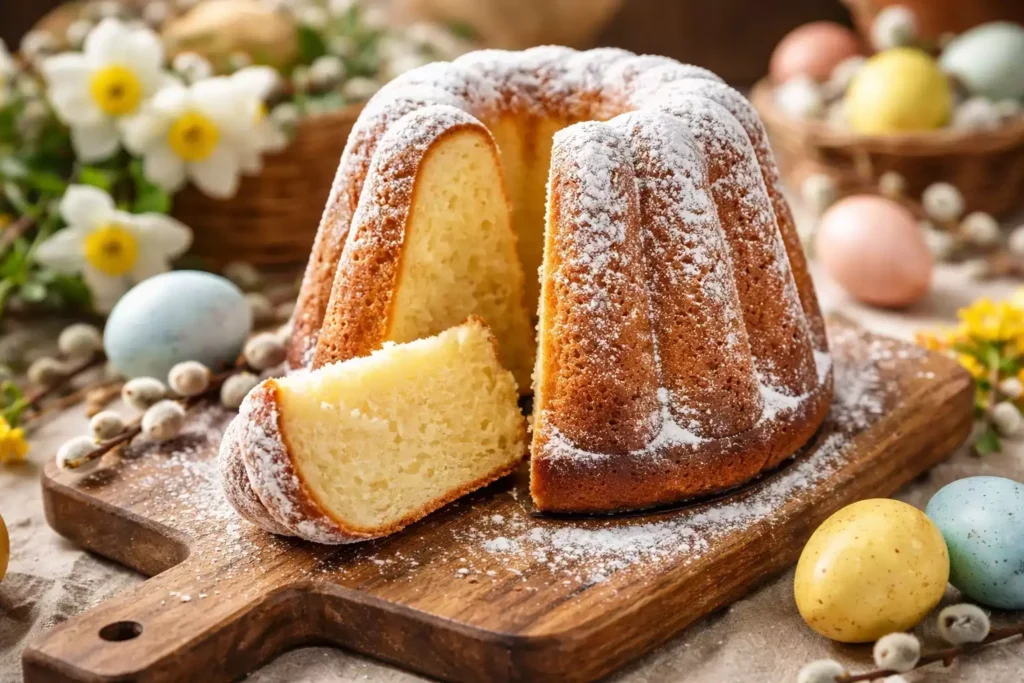
Baba Wielkanocna — Easter Yeast Cake
The tall, golden yeast cake that goes in the święconka basket. If it rises, Easter is saved. If it falls, you cry, curse under your breath, and start over. There is no in-between with baba.
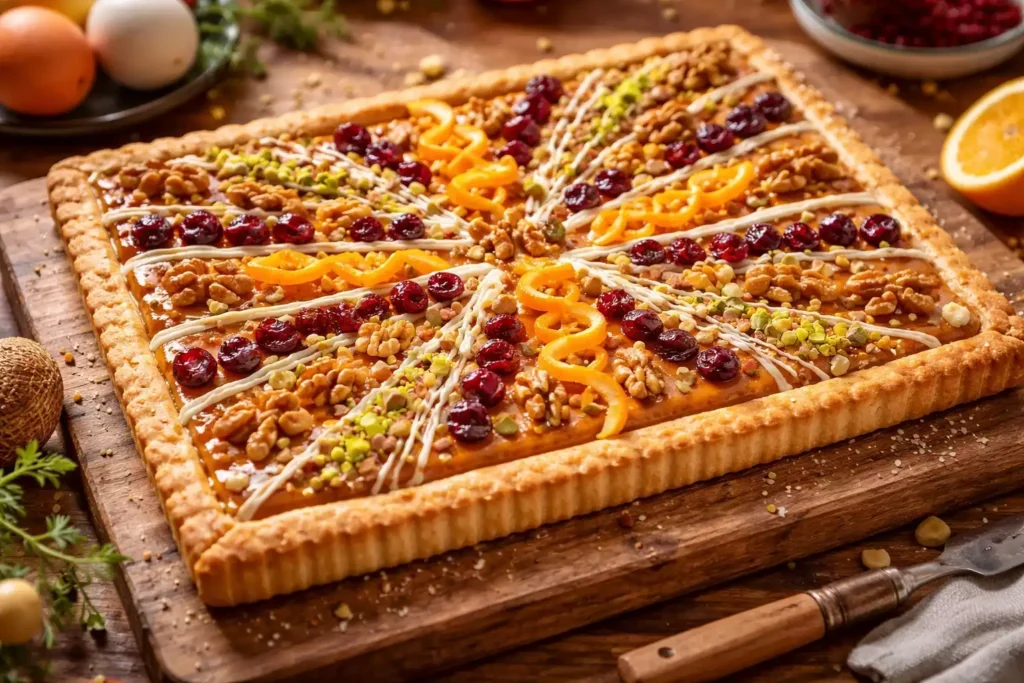
Mazurek Wielkanocny — Easter Flatcake
Shortcrust base, caramel or jam topping, decorated with nuts, dried fruit, and sometimes chocolate. This is the cake you photograph before you eat. Polish Instagram before Instagram existed.
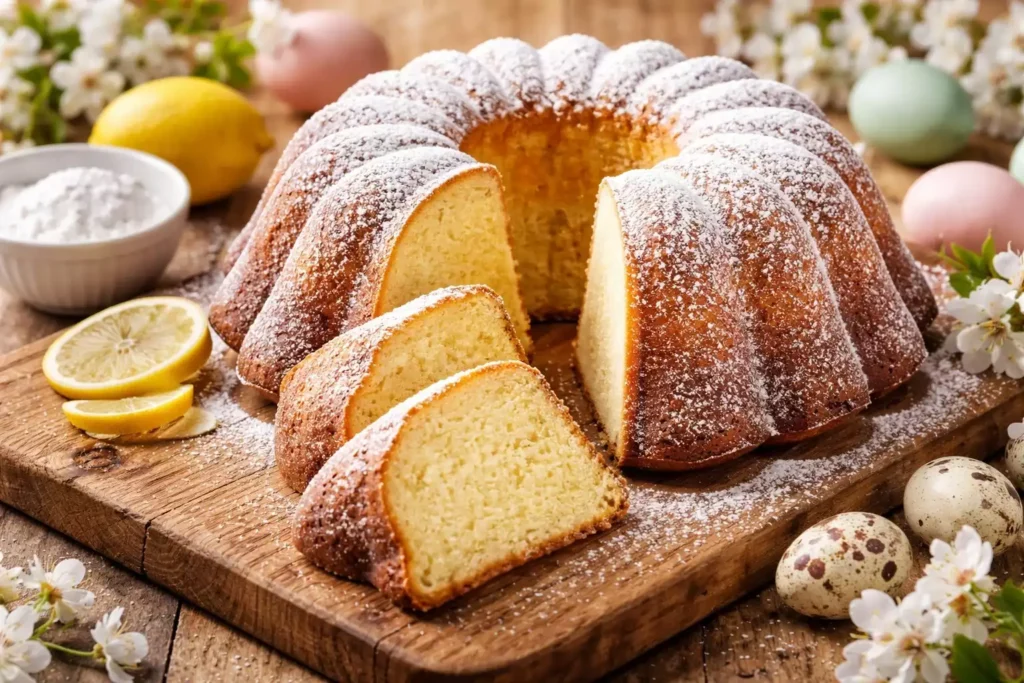
Babka Piaskowa — Sand Cake
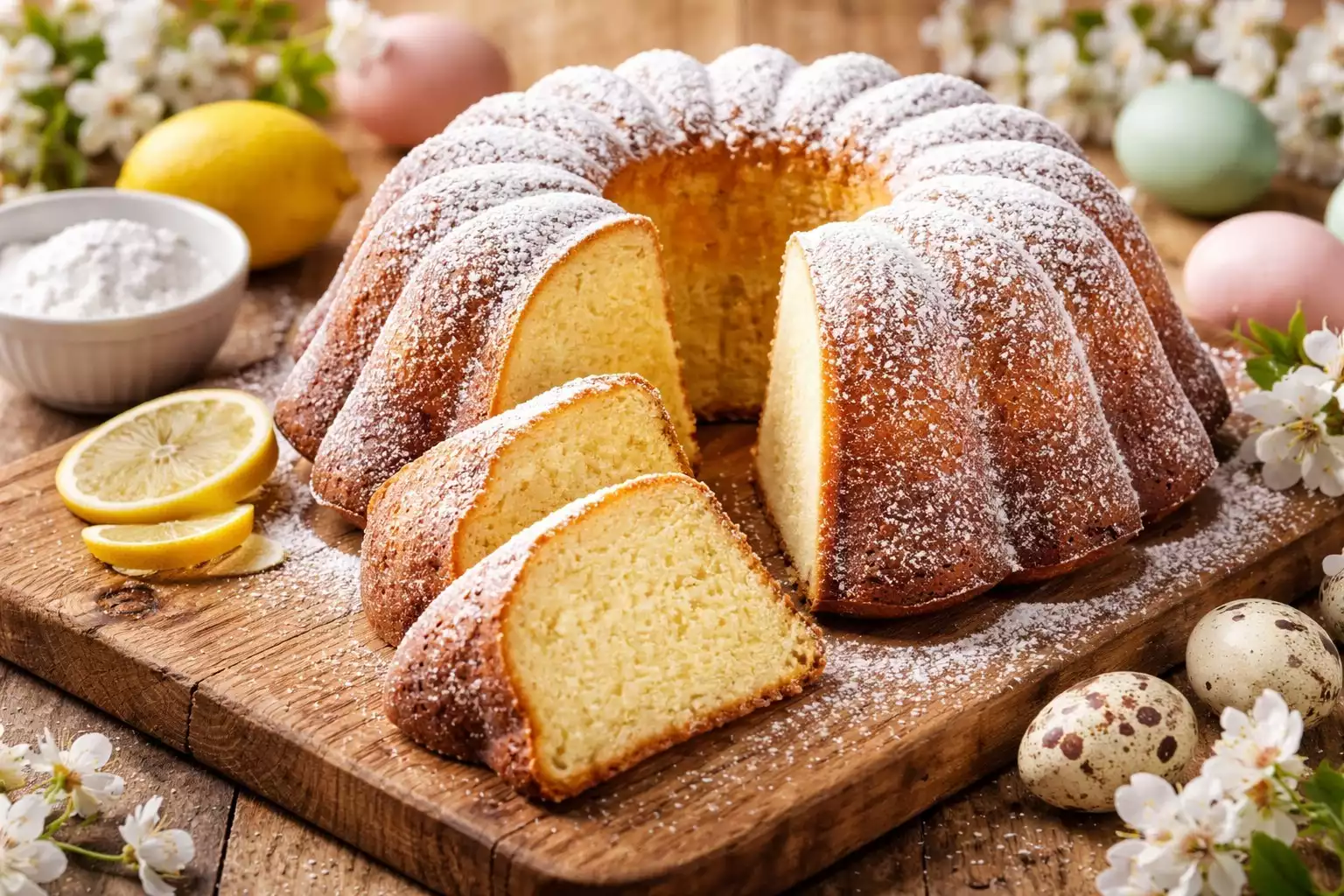
Dense, buttery pound cake that never fails. If baba wielkanocna scares you, babka piaskowa is your insurance policy. Every Polish babcia has this recipe memorized.
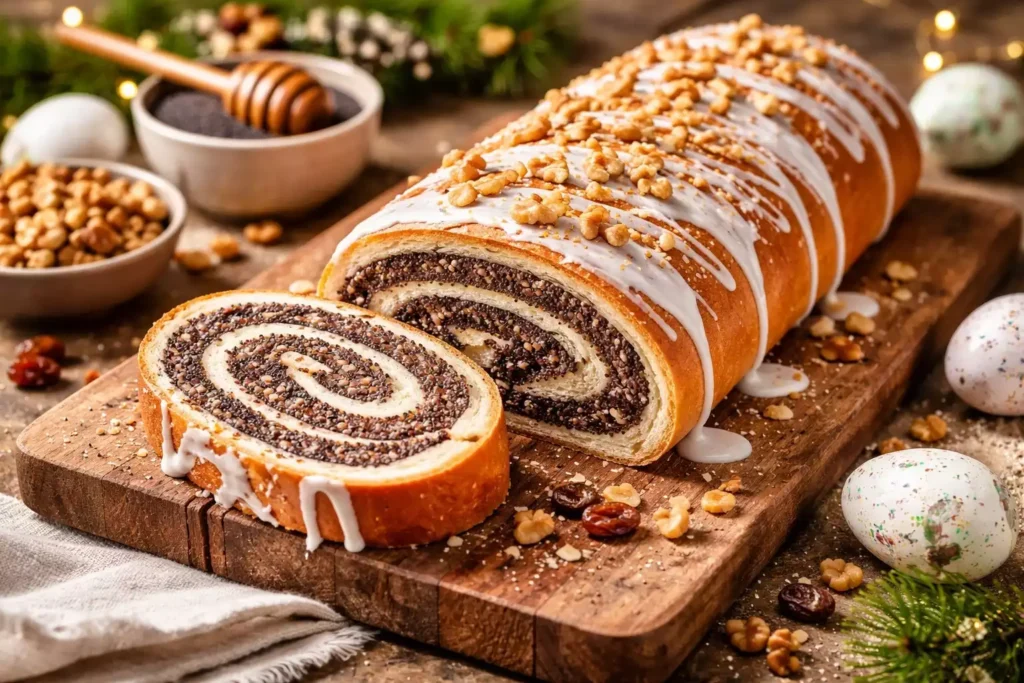
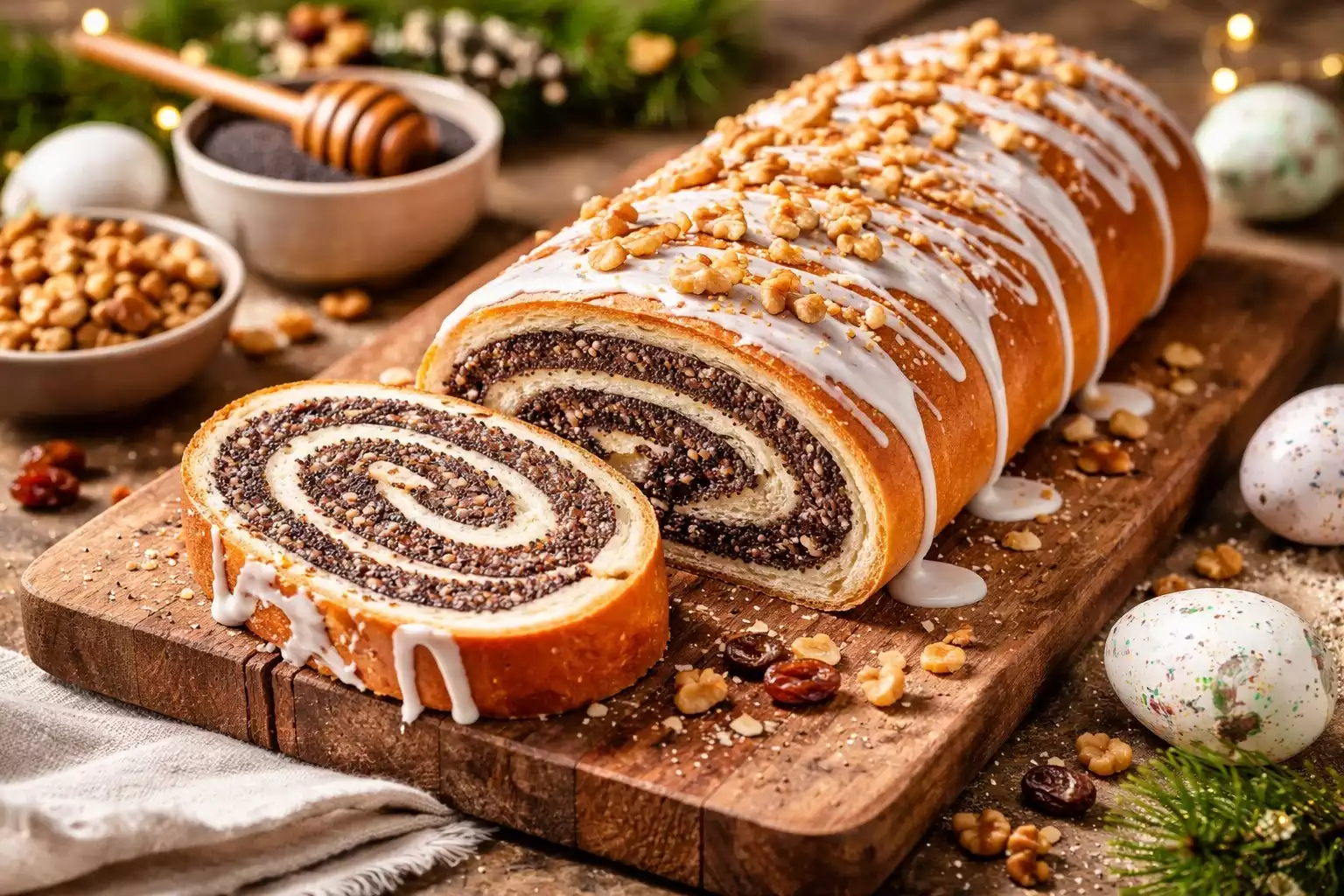
Makowiec — Poppy Seed Roll
Yeast dough rolled tight around a thick, sweet poppy seed filling. It’s technically a Christmas cake, but it shows up at Easter too and nobody complains. My kids call it “the swirl cake.”
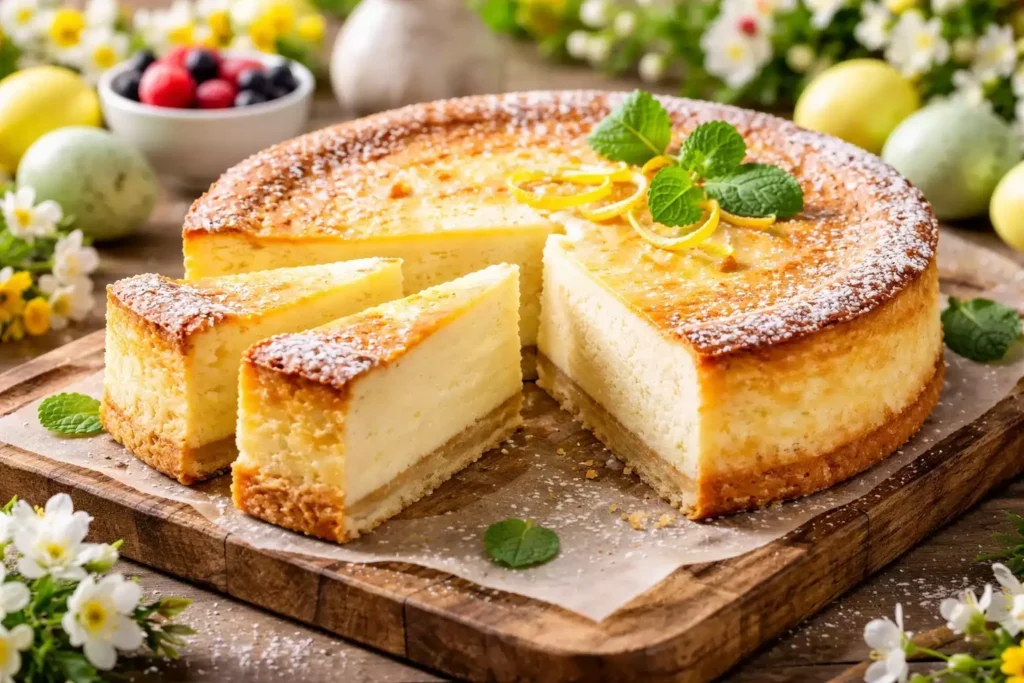
Sernik Wielkanocny — Baked Cheesecake
The baked version — denser and richer than the no-bake sernik. Made with twaróg (Polish farmer’s cheese) for that distinct texture that American cheesecake can’t replicate.
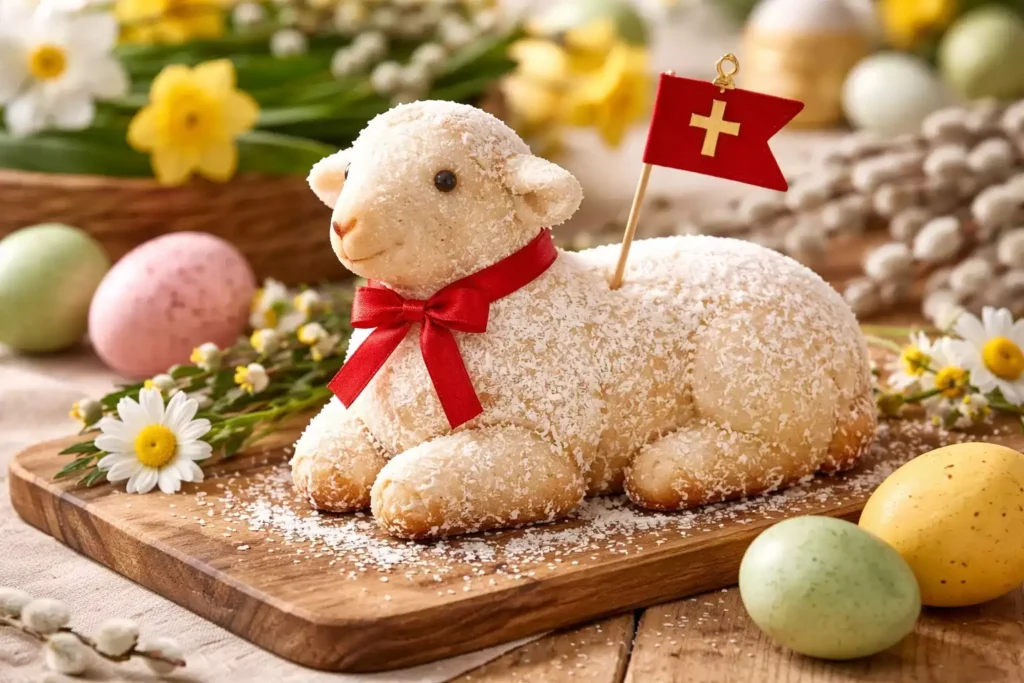
Baranek z Cukru — Sugar Lamb
The little sugar or butter lamb that sits in the święconka basket — a symbol of Christ. It’s not really dessert, it’s tradition. But my kids eat it anyway. Every year. Within minutes of getting home from church.
Święconka i Tradycje (Basket & Traditions)
Polish Easter isn’t just about the food — it’s about the rituals around the food. The basket blessing on Saturday, the massive breakfast feast on Sunday morning, and Śmigus-Dyngus on Monday when everyone throws water at each other. If you didn’t grow up with these traditions, they might sound a little wild. If you did grow up with them, you know there’s no Easter without them.
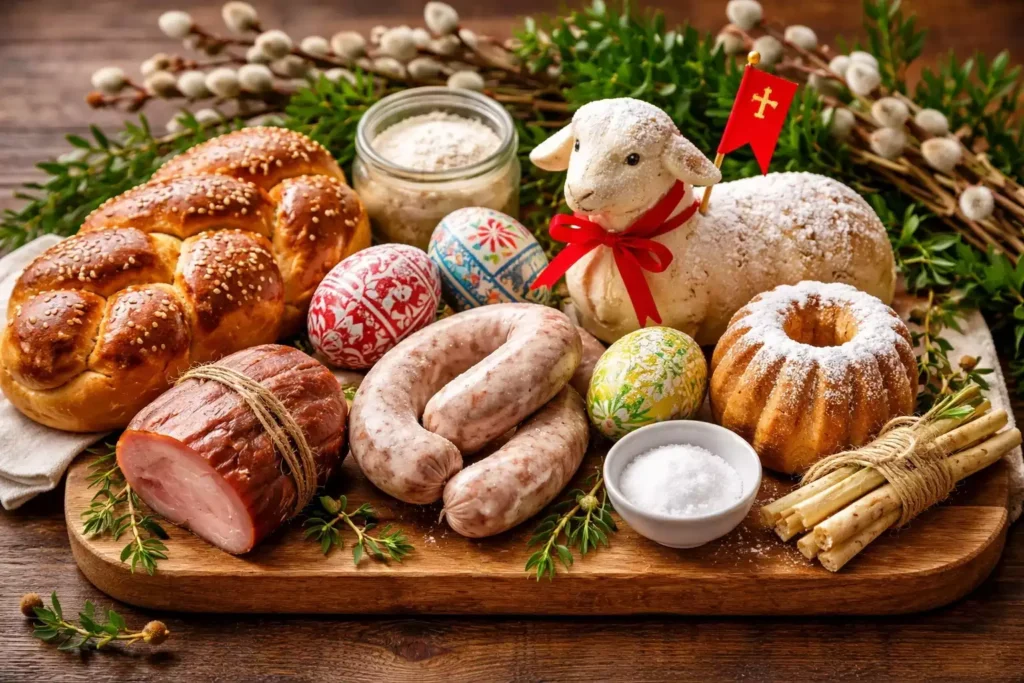
Święconka — The Easter Basket Guide
What goes in the basket and why. Bread for prosperity, salt for preservation, egg for new life, sausage for abundance, horseradish for suffering. Every item is a symbol — and I’ll walk you through all of them.
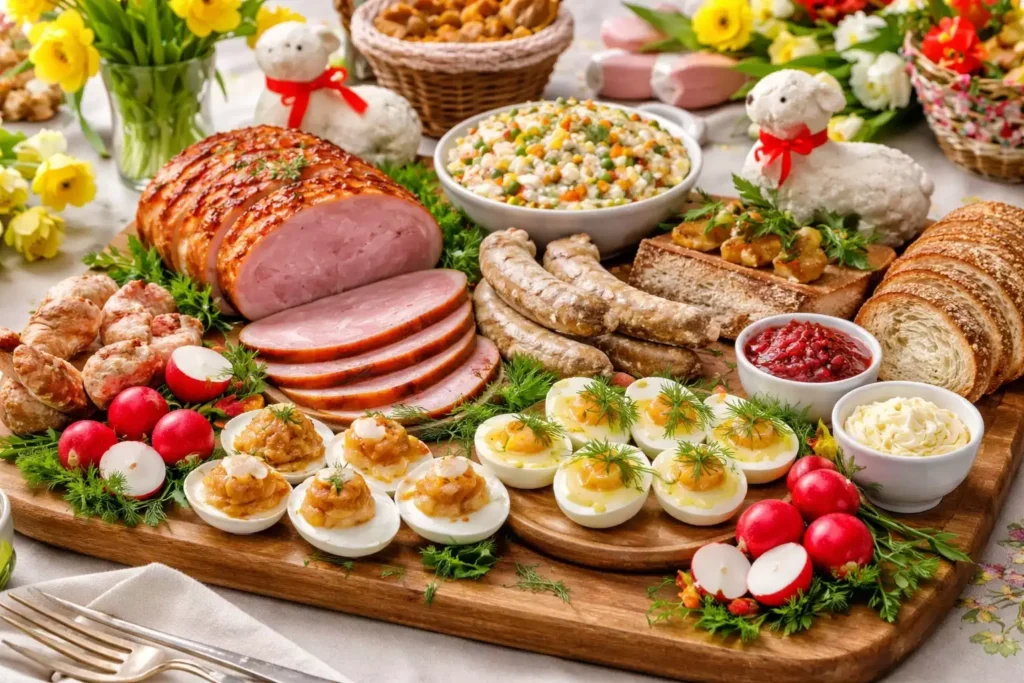
Śniadanie Wielkanocne — Easter Breakfast Menu
How to plan the full Polish Easter breakfast: timing, quantities, what to make ahead, and what to put out last. Because “breakfast” is really a 3-hour feast that starts with soup and ends with cake.

Śmigus-Dyngus — Wet Monday
The day after Easter, when Poland throws water at each other. It sounds insane. It is insane. It’s also one of the most fun traditions I grew up with. Here’s what it is, where it came from, and how to survive it.
Wielki Post (Lent & Good Friday)
Before the feast comes the fast. Wielki Post (Lent) in Poland means six weeks of meatless Fridays, herring in every possible form, and mushroom pierogi on repeat. Good Friday is the strictest day — no meat at all, and in some families, only one full meal. But honestly? Polish Lenten food is so good that “fasting” feels like a stretch.
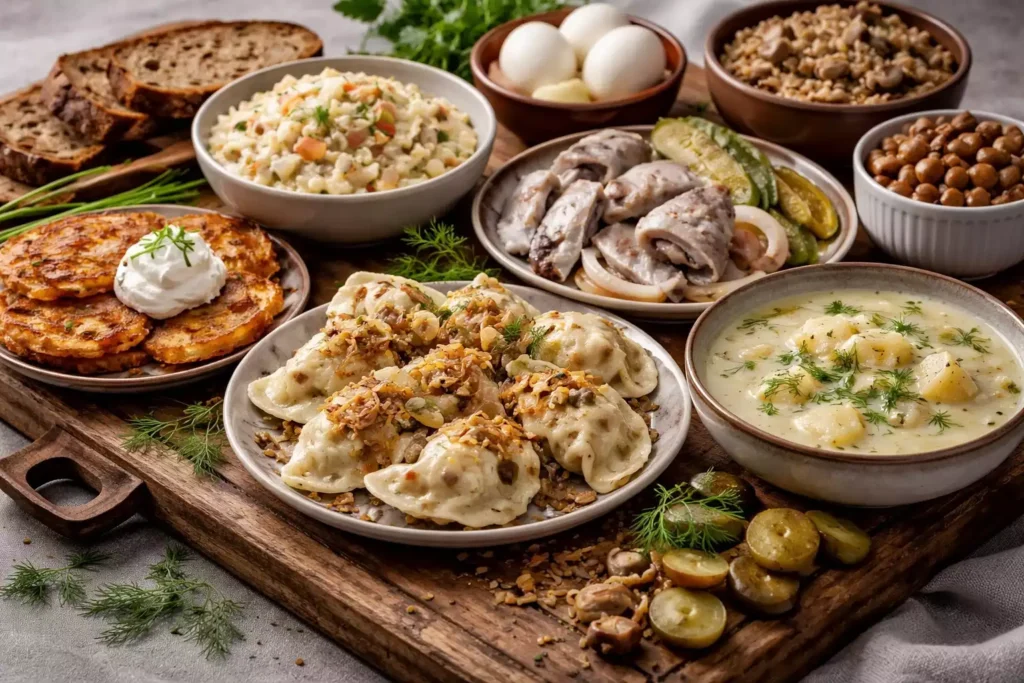
Polish Lent Recipes — Wielki Post
Meatless meals for the six weeks before Easter. Herring, mushroom soups, sauerkraut pierogi, fish on Fridays. Everything you need to get through Lent the Polish way.
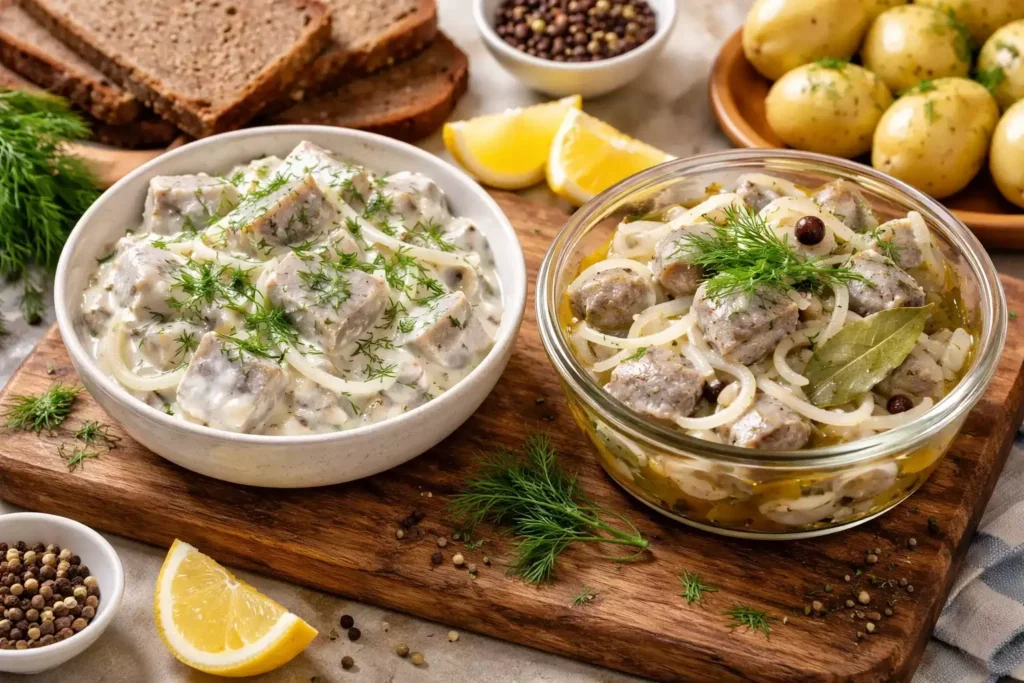
Śledź — Polish Herring Two Ways
W śmietanie (in cream) or w oleju (in oil) — the great Polish herring debate. I’m giving you both versions because every family has strong opinions and I’m not getting in the middle of it.
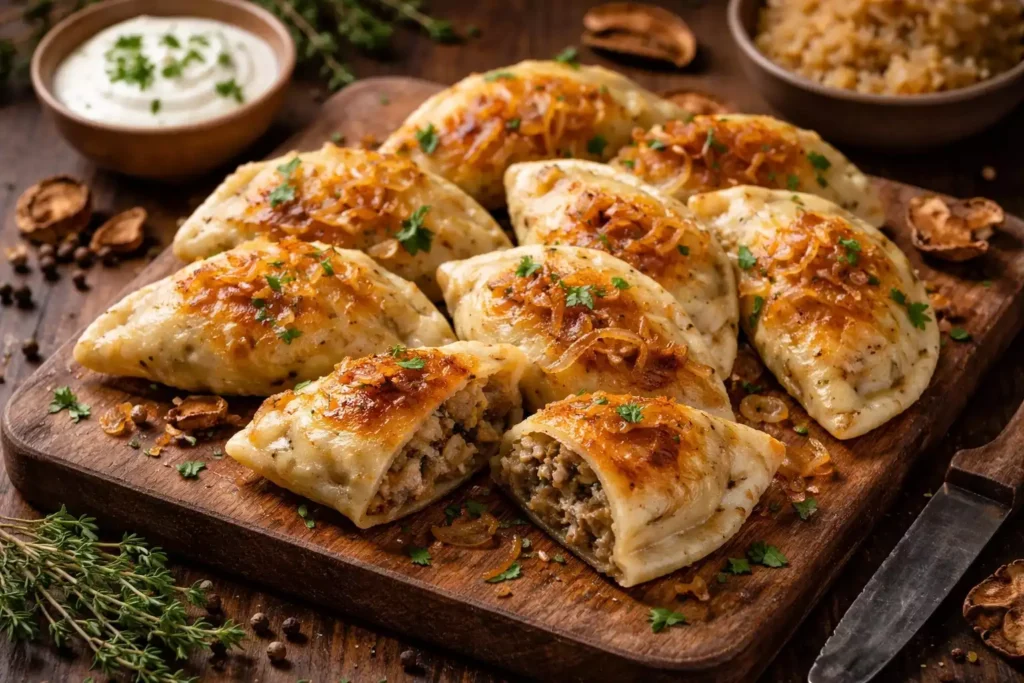
Pierogi z Kapustą i Grzybami
Sauerkraut and dried forest mushroom filling — the meatless pierogi that carries Lent, Good Friday, and Christmas Eve on its back. The filling smells like a Polish forest in autumn.
Kasia’s Easter Survival Tips
Start the żurek starter 5 days before Easter. This is the one thing you cannot rush. The rye flour and water need time to ferment. Start Monday for a Sunday Easter breakfast.
Bake the baba wielkanocna on Thursday. It needs a day to settle and actually tastes better the next day. Plus if it fails, you have time to make another one (or pivot to babka piaskowa).
Make chrzan and ćwikła on Friday. They need a day in the fridge for the flavors to meld. Fresh-grated chrzan that’s been sitting overnight hits different than chrzan made that morning.
Cook szynka (ham) and pasztet on Friday too. Both are served cold, so they can chill overnight. That’s two major items off your Saturday list.
Saturday is for assembly, not cooking. Pack the basket, set the table, slice the meats, arrange the eggs. If you’ve prepped right, Saturday should be calm. (Should. In theory. My Saturdays are still chaos, but less chaos than they used to be.)
The basket goes to church between 2-4pm on Saturday. Check your parish’s schedule — blessing times vary. Don’t be the family sprinting across the parking lot at 3:59.
Frequently Asked Questions
What is the traditional Polish Easter menu?
A full Polish Easter breakfast includes żurek or biały barszcz (soup), biała kiełbasa (white sausage), szynka (ham), pasztet (pâté), hard-boiled eggs, chrzan (horseradish), ćwikła (beetroot horseradish), sałatka jarzynowa (vegetable salad), chałka or bread, and a dessert table with baba wielkanocna, mazurek, and sernik. Everything goes out at once and the meal lasts hours.
What is Święconka?
Święconka is the tradition of blessing the Easter basket (koszyczek) at church on Holy Saturday. The basket contains a sample of each food that will be on the Easter table — bread, salt, egg, sausage, horseradish, and a small butter or sugar lamb (baranek). The blessed food is shared at Easter breakfast the next morning.
Can I prepare Polish Easter food ahead of time?
Yes — and you should. The żurek starter needs 5 days. Baba wielkanocna and mazurek can be baked 1-2 days ahead. Chrzan and ćwikła improve overnight in the fridge. Ham and pasztet are served cold so they can be made Friday. The only things to do Easter morning are reheat the soup and set the table.
What is Śmigus-Dyngus?
Śmigus-Dyngus (also called Lany Poniedziałek or Wet Monday) is the tradition of dousing people with water on Easter Monday. It started as boys splashing girls with water, but now it’s a free-for-all — buckets, water guns, water balloons. It’s chaotic, hilarious, and if you’re visiting Poland on Easter Monday, wear clothes you don’t care about.
Where can I find ingredients like twaróg and biała kiełbasa in the US?
Polish delis are your best bet — most major US cities with Polish communities (Chicago, New York, Detroit, Philadelphia) have them. Around Easter, even some regular grocery stores stock biała kiełbasa in the meat section. Twaróg can sometimes be substituted with ricotta or quark, but it’s not quite the same. Online Polish grocery stores like Polana.com ship nationwide.
All Polish Easter Recipes
Żurek — Sour Rye Soup
Biały Barszcz — White Borscht
Biała Kiełbasa — White Sausage
Szynka Wielkanocna — Easter Ham
Pasztet Wielkanocny — Easter Pâté
Chałka Wielkanocna — Easter Bread
Chrzan — Horseradish Sauce
Ćwikła — Beetroot Horseradish
Sałatka Jarzynowa — Vegetable Salad
Jajka Faszerowane — Deviled Eggs
Polish Easter Egg Salad
Rzodkiewka z Masłem — Radishes With Butter
Baba Wielkanocna — Easter Yeast Cake
Mazurek Wielkanocny — Easter Flatcake
Babka Piaskowa — Sand Cake
Makowiec — Poppy Seed Roll
Sernik Wielkanocny — Baked Cheesecake
Baranek z Cukru — Sugar Lamb
Święconka — Easter Basket Guide
Śniadanie Wielkanocne — Easter Breakfast
Śmigus-Dyngus — Wet Monday
Polish Lent Recipes
Śledź — Polish Herring
Pierogi z Kapustą i Grzybami
Related collections: Polish Recipes · Best Soup Recipes · Comfort Food Recipes
Kasia Polish Mom
Polish-born, Chicago-raised, feeding a family of six with babcia’s recipes and a global pantry. I grew up folding pierogi at my grandmother’s kitchen table and never stopped — 15+ years of cooking from scratch, one Sunday dinner at a time. Everything here is tested on four kids, a hungry husband, and the memory of a woman who never measured anything but always got it right.