


Kasia Polish Mom
Polish-born, Chicago-raised, feeding a family of six with babcia’s recipes and a global pantry. I grew up folding pierogi at my grandmother’s kitchen table and never stopped — 15+ years of cooking from scratch, one Sunday dinner at a time. Everything here is tested on four kids, a hungry husband, and the memory of a woman who never measured anything but always got it right.
Mizeria — Poland’s Refreshing Cucumber Salad (5 Minutes, 5 Ingredients)
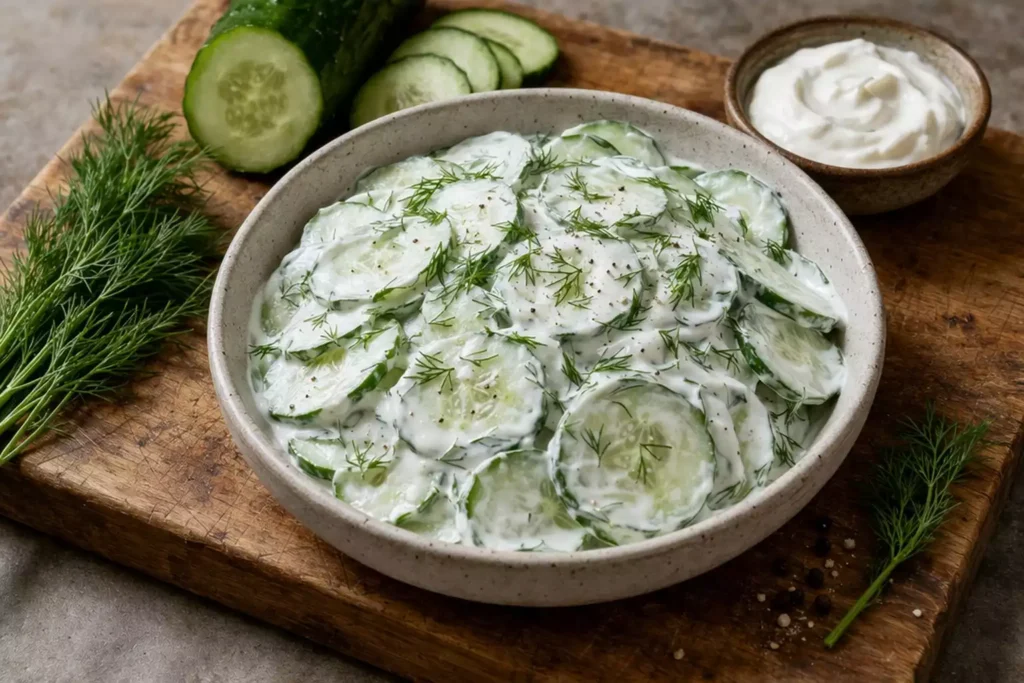
Three ingredients. Five minutes. And suddenly every heavy dinner feels balanced. Mizeria is proof that simple wins — and that sometimes the best side dish is the one you barely have to think about.
If you’ve never had mizeria (pronounced mee-ZEH-ryah), here’s the pitch: thinly sliced cucumbers in sour cream with fresh dill. That’s it. It sounds like nothing, and it tastes like everything. Cool, tangy, creamy, with that grassy dill flavour running through it. Every Polish family makes it, every Polish family thinks theirs is the best, and every Polish family is correct because there’s basically no wrong way to make it.
The name literally means “misery” in Polish, which I find hilarious because there’s nothing miserable about this salad. Nobody knows for sure why it’s called that — some people say it’s because it was the food of the poor, some say it’s ironic, and my babcia (that’s grandma in Polish) said it’s because the cucumbers “cry” when you salt them. I like babcia’s version best.
Why Mizeria Belongs on Your Table
In Poland, mizeria is the side dish. Not one of many options — THE side dish. It shows up next to kotlet schabowy (breaded pork cutlet), next to kopytka, next to every roast, stew, and Sunday dinner. It works because it does what no heavy main course can do on its own: it refreshes. That cool, acidic crunch cuts through rich gravy and fried breading like a reset button for your palate.
I grew up eating mizeria at least twice a week. It was as standard on our dinner table as salt and pepper. When I moved to America and started cooking on my own, I’d make elaborate dinners and forget the mizeria, and something always felt missing. Now I keep cucumbers and sour cream stocked at all times specifically for this. My kids eat it by the bowlful — even my pickiest eater, who treats most vegetables like personal insults, will happily demolish a plate of mizeria. I think it’s the sour cream. Sour cream is the great equaliser.
Ingredients
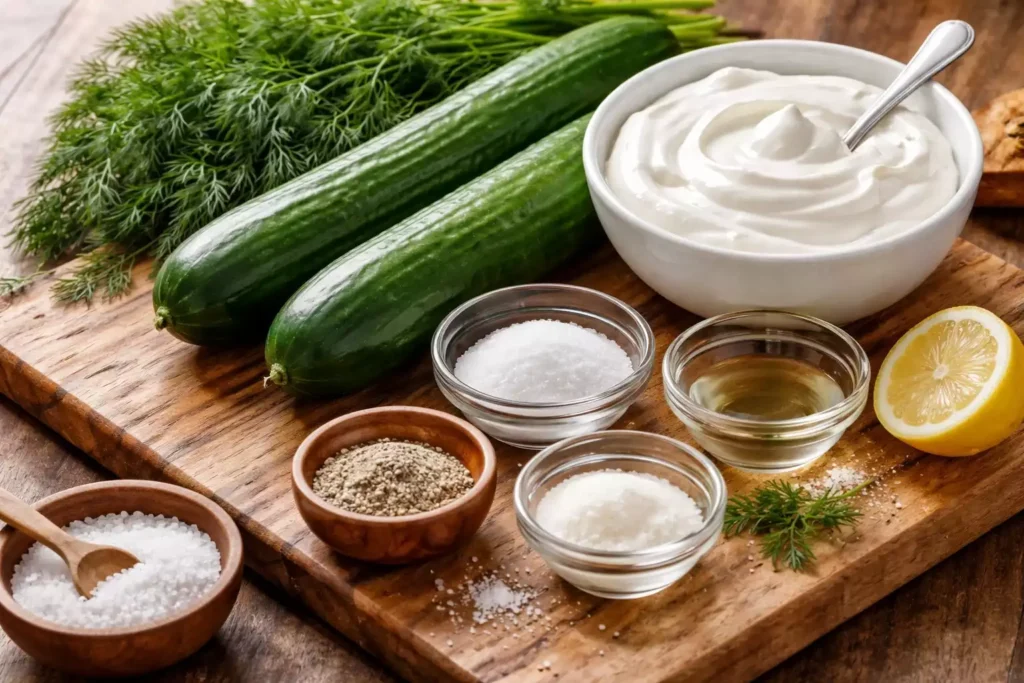
- • 2 large cucumbers — European/English cucumbers work best. Regular American cucumbers work too, but peel them and scoop out the seeds, which can be watery and bitter.
- • 1 cup (240ml) sour cream — full fat. Don’t even think about light sour cream. This is not the place for that.
- • 2 tablespoons fresh dill, chopped — fresh, not dried. Dried dill in mizeria is a crime in 16 Polish voivodeships.
- • 1 teaspoon white vinegar or lemon juice (optional — adds brightness)
- • ½ teaspoon sugar (optional — balances the tang)
- • Salt and white pepper to taste
How to Make Mizeria
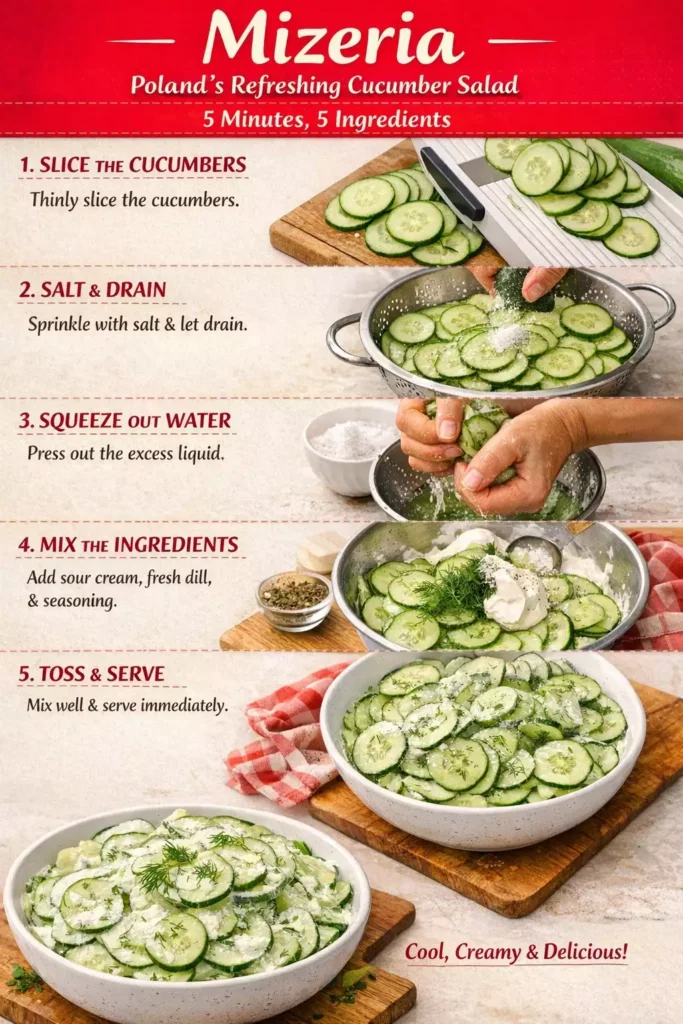
Slice the Cucumbers
Slice the cucumbers as thin as humanly possible. A mandoline is your best friend here — it gets them paper-thin and uniform. If you don’t have one, a sharp knife and patience work fine. Thin slices are important because they absorb the sour cream dressing and become soft and silky instead of chunky.
Salt and Drain
Put the sliced cucumbers in a colander, sprinkle generously with salt, toss, and let them sit for 15-20 minutes. They’ll release a surprising amount of water — this is the cucumbers “crying,” as babcia said. Squeeze out the excess moisture with your hands. This step is critical. Skip it and you’ll end up with watery, diluted mizeria that’s more cucumber soup than salad.
Dress and Serve
Transfer the drained cucumbers to a bowl. Add the sour cream, fresh dill, a squeeze of lemon juice or splash of vinegar if using, and the sugar if you like a hint of sweetness. Season with salt and white pepper. Toss gently until everything is coated. Taste and adjust — more salt, more dill, more lemon. It should taste cool, creamy, and bright.
Serve immediately, or refrigerate for 30 minutes to let the flavours meld. Mizeria is best eaten the day it’s made — it doesn’t keep well overnight because the cucumbers continue releasing water and the whole thing gets soupy.
The Great Mizeria Debate
Every Polish family has opinions about mizeria, and they will defend those opinions with startling passion. Here are the main points of contention:
• Sugar or no sugar? My mama added a pinch. My babcia did not. My aunt adds a full tablespoon, which I personally think is too much but I value our relationship so I don’t say anything. I add half a teaspoon — just enough to balance the tang without making it sweet.
• Vinegar or lemon? Traditionalists use white vinegar. I prefer lemon juice because it’s brighter. Some people use neither. All three options are valid. Do what makes your taste buds happy.
• Sour cream or yogurt? Sour cream is traditional. Some people use Greek yogurt for a lighter version. It works, but the flavour is different — tangier and less rich. My babcia would have had Opinions about yogurt in mizeria, and none of them would have been positive.
Tips
💡 Pro Tips
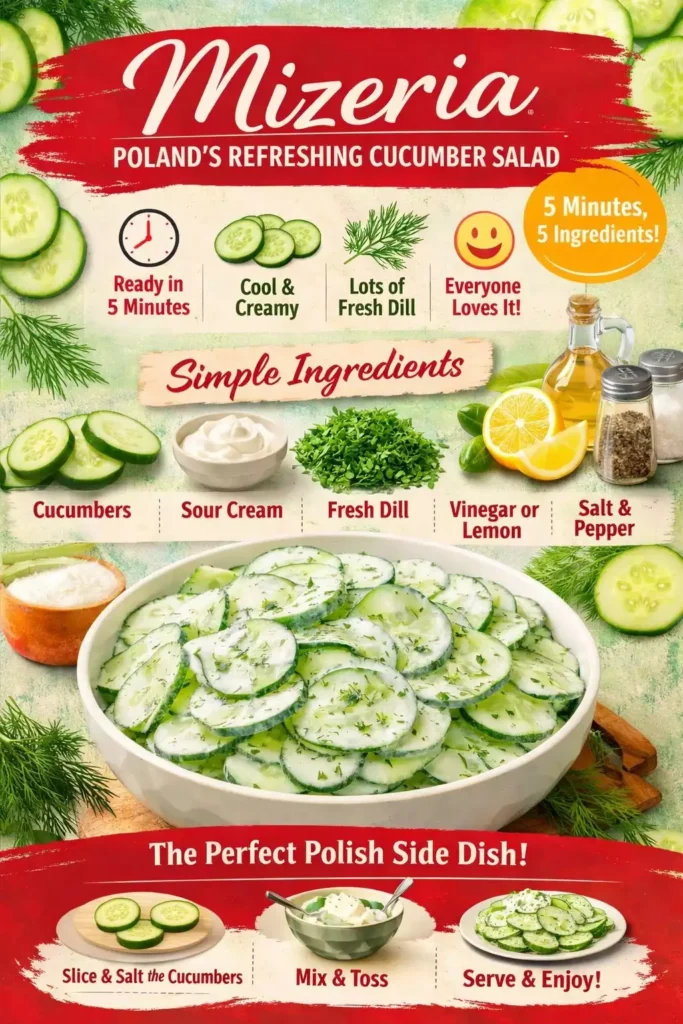
✓ Thin slices matter. Thick cucumber slices don’t absorb the dressing and stay crunchy in a bad way. You want them almost translucent.
✓ Salt and drain. This removes excess water and seasons the cucumbers from the inside. It’s the most important step. I’ve watched people skip it and the result is always disappointing.
✓ Fresh dill only. Dried dill tastes like hay in this recipe. If you can’t find fresh dill, use fresh chives instead — don’t use dried dill.
✓ Use full-fat sour cream. The richness is the point. Low-fat sour cream is watery and lacks the creamy coating that makes mizeria mizeria.
✓ Make it right before serving. Mizeria doesn’t store well. The cucumbers weep, the sour cream thins out, and by the next day it’s a puddle. Make fresh each time — it only takes 5 minutes of active work.
What to Serve with Mizeria
Mizeria goes with almost everything, but here are the classic pairings:
• Kotlet schabowy — THE classic combo. Breaded pork cutlet with mizeria and potatoes is basically the Polish national dinner. If you’ve never had it, start here.
• Kopytka — potato dumplings with butter and breadcrumbs, plus a big bowl of mizeria on the side.
• Any roast meat — roast chicken, pork roast, beef roast. The cool mizeria balances rich, hot meat perfectly.
• Grilled anything — we bring mizeria to every summer barbecue. It’s the coleslaw of Polish cookouts, except better. I said what I said.
Variations
• With onion: Add thin rings of mild white onion or spring onion. My mama always added a little onion. I sometimes do, sometimes don’t.
• Creamy dill version: Double the dill and add a tablespoon of sour cream. Almost like a tzatziki-mizeria hybrid.
• Spicy twist: A tiny pinch of red pepper flakes in the sour cream. Not traditional at all, but this is Polish Mom — we experiment here. The gentle heat works surprisingly well with the cool cucumber.
Frequently Asked Questions
Why is it called mizeria if it’s not miserable?
The name comes from the Latin “miseria” and there are several theories — it was a humble, inexpensive dish; Queen Bona Sforza (the Italian wife of a Polish king) supposedly ate it when she was homesick and miserable; or it’s simply ironic because the dish is anything but miserable. The true origin is debated. I prefer to think the cucumbers are crying because they know how good they’re about to taste.
Can I make mizeria ahead of time?
You can prep it 1-2 hours ahead and refrigerate, but not much longer. The cucumbers keep releasing water and the texture degrades. If you need to prep ahead, salt and drain the cucumbers, then dress them right before serving.
Is mizeria healthy?
Cucumbers are mostly water with some vitamins, and sour cream adds fat and protein. It’s not a health food, but it’s not junk either — it’s a light, refreshing side dish. If you want a lighter version, use Greek yogurt instead of sour cream, but be prepared for my babcia’s ghost to give you a look.
Kasia Polish Mom
Polish-born, Chicago-raised, feeding a family of six with babcia’s recipes and a global pantry. I grew up folding pierogi at my grandmother’s kitchen table and never stopped — 15+ years of cooking from scratch, one Sunday dinner at a time. Everything here is tested on four kids, a hungry husband, and the memory of a woman who never measured anything but always got it right.