
Kasia Polish Mom
Polish-born, Chicago-raised, feeding a family of six with babcia’s recipes and a global pantry. I grew up folding pierogi at my grandmother’s kitchen table and never stopped — 15+ years of cooking from scratch, one Sunday dinner at a time. Everything here is tested on four kids, a hungry husband, and the memory of a woman who never measured anything but always got it right.
Cottage Cheese Protein Pancakes — Fluffy, High-Protein, No Powder Needed
Polish people have been putting twarog in everything for centuries. America just discovered cottage cheese and thinks it’s new. I love this country, but sometimes the lack of dairy history awareness is staggering.
Cottage cheese pancakes are trending everywhere right now — high protein, fluffy, and somehow actually good. TikTok acts like someone invented something revolutionary. Meanwhile, my babcia was making nalesniki z twarogiem (crepes with farmer cheese) in 1970s Poland, and my mama made sernik (Polish cheesecake) with fresh curd cheese before “protein” was a hashtag. Polish dairy culture has been doing this forever. But I’m not bitter. I’m glad America caught up. And these pancakes are genuinely great.
The concept is simple: blend cottage cheese into your pancake batter. The cottage cheese adds protein (about 14g per serving), makes the pancakes incredibly fluffy, and gives them a subtle tanginess that regular pancakes don’t have. They taste like a cross between an American pancake and a Polish nalesnik — which, as a Polish-American mom, is exactly where I want to live.
Ingredients
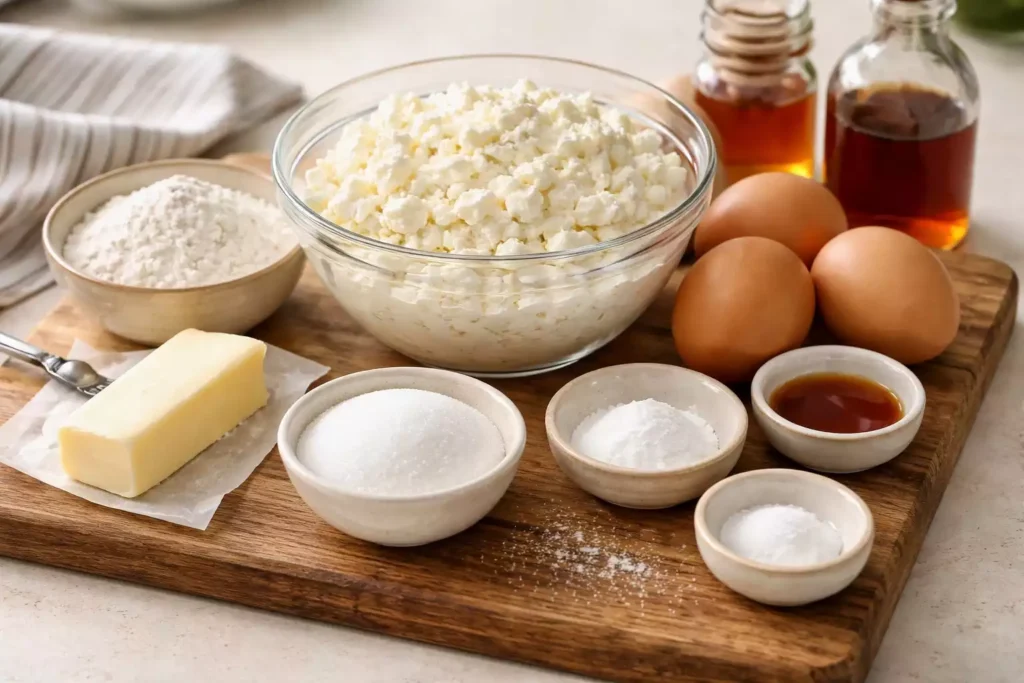
- • 1 cup (225g) full-fat cottage cheese
- • 3 eggs
- • 1/2 cup (65g) all-purpose flour (or oat flour for GF)
- • 1 tablespoon sugar (or honey or maple syrup)
- • 1/2 teaspoon baking powder
- • 1/2 teaspoon vanilla extract
- • Pinch of salt
- • Butter for the pan
How to Make Them
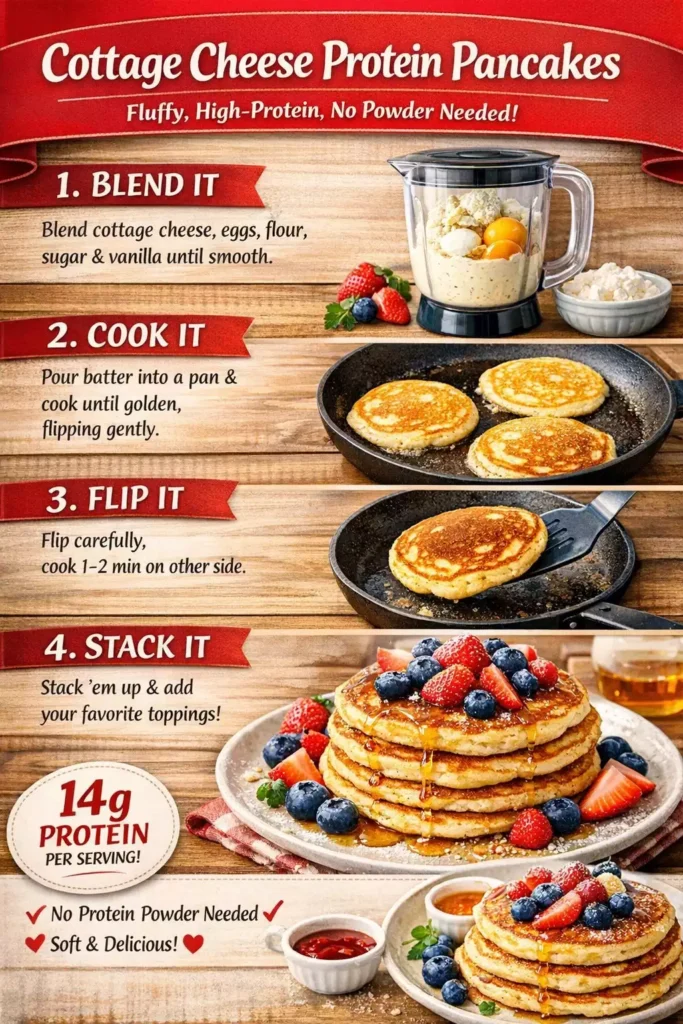
Blend
Add everything — cottage cheese, eggs, flour, sugar, baking powder, vanilla, salt — to a blender. Blend for 20-30 seconds until completely smooth. No lumps. The blending is what makes these fluffy — it incorporates air and breaks down the cottage cheese curds into a smooth, pourable batter. You can mix by hand, but the texture won’t be as good and you’ll have cottage cheese lumps, which my daughter described as “suspicious dots.” The blender eliminates suspicion.
Cook
Heat a non-stick skillet or griddle over medium-low heat. Add a small pat of butter. Pour about 1/4 cup of batter per pancake. Cook 2-3 minutes until bubbles form on the surface and the edges look set. Flip gently — these are more delicate than regular pancakes because of the higher protein and lower flour content. Cook another 1-2 minutes until golden. Keep heat at medium-low. Higher heat burns the outside before the inside sets, and nobody wants a pancake that’s burnt outside and raw inside.
Serve
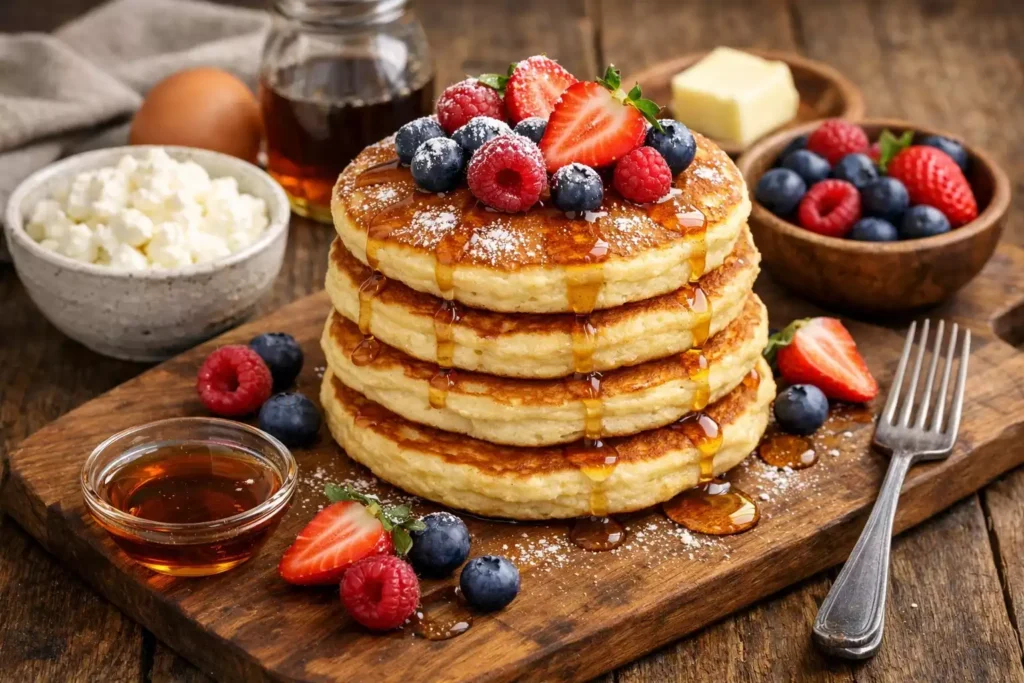
Stack them up and go wild with toppings. Maple syrup is the obvious choice. Fresh berries and a dusting of powdered sugar is my favourite. A dollop of Greek yogurt and honey is the high-protein way. Or — the Polish Mom way — a smear of farmer cheese (twarog) and a drizzle of honey, which brings the whole thing full circle back to nalesniki and makes my babcia’s spirit smile.
Why Cottage Cheese Works
Cottage cheese does three things in pancakes that regular milk can’t: it adds protein (about 14g per cup), it creates a fluffier texture (the curds trap air when blended), and it adds a subtle tang that makes the pancakes taste more complex. The protein also means these pancakes keep you full longer — my kids eat these at 7:30am and don’t complain about hunger until lunch, which is a small miracle in a household where “I’m hungry” is said approximately every 45 minutes.
The Polish connection runs deeper than cottage cheese, though. Twarog — the farmer cheese used in traditional Polish cooking — is essentially cottage cheese’s older, more sophisticated cousin. They’re both fresh, unaged cheeses made from curdled milk. When I use cottage cheese in pancakes, I’m doing what Polish women have done with twarog for generations: putting fresh cheese in carbs and making it taste incredible. The method isn’t new. Just the marketing is.
Tips
💡 Pro Tips
✓ Use full-fat cottage cheese. Low-fat works but the pancakes are less fluffy and less flavourful. The fat helps with texture.
✓ Blend, don’t mix. The blender creates a smooth batter and incorporates air. Hand-mixing leaves lumps and produces flatter pancakes.
✓ Medium-low heat. These burn faster than regular pancakes because of the protein and sugar content. Patience gives you golden, not charred.
✓ Flip gently. They’re more delicate than traditional pancakes. A thin spatula and a confident wrist motion is the technique.
Variations
• Banana version: Add one ripe banana to the blender. Natural sweetness, extra creaminess.
• Chocolate chip: Fold mini chocolate chips into the blended batter. My kids’ Saturday morning request.
• Savoury: Skip the sugar and vanilla. Add salt, pepper, chopped chives, and shredded cheese. Essentially a savoury pancake that’s halfway to a Polish placek. Serve with sour cream.
• With twarog topping: Make a quick sweetened farmer cheese: mix twarog (or ricotta) with sugar, vanilla, and lemon zest. Spread on top of pancakes. Full nalesniki experience in pancake form.
How to Store
Keeps 3-4 days in the fridge. Reheat in the toaster for 1-2 minutes — they crisp up slightly and taste almost as good as fresh. Freeze for up to 2 months. Layer with parchment paper between pancakes so they don’t stick. Reheat from frozen in the toaster or microwave.
Frequently Asked Questions
Can I taste the cottage cheese?
Not really — once blended and cooked, the cottage cheese flavour disappears into a subtle tanginess. My kids don’t know there’s cottage cheese in these. They just know they’re “the good pancakes.” I’m not correcting them.
Are these actually high protein?
Yes — about 20-25g protein per serving (3-4 pancakes), depending on the cottage cheese brand. That’s roughly double a regular pancake. The eggs add to it too. These are legitimately a protein-rich breakfast without tasting like a protein powder shake.
Can I use Greek yogurt instead of cottage cheese?
Greek yogurt works but produces a slightly different texture — thinner batter, flatter pancakes, tangier taste. Cottage cheese has more structure because of the curds, which trap air when blended and create fluffiness. If you use yogurt, add an extra tablespoon of flour to compensate. The protein content will be similar, so you’re still getting the nutritional benefit. But if you’re choosing between the two specifically for pancakes, cottage cheese wins on texture. Greek yogurt wins on smoothies. Each dairy product has its lane and I respect that.
Kasia Polish Mom
Polish-born, Chicago-raised, feeding a family of six with babcia’s recipes and a global pantry. I grew up folding pierogi at my grandmother’s kitchen table and never stopped — 15+ years of cooking from scratch, one Sunday dinner at a time. Everything here is tested on four kids, a hungry husband, and the memory of a woman who never measured anything but always got it right.