




Kasia Polish Mom
Polish-born, Chicago-raised, feeding a family of six with babcia’s recipes and a global pantry. I grew up folding pierogi at my grandmother’s kitchen table and never stopped — 15+ years of cooking from scratch, one Sunday dinner at a time. Everything here is tested on four kids, a hungry husband, and the memory of a woman who never measured anything but always got it right.
Teriyaki Salmon Bowl — 20-Minute Glossy Dinner
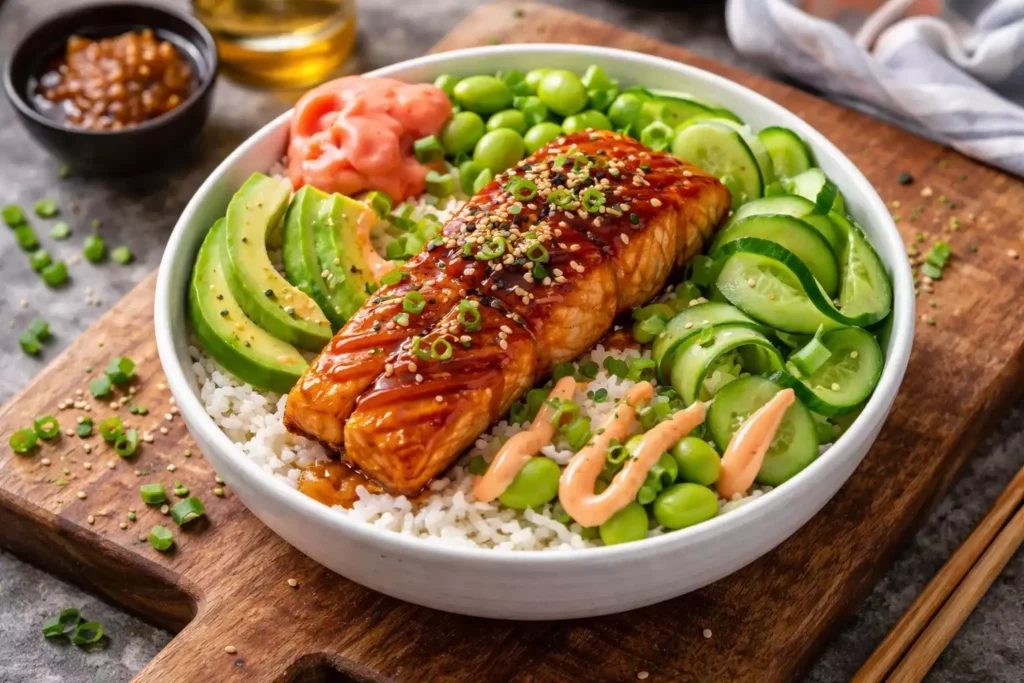
I serve this when I want my family to think I have my life together. A beautifully assembled bowl of glazed salmon over rice with avocado, edamame, and pickled ginger looks like the kind of meal a person with a colour-coded calendar and a daily yoga practice makes. In reality, I made it in 20 minutes while refereeing a homework argument and mentally calculating whether we have enough milk for tomorrow’s breakfast. But nobody needs to know that. The bowl speaks for itself.
Teriyaki salmon bowls are my answer to the question “how do I make something healthy that my family will actually eat?” Because salmon alone gets resistance. “Fishy.” “Weird.” “Can I have chicken instead?” But salmon glazed in homemade teriyaki — sweet, salty, glossy, caramelised — gets eaten without complaint. The teriyaki is the gateway. The salmon is the vehicle. The nutrition is the secret agenda. Parenting through condiments is a legitimate strategy and I stand by it.
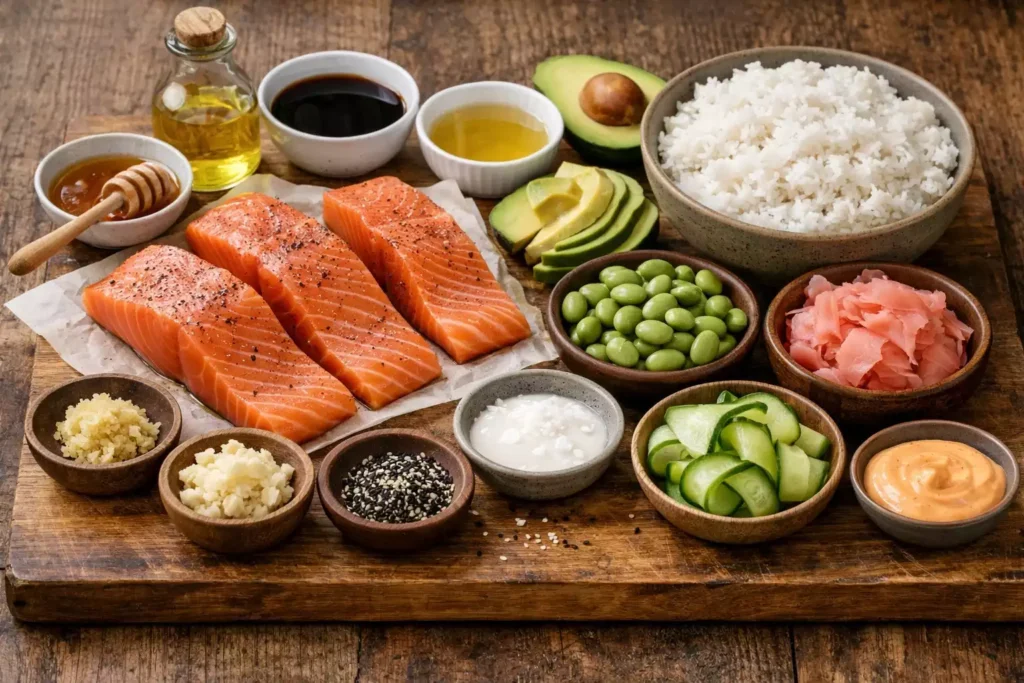
Ingredients
For the Teriyaki Salmon
- • 4 salmon fillets (about 6oz each)
- • 1 tablespoon vegetable oil
- • Salt and pepper
Homemade Teriyaki Sauce
- • 1/4 cup soy sauce
- • 2 tablespoons mirin (or rice vinegar + 1 tsp sugar)
- • 2 tablespoons honey
- • 1 clove garlic, minced
- • 1 teaspoon fresh ginger, grated
- • 1 teaspoon cornstarch + 1 tablespoon water
For the Bowl
- • Steamed jasmine or sushi rice
- • 1 avocado, sliced
- • 1 cup edamame, shelled
- • 1 cucumber, sliced or ribboned
- • Pickled ginger
- • Sesame seeds
- • Sriracha mayo (mayo + sriracha, mixed)
How to Make It
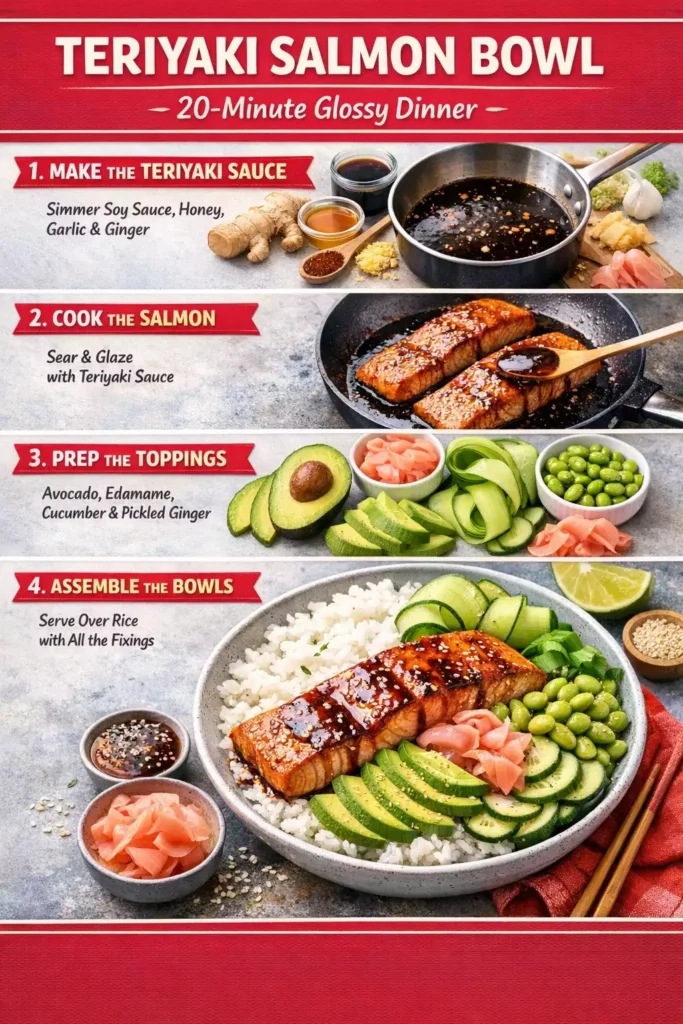
Make the Teriyaki Sauce
Combine soy sauce, mirin, honey, garlic, and ginger in a small saucepan. Bring to a simmer over medium heat. Add the cornstarch slurry and stir until the sauce thickens into a glossy glaze — about 2 minutes. Set aside. Store-bought teriyaki works in a pinch, but homemade takes 5 minutes and tastes dramatically better — fresher, less syrupy, and without the artificial ingredients.
Cook the Salmon
Season salmon fillets with salt and pepper. Heat oil in a skillet over medium-high heat. Place salmon skin-side up and sear for 3-4 minutes until a golden crust forms. Flip. Brush the teriyaki sauce generously over the top. Cook 3-4 more minutes until the salmon is just cooked through — still slightly pink in the centre. Overcooked salmon is dry salmon, and dry salmon is what makes people say they “don’t like fish.” Medium-rare to medium is the sweet spot.
Assemble the Bowls
Scoop rice into bowls. Lay the teriyaki salmon on top. Arrange avocado slices, edamame, cucumber, and pickled ginger around the salmon. Drizzle sriracha mayo over everything. Sprinkle sesame seeds. The bowl should look colourful and inviting — the visual appeal is part of what makes this recipe work on kids. My daughter eats with her eyes first, and a well-arranged bowl gets her to try things she’d refuse if they were piled on a plate.
Homemade vs. Store-Bought Teriyaki
Store-bought teriyaki sauce is convenient but usually loaded with corn syrup, preservatives, and way too much sodium. Homemade uses four real ingredients (soy, mirin, honey, aromatics) and takes 5 minutes. The difference in taste is significant — homemade is cleaner, brighter, and you can adjust the sweetness and salt to your family’s preference. I make a double batch every Sunday and keep it in a jar in the fridge for the week. It goes on salmon, chicken, stir-fries, and occasionally rice bowls where the kids just want “sauce rice” and I’m too tired to argue.
Tips
💡 Pro Tips
✓ Don’t overcook the salmon. Slightly translucent in the centre is perfect. Carryover heat finishes the job. Overcooked salmon = dry, flaky, and the reason half the population claims they don’t like fish.
✓ Skin-side up first. Sear the flesh side first for colour, then flip to finish on the skin. The skin crisps up and acts as a natural non-stick layer.
✓ Glaze twice. Brush teriyaki during cooking AND after plating. The double-glaze gives a glossier finish and more flavour.
✓ Use ripe avocado. Underripe avocado in a salmon bowl is a sad experience. Press gently — it should yield slightly. If it’s rock hard, it’s not ready.
Variations
• Teriyaki chicken bowl: Replace salmon with sliced chicken thigh, cooked the same way. More budget-friendly, still delicious.
• Poke-style: Use raw sushi-grade salmon, cubed, tossed in soy sauce, sesame oil, and rice vinegar. Cold salmon over warm rice with all the toppings.
• With mizeria: Swap the plain cucumber for Polish cucumber salad alongside the salmon. The sour cream and dill surprisingly complement the teriyaki glaze — tangy meets sweet-salty. Polish-Japanese fusion, accidental and excellent.
How to Store
Salmon keeps 2-3 days in the fridge. Reheat gently — a skillet over low heat or a few seconds in the microwave (just enough to warm, not re-cook). Store the bowl components separately and assemble fresh. The teriyaki sauce keeps 2 weeks refrigerated.
Frequently Asked Questions
My kids say they don’t like salmon — will they eat this?
The teriyaki glaze is the magic converter. Sweet, salty, familiar flavour profile that makes the salmon secondary. My boys went from “I don’t eat fish” to “can we have the salmon bowls again?” within three servings. The bowl format helps too — they can customise toppings and feel in control, which makes them more willing to try the protein.
What’s mirin?
Japanese sweet rice wine used for cooking. Available in the Asian aisle. If you can’t find it, substitute rice vinegar plus a teaspoon of sugar. It adds a subtle sweetness and sheen to the teriyaki that regular sugar alone can’t quite replicate, but the substitute gets you 90% of the way there.
The “Having My Life Together” Illusion
Here’s the truth about teriyaki salmon bowls: they’re the easiest dinner in my rotation that looks the hardest. The salmon takes 8 minutes. The sauce takes 5. The rice was made in a rice cooker with zero involvement from me. The toppings are raw — sliced avocado, shelled edamame from the freezer, sliced cucumber. Total active cooking time: about 12 minutes. But when I set four assembled bowls on the table — colourful, composed, each one looking like it was photographed for a cookbook — my family treats me like a professional chef. My husband says “this is incredible” as if I trained under a Japanese master instead of just following a recipe I developed while simultaneously answering emails. I don’t correct him. The illusion of effort is a tool, and I wield it shamelessly.
More From Polish Mom
Spicy Korean Chicken Stir Fry (Gochujang) · Easy Chicken Pad Thai · Chicken Katsu Curry · Korean Beef Bowl (Bulgogi-Style)
Kasia Polish Mom
Polish-born, Chicago-raised, feeding a family of six with babcia’s recipes and a global pantry. I grew up folding pierogi at my grandmother’s kitchen table and never stopped — 15+ years of cooking from scratch, one Sunday dinner at a time. Everything here is tested on four kids, a hungry husband, and the memory of a woman who never measured anything but always got it right.