
Kasia Polish Mom
Polish-born, Chicago-raised, feeding a family of six with babcia’s recipes and a global pantry. I grew up folding pierogi at my grandmother’s kitchen table and never stopped — 15+ years of cooking from scratch, one Sunday dinner at a time. Everything here is tested on four kids, a hungry husband, and the memory of a woman who never measured anything but always got it right.
Spicy Wonton Soup — Chilli Oil, Dumplings, 20 Minutes
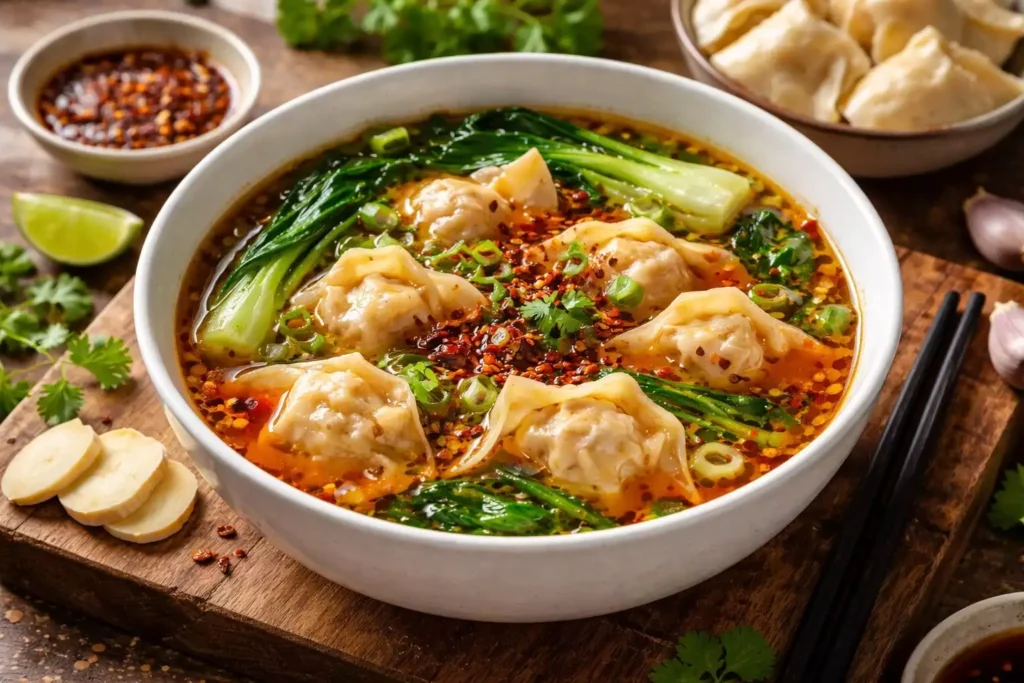
Americans have chicken soup for sick days. I have spicy wonton soup. And rosol. Honestly, I have a lot of soups for sick days — my babcia’s influence runs deep and her answer to everything was broth. But spicy wonton soup is my non-Polish sick day soup, and it combines two things I love: dumplings and broth that clears your sinuses.
Wontons are Chinese dumplings — thin wrappers filled with seasoned pork, folded into little parcels, and cooked in a fragrant, spicy broth. If you’re thinking “this sounds like pierogi in soup,” you’re absolutely right, and that cross-cultural dumpling connection is exactly why this recipe exists on Polish Mom. I’ve made dumplings my entire life. Pierogi, kopytka, kluski slaskie, gyoza. Wontons are just the next stop on my global dumpling tour, and my pierogi-trained hands picked up the folding technique faster than any other dumpling I’ve attempted.
Ingredients
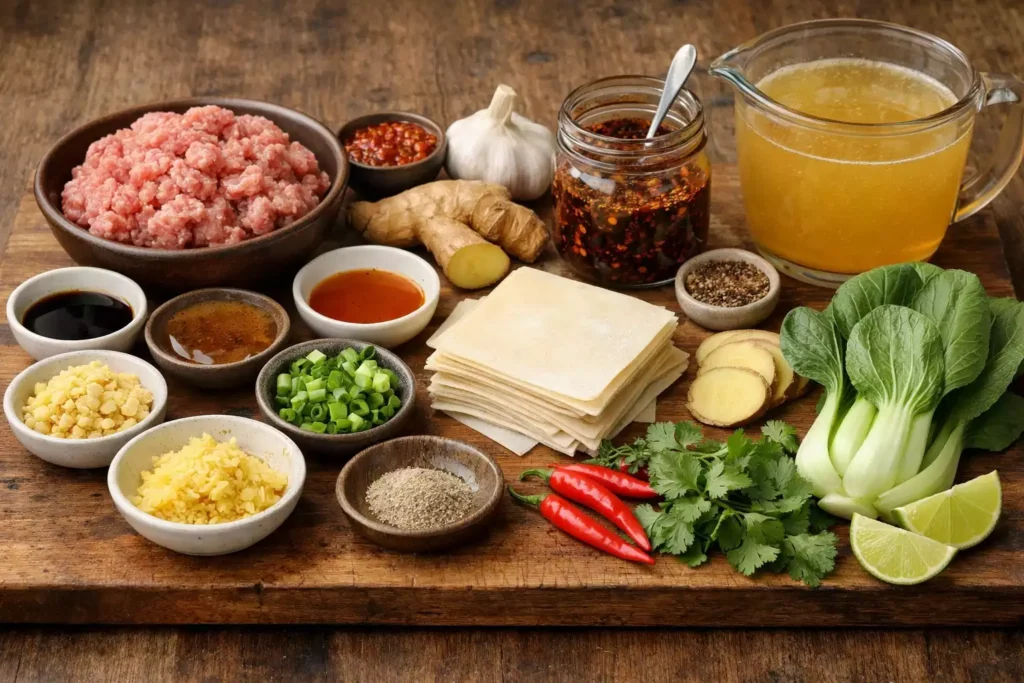
For the Wontons (Makes ~30)
- • 1/2 pound (225g) ground pork
- • 2 green onions, finely sliced
- • 1 tablespoon soy sauce
- • 1 teaspoon sesame oil
- • 1 teaspoon fresh ginger, grated
- • 1 clove garlic, minced
- • 1/4 teaspoon white pepper
- • 1 package square wonton wrappers
For the Spicy Broth
- • 6 cups chicken broth
- • 2 tablespoons soy sauce
- • 1 tablespoon chilli garlic sauce or sambal oelek
- • 1 teaspoon sesame oil
- • 1 tablespoon rice vinegar
- • Fresh ginger slices (3-4 coins)
- • Bok choy or baby spinach
- • Sliced green onions, cilantro, chilli crisp
How to Make Them
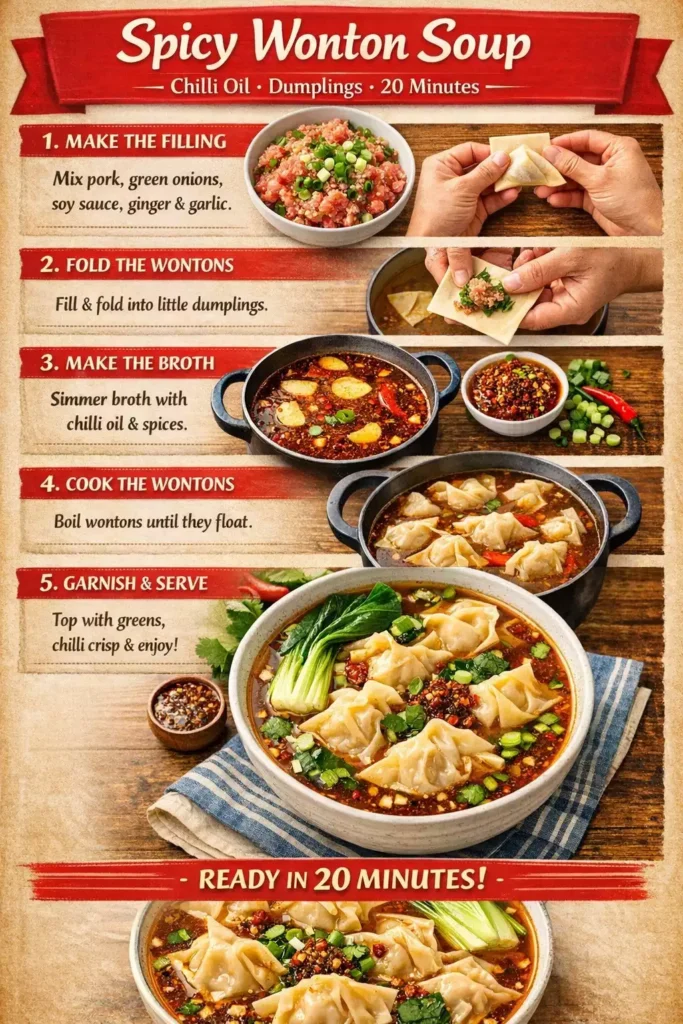
Make the Filling
Mix pork, green onions, soy sauce, sesame oil, ginger, garlic, and white pepper. Stir vigorously in one direction for about a minute — this develops the protein and makes the filling bind together instead of crumbling inside the wrapper. Same principle as pierogi filling: cohesion matters.
Fold the Wontons
Place a wonton wrapper on your palm (it’s a square — unlike round gyoza wrappers). Put 1 teaspoon of filling in the centre. Dip your finger in water and moisten the edges. Fold into a triangle and press edges firmly to seal, pushing out any air. Then bring the two bottom corners together and pinch — you get the classic wonton shape that looks like a little nurse’s cap or a tortellini. The folding is simpler than gyoza pleating and much simpler than pierogi crimping. If you can fold a letter, you can fold a wonton.
My daughter and I now have a wonton-folding assembly line. She places filling, I fold and seal. We can do 30 wontons in about 12 minutes while debating whether cats or dogs are better (she says cats, she’s wrong, but I let her have this one).
Make the Broth
Bring chicken broth to a simmer with ginger slices. Cook 5 minutes so the ginger infuses the broth. Add soy sauce, chilli garlic sauce, sesame oil, and rice vinegar. Taste: it should be savoury, slightly spicy, with a vinegar brightness. This is a broth-forward soup — the liquid should be as flavourful as the dumplings.
Cook the Wontons
Drop wontons into the simmering broth. Cook 4-5 minutes — they’ll float when done. Add bok choy or spinach in the last minute. Ladle into bowls. Top with sliced green onions, cilantro, and a drizzle of chilli crisp for extra heat and crunch.
The Global Dumpling Connection
Every dumpling culture uses the same basic formula: thin wrapper + seasoned filling + wet-heat cooking. Pierogi use potato-based filling in wheat dough, boiled. Gyoza use pork-cabbage filling in thin wrappers, pan-fried with steam. Wontons use pork filling in even thinner wrappers, boiled in broth. The techniques transfer beautifully. Once you understand how to handle dough, fill without overstuffing, and seal without air pockets, you can make any dumpling on Earth. My pierogi training gave me a dumpling foundation that serves me across every cuisine, and that makes my babcia accidentally responsible for my entire World Kitchen recipe collection.
Tips
💡 Pro Tips
✓ Don’t overfill. 1 teaspoon per wonton. Overfilled wontons burst in the broth.
✓ Push out air when sealing. Air pockets cause wontons to inflate, pop open, and lose their filling into the broth.
✓ Simmer, don’t boil. A gentle simmer cooks wontons evenly. A rolling boil tosses them around and tears the thin wrappers.
✓ Wonton wrappers dry out fast. Keep them covered with a damp towel while working. Dry wrappers crack when folding.
Variations
• Shrimp wontons: Replace pork with minced shrimp + water chestnuts. More delicate, slightly sweet.
• Fried wontons: Instead of soup, deep-fry at 175C / 350F for 2-3 minutes. Serve with sweet chilli sauce. Appetiser-style.
• Polish-Chinese fusion: Fill wontons with pierogi-style potato-cheese filling. Serve in a clear chicken broth with dill. It sounds bizarre. It’s comforting beyond reason. Two cultures in one bowl.
How to Store
Freeze uncooked wontons on a parchment-lined sheet, then bag them. They keep 3 months. Cook straight from frozen — add 1-2 minutes to cooking time. Store broth separately for 5 days. The ability to freeze wontons in bulk is what makes this a weeknight-friendly recipe despite the folding time.
Wonton Folding as Family Activity
Making wontons has become our version of what pierogi-making was in my childhood: a family activity disguised as cooking. My daughter handles the filling — one teaspoon, precisely measured, she’s very particular about this. My oldest son does the water-and-seal step. The younger two “help” by eating raw wonton wrappers when they think I’m not looking (I’m always looking, I’m just choosing my battles). We can produce 30 wontons in about 15 minutes when the assembly line is running, and the conversation that happens during repetitive kitchen tasks is always better than anything that happens around a dinner table. It’s the same magic babcia’s kitchen had when we made pierogi together — hands busy, mouths talking, kitchen warm. The recipe changes. The feeling stays the same.
What’s the difference between wontons and dumplings?
All wontons are dumplings, but not all dumplings are wontons. “Dumpling” is the universal category — any dough wrapped around filling. Wontons use specifically thin, square wheat wrappers. Gyoza use round wrappers. Pierogi use thick homemade dough. They’re all cousins at the global dumpling family reunion, and I’m the Polish mom who shows up knowing how to fold all of them.
Kasia Polish Mom
Polish-born, Chicago-raised, feeding a family of six with babcia’s recipes and a global pantry. I grew up folding pierogi at my grandmother’s kitchen table and never stopped — 15+ years of cooking from scratch, one Sunday dinner at a time. Everything here is tested on four kids, a hungry husband, and the memory of a woman who never measured anything but always got it right.