

Kasia Polish Mom
Polish-born, Chicago-raised, feeding a family of six with babcia’s recipes and a global pantry. I grew up folding pierogi at my grandmother’s kitchen table and never stopped — 15+ years of cooking from scratch, one Sunday dinner at a time. Everything here is tested on four kids, a hungry husband, and the memory of a woman who never measured anything but always got it right.
Vietnamese Pho — Shortcut 30-Minute Version
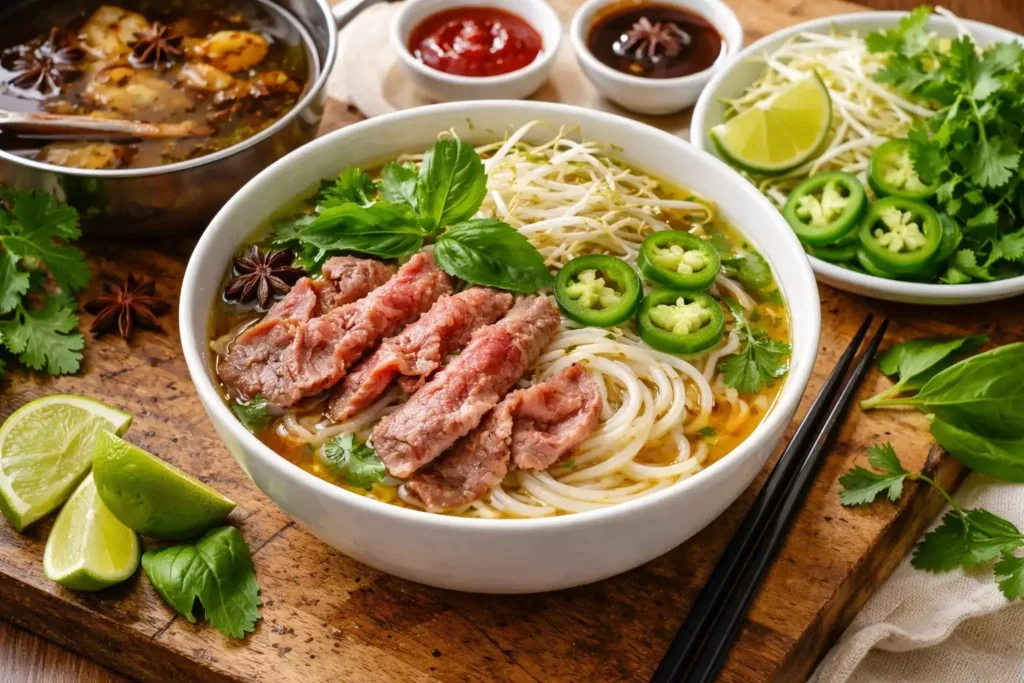
Poles have rosol. Vietnamese have pho. Both are golden healing broths that fix everything. Both simmer for hours with aromatics. Both are served with noodles and fresh herbs. Both are what you make when someone you love is sick, cold, or having a terrible day. When I discovered pho, I felt the same familiarity I felt when I first tasted American chicken noodle soup — different spices, identical purpose. Every culture that invented a slow-simmered broth with noodles was answering the same human need: warmth in a bowl.
Traditional pho simmers beef bones for 8-12 hours. My shortcut version uses toasted spices steeped in good store-bought broth for 30 minutes, producing a broth that’s 80% as complex as the real thing in a fraction of the time. Is it authentic? No. Is it good enough to make my family feel warm and cared for on a cold Chicago evening? Absolutely. Authenticity is a spectrum, and “delicious and achievable on a Tuesday” is where I live on that spectrum.
Ingredients
For the Broth
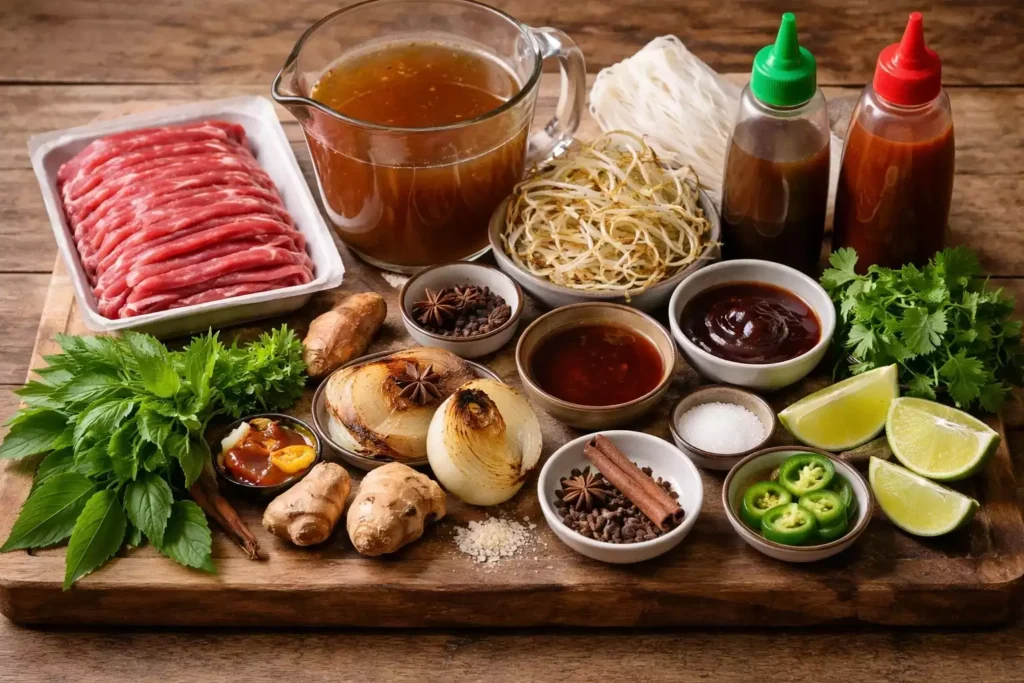
- • 8 cups (2L) beef broth — good quality
- • 2 star anise pods
- • 3 whole cloves
- • 1 cinnamon stick
- • 1 inch fresh ginger, halved and charred
- • 1 small onion, halved and charred
- • 2 tablespoons fish sauce
- • 1 tablespoon sugar
For Serving
- • 8 oz flat rice noodles (banh pho)
- • 8 oz thinly sliced beef (sirloin, eye of round, or flank — freeze 15 min for easier slicing)
- • Bean sprouts, Thai basil, lime wedges, jalapeno slices, hoisin sauce, sriracha, cilantro
How to Make It
Toast the Spices
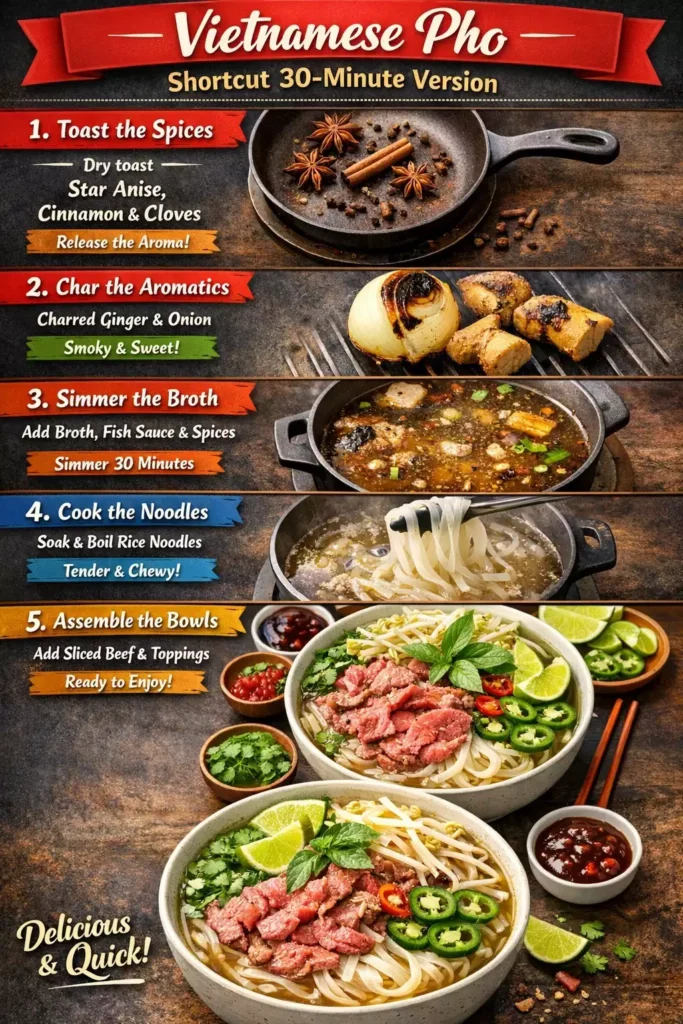
In a dry pot over medium heat, toast the star anise, cloves, and cinnamon stick for 2-3 minutes until fragrant. This step — dry-toasting whole spices — is what gives the broth its distinctive pho aroma. The heat wakes up the essential oils in the spices and releases flavours that raw spices can’t provide. The kitchen will smell like a Vietnamese restaurant. This is the correct outcome.
Char the Aromatics
While spices toast, char the ginger and onion halves. You can do this under a broiler for 5 minutes, directly over a gas flame, or in a dry skillet until blackened. The charring adds a smoky depth that’s essential to pho’s flavour profile. It also caramelises the sugars in the onion, adding sweetness to the broth.
Simmer the Broth
Add the beef broth to the pot with the toasted spices and charred ginger/onion. Bring to a simmer. Add fish sauce and sugar. Simmer gently for 25-30 minutes with the lid slightly ajar. Strain out the solids. Taste: the broth should be aromatic, slightly sweet, savoury, and have a warm spice note from the star anise and cinnamon. If it needs more salt, add fish sauce (not salt — fish sauce adds umami depth that salt can’t).
Cook the Noodles
Soak flat rice noodles in room temperature water for 30 minutes (start when you start the broth). Then boil for 30-60 seconds until just tender. Drain and divide into bowls.
Assemble
Place the raw sliced beef on top of the noodles. Ladle the HOT broth over everything. The boiling broth cooks the thin beef slices instantly — they’ll turn from red to pink to perfectly cooked in about 20 seconds. This is the pho magic trick: raw meat goes in, cooked meat emerges, and the beef stays incredibly tender because it was never overcooked. Set up a toppings plate: bean sprouts, Thai basil, lime wedges, jalapeno slices, hoisin, sriracha. Everyone customises their bowl.
Rosol vs. Pho: Soul Siblings
• Both start with bones or rich broth simmered with aromatics for maximum depth
• Both use fresh herbs at the end — rosol gets dill and parsley, pho gets Thai basil and cilantro
• Both serve noodles in broth — rosol uses lane kluski, pho uses flat rice noodles
• Both are culturally sacred — you don’t mess with someone’s babcia’s rosol recipe, and you don’t mess with someone’s pho recipe. Both provoke passionate debates about the “right” way to make them.
The biggest difference is the spice profile. Rosol is gentle — celery root, parsley root, carrot, bay leaf. Pho is bold — star anise, cinnamon, cloves, charred ginger. But both create the same feeling: deep comfort, genuine nourishment, and the conviction that broth is the most important liquid on Earth after water.
Tips
💡 Pro Tips
✓ Toast the spices. Raw star anise in broth tastes medicinal. Toasted star anise tastes like pho. The difference is enormous.
✓ Char the ginger and onion. The blackened edges add smoky sweetness. Don’t skip this.
✓ Slice beef paper-thin. Freeze the beef for 15 minutes — it firms up enough to slice very thin. Thick slices won’t cook through from the broth alone.
✓ Hot broth over raw beef. The broth must be genuinely boiling when you ladle it. Lukewarm broth won’t cook the beef.
Variations
• Chicken pho: Use chicken broth and shredded cooked chicken instead of beef. Lighter, still aromatic.
• Vegetarian: Vegetable broth, tofu, mushrooms. Add extra soy sauce for umami.
• Quick version: Skip toasting spices. Use five-spice powder (1/2 teaspoon) stirred into hot broth. Not the same but gets you 60% of the flavour in 10 minutes.
How to Store
Broth (strained) keeps 5 days in the fridge and freezes beautifully for 3 months. Store noodles separately — they absorb broth and expand. Slice beef fresh each time. Assemble bowls to order for the best result.
Frequently Asked Questions
What are star anise and where do I find them?
Star anise is a dried spice shaped like an eight-pointed star with a warm, licorice-like flavour. It’s in the spice aisle of most grocery stores or in Asian markets. Two pods are enough for a pot of pho — the flavour is potent. If you’ve never smelled toasted star anise, you’re about to discover one of the most beautiful aromas in cooking.
Is this kid-friendly?
The broth is mild and aromatic, not spicy. My younger kids eat it with just noodles and beef, skipping the jalapenos and sriracha. The toppings bar lets everyone customise — adults go bold, kids keep it simple. Same strategy as every other meal in this household: one base, multiple heat levels, zero arguments.
More From Polish Mom
Żurek (Sour Rye Soup) · Rosół (Polish Chicken Noodle Soup) · Zupa Pomidorowa (Polish Tomato Soup) · Lasagna Soup (Crockpot)
Kasia Polish Mom
Polish-born, Chicago-raised, feeding a family of six with babcia’s recipes and a global pantry. I grew up folding pierogi at my grandmother’s kitchen table and never stopped — 15+ years of cooking from scratch, one Sunday dinner at a time. Everything here is tested on four kids, a hungry husband, and the memory of a woman who never measured anything but always got it right.