
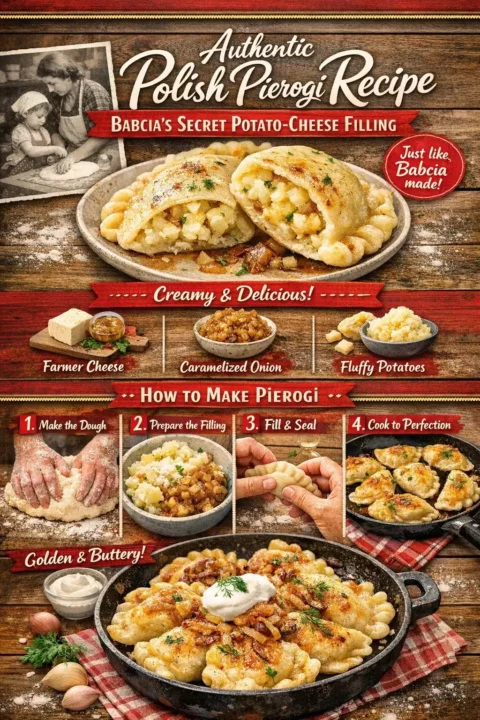
Authentic Polish Pierogi (Potato-Cheese)
Soft handmade dough with creamy potato-cheese filling, pan-fried in butter until golden. My babcia’s pierogi recipe with step-by-step instructions, 3 filling variations, and freezing tips. Makes about 60 pierogi.
Ingredients
For the Dough
- 3 cups all-purpose flour 400g
- 1 large egg
- 3 tablespoons sour cream
- 3/4 cup warm water 180ml — not boiling, just warm from the tap
- 1 teaspoon salt
- 1 tablespoon vegetable oil
For the Potato-Cheese Filling (Pierogi Ruskie)
- 2 pounds Yukon Gold potatoes 900g, peeled and cubed
- 1 cup farmer cheese (twaróg) 200g — or dry-curd cottage cheese
- 1 medium yellow onion finely diced
- 2 tablespoons unsalted butter
- salt and white pepper to taste
For Serving
- 4 tablespoons unsalted butter
- 2 large onions thinly sliced
- sour cream
- fresh dill optional but highly recommended
Equipment
-
Large pot
-
Rolling Pin
-
Round cookie cutter or glass (3-inch / 8cm)
-
Large skillet
-
Potato ricer or masher
Method
Make the Dough
-
Combine the flour and salt in a large bowl. Make a well in the centre. Add the egg, sour cream, vegetable oil, and warm water.
-
Mix with a fork until it comes together into a shaggy mass, then knead by hand for 8-10 minutes until smooth and elastic. The dough should be soft and slightly tacky but not sticky. If it sticks to your hands, add flour a tablespoon at a time.
-
Wrap the dough in cling film and rest for at least 30 minutes at room temperature. This is not optional — the gluten needs time to relax or you’ll fight the dough when rolling.
Make the Filling
-
Boil the potatoes in salted water until fork-tender, about 15-18 minutes. Drain immediately and mash while still hot — cold potatoes get gluey.
-
While potatoes cook, sauté the diced onion in 2 tablespoons butter over medium heat until soft and golden, about 8 minutes.
-
Combine the mashed potatoes, sautéed onion, and farmer cheese. Season with salt and white pepper. Mix until smooth. Let cool before filling.
Roll, Cut, and Fill
-
Divide the dough in half. Keep the unused half covered. Roll one piece out on a lightly floured surface to about 2-3mm thickness (thin enough to see your hand shadow through it).
-
Cut circles using a 3-inch (8cm) round cutter or the rim of a glass. Gather scraps and re-roll once.
-
Place a heaped teaspoon of filling slightly off-centre on each circle. Fold the dough over into a half-moon. Pinch the edges firmly to seal — then pinch again. A weak seal is the number one reason pierogi fall apart during boiling.
Boil and Serve
-
Bring a large pot of salted water to a gentle boil. Drop in 8-10 pierogi at a time (don’t crowd the pot). Stir gently once to prevent sticking.
-
The pierogi will sink, then float to the surface after 2-3 minutes. Once they float, cook for 1 more minute, then remove with a slotted spoon.
-
For the classic finish, melt 4 tablespoons butter in a large skillet over medium heat. Add sliced onions and cook until deeply caramelised, about 15 minutes. Add the boiled pierogi and fry until golden and crispy on both sides, about 2-3 minutes per side.
-
Serve with a big dollop of sour cream and a scatter of fresh dill.
Notes
Freezing: Place uncooked pierogi on a parchment-lined baking sheet in a single layer. Freeze until solid (about 2 hours), then transfer to freezer bags. They keep for 3 months. Cook from frozen — just add 1-2 minutes to the boiling time.
Farmer cheese substitute: If you can’t find twaróg, use dry-curd cottage cheese or ricotta that’s been drained in a cheesecloth for 2 hours.
Variation — Sauerkraut & Mushroom: Sauté 2 cups drained sauerkraut with 1 cup rehydrated dried mushrooms and 1 diced onion. Season with pepper. This is the traditional Christmas Eve filling.
Variation — Sweet Blueberry: Toss 2 cups fresh blueberries with 3 tablespoons sugar and a squeeze of lemon. Use as filling and serve with sour cream and a dusting of powdered sugar.
Variation — Meat (Pierogi z Mięsem): Mix 2 cups cooked and finely ground pork or beef with 1 sautéed onion. Season with salt, pepper, and a pinch of marjoram.

Kasia Polish Mom
Polish-born, Chicago-raised, feeding a family of six with babcia’s recipes and a global pantry. I grew up folding pierogi at my grandmother’s kitchen table and never stopped — 15+ years of cooking from scratch, one Sunday dinner at a time. Everything here is tested on four kids, a hungry husband, and the memory of a woman who never measured anything but always got it right.
Authentic Polish Pierogi Recipe — Babcia’s Secret Potato-Cheese Filling

Every Polish family thinks their babcia made the best pierogi. But mine actually did. Here’s proof.
I grew up standing on a wooden stool in my babcia’s kitchen in Poland, flour up to my elbows, watching her shape each pieróg with hands that had made tens of thousands before mine. When my family moved to the US, those Sunday pierogi sessions came with us. The kitchen changed, the language outside the window changed, but the dough recipe on the flour-dusted counter stayed exactly the same.
This is that recipe. Soft, pliable dough that doesn’t crack. Creamy potato-cheese filling with just the right amount of tang from real farmer cheese. Pan-fried in butter with caramelised onions on top. I’ve been making these for over twenty years now, and I’ve taught my daughter to fold them the same way babcia taught me — pinch firmly, no air pockets, and always make more than you think you need.
What Are Pierogi?
Pierogi (the word is already plural — one is a pieróg, so please never say “pierogies”) are Polish filled dumplings made from unleavened dough. They’re boiled, then traditionally served with melted butter or pan-fried until golden. The fillings range from savoury potato-cheese to sauerkraut-mushroom to sweet fillings like blueberry or farmer cheese with sugar.
The version I’m sharing today is pierogi ruskie — the most popular variety in Poland. The name doesn’t actually mean “Russian pierogi” despite what you might read online. It comes from the historical region of Red Ruthenia (Ruś Czerwona), which is now part of Ukraine. In fact, Ukrainians call these same dumplings “pierogi polskie” — Polish pierogi. Two countries claiming the same dumpling. That tells you how good they are.
Pierogi have been part of Polish cuisine since at least the 13th century. The oldest written recipe appears in Poland’s first cookbook, Compendium Ferculorum, published in 1682. Back then, different shapes and fillings were reserved for specific occasions — weddings, funerals, name days. These days, we eat them whenever we want. Which in my house is about once a week.
Why This Pierogi Recipe Works
I’ve tested every shortcut and variation over two decades of making pierogi, and here’s what makes this version reliable every single time:
The dough uses sour cream. This is my babcia’s non-negotiable addition. Most English-language recipes skip it, but sour cream keeps the dough tender and pliable — it won’t crack when you fold it, and it stays soft even after boiling and pan-frying. If your pierogi dough has ever been tough or rubbery, this is probably what was missing.
The filling uses real farmer cheese. Traditional pierogi ruskie use twaróg — a dry, crumbly Polish farmer cheese that’s tangier than cream cheese and drier than ricotta. If you can’t find twaróg at a Polish or Eastern European deli, dry-curd cottage cheese pressed through a sieve is the closest substitute. Regular cheddar works in a pinch, but it melts differently and you’ll lose that distinctive tang.
Caramelised onion goes inside the filling, not just on top. This is a step a lot of recipes skip. The sweetness of slowly cooked onion balances the tang of the cheese and makes the filling taste more complex. You’ll still put more onion on top when serving — but the filling needs its own.
Ingredients You’ll Need
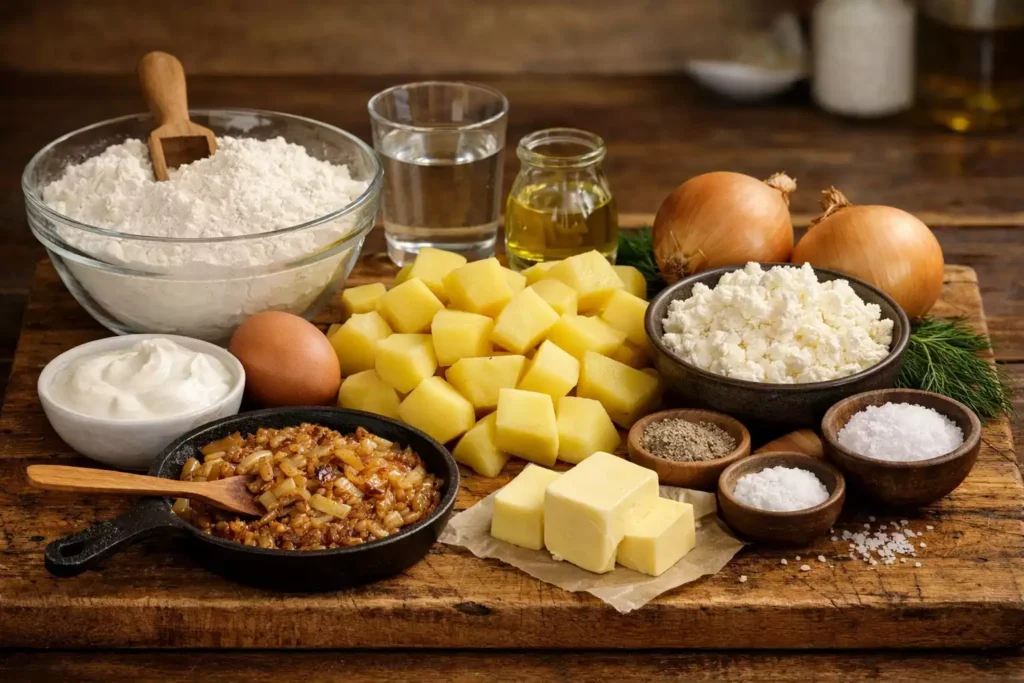
For the Dough
- • 3 cups (400g) all-purpose flour
- • 1 large egg
- • 3 tablespoons sour cream
- • ¾ cup (180ml) warm water — not boiling, just warm from the tap
- • 1 teaspoon salt
- • 1 tablespoon vegetable oil
For the Potato-Cheese Filling (Pierogi Ruskie)
- • 2 pounds (900g) Yukon Gold potatoes, peeled and cubed
- • 1 cup (200g) farmer cheese (twaróg) — or dry-curd cottage cheese
- • 1 medium yellow onion, finely diced
- • 2 tablespoons unsalted butter
- • Salt and white pepper to taste
For Serving
- • 4 tablespoons unsalted butter
- • 2 large onions, thinly sliced
- • Sour cream
- • Fresh dill (optional but highly recommended)
Where to find twaróg in the US: Check Polish delis, Eastern European grocery stores, or the international aisle of larger supermarkets. Polana.com ships authentic Polish products nationwide. In a pinch, you can make a simple farmer cheese at home with whole milk and lemon juice — it takes about 15 minutes.
How to Make Pierogi Step by Step
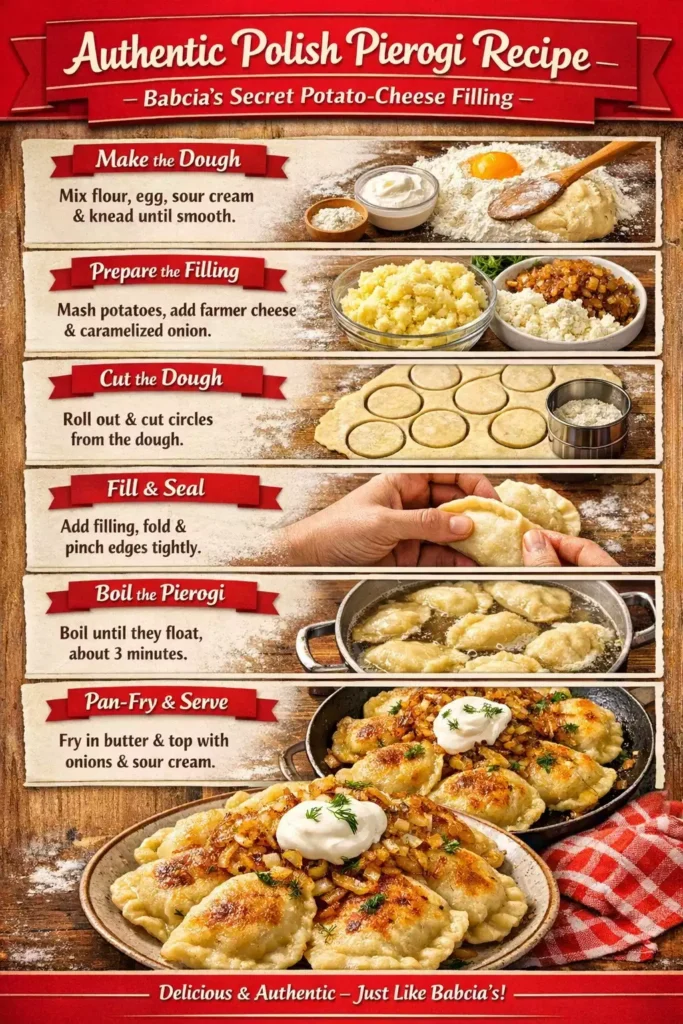
1
1Make the Dough
Combine flour and salt in a large bowl. Make a well in the centre and add the egg, sour cream, and oil. Pour in the warm water gradually, mixing with a fork until a shaggy dough forms.
Turn it out onto a floured surface and knead for about 6 minutes until smooth and elastic. The dough should feel like soft playdough — not stiff and not sticky. If it’s too dry, add water a teaspoon at a time. If it sticks to your hands, dust with a little more flour.
Wrap in cling film and rest at room temperature for 30 minutes. Don’t skip this step. Resting relaxes the gluten and makes the dough much easier to roll thin without it springing back.
2
2Make the Filling
While the dough rests, boil the potatoes in salted water until fork-tender — about 15 minutes. Meanwhile, sauté the finely diced onion in butter over medium-low heat until deeply golden and sweet. This takes a solid 10 minutes. Don’t rush it.
Drain the potatoes and mash them while still hot — a potato ricer gives the smoothest result, but a regular masher works fine. Stir in the crumbled farmer cheese and the caramelised onion. Season with salt and white pepper. Taste it now. The filling should be creamy, slightly tangy, and properly seasoned.
Let the filling cool to room temperature before using it. Warm filling makes the dough sticky and tears it. I usually make the filling the night before and refrigerate it.
3
3Roll and Cut
Divide the dough into 3 pieces. Work with one piece at a time and keep the rest covered. Roll the dough out on a floured surface to about 3mm thick — thin enough to be delicate but thick enough not to tear when you fill it.
Cut circles using a 3-inch (7-8cm) round cutter or a drinking glass. Gather the scraps, press them together, re-roll, and cut more circles. You should get about 45 pierogi from this batch.
4
4Fill and Seal
Place a heaped tablespoon of filling in the centre of each circle. Fold the dough over into a half-moon shape and pinch the edges firmly to seal. Start from one end and work your way across, pressing out any air as you go.
Air trapped inside is what causes pierogi to burst during boiling — so take an extra second to make sure each one is sealed properly. You can press the edges with a fork for a decorative finish, but a firm thumb-and-finger pinch works just as well.
My tip: If the edges won’t stick, dip your finger in water and run it along the edge before pressing. Works every time.
5
5Boil
Bring a large pot of salted water to a gentle rolling boil. Drop in 8-10 pierogi at a time — don’t overcrowd them or they’ll stick together. They’ll sink to the bottom. Give them a gentle stir so they don’t stick to the pot.
When they float to the surface, cook for 2-3 more minutes, then remove with a slotted spoon. Place them on a lightly buttered plate so they don’t stick to each other while you cook the rest.
6
6Pan-Fry and Serve
Melt butter in a large skillet over medium heat. Add the thinly sliced onions and cook slowly until deeply golden and caramelised — about 12-15 minutes. Add the boiled pierogi to the pan in a single layer and fry for 2-3 minutes per side until golden and slightly crispy.
Serve hot with a generous spoonful of sour cream and a sprinkle of fresh dill.
Tips for Perfect Pierogi Every Time
💡 Pro Tips
✓ Don’t skip the dough rest. Thirty minutes minimum. If your dough keeps springing back when you roll it, it needs more time. Walk away, make coffee, come back.
✓ Keep unused dough covered. It dries out fast. A damp kitchen towel or cling film over the bowl prevents cracking.
✓ Mash potatoes while hot. Cold potatoes get gluey and lumpy. Mash immediately after draining.
✓ Seal with confidence. The number one reason pierogi fall apart during boiling is a weak seal. Pinch firmly. Then pinch again.
✓ Don’t boil — simmer. A violent rolling boil will tear delicate pierogi. Keep it at a gentle simmer once you’ve added them.
✓ Use white pepper in the filling. It’s traditional, and it gives a cleaner flavour than black pepper without the visible specks.
Three Classic Filling Variations
Once you’ve mastered the dough, the filling possibilities are endless. Here are the three most traditional Polish options:
Sauerkraut and Mushroom (Pierogi z Kapustą i Grzybami): Sauté chopped sauerkraut with rehydrated dried forest mushrooms and onion. This is the traditional Christmas Eve filling. The tangy sauerkraut with earthy mushrooms is deeply savoury.
Meat Filling (Pierogi z Mięsem): Mix cooked ground pork or beef with sautéed onion, salt, pepper, and a pinch of marjoram. Some families use leftover roast meat, finely minced. My babcia used a combination of pork and beef in equal parts.
Sweet Farmer Cheese (Pierogi z Serem): Mix twaróg with sugar, a beaten egg yolk, vanilla, and optionally raisins. These are boiled (never fried) and served with melted butter and a dusting of sugar. My kids ask for these as dessert.
What to Serve With Pierogi
In my family, pierogi are almost always the main event — not a side dish. But here’s how I build a meal around them:
• Sour cream — non-negotiable. The cold creaminess against the hot, crispy pierogi is everything.
• Caramelised onions — cooked low and slow until almost jammy.
• A simple green salad or Polish cucumber salad (mizeria) to cut through the richness.
• Kielbasa on the side — pan-fried until the skin crisps. My husband’s favourite combination.
• Beet soup (barszcz) — the traditional Christmas Eve pairing. A small cup of clear beet broth alongside a plate of pierogi is pure comfort.
How to Store and Freeze Pierogi
Fridge: Cooked pierogi keep in an airtight container for 3-4 days. Toss with a little butter before storing so they don’t stick together.
Freezer (uncooked — recommended): Lay filled, uncooked pierogi on a parchment-lined baking sheet in a single layer, making sure they don’t touch. Freeze until solid (about 2 hours), then transfer to freezer bags. They’ll keep for up to 3 months. Cook straight from frozen — just add an extra minute to the boiling time.
Freezer (cooked): Let cooked pierogi cool completely, toss gently with melted butter, then freeze in a single layer before transferring to bags. Reheat by pan-frying from frozen — no need to thaw.
My tip: If you’re going to the effort of making pierogi, double or triple the batch. Make 100 at once and freeze most of them. Future you will be very grateful on a busy Tuesday night.
Frequently Asked Questions
Do I need a pierogi press?
No. I’ve been making pierogi by hand my entire life and I don’t own one. A round cutter and your fingers are all you need. That said, if you’re making very large batches, a press can speed things up.
Can I make the dough ahead of time?
Yes. Wrap it tightly in cling film and refrigerate for up to 24 hours. Bring it back to room temperature for about 20 minutes before rolling — cold dough is stiff and cracks.
What’s the difference between pierogi and vareniki?
They’re essentially the same thing. Pierogi is the Polish name, vareniki is Ukrainian/Russian. The fillings and preparation are nearly identical. If you’ve had one, you’ve basically had the other — just don’t say that to a Polish or Ukrainian grandma.
Why did my pierogi fall apart during boiling?
Three likely reasons: the seal wasn’t tight enough (pinch harder), there was air trapped inside (press it out as you seal), or the water was boiling too aggressively (keep it at a gentle simmer). Also make sure you add them to already boiling water — never cold.
Can I use cheddar cheese instead of farmer cheese?
You can, but it won’t taste the same. Cheddar melts into the potatoes and makes the filling richer and heavier. Farmer cheese (twaróg) gives a distinctive tang and lighter texture that’s characteristic of authentic pierogi ruskie. If you can find it, it’s worth the effort.
How many pierogi does this recipe make?
About 45 medium-sized pierogi, which feeds 4-5 people generously (trust me, everyone eats more than they think they will). In my house with four kids, this barely survives one meal — which is why I always make a double batch.
Kasia Polish Mom
Polish-born, Chicago-raised, feeding a family of six with babcia’s recipes and a global pantry. I grew up folding pierogi at my grandmother’s kitchen table and never stopped — 15+ years of cooking from scratch, one Sunday dinner at a time. Everything here is tested on four kids, a hungry husband, and the memory of a woman who never measured anything but always got it right.
Beef and Broccoli — The 20-Minute Weeknight Hero

Biały Barszcz — Poland’s Other Easter Soup
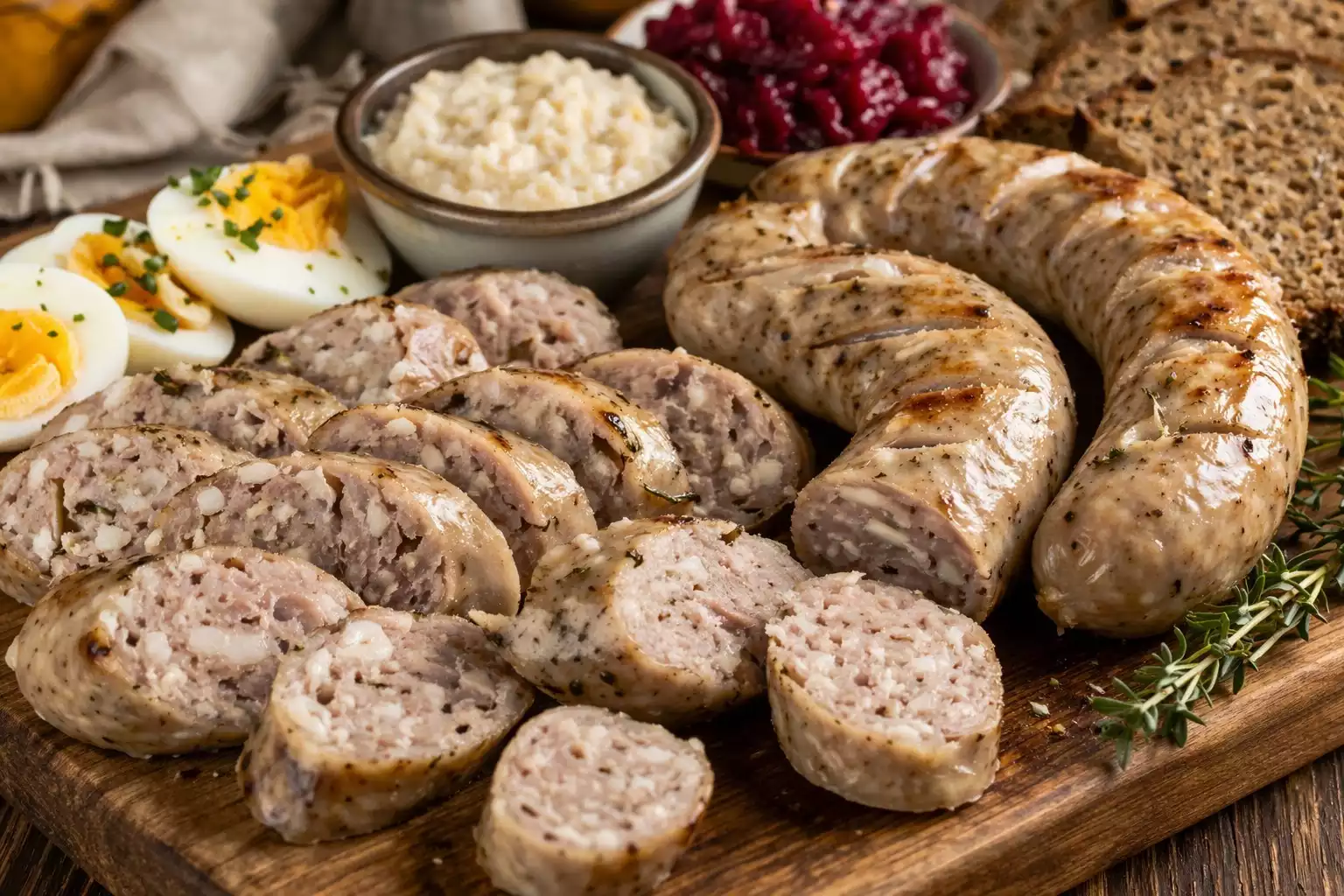
Biała Kiełbasa — The Easter Sausage Every Polish Table Needs
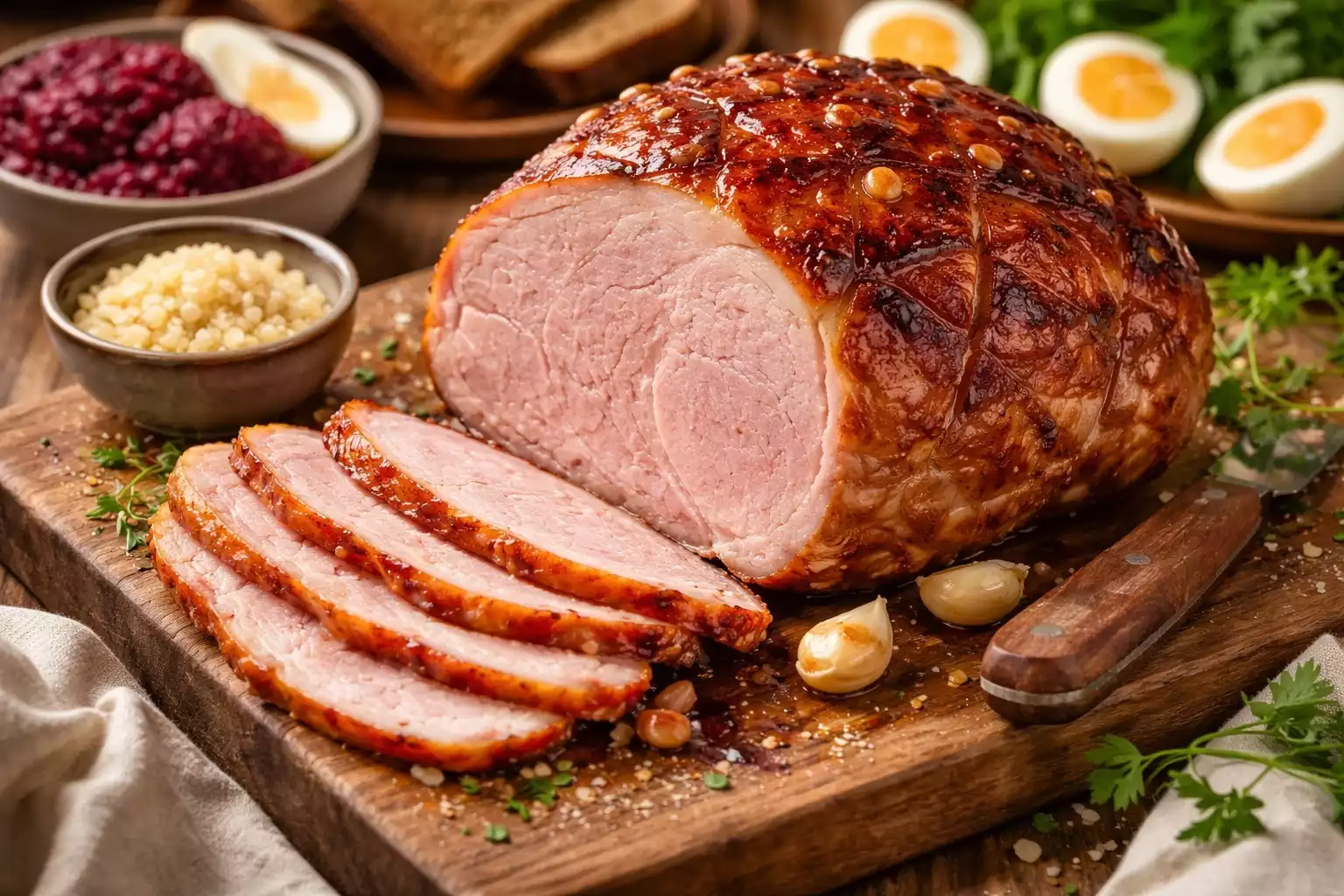
Szynka Wielkanocna — Polish Easter Ham Done Right
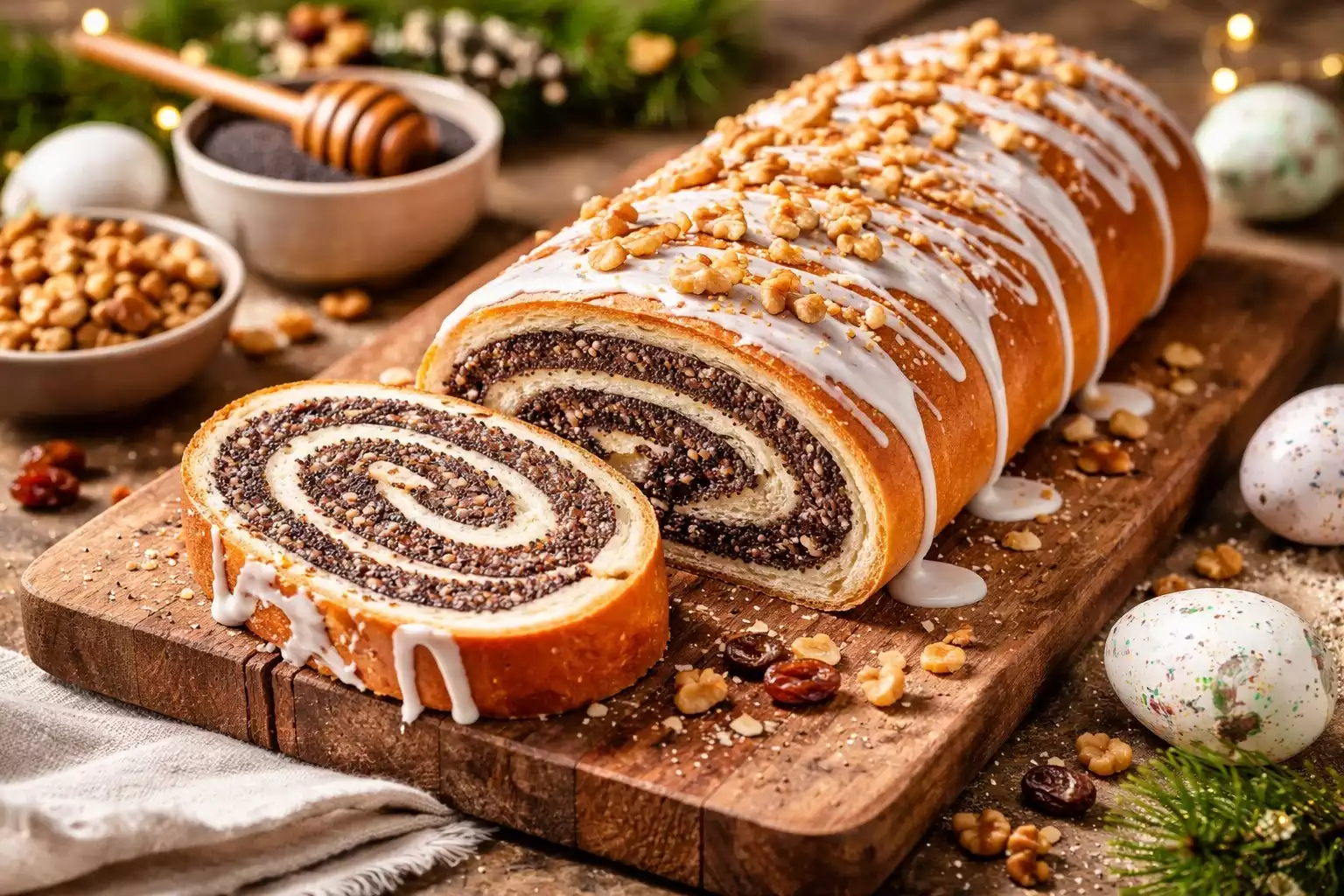
Makowiec — Polish Poppy Seed Roll for Every Holiday