
Kasia Polish Mom
Polish-born, Chicago-raised, feeding a family of six with babcia’s recipes and a global pantry. I grew up folding pierogi at my grandmother’s kitchen table and never stopped — 15+ years of cooking from scratch, one Sunday dinner at a time. Everything here is tested on four kids, a hungry husband, and the memory of a woman who never measured anything but always got it right.
Beef Stew — The Cold Weather Hug in a Bowl
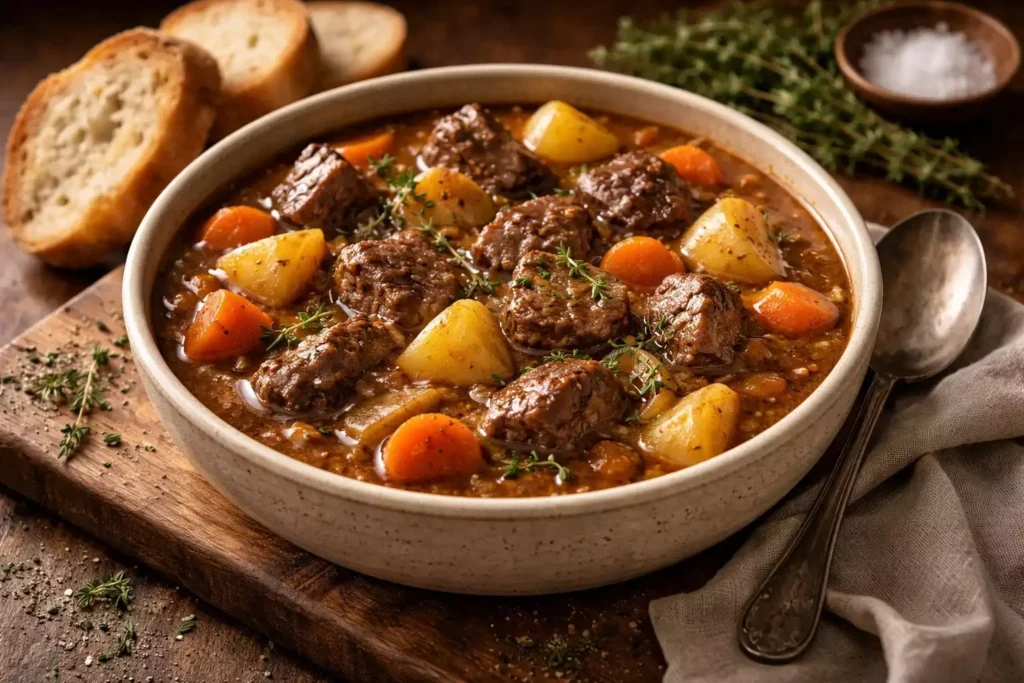
This stew simmers all afternoon and fills the house with the kind of smell that makes neighbors jealous. Fork-tender beef, root vegetables, and a thick rich broth that takes the whole cold-weather season to earn its depth — except it does not, actually, because this recipe produces that depth in 2.5 hours. The secret is browning the beef properly, building the base aromatics carefully, and then leaving it entirely alone while time and low heat do the work.
Classic American beef stew is one of the great comfort foods: a one-pot meal that feeds a family, improves in flavor the next day, freezes beautifully, and makes a cold evening feel actively warm rather than merely less cold. It is the kind of food that has no bad day to serve it and that children and adults eat with equal enthusiasm. My family considers it a staple and I consider it a reliable solution to the question of what to make when I want something that requires minimal active cooking but tastes like I worked all day.
The work here is 20 minutes of active prep. The next 2 hours are time. Time is the main ingredient.
Why Browning the Beef Matters
The browning step — searing the beef cubes in a hot pan before the braising liquid goes in — creates the Maillard reaction, which generates hundreds of flavor compounds that slow cooking alone cannot produce. Browned beef in stew has a deeper, more complex, more savory flavor than unbrowned beef. Skipping the browning step produces a pale, one-dimensional stew. The extra 10 minutes of browning is the single most impactful step in the recipe.
Ingredients
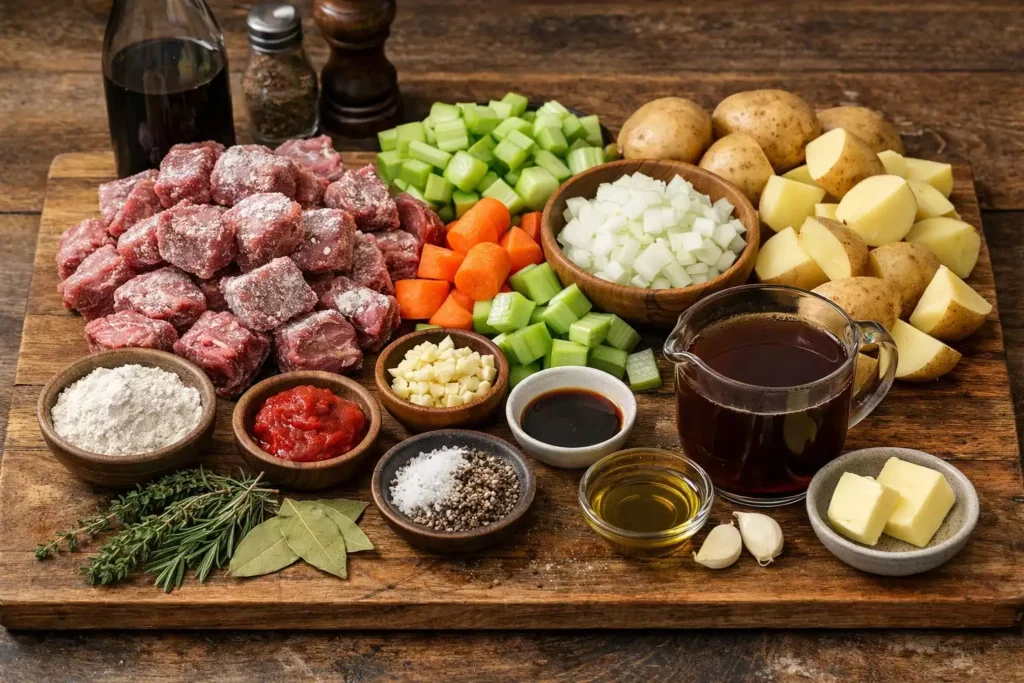
Classic Beef Stew (serves 4–6)
- 1 kg (2.2 lbs) beef chuck or stewing beef, cut into 4cm cubes
- 3 medium carrots, cut into 3cm pieces
- 3 stalks celery, cut into 3cm pieces
- 1 large onion, diced
- 500g (1.1 lbs) potatoes (Yukon Gold), cut into 4cm chunks
- 4 cloves garlic, minced
- 2 tbsp tomato paste
- 250ml (1 cup) red wine or beef stock
- 750ml (3 cups) beef stock
- 2 tbsp Worcestershire sauce
- 2 tbsp plain flour (for coating)
- 2 bay leaves, 2 sprigs fresh thyme, 2 sprigs rosemary
- Salt and black pepper
- 3 tbsp oil for browning
- 2 tbsp butter for the base
How to Make It
1
1Brown the Beef
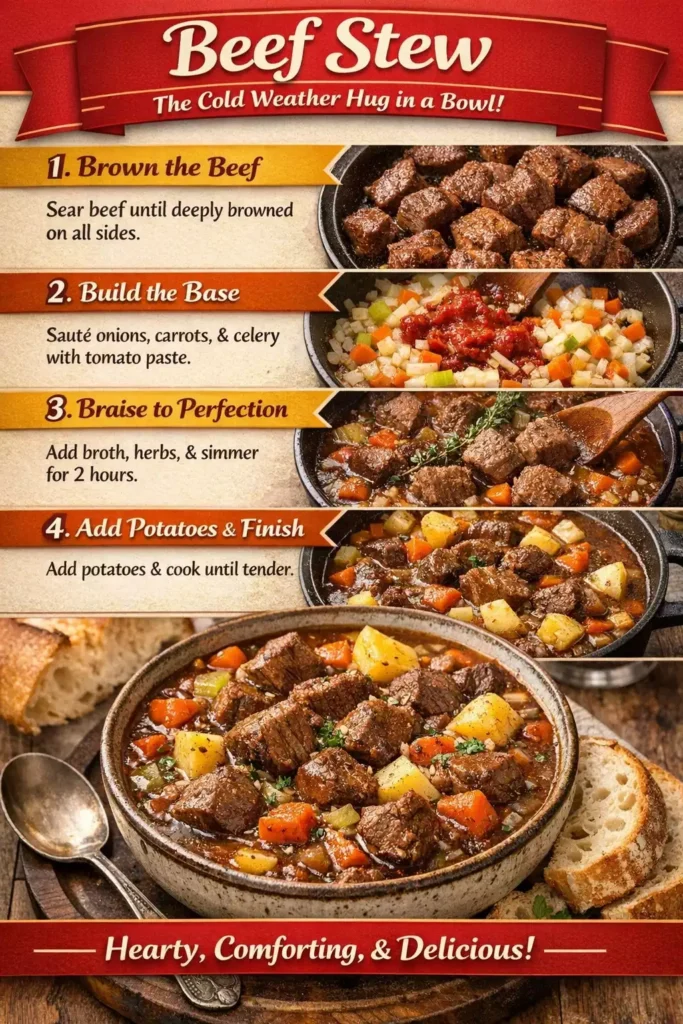
Season the beef cubes generously with salt and pepper. Toss with 2 tablespoons of flour. Heat the oil in a large heavy pot or Dutch oven over high heat until nearly smoking. Brown the beef in batches — do not crowd — for 3–4 minutes per batch, turning to brown all sides. The beef should be deeply brown, not grey. Remove each batch and set aside. Resist the urge to stir; the crust forms from contact with the hot pan.
2
2Build the Base
Reduce heat to medium. Add butter to the pot. Add onion, carrot, and celery and cook, stirring occasionally, for 5–6 minutes until softened. Add garlic and cook 1 minute more. Add tomato paste and stir for 2 minutes until it darkens slightly — this concentrates the tomato flavor and removes the raw taste. Add the wine (or extra stock) and scrape up all the browned bits from the bottom of the pot — these bits are concentrated flavor.
3
3Braise the Beef
Return the browned beef to the pot. Add the stock, Worcestershire sauce, bay leaves, thyme, and rosemary. Bring to a boil, then reduce to the lowest possible simmer. Cover and cook for 1.5–2 hours until the beef is fork-tender and the broth has deepened in color and flavor. Stir occasionally and check the liquid level — add stock if it reduces too much.
4
4Add Potatoes and Finish
Add the potato chunks in the last 30 minutes of cooking — adding them earlier causes them to disintegrate. Cook until the potatoes are tender and the broth has thickened naturally from the starch they release. Remove the bay leaves and herb sprigs. Taste and adjust seasoning. Serve in deep bowls with crusty bread.
Beef Stew Tips
Chuck is the correct cut. Beef chuck (also sold as braising beef or stewing beef) has the right ratio of fat, collagen, and muscle for stewing. The collagen converts to gelatin during the long braise, thickening the sauce naturally and producing melt-in-mouth meat. Lean beef like round or sirloin is wrong for stew — it dries out and becomes stringy. Buy chuck.
Add potatoes late. Potatoes added at the beginning of a 2-hour braise will disintegrate completely into the sauce. This is not necessarily bad (it thickens the stew) but if you want identifiable potato pieces, add them in the last 30 minutes. For a very thick stew, add half the potatoes early to dissolve and half late for texture.
The stew improves the next day. This is true of almost all braised dishes. The flavors meld overnight and the sauce deepens. Make this stew the day before you want to serve it, refrigerate, skim any solidified fat from the top, and reheat. The next-day version is noticeably better. This makes it perfect for dinner parties.
A Dutch oven is ideal. A heavy-bottomed pot that distributes heat evenly is important for long braising. A Dutch oven (cast iron enameled) is the ideal vessel — it maintains temperature perfectly, browns well, and goes from stove to oven if desired. Any heavy pot with a lid works.
Serving Classic Beef Stew
In deep bowls with crusty sourdough or cornbread for soaking up the broth. Alongside creamy mashed potatoes instead of potatoes in the stew for a more luxurious presentation. For a complete cold-weather table, serve with beef chili on another night — both are one-pot wonders that improve overnight.
Variations Worth Trying
With mushrooms. Add 300g of mushrooms (cremini or a wild mix) to the aromatics stage. Mushrooms add umami depth and a meaty texture that enriches the stew significantly. Deglaze with the mushroom soaking liquid if using dried mushrooms for extra depth.
Red wine beef stew (French style). Use a full bottle of red wine instead of stock for half the liquid. The wine-forward braise produces a dramatically richer, more complex stew. Add pearl onions, lardons, and mushrooms for a bœuf bourguignon-adjacent result that is extraordinary.
Storage
Refrigerate for up to 4 days — improves with each day. Freezes beautifully for up to 3 months. For freezing, consider making the stew without potatoes (which have a poor texture after freezing) and adding freshly cooked potatoes when reheating. Thaw overnight in the refrigerator and reheat gently on the stove.
FAQ
Can I make this in a slow cooker?
Yes. Brown the beef and build the base on the stove as directed, then transfer everything to a slow cooker. Cook on low for 8–10 hours or high for 4–5 hours. Add potatoes in the last 2 hours on low or last hour on high. The slow cooker version is excellent and produces particularly tender beef. The browning step is still important — do not skip it even for slow cooker preparation.
What can I substitute for red wine?
Beef stock, or a combination of beef stock and a tablespoon of balsamic vinegar (which adds the acidity and depth that wine provides without alcohol). Pomegranate juice in small quantities adds color and a fruit note. The wine substitutes are all adequate; the wine version has a more complex, layered flavor that is worth using if you drink wine and have an open bottle.
Kasia Polish Mom
Polish-born, Chicago-raised, feeding a family of six with babcia’s recipes and a global pantry. I grew up folding pierogi at my grandmother’s kitchen table and never stopped — 15+ years of cooking from scratch, one Sunday dinner at a time. Everything here is tested on four kids, a hungry husband, and the memory of a woman who never measured anything but always got it right.