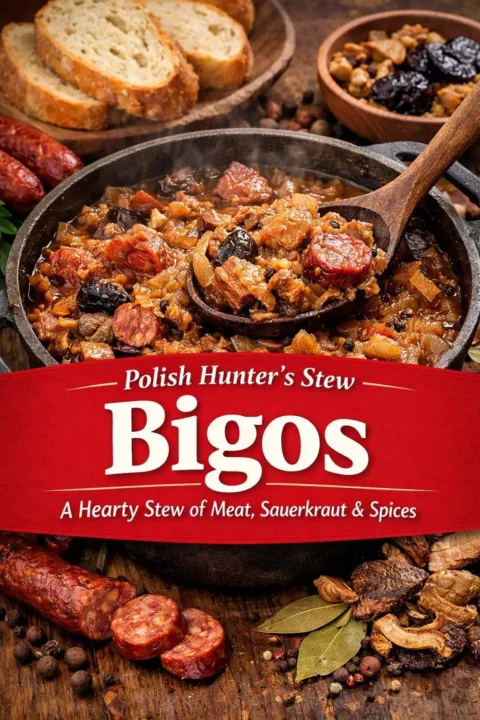
Bigos (Hunter’s Stew)
Bigos is the dish that gets better every single time you reheat it. Day one? Good. Day two? Great. Day three? You’ll understand why Poles have been making this for five hundred years.
Ingredients
The Cabbage Base
- 1 pound sauerkraut 450g; drain it, but don’t rinse unless it’s extremely sour
- ½ small head fresh white cabbage, thinly shredded about 3 cups
The Meats
- ½ pound pork shoulder or pork belly, cut into bite-sized cubes 225g
- ½ pound smoked Polish kielbasa, sliced into thick rounds 225g
- ¼ pound thick-cut smoked bacon, diced 115g
- ½ pound beef stew meat, cubed 225g; optional but traditional
The Flavour Builders
- 1 oz dried porcini mushrooms 30g; soaked in 1 cup boiling water
- 1 large onion, diced
- 3 garlic cloves, minced
- 8-10 prunes , halved dried plums
- 2 tablespoons tomato paste
- ½ cup red wine, dry 120ml; or beer, or stock
- 1 cup beef or chicken stock 240ml
The Spices
- 3 bay leaves
- 5-6 allspice berries whole
- 6-8 juniper berries whole; these are traditional and add a beautiful piney warmth
- 1 teaspoon dried marjoram
- 1 teaspoon sweet paprika
- Freshly ground black pepper
- NO SALT the sauerkraut, kielbasa, and bacon provide enough. Taste at the end and adjust only if needed.
Method
Step 1 — Prep the Mushrooms and Sauerkraut
-
Soak the dried mushrooms in 1 cup of boiling water for at least 30 minutes. When soft, slice them thinly. Keep the soaking liquid — it’s liquid gold for the stew. Strain it through a fine sieve or coffee filter to remove any grit.
-
Drain the sauerkraut. If it smells very sharp and sour, give it a quick rinse under cold water. If it’s mild, use it as-is. Roughly chop it so you don’t have long, stringy strands in the stew.
Step 2 — Brown the Meats
-
In a large Dutch oven or heavy-bottomed pot, render the diced bacon over medium heat until it starts to crisp — about 5 minutes. Remove with a slotted spoon and set aside.
-
In the bacon fat, brown the pork shoulder cubes on all sides — about 6-8 minutes. Don’t crowd the pot; work in batches. Remove and set aside. Brown the beef cubes the same way. Then brown the kielbasa slices until they develop golden colour. Remove everything and set aside.
Step 3 — Build the Base
-
In the same pot (don’t clean it — that fond on the bottom is flavour), sauté the diced onion until softened and golden, about 5 minutes. Add the garlic and cook for another minute.
-
Add the tomato paste and stir it into the onion for a minute to cook off the raw taste. Pour in the red wine and scrape up all the browned bits from the bottom of the pot. Let the wine reduce by half.
Step 4 — Combine Everything
-
Return all the browned meats and bacon to the pot. Add the sauerkraut, shredded fresh cabbage, sliced mushrooms with their strained soaking liquid, halved prunes, stock, bay leaves, allspice berries, juniper berries, marjoram, and paprika.
-
Stir everything together. The liquid should barely cover the ingredients — bigos is a stew, not a soup. If it looks dry, add a splash more stock or water.
Step 5 — Slow Simmer
-
Bring to a gentle simmer, then reduce the heat to the lowest setting. Cover with a lid slightly ajar (to let steam escape slowly) and cook for at least 1.5-2 hours, stirring occasionally. The cabbage should be very tender, the meat should fall apart easily, and the liquid should be thick and concentrated.
-
Taste and adjust. Need more tang? Add a splash of sauerkraut juice. Too sour? Add another prune or two, or a teaspoon of honey. Need salt? Check first — you probably don’t.
Step 6 — Rest and Reheat (The Secret Step)
-
Let the bigos cool completely, then refrigerate overnight. The next day, bring it back to a gentle simmer for 15-20 minutes. Cool and refrigerate again. On day three, reheat one more time before serving. Each cycle deepens the flavour.
-
Serve hot with crusty bread or mashed potatoes.

Kasia Polish Mom
Polish-born, Chicago-raised, feeding a family of six with babcia’s recipes and a global pantry. I grew up folding pierogi at my grandmother’s kitchen table and never stopped — 15+ years of cooking from scratch, one Sunday dinner at a time. Everything here is tested on four kids, a hungry husband, and the memory of a woman who never measured anything but always got it right.
Bigos — Poland’s Legendary Hunter’s Stew (Better on Day Three)
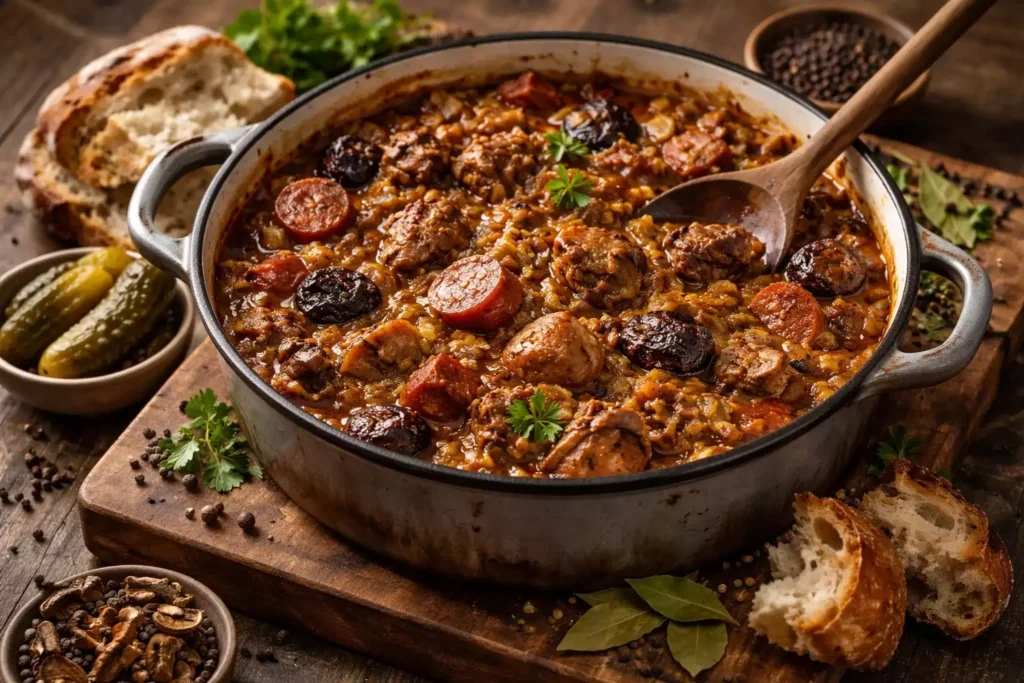
Bigos is the dish that gets better every single time you reheat it. Day one? Good. Day two? Great. Day three? You’ll understand why Poles have been making this for five hundred years.
Bigos (pronounced “BEE-gohs”) is Poland’s legendary hunter’s stew — a slow-simmered combination of sauerkraut, fresh cabbage, smoky kielbasa, chunks of pork and beef, dried forest mushrooms, prunes, and a blend of warming spices. It’s tangy, smoky, slightly sweet, deeply savoury, and unlike anything in American cooking. If you forced me to name one dish that represents all of Polish cuisine, this would be it.
In my family, bigos was a permanent fixture. My tata kept a pot on the stove through every winter — he’d add to it, reheat it, and it would evolve over days. Unexpected guests? There’s bigos. Cold night? There’s bigos. Christmas Eve? Bigos without meat. Easter? Bigos with everything. My kids now call it “the stew that never ends,” and honestly, that’s the highest compliment this dish can receive.
What Is Bigos?
Bigos — sometimes called “hunter’s stew” or “Polish national stew” — is a slow-cooked combination of sauerkraut and fresh cabbage with an assortment of meats, dried mushrooms, and aromatics. The word likely comes from the German “Begoss” (meaning something poured over) or possibly from the Latin “biga” (a two-horse chariot, implying something mixed together).
The dish dates back to medieval Poland, when hunters returning from the forests would add whatever game they’d caught — boar, venison, hare, duck — to a perpetually simmering pot of sauerkraut and cabbage. The sauerkraut acted as both a flavouring agent and a preservative, and the long cooking time meant even tough game meat became tender.
Bigos was immortalised in Polish literature by Adam Mickiewicz in the epic poem Pan Tadeusz (1834), where he described it as a dish whose wonderful flavour and colour could only be understood through experience. It’s been a symbol of Polish hospitality ever since — the kind of dish you make in enormous quantities because there are always more people to feed.
Why Bigos Tastes Better the Next Day
This isn’t a myth — it’s chemistry. During each cooling and reheating cycle, the lactic acid in the sauerkraut continues to work on the proteins in the meat, breaking them down further and blending the flavours more deeply. The collagen in the pork converts to gelatin, making the liquid silkier. The dried mushrooms release more umami compounds with each reheat.
Traditional bigos is actually reheated 2-3 times before it’s considered “ready” to serve. On day one, you cook it. Days two and three, you bring it to a simmer for 15-20 minutes, then let it cool again. By day three, the transformation is remarkable — all the individual flavours have merged into something greater than the sum of its parts.
This makes bigos the ultimate make-ahead dish. It’s actually better if you don’t eat it the day you make it.
Ingredients You’ll Need
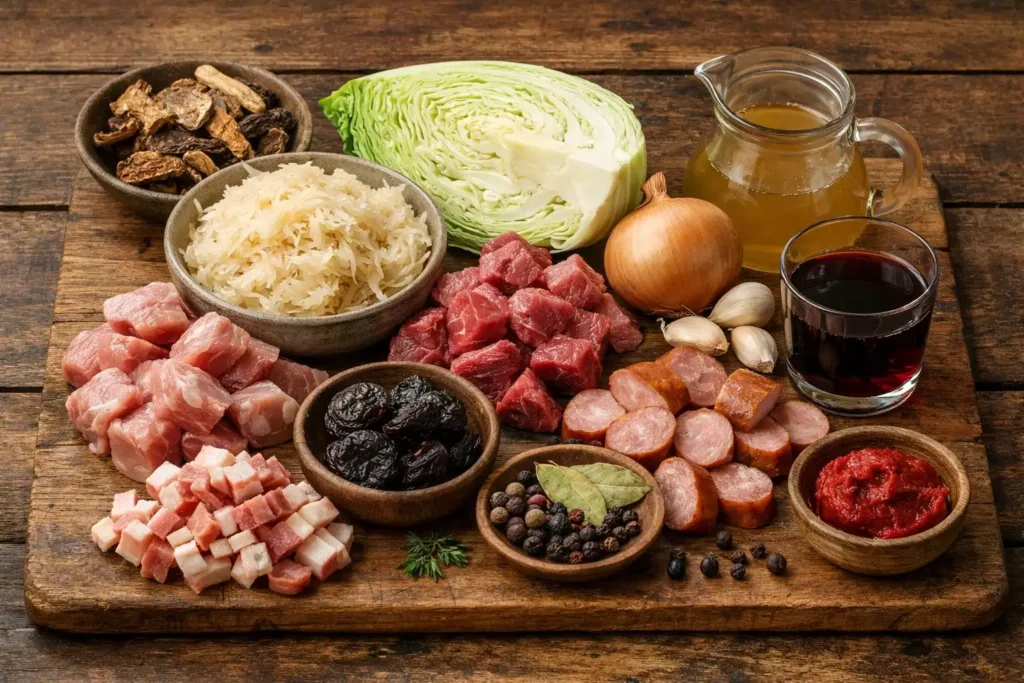
The Cabbage Base
- • 1 pound (450g) sauerkraut — drain it, but don’t rinse unless it’s extremely sour
- • ½ small head fresh white cabbage, thinly shredded (about 3 cups)
The Meats
- • ½ pound (225g) pork shoulder or pork belly, cut into bite-sized cubes
- • ½ pound (225g) smoked Polish kielbasa, sliced into thick rounds
- • ¼ pound (115g) thick-cut smoked bacon, diced
- • ½ pound (225g) beef stew meat, cubed (optional but traditional)
The Flavour Builders
- • 1 oz (30g) dried porcini mushrooms — soaked in 1 cup boiling water
- • 1 large onion, diced
- • 3 garlic cloves, minced
- • 8-10 prunes (dried plums), halved
- • 2 tablespoons tomato paste
- • ½ cup (120ml) red wine, dry (or beer, or stock)
- • 1 cup (240ml) beef or chicken stock
The Spices
- • 3 bay leaves
- • 5-6 allspice berries (whole)
- • 6-8 juniper berries (whole) — these are traditional and add a beautiful piney warmth
- • 1 teaspoon dried marjoram
- • 1 teaspoon sweet paprika
- • Freshly ground black pepper
- • NO SALT — the sauerkraut, kielbasa, and bacon provide enough. Taste at the end and adjust only if needed.
On dried mushrooms: Use proper dried porcini or dried forest mushrooms from a Polish deli — not regular sliced mushrooms. Dried mushrooms provide an umami depth that fresh ones cannot. If you have access to a Polish shop, look for “grzyby suszone” — they’re usually much cheaper there than in mainstream supermarkets.
On prunes: Don’t skip them. They add a subtle sweetness that balances the sourness of the sauerkraut and rounds out the smoky-meaty flavours. You won’t taste “prune” — you’ll just taste a stew with more depth.
How to Make Bigos Step by Step
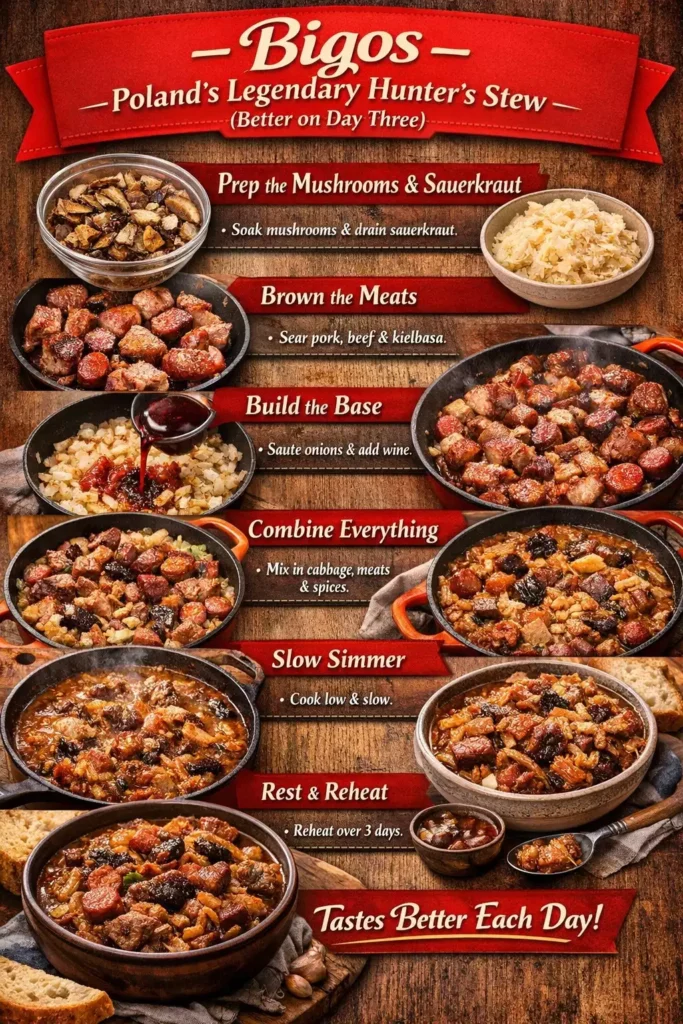
1
1Prep the Mushrooms and Sauerkraut
Soak the dried mushrooms in 1 cup of boiling water for at least 30 minutes. When soft, slice them thinly. Keep the soaking liquid — it’s liquid gold for the stew. Strain it through a fine sieve or coffee filter to remove any grit.
Drain the sauerkraut. If it smells very sharp and sour, give it a quick rinse under cold water. If it’s mild, use it as-is. Roughly chop it so you don’t have long, stringy strands in the stew.
2
2Brown the Meats
In a large Dutch oven or heavy-bottomed pot, render the diced bacon over medium heat until it starts to crisp — about 5 minutes. Remove with a slotted spoon and set aside.
In the bacon fat, brown the pork shoulder cubes on all sides — about 6-8 minutes. Don’t crowd the pot; work in batches. Remove and set aside. Brown the beef cubes the same way. Then brown the kielbasa slices until they develop golden colour. Remove everything and set aside.
3
3Build the Base
In the same pot (don’t clean it — that fond on the bottom is flavour), sauté the diced onion until softened and golden, about 5 minutes. Add the garlic and cook for another minute.
Add the tomato paste and stir it into the onion for a minute to cook off the raw taste. Pour in the red wine and scrape up all the browned bits from the bottom of the pot. Let the wine reduce by half.
4
4Combine Everything
Return all the browned meats and bacon to the pot. Add the sauerkraut, shredded fresh cabbage, sliced mushrooms with their strained soaking liquid, halved prunes, stock, bay leaves, allspice berries, juniper berries, marjoram, and paprika.
Stir everything together. The liquid should barely cover the ingredients — bigos is a stew, not a soup. If it looks dry, add a splash more stock or water.
5
5Slow Simmer
Bring to a gentle simmer, then reduce the heat to the lowest setting. Cover with a lid slightly ajar (to let steam escape slowly) and cook for at least 1.5-2 hours, stirring occasionally. The cabbage should be very tender, the meat should fall apart easily, and the liquid should be thick and concentrated.
Taste and adjust. Need more tang? Add a splash of sauerkraut juice. Too sour? Add another prune or two, or a teaspoon of honey. Need salt? Check first — you probably don’t.
6
6Rest and Reheat (The Secret Step)
Let the bigos cool completely, then refrigerate overnight. The next day, bring it back to a gentle simmer for 15-20 minutes. Cool and refrigerate again. On day three, reheat one more time before serving. Each cycle deepens the flavour.
Serve hot with crusty bread or mashed potatoes.
Slow Cooker Method
Brown the meats and sauté the onion on the stovetop as described above. Transfer everything to a slow cooker, add all remaining ingredients, and cook on LOW for 6-8 hours or HIGH for 3-4 hours. The slow cooker won’t develop quite as much fond flavour as stovetop, but it’s incredibly convenient for a busy day.
Tips for the Best Bigos
💡 Pro Tips
✓ More meat variety = better bigos. The traditional rule is: the more types of meat, the richer the stew. Pork, beef, kielbasa, and bacon is a great base. If you can add duck, venison, or a piece of smoked pork rib, even better.
✓ Don’t add salt until the very end. The sauerkraut, kielbasa, and bacon are already salty. Taste after cooking and you’ll likely find it doesn’t need any.
✓ Use juniper berries. They’re not easy to find in mainstream American stores, but they’re what give bigos its distinctive piney warmth. Check the spice section or order online. If you can’t find them, a tiny splash of gin provides a similar note.
✓ The sauerkraut-to-cabbage ratio matters. Too much sauerkraut and it’s overwhelmingly sour. Too much fresh cabbage and it’s bland. A roughly 2:1 ratio (sauerkraut to fresh) is the sweet spot.
✓ Let it rest. I cannot stress this enough. Day-three bigos is a fundamentally different (and better) dish than day-one bigos.
What to Serve With Bigos
• Crusty rye bread or sourdough — for dunking into the rich liquid. This is the most traditional pairing.
• Boiled or mashed potatoes — common, filling, and comforting.
• In a bread bowl — hollow out a round loaf, ladle the bigos in. The bread soaks up the juices. This is how you’ll find it at Polish markets and festivals.
• Polish pickled cucumbers (ogórki kiszone) — the acidity cuts through the richness.
How to Store and Freeze
Fridge: Store in a covered container for up to 5 days. Reheat each time you serve — it improves with every cycle.
Freezer: Bigos freezes brilliantly for up to 3 months. Portion into individual containers for easy weeknight meals. Thaw in the fridge overnight and reheat on the stove.
Canning: Pour hot bigos into sterilised jars, seal tightly, and let cool upside down. Store in the fridge for up to 2 weeks. This is the traditional Polish method for keeping large batches.
Frequently Asked Questions
Can I make bigos without meat?
Yes — meatless bigos (bigos postny) is traditional for Christmas Eve, when meat is forbidden at the Polish table. Use extra mushrooms (both dried and fresh), add some smoked paprika for smokiness, and substitute the stock with vegetable stock or mushroom broth. It won’t have the same depth, but it’s still delicious and authentically Polish.
What’s the difference between bigos and kapusta?
Kapusta is braised sauerkraut with mushrooms — essentially the cabbage-mushroom base of bigos without the meat. Bigos is the full version with multiple meats, prunes, wine, and additional seasonings. Think of kapusta as bigos’ simpler, vegetarian-friendly cousin.
Can I use canned sauerkraut?
You can, but the flavour won’t be as good. Fresh sauerkraut from a Polish deli or the refrigerated section of the supermarket (not shelf-stable) has more tang and better texture. If using canned, taste it first — if it’s very sour, rinse it lightly before adding.
Why does my bigos taste flat?
Three likely reasons: not enough dried mushrooms (they’re the umami backbone), missing the prunes (they add hidden depth), or not enough reheating cycles. Give it another day in the fridge and reheat again. The flavour compounds need time to merge.
What wine works best?
Any dry red wine you’d drink. Nothing too tannic or too sweet. A Cabernet, Merlot, or even a dry Polish red works well. Beer is also traditional — a dark lager or porter adds a malty sweetness. Or skip the alcohol entirely and use extra stock.
Can I add potatoes to bigos?
Some regional versions in Silesia include potatoes, so yes — it’s authentically Polish. Add peeled, cubed potatoes about 30 minutes before the stew is done. They’ll absorb the flavours beautifully and make the stew even heartier.
Kasia Polish Mom
Polish-born, Chicago-raised, feeding a family of six with babcia’s recipes and a global pantry. I grew up folding pierogi at my grandmother’s kitchen table and never stopped — 15+ years of cooking from scratch, one Sunday dinner at a time. Everything here is tested on four kids, a hungry husband, and the memory of a woman who never measured anything but always got it right.
Beef and Broccoli — The 20-Minute Weeknight Hero
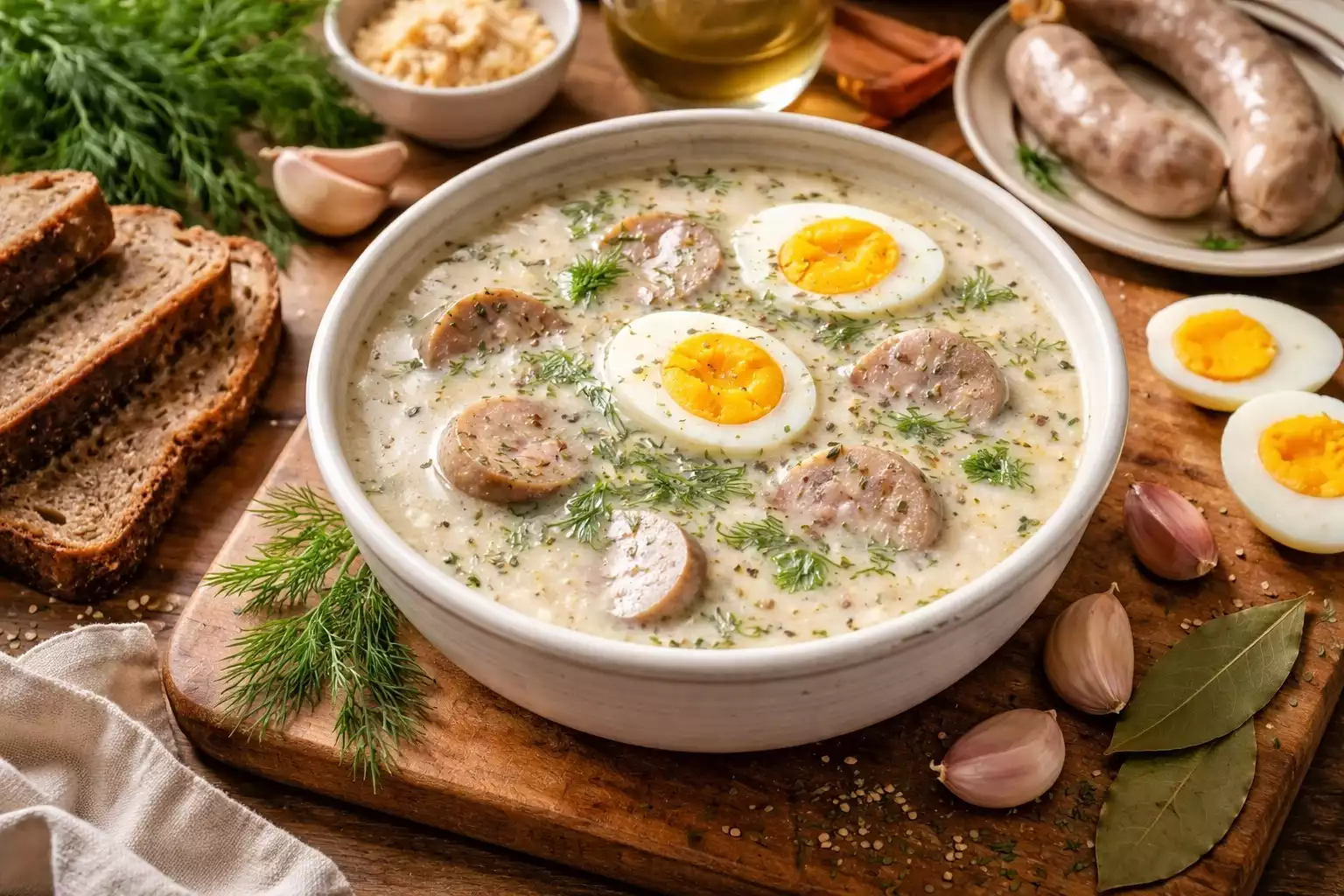
Biały Barszcz — Poland’s Other Easter Soup
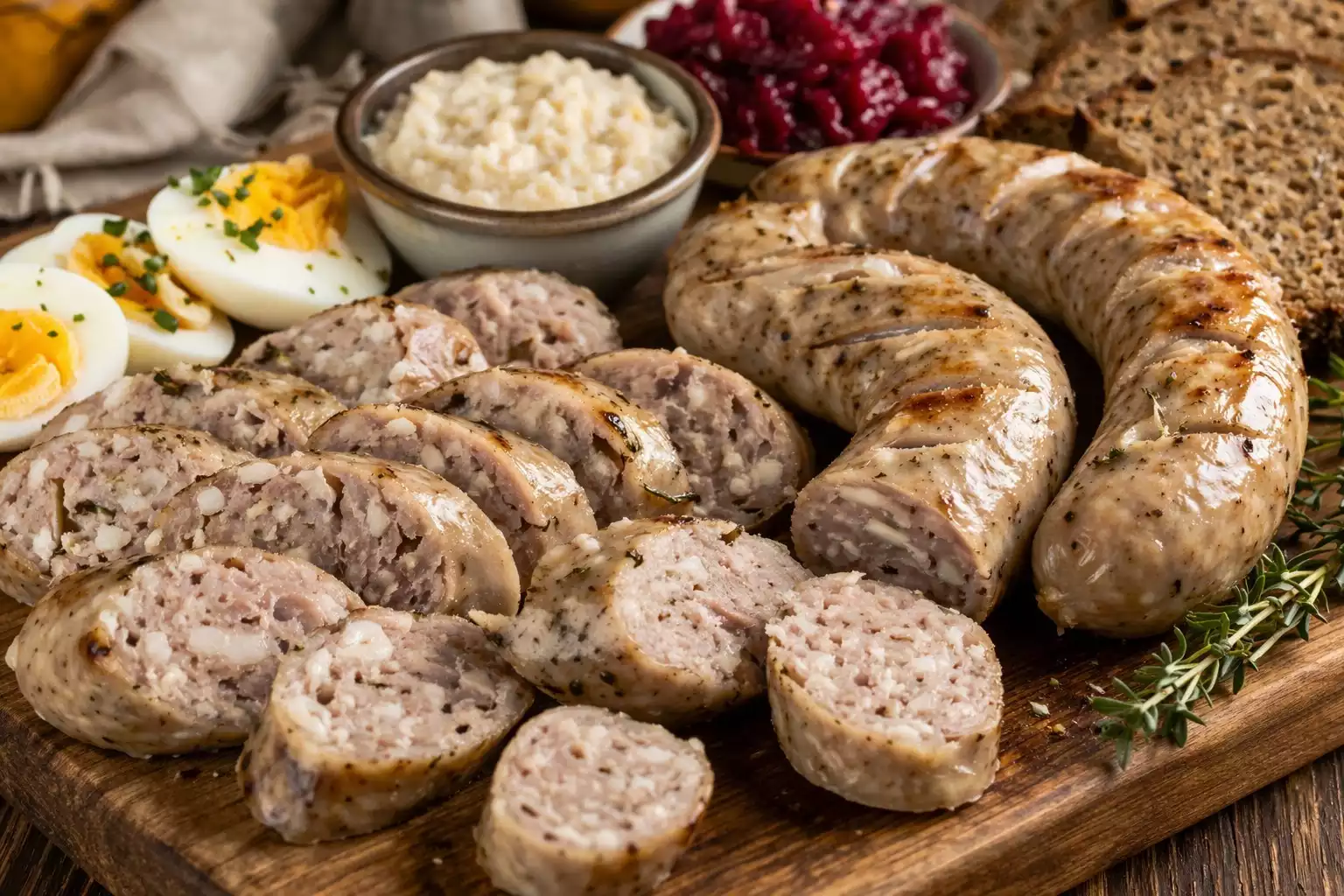
Biała Kiełbasa — The Easter Sausage Every Polish Table Needs
Szynka Wielkanocna — Polish Easter Ham Done Right

Makowiec — Polish Poppy Seed Roll for Every Holiday