




Kasia Polish Mom
Polish-born, Chicago-raised, feeding a family of six with babcia’s recipes and a global pantry. I grew up folding pierogi at my grandmother’s kitchen table and never stopped — 15+ years of cooking from scratch, one Sunday dinner at a time. Everything here is tested on four kids, a hungry husband, and the memory of a woman who never measured anything but always got it right.
Budget Grocery Haul + Meal Plan — $75/Week Family of 4
I feed my family of six for $75 a week and nobody eats sad food. This is the actual budget meal plan I use, with real prices from real grocery receipts, real meals that my family actually eats, and a shopping strategy built on ingredient overlap — where the same purchases serve multiple dinners across the week.
The Philosophy: Ingredient Overlap
Most budget meal plans fail because they treat each dinner as independent, requiring separate shopping lists. My system uses OVERLAP: ingredients bought once that appear in 2-3 dinners across the week. Buy one chicken: Monday dinner + Wednesday lunch + Thursday soup. Buy one bag of rice: serves as a side Monday, base for fried rice Thursday, burrito bowl Friday. Buy one head of cabbage: slaw Tuesday, stir-fry Wednesday, soup Thursday. The overlap reduces waste, reduces cost, and reduces the number of items on the shopping list.
Shopping List (~$72-78)
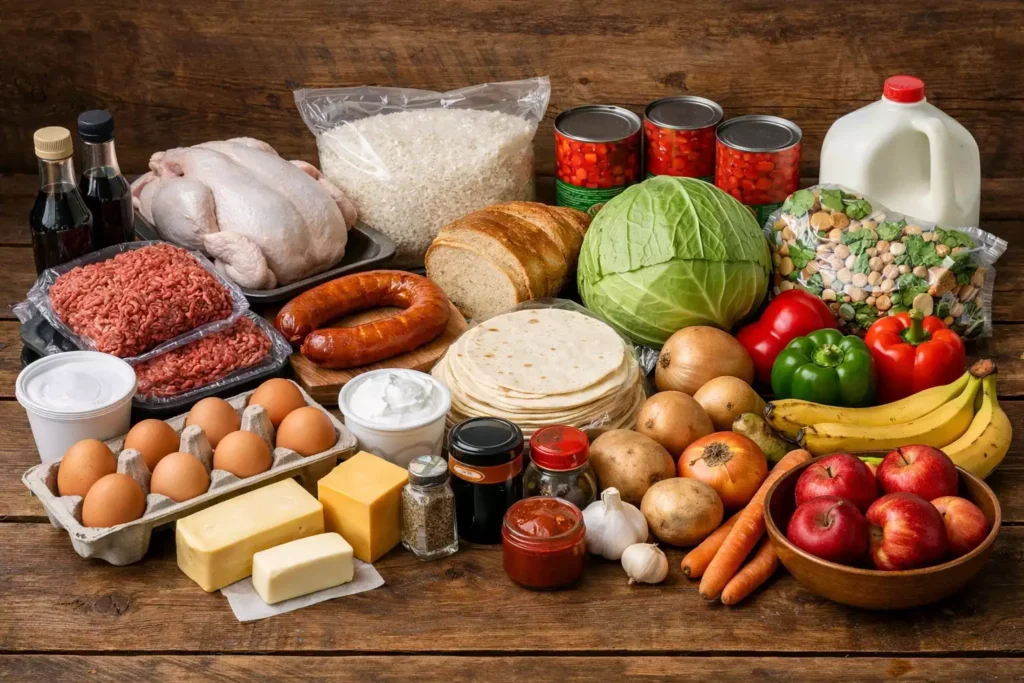
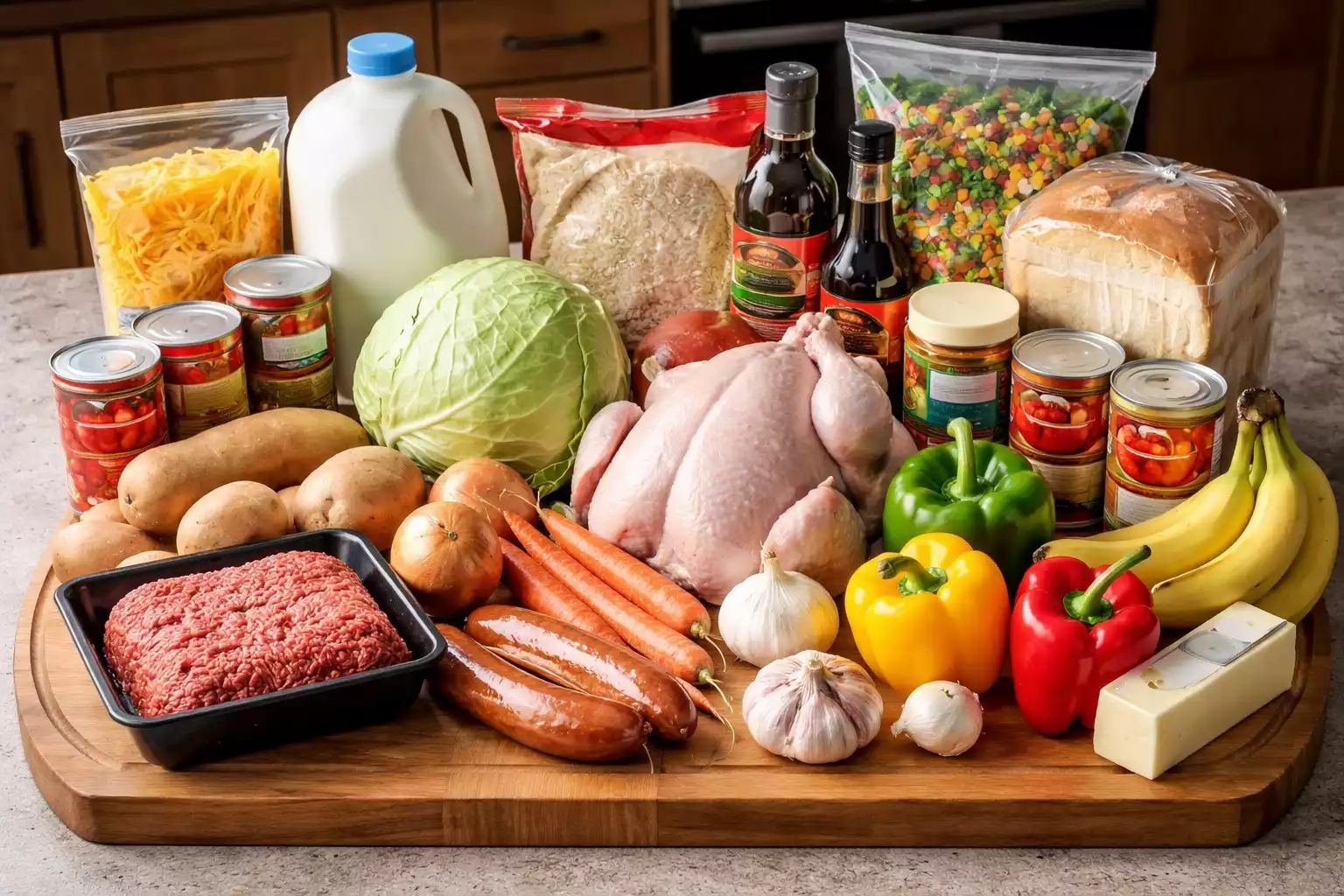
Proteins ($22): 1 whole chicken ($8), 2 lbs ground beef ($10), 1 lb kielbasa ($4)
Grains & Starches ($8): Rice ($2), pasta ($2), tortillas ($3), bread ($1)
Vegetables ($15): Cabbage ($1), onions ($2), potatoes ($3), carrots ($2), bell peppers ($3), canned tomatoes x3 ($4)
Dairy ($10): Eggs ($3), cheese ($4), sour cream ($2), butter ($1)
Pantry ($8): Soy sauce, gochujang, peanut butter, spices (amortised weekly cost)
Extras ($9): Frozen vegetables ($3), fruit ($4), milk ($2)
The Week
Total for 7 dinners: approximately $28. Remaining $47 covers breakfasts, lunches, and snacks for the week.
Monday: Roast the whole chicken + roasted potatoes + simple salad ($6 dinner)
Tuesday: Taco skillet with ground beef, rice, and cabbage slaw ($5)
Wednesday: Leftover chicken → fried rice with day-old rice and frozen vegetables ($3)
Thursday: Chicken carcass → rosol soup with carrots, noodles, and dill ($2)
Friday: Kielbasa & sauerkraut skillet with leftover potatoes ($4)
Saturday: Smash burgers with remaining ground beef + leftover cabbage slaw ($5)
Sunday: Creamy tomato garlic pasta (pantry dinner — canned tomatoes, pasta, garlic, cream) ($3)
The Babcia Budget System
My babcia fed her family on less than I spend on coffee. Her system was the same as mine: buy one protein, use it multiple ways. Buy cheap vegetables in season, cook them in every direction. Waste nothing — bones become broth, stale bread becomes breadcrumbs, leftover vegetables become soup. The currency changed from zloty to dollars. The continent changed from Europe to America. The family size stayed the same (big). The principle is identical: stretch every ingredient across as many meals as possible, and make each one delicious enough that nobody notices it’s budget cooking.
Tips
✓ Whole chicken is the ultimate budget protein. Roast dinner Monday, shred leftovers for two more meals, boil the carcass for soup. One $8 chicken provides four meals.
✓ Rice is the cheapest base. A 5-pound bag costs $4 and lasts 2-3 weeks. It’s a side, a base, and a fried rice ingredient.
✓ Buy cabbage weekly. At $0.50-1.00 per head, it’s the most cost-effective vegetable. Slaw, stir-fry, soup — it does everything.
✓ Pantry staples are amortised costs. A bottle of soy sauce costs $3 and lasts 2 months. Per-meal cost: pennies. Build the pantry gradually, use it constantly.
$75 seems low — is this realistic?
It’s tight but achievable, and it’s my actual budget. The keys: no pre-packaged convenience foods (they’re expensive), no name brands (store brand is identical), and strategic use of sales and overlap. It requires planning. It requires a Sunday prep session. It requires saying “no” to impulse purchases. But the meals are genuinely good — nobody at my table feels like they’re eating “budget food.” They just feel like they’re eating dinner.
The Overlap Visualised
Here’s how one chicken serves four meals: Monday roast dinner → Wednesday fried rice (leftover meat) → Thursday rosol (carcass boiled for broth) → Friday’s rosol leftovers become the base for a quick noodle soup lunch. One $8 chicken. Four meals. $2 per meal for the protein component. This cascading-ingredient approach is how my babcia stretched a family budget across a week, and it’s how I stretch $75 across seven days of dinners, breakfasts, and lunches for six people. The secret isn’t buying cheap food. It’s buying smart food that serves multiple purposes.
What if something goes on sale mid-week?
Adapt. The meal plan is a guide, not a prison. If chicken thighs go on sale Wednesday, I buy them and shuffle Thursday’s dinner to use fresh chicken instead of the planned ground beef. The overlap strategy has enough flexibility to absorb changes. My babcia never had a fixed meal plan — she cooked based on what was available and affordable that day. I plan more than she did, but I leave room for the same opportunistic shopping she practiced.
How do I start if $75 seems impossible?
Start with the protein overlap: buy one whole chicken and use it for 3 meals. That alone saves $10-15 versus buying separate proteins for each meal. Then add the rice-and-cabbage base strategy. Build gradually. My $75 budget didn’t happen overnight — I optimised over about 3 months of tracking what we actually ate versus what I actually bought. The waste reduction alone saved $15-20 per week. Most families throw away 20-30% of their groceries. Eliminate that waste and $75 becomes achievable.
The $75 Shopping Strategy
The secret to feeding a family of six for $75 per week isn’t deprivation — it’s strategy. Three principles: ingredient overlap (buy chicken thighs that serve Korean bowls AND pad thai AND soup), anchor meals around cheap staples (rice, pasta, cabbage, potatoes, beans), and buy proteins on sale and freeze them. I check the weekly flyer every Sunday morning and build my menu around what’s discounted. Chicken thighs on sale for $1.99/lb? That’s the week for Korean chicken, crockpot chicken, and chicken fried rice. Pork shoulder marked down? Carnitas week. Ground beef on special? Smash burgers, taco casserole, and taco skillet. The menu serves the budget, not the other way around.
Kasia Polish Mom
Polish-born, Chicago-raised, feeding a family of six with babcia’s recipes and a global pantry. I grew up folding pierogi at my grandmother’s kitchen table and never stopped — 15+ years of cooking from scratch, one Sunday dinner at a time. Everything here is tested on four kids, a hungry husband, and the memory of a woman who never measured anything but always got it right.