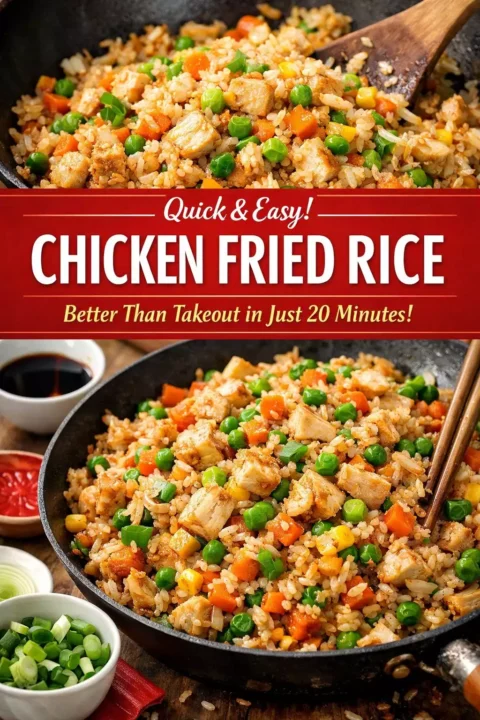
Chicken Fried Rice (Better Than Takeout)
Fried rice is the greatest leftover makeover in culinary history. Take yesterday’s rice — cold, dry, forgotten in the back of the fridge — and transform it into something smoky, savoury, and better than the rice it was when it was fresh. Fried rice doesn’t just rescue leftovers. It elevates them. And as someone raised by a Polish babcia who believed throwing away food was a mortal sin, the zero-waste magic of fried rice speaks to my soul.
Ingredients
- 4 cups day-old cooked rice cold from the fridge
- 2 eggs
- 1 cup cooked chicken, diced or shrimp, kielbasa, tofu, or any leftover protein
- 1 cup mixed vegetables peas, corn, diced carrots, green beans
- 3 green onions, sliced
- 3 cloves garlic, minced
- 3 tablespoons soy sauce
- 1 tablespoon sesame oil
- 1 tablespoon oyster sauce optional but recommended
- 2 tablespoons vegetable oil
- White pepper
Method
Why Day-Old Rice
-
Fresh rice is moist and sticky. When it hits a hot wok, it clumps together and steams instead of frying. Day-old rice has dried out in the fridge — the individual grains separate easily and crisp up when they hit the hot oil. This is not optional. Fresh rice = mushy fried rice. Cold rice = individual grains that bounce and char. The dryness is the secret. Every fried rice recipe that fails can usually trace the problem to fresh rice.
Cook
-
Heat vegetable oil in a wok or large skillet over the HIGHEST heat your stove can produce. When the oil shimmers and barely begins to smoke, add the eggs. Scramble quickly — 30 seconds, big curds, slightly underdone. Push to the side. Add garlic — 15 seconds. Add the vegetables and protein. Stir-fry 2 minutes.
-
Add the cold rice. Press it flat against the wok and let it sit for 30 seconds without touching it. This is where the magic happens — the rice chars slightly against the hot surface, developing that smoky, toasty flavour (wok hei) that separates restaurant fried rice from sad, steamy home attempts. Toss, press flat again, let it char. Repeat 3-4 times over 3-4 minutes.
-
Add soy sauce, oyster sauce, sesame oil, and white pepper. Toss everything together. The soy sauce sizzles against the hot wok and creates steam that distributes flavour. Add green onions in the last 10 seconds — they should stay crisp and bright green.

Kasia Polish Mom
Polish-born, Chicago-raised, feeding a family of six with babcia’s recipes and a global pantry. I grew up folding pierogi at my grandmother’s kitchen table and never stopped — 15+ years of cooking from scratch, one Sunday dinner at a time. Everything here is tested on four kids, a hungry husband, and the memory of a woman who never measured anything but always got it right.
Chicken Fried Rice — Better Than Takeout, 20 Minutes
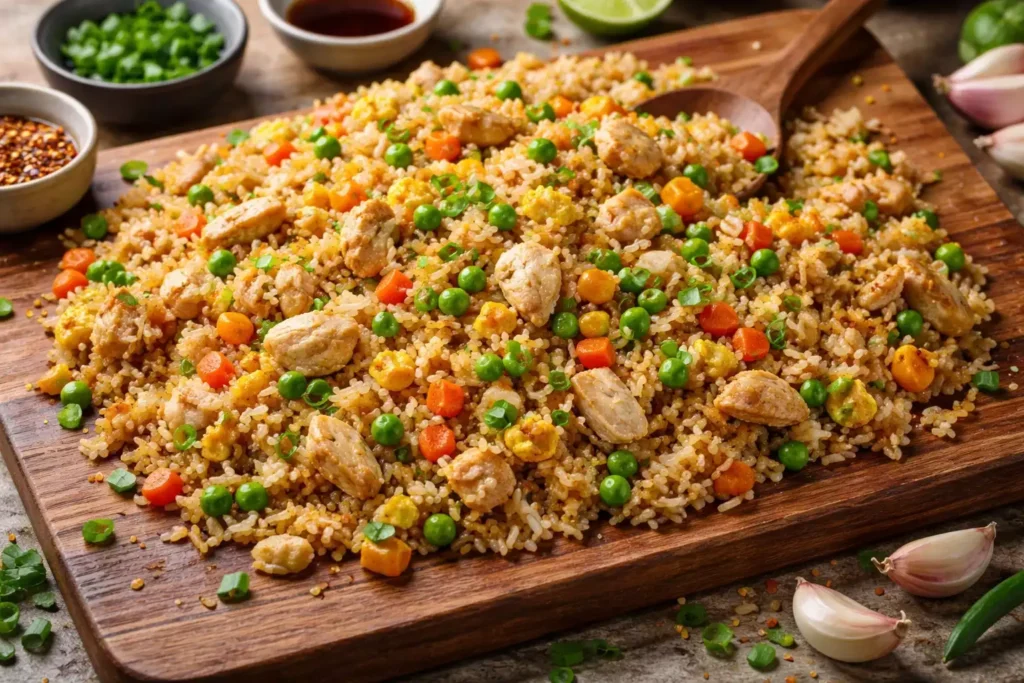
Fried rice is the greatest leftover makeover in culinary history. Take yesterday’s rice — cold, dry, forgotten in the back of the fridge — and transform it into something smoky, savoury, and better than the rice it was when it was fresh. Fried rice doesn’t just rescue leftovers. It elevates them. And as someone raised by a Polish babcia who believed throwing away food was a mortal sin, the zero-waste magic of fried rice speaks to my soul.
In my babcia’s kitchen, nothing went to waste. Stale bread became breadcrumbs for schabowy. Leftover potatoes became placki ziemniaczane. Meat scraps became soup. It was an entire philosophy: every ingredient has a second life if you’re creative enough. Fried rice is the Chinese expression of that same philosophy — leftover rice, leftover vegetables, whatever protein is in the fridge, all tossed in a screaming hot wok with soy sauce and sesame oil. My babcia and every Chinese grandmother on Earth would understand each other perfectly on this point.
Ingredients
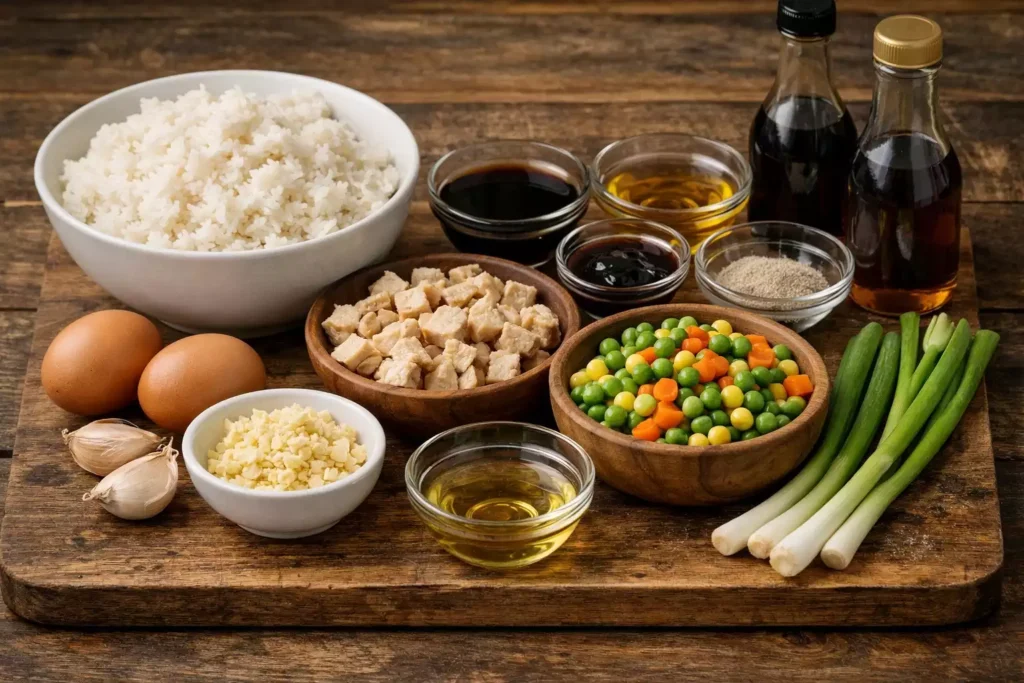
- • 4 cups day-old cooked rice — cold from the fridge
- • 2 eggs
- • 1 cup cooked chicken, diced (or shrimp, kielbasa, tofu, or any leftover protein)
- • 1 cup mixed vegetables — peas, corn, diced carrots, green beans
- • 3 green onions, sliced
- • 3 cloves garlic, minced
- • 3 tablespoons soy sauce
- • 1 tablespoon sesame oil
- • 1 tablespoon oyster sauce (optional but recommended)
- • 2 tablespoons vegetable oil
- • White pepper
How to Make It
Why Day-Old Rice
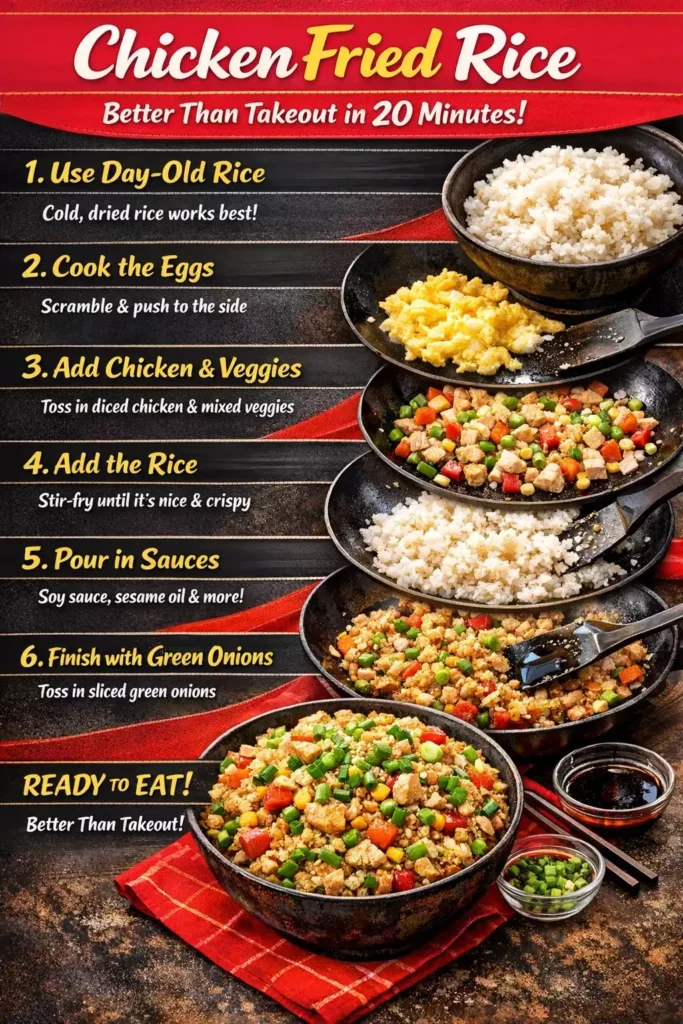
Fresh rice is moist and sticky. When it hits a hot wok, it clumps together and steams instead of frying. Day-old rice has dried out in the fridge — the individual grains separate easily and crisp up when they hit the hot oil. This is not optional. Fresh rice = mushy fried rice. Cold rice = individual grains that bounce and char. The dryness is the secret. Every fried rice recipe that fails can usually trace the problem to fresh rice.
Cook
Heat vegetable oil in a wok or large skillet over the HIGHEST heat your stove can produce. When the oil shimmers and barely begins to smoke, add the eggs. Scramble quickly — 30 seconds, big curds, slightly underdone. Push to the side. Add garlic — 15 seconds. Add the vegetables and protein. Stir-fry 2 minutes.
Add the cold rice. Press it flat against the wok and let it sit for 30 seconds without touching it. This is where the magic happens — the rice chars slightly against the hot surface, developing that smoky, toasty flavour (wok hei) that separates restaurant fried rice from sad, steamy home attempts. Toss, press flat again, let it char. Repeat 3-4 times over 3-4 minutes.
Add soy sauce, oyster sauce, sesame oil, and white pepper. Toss everything together. The soy sauce sizzles against the hot wok and creates steam that distributes flavour. Add green onions in the last 10 seconds — they should stay crisp and bright green.
The Polish Leftover Philosophy
My babcia had a saying: “nic sie nie marnuje” — nothing goes to waste. She would be horrified by the amount of food Americans throw away, and she would be deeply satisfied by fried rice. Taking something that was headed for the bin and turning it into dinner? That’s peak babcia energy. I’ve adopted this philosophy across my cooking: leftover pulled pork becomes fried rice protein. Yesterday’s roasted vegetables get chopped and tossed in. Even the kielbasa from Monday’s sauerkraut skillet gets diced and fried into the rice on Wednesday. Every leftover has a second act, and fried rice is the stage.
Tips
💡 Pro Tips
✓ Day-old rice. Non-negotiable. Cook rice the night before and refrigerate uncovered. The drying process is essential.
✓ Highest heat possible. Wok hei requires intense heat. Home stoves can’t match restaurant burners, but maximum heat gets you closest.
✓ Don’t crowd the wok. If making a large batch, work in two rounds. Overcrowded wok = steaming, not frying.
✓ Soy sauce on the hot wok, not the rice. Pour it down the side of the wok where it sizzles and caramelises before touching the rice. Better flavour distribution, no soggy spots.
Variations
• Kimchi fried rice: Add 1 cup chopped kimchi with the vegetables. The fermented tang is incredible — and as someone who grew up eating sauerkraut, fermented cabbage in rice feels entirely natural to me.
• Kielbasa fried rice: Diced kielbasa instead of chicken. Polish-Chinese fusion that my babcia would question and my family devours.
• Egg-only version: Skip the protein, use 4 eggs, add extra vegetables. The simplest version and honestly one of the best.
How to Store
Fridge for 3-4 days. Reheat in a hot skillet (not microwave — you lose the texture). Freezes for 2 months but won’t be as crispy after thawing. Best eaten fresh from the wok.
Frequently Asked Questions
Can I use freshly cooked rice?
If you must: spread hot rice on a sheet pan and refrigerate uncovered for 1-2 hours. This speed-dries it. It’s not as good as overnight rice, but it’s serviceable in a fried-rice emergency (which, in a house with four kids, happens more often than you’d think).
Why white pepper instead of black?
White pepper has a sharper, more pungent heat that’s traditional in Chinese cooking. Black pepper works fine if that’s what you have. The flavour difference is subtle but noticeable once you try both side by side.
The Kielbasa Fried Rice Incident
The first time I put kielbasa in fried rice, my husband looked at me like I’d lost my mind. “You’re putting Polish sausage in Chinese food?” Yes. Yes I am. And the smoky, garlicky kielbasa charred in a hot wok with soy sauce and sesame oil produced one of the best fried rice variations I’ve ever made. The smokiness of kielbasa is actually closer to Chinese lap cheong (sweet Chinese sausage) than you’d think — both are cured, smoky, and intensely flavourful. My babcia and a Chinese grandmother would disagree on most things, but they’d both agree that putting good sausage in rice is a fundamentally sound decision. I’ve made kielbasa fried rice at least twenty times since. My husband stopped questioning it after the third time. Now he requests it.
Kasia Polish Mom
Polish-born, Chicago-raised, feeding a family of six with babcia’s recipes and a global pantry. I grew up folding pierogi at my grandmother’s kitchen table and never stopped — 15+ years of cooking from scratch, one Sunday dinner at a time. Everything here is tested on four kids, a hungry husband, and the memory of a woman who never measured anything but always got it right.