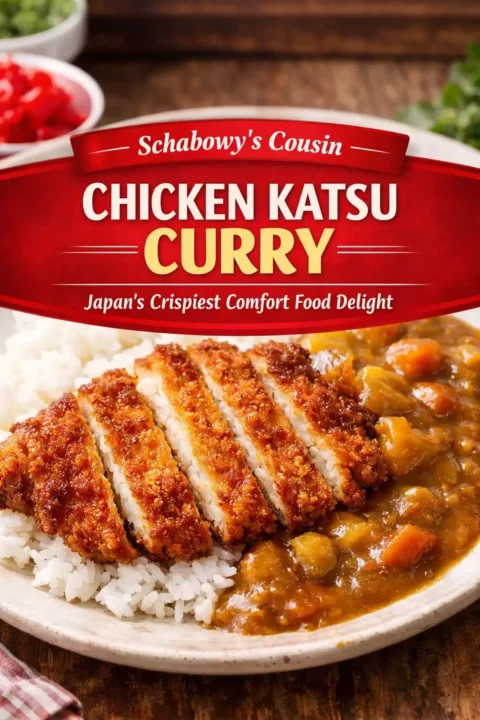
Chicken Katsu Curry
When I realised Japanese katsu and Polish schabowy are basically cousins, my brain exploded. Both are pounded meat cutlets, coated in flour-egg-breadcrumbs, and fried until golden. Poland and Japan, separated by 8,000 kilometres and approximately zero shared history, independently decided that the best thing to do with a piece of meat is bread it and fry it. This is proof that some culinary ideas are universal truths.
Ingredients
For the Chicken Katsu
- 2 large chicken breasts, butterflied or pounded to 1cm thick
- 1/2 cup flour
- 2 eggs, beaten
- 1.5 cups panko breadcrumbs
- Salt and pepper
- Vegetable oil for frying
For the Curry Sauce
- 1 large onion, diced
- 2 carrots, diced
- 2 medium potatoes, cubed
- 3 cloves garlic, minced
- 1 tablespoon fresh ginger, grated
- 2 tablespoons curry powder
- 1 tablespoon flour
- 2 cups chicken broth
- 1 tablespoon soy sauce
- 1 tablespoon honey
- 1 tablespoon butter
Method
Make the Curry Sauce First
-
Melt butter in a pot over medium heat. Cook the onion for 5-6 minutes until soft and golden. Add garlic and ginger — 1 minute, fragrant, not brown. Add curry powder and flour, stir for 1 minute until the raw flour taste cooks out and the spices bloom (you’ll smell them intensify). Pour in the broth, stirring to prevent lumps. Add carrots, potatoes, soy sauce, and honey. Simmer for 20-25 minutes until the vegetables are tender and the sauce is thick enough to coat a spoon. If you want it smoother, blend half with an immersion blender and stir it back in.
Make the Katsu
-
While the sauce simmers, bread the chicken. Set up three shallow dishes: flour (seasoned with salt and pepper), beaten eggs, and panko. This is the exact same breading station I use for schabowy and schabowy burgers — flour, egg, crumbs. Polish muscle memory, Japanese result. Coat each chicken breast in flour, dip in egg, press firmly into panko on both sides. Really press the panko in — it needs to adhere or it falls off during frying.
-
Heat about 1cm of oil in a large skillet over medium-high heat. When the oil shimmers, add the breaded chicken. Cook 4-5 minutes per side until deep golden and crispy, and the internal temperature hits 165F / 74C. Drain on paper towels. Let rest 2 minutes, then slice into strips.
Serve
-
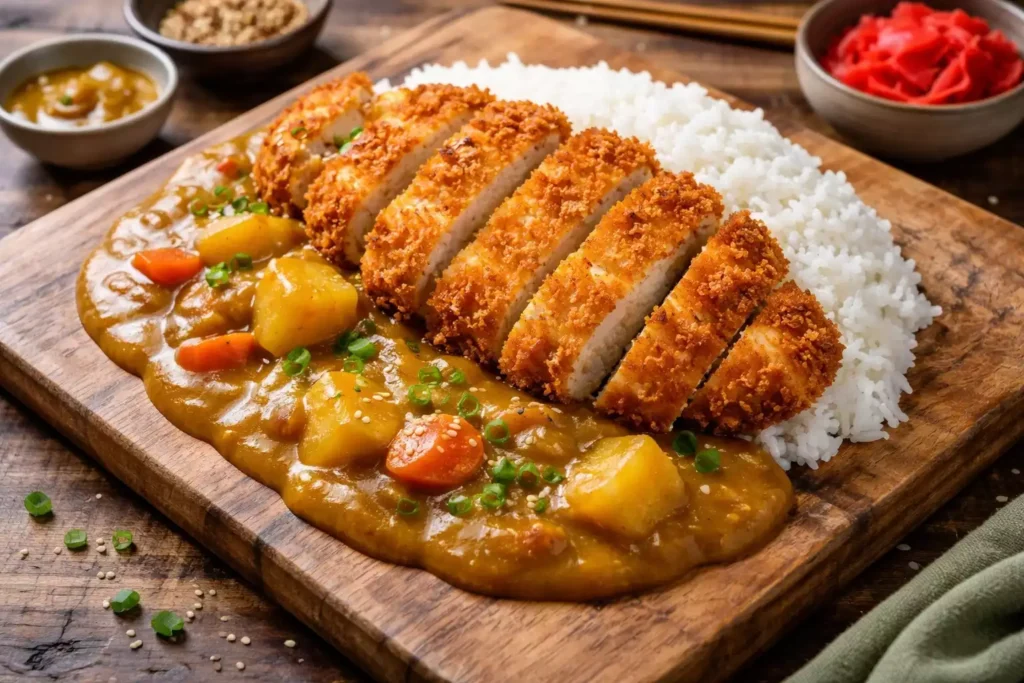
Scoop rice into a bowl. Ladle curry sauce alongside. Lay the sliced katsu on top or next to the curry. The contrast of crispy cutlet meeting rich, thick curry sauce is the whole point. Some people pour the curry over the katsu, but I serve them side by side so the bottom stays crispy as long as possible. Each bite you dip into the sauce, getting crispy-outside-juicy-inside chicken with warm, spiced curry. Smacznego.

Kasia Polish Mom
Polish-born, Chicago-raised, feeding a family of six with babcia’s recipes and a global pantry. I grew up folding pierogi at my grandmother’s kitchen table and never stopped — 15+ years of cooking from scratch, one Sunday dinner at a time. Everything here is tested on four kids, a hungry husband, and the memory of a woman who never measured anything but always got it right.
Chicken Katsu Curry — Japan’s Crunchiest Comfort Food (Schabowy’s Cousin)
When I realised Japanese katsu and Polish schabowy are basically cousins, my brain exploded. Both are pounded meat cutlets, coated in flour-egg-breadcrumbs, and fried until golden. Poland and Japan, separated by 8,000 kilometres and approximately zero shared history, independently decided that the best thing to do with a piece of meat is bread it and fry it. This is proof that some culinary ideas are universal truths.
Chicken katsu curry is a Japanese comfort food classic: crispy panko-breaded chicken cutlet served over rice with a thick, mildly spiced curry sauce. It’s warm, satisfying, and has that same soul-feeding quality as kotlet schabowy with mashed potatoes. Different flavours, same emotional function. Both make you feel like someone who loves you made dinner.
The first time I made katsu curry, I used my schabowy technique — same three-station breading, same pounding method, same medium-high heat frying. The only difference was the panko (Japanese breadcrumbs that are flakier and crispier than Polish ones) and the curry sauce instead of mizeria on the side. My husband took one bite and said “this is basically Japanese schabowy.” And honestly? He was right. I just served it with curry instead of potatoes, and suddenly we were eating “exotic Asian food.” Cross-cultural cooking is sometimes just recognising that everyone had the same idea.
Ingredients
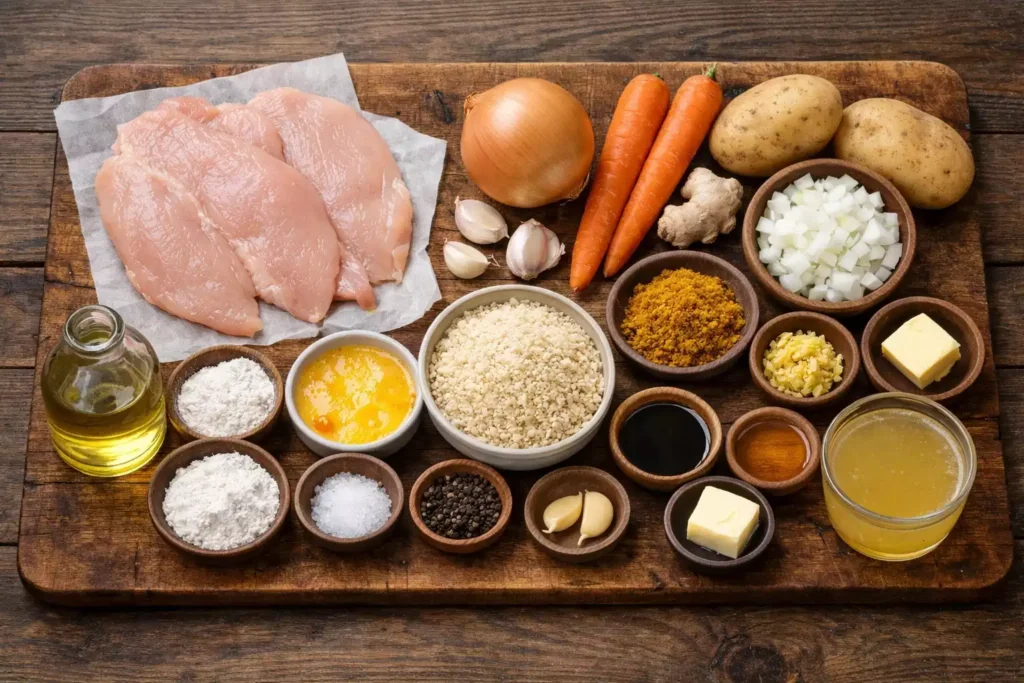
For the Chicken Katsu
- • 2 large chicken breasts, butterflied or pounded to 1cm thick
- • 1/2 cup flour
- • 2 eggs, beaten
- • 1.5 cups panko breadcrumbs
- • Salt and pepper
- • Vegetable oil for frying
For the Curry Sauce
- • 1 large onion, diced
- • 2 carrots, diced
- • 2 medium potatoes, cubed
- • 3 cloves garlic, minced
- • 1 tablespoon fresh ginger, grated
- • 2 tablespoons curry powder
- • 1 tablespoon flour
- • 2 cups chicken broth
- • 1 tablespoon soy sauce
- • 1 tablespoon honey
- • 1 tablespoon butter
How to Make It
Make the Curry Sauce First
Melt butter in a pot over medium heat. Cook the onion for 5-6 minutes until soft and golden. Add garlic and ginger — 1 minute, fragrant, not brown. Add curry powder and flour, stir for 1 minute until the raw flour taste cooks out and the spices bloom (you’ll smell them intensify). Pour in the broth, stirring to prevent lumps. Add carrots, potatoes, soy sauce, and honey. Simmer for 20-25 minutes until the vegetables are tender and the sauce is thick enough to coat a spoon. If you want it smoother, blend half with an immersion blender and stir it back in.
Make the Katsu
While the sauce simmers, bread the chicken. Set up three shallow dishes: flour (seasoned with salt and pepper), beaten eggs, and panko. This is the exact same breading station I use for schabowy and schabowy burgers — flour, egg, crumbs. Polish muscle memory, Japanese result. Coat each chicken breast in flour, dip in egg, press firmly into panko on both sides. Really press the panko in — it needs to adhere or it falls off during frying.
Heat about 1cm of oil in a large skillet over medium-high heat. When the oil shimmers, add the breaded chicken. Cook 4-5 minutes per side until deep golden and crispy, and the internal temperature hits 165F / 74C. Drain on paper towels. Let rest 2 minutes, then slice into strips.
Serve
Scoop rice into a bowl. Ladle curry sauce alongside. Lay the sliced katsu on top or next to the curry. The contrast of crispy cutlet meeting rich, thick curry sauce is the whole point. Some people pour the curry over the katsu, but I serve them side by side so the bottom stays crispy as long as possible. Each bite you dip into the sauce, getting crispy-outside-juicy-inside chicken with warm, spiced curry. Smacznego.
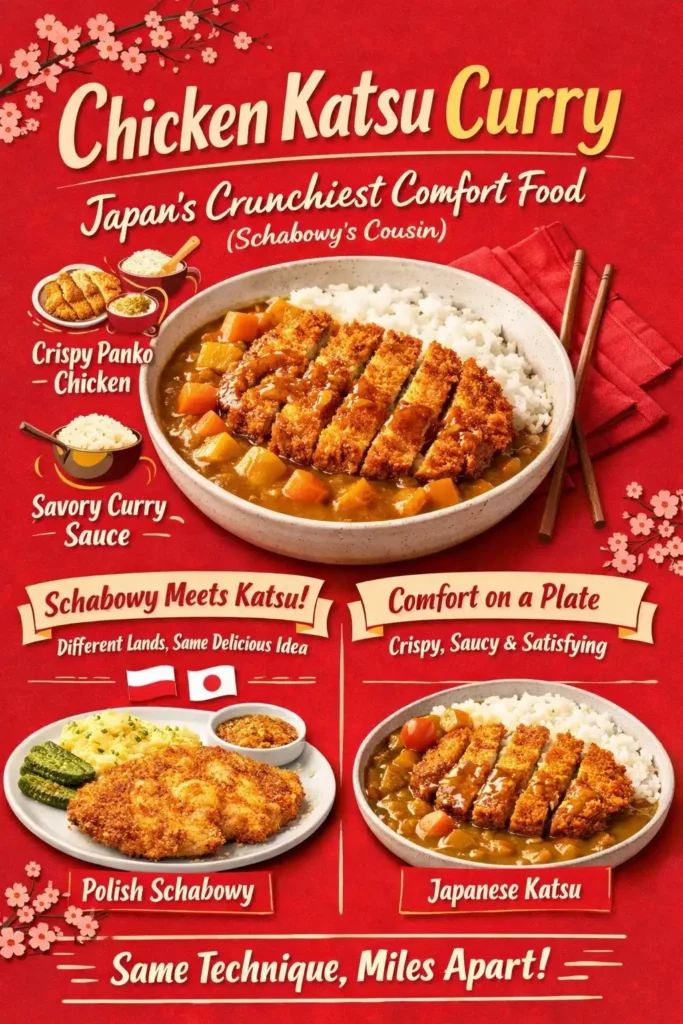
Schabowy vs. Katsu: The Cross-Cultural Connection
The parallels are genuinely fascinating to me as someone who grew up making one and discovered the other as an adult:
• Both pound the meat thin for even cooking and maximum surface area for breading
• Both use the flour-egg-breadcrumb method — Poland uses regular breadcrumbs, Japan uses panko
• Both fry in oil until golden and crispy
• Both serve with a complementary side — schabowy gets potatoes and mizeria, katsu gets rice and curry
The differences are mostly in the breading texture (panko is crunchier) and the seasoning (Polish marjoram vs. no seasoning in the coating for Japanese). When I make katsu, I sometimes sneak marjoram into the flour station — my Polish signature that nobody in Japan asked for but that my family expects from me at this point.
Tips
💡 Pro Tips
✓ Pound the chicken to even thickness. Same advice I give for schabowy — uneven = overcooked thin parts. Use a meat mallet between plastic wrap.
✓ Press the panko firmly. Loose panko falls off in the oil. Palm-press it into the egg coating.
✓ Make the sauce while the katsu rests. The sauce takes 25 minutes, the katsu takes 10. Start the sauce first, fry the chicken toward the end.
✓ Fresh ginger makes a difference. Dried ginger works in a pinch but lacks the bright, sharp flavour that fresh ginger brings. Grate it on a microplane for the finest texture.
Variations
• Pork katsu: Use pork loin instead of chicken. Pound thin, bread the same way. This is closer to tonkatsu, the original Japanese katsu, and also closer to schabowy. Full circle.
• With Japanese curry blocks: If you want maximum authenticity with minimum effort, use S&B Golden Curry blocks (available in Asian grocery stores). They dissolve in water and produce a thick, flavourful sauce in 15 minutes.
• Air fryer katsu: Spray the breaded cutlets with oil and air fry at 200C / 400F for 12-14 minutes, flipping once. Not as crispy as fried but good enough for a weeknight.
How to Store
Store curry sauce and katsu separately. Sauce keeps 5 days in the fridge and freezes beautifully for 3 months. Katsu is best fresh but keeps 2-3 days — reheat in the oven at 190C / 375F to re-crisp. Never microwave the katsu unless you enjoy chewy, sad breading.
Frequently Asked Questions
What is panko?
Japanese breadcrumbs made from crustless white bread. They’re flakier, lighter, and crunchier than regular breadcrumbs. Available in most grocery stores’ Asian or baking section. If you can’t find panko, regular breadcrumbs work — the katsu just won’t be quite as shatteringly crispy. But my schabowy has survived decades with regular breadcrumbs, so it’s clearly not a dealbreaker.
Is the curry very spicy?
Japanese curry is mild by default — warm and aromatic, not fiery. It’s one of the most kid-friendly curries that exists. My youngest eats it happily. For more heat, add cayenne or chilli flakes to the sauce. For maximum heat, serve with gochujang on the side. Cross-cultural heat layering — it’s a Polish Mom specialty.
More From Polish Mom
Marry Me Chicken · Creamy Tuscan Chicken · Spicy Korean Chicken Stir Fry (Gochujang) · Easy Chicken Pad Thai
Kasia Polish Mom
Polish-born, Chicago-raised, feeding a family of six with babcia’s recipes and a global pantry. I grew up folding pierogi at my grandmother’s kitchen table and never stopped — 15+ years of cooking from scratch, one Sunday dinner at a time. Everything here is tested on four kids, a hungry husband, and the memory of a woman who never measured anything but always got it right.