


Kasia Polish Mom
Polish-born, Chicago-raised, feeding a family of six with babcia’s recipes and a global pantry. I grew up folding pierogi at my grandmother’s kitchen table and never stopped — 15+ years of cooking from scratch, one Sunday dinner at a time. Everything here is tested on four kids, a hungry husband, and the memory of a woman who never measured anything but always got it right.
Chicken Pot Pie — Under That Crust Is Pure Magic
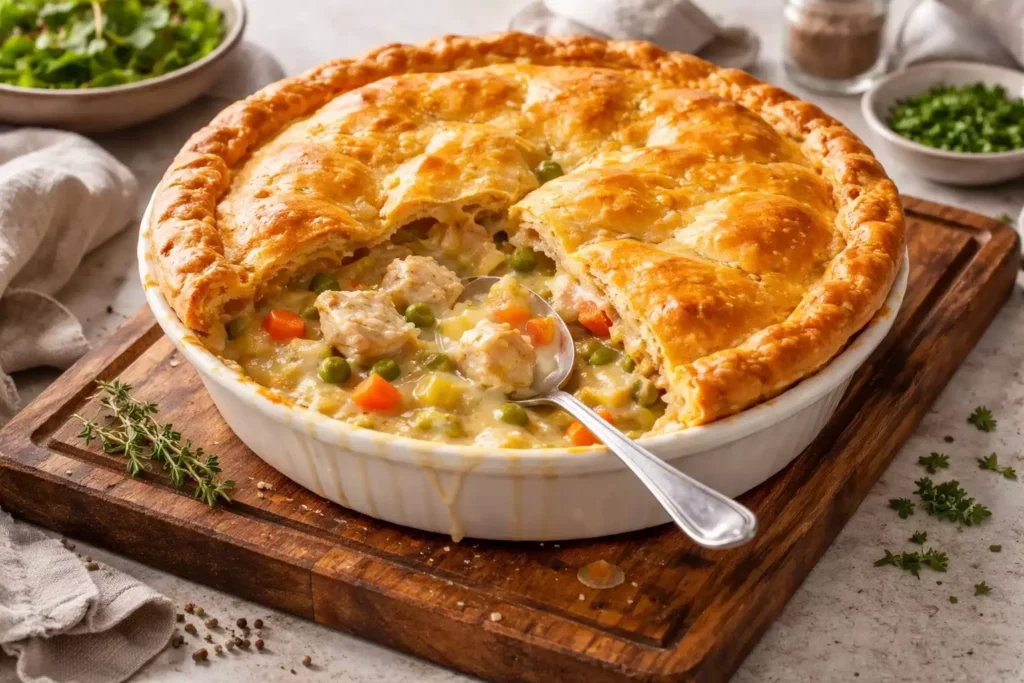
I made pulled pork for forty people last summer and there were no leftovers. This is the entire endorsement this recipe needs. Pulled pork — pork shoulder rubbed with a spice blend, slow-roasted until falling apart, pulled into tender, smoky shreds, and served on soft buns with coleslaw and barbecue sauce — is one of the most crowd-pleasing foods that exists. It scales endlessly, it improves if made the day before, and it produces the kind of smell while cooking that makes people text asking when dinner is three hours before it is ready.
Classic American pulled pork comes from the Southern barbecue tradition, where pork shoulder is traditionally smoked low and slow over hickory wood for many hours. The home oven version — which this is — produces a result that is genuinely excellent even without a smoker. The key is low temperature, long time, and a good dry rub. I add a splash of liquid smoke to compensate for the absence of a smoker and the result is very close to the real thing.
Plan for this recipe at least a day in advance. The pork is rubbed the night before and cooked the next day. Total active time: 20 minutes. Total time including marinating and cooking: approximately 14 hours. Every minute of the passive time is worth it.
Low, Slow, and Covered
Pork shoulder (also called Boston butt, confusingly) is a heavily worked muscle with significant fat and collagen. At high temperatures, the protein tightens and squeezes out moisture before the collagen can convert to gelatin. At low temperatures (120–140°C), the collagen converts slowly to gelatin, the fat renders gradually, and the muscle fibers relax until they can be pulled apart with two forks. The low temperature is not a shortcut compromise — it is the correct temperature for the correct result. High temperature produces dry, stringy pork. Low temperature produces meltingly tender, pull-apart pork.
Ingredients
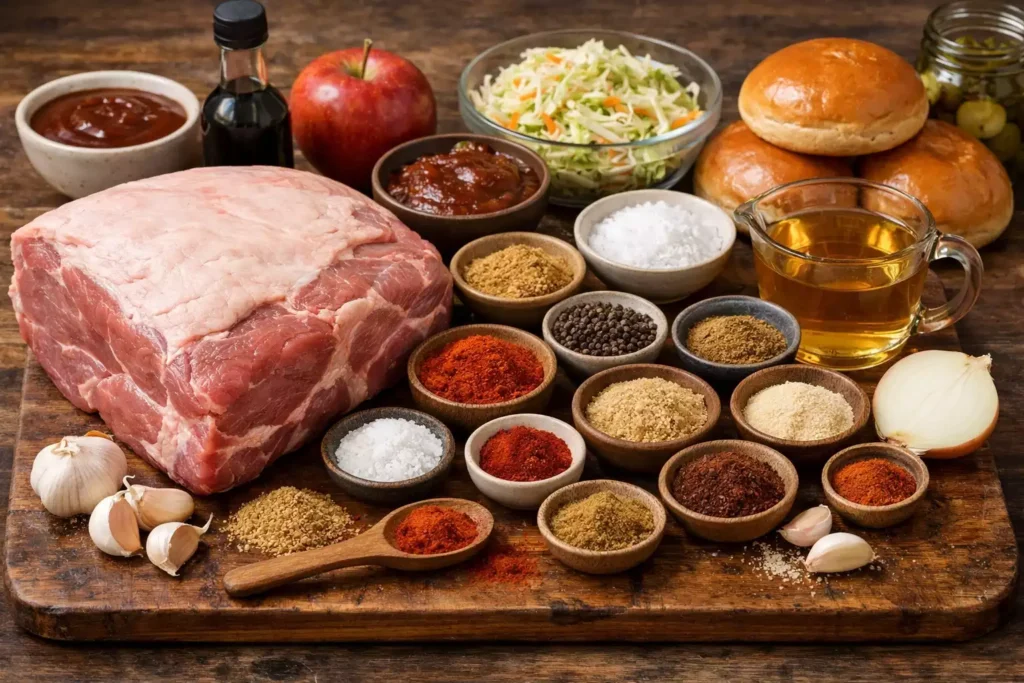
For the Pulled Pork
- 2–2.5 kg (4.4–5.5 lbs) bone-in or boneless pork shoulder
- 1 tsp liquid smoke (optional but recommended for oven method)
- 120ml (½ cup) apple cider vinegar or apple juice
- Soft brioche buns, coleslaw, and barbecue sauce for serving
For the Dry Rub
- 3 tbsp brown sugar
- 2 tbsp smoked paprika
- 2 tsp salt (increase for a larger cut)
- 2 tsp black pepper
- 1 tsp garlic powder
- 1 tsp onion powder
- 1 tsp cumin
- 1 tsp chili powder
- ½ tsp cayenne
How to Make It
1
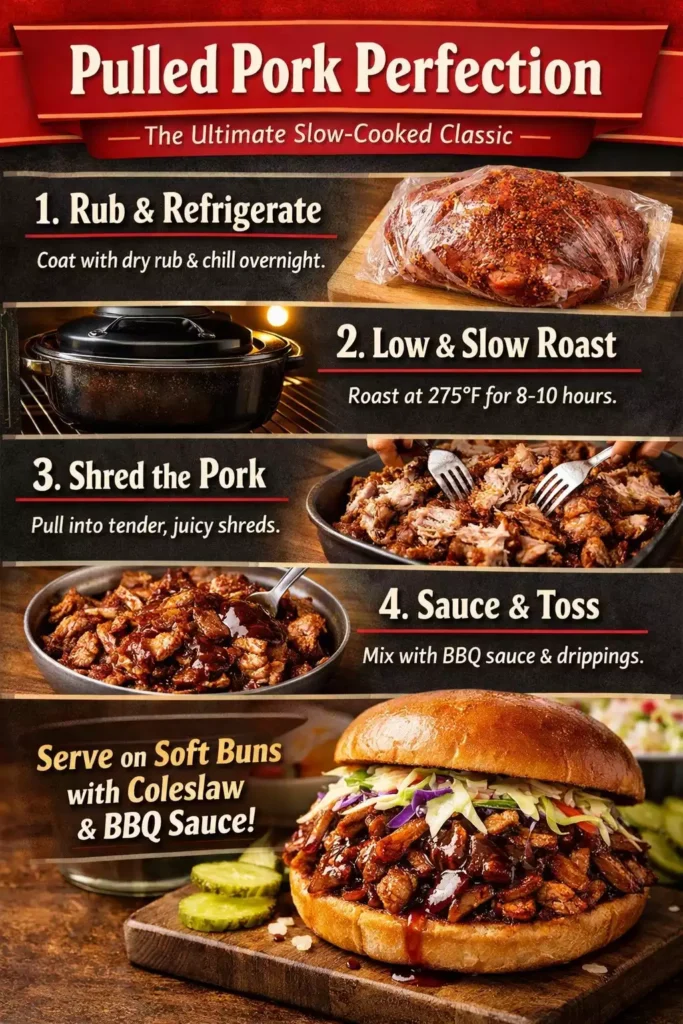
1Apply the Rub (Night Before)
Mix all dry rub ingredients. Score the fat cap of the pork shoulder in a crosshatch pattern to allow the rub to penetrate. Rub the spice mixture over every surface of the pork, pressing firmly into all crevices. If using liquid smoke, add to the rub as a paste. Wrap tightly in plastic wrap and refrigerate overnight or up to 24 hours. The overnight marination allows the rub to penetrate and season deep into the meat.
2
2Set Up the Slow Roast
Remove the pork from the refrigerator 30 minutes before cooking. Preheat oven to 135°C (275°F). Place the pork in a deep roasting pan or Dutch oven, fat side up. Pour apple cider vinegar or juice into the bottom of the pan — this creates steam and adds a slight acidity to the drippings. Cover tightly with foil or a lid.
3
3Roast Low and Slow
Roast at 135°C for 8–10 hours until the internal temperature reaches 93–96°C (200–205°F) and the pork is completely falling apart — a fork inserted and twisted should meet no resistance. At this temperature, bones slide out cleanly and the pork shreds with two forks with almost no effort. Do not rush this. The pork is done when the temperature and texture are both right, not when a fixed time has passed.
4
4Pull, Sauce, and Serve
Remove the pork and let rest 30 minutes, covered. Pour off the pan drippings — skim the fat and reserve the remaining liquid. Pull the pork apart with two forks, removing any large pieces of fat or bone. Toss the pulled pork with a few tablespoons of the reserved pan drippings and some of the liquid to keep it moist. Add barbecue sauce to taste and toss. Serve on soft buns with coleslaw.
Pulled Pork Tips
Temperature over time. The pork is done when it reaches 93–96°C internally, not when a fixed number of hours has passed. A 2kg shoulder might take 8 hours; a 2.5kg shoulder might take 10–11 hours. Start checking internal temperature after 7 hours and continue until you hit the target. This temperature is unusually high for meat — at normal roasting temps you would stop at 70°C, but the collagen conversion for pulled pork requires the extended time above 90°C.
Fat side up. The fat cap should face up during cooking so it bastes the meat below it as it renders. The fat does not need to be removed before cooking — it renders away or is easy to remove when pulling. Fat side down means the fat sits in the pan drippings and the meat above dries out.
Pull while hot, not cold. Pulled pork is most easily shredded when it is hot and the collagen is still liquid. Cold pulled pork requires much more effort to shred and the fibers can become tight and stringy as they cool. Pull immediately when the pork comes out of the oven, while still hot.
Reserve the pan drippings. The liquid in the bottom of the roasting pan is concentrated pork flavor. Skim the fat, reduce slightly on the stovetop if needed, and use it to keep the pulled pork moist. This liquid is what distinguishes moist, juicy pulled pork from the dry, shredded version. Do not discard it.
Serving Pulled Pork
On soft brioche buns with a generous pile of creamy coleslaw on top and barbecue sauce on the side. The coleslaw on the sandwich (not alongside) is the correct approach — the cool, crunchy, tangy coleslaw inside the bun with the warm, rich pulled pork is one of the great textures in sandwich eating. For a crowd, serve buffet-style with buns, coleslaw, various sauces, and pickle chips alongside beef chili.
Variations Worth Trying
Carolina-style (vinegar-based sauce). Instead of the standard tomato-based BBQ sauce, toss the pulled pork with apple cider vinegar sauce: 120ml apple cider vinegar, 1 tablespoon brown sugar, 1 teaspoon cayenne, 1 teaspoon black pepper, and salt. Eastern North Carolina style is vinegar-only — no tomato. The vinegar-dressed pulled pork is tangy, lighter, and extraordinary.
Pulled pork tacos. Instead of buns, serve the pulled pork in warm corn tortillas with shredded cabbage, pickled red onion, cilantro, and lime juice. A cross-cultural adaptation that is excellent and requires only the addition of tortilla to pivot the pulled pork entirely.
Storage
Pulled pork keeps refrigerated for 5 days and freezes beautifully for up to 3 months. Reheat gently on the stove with a splash of the reserved pan drippings or stock, stirring to warm through. The reheated version is often even better than fresh — flavors meld overnight. Make pulled pork in large batches specifically for freezing — a freezer stocked with pulled pork is a meal-planning asset of considerable value.
FAQ
What cut of pork is best for pulled pork?
Pork shoulder (also called Boston butt or pork butt — the “butt” name comes from the barrel in which it was traditionally stored, not the anatomy) is the classic and correct cut. It has the right fat content, the right collagen structure, and the right size for long cooking. Pork leg can also be used but is leaner and produces a slightly drier result. Pork loin is wrong for pulled pork — too lean and will dry out long before it reaches the temperature needed for pulling.
Can I make pulled pork in a slow cooker?
Yes — this is one of the best slow cooker applications. Apply the rub the night before as directed. Place in the slow cooker with the apple cider vinegar. Cook on low for 10–12 hours or high for 6–8 hours until falling apart. Finish uncovered in the oven at 220°C for 15 minutes if you want a slightly caramelized exterior. The slow cooker version lacks the slight exterior crust of the oven method but is excellent and extremely practical.

Kasia Polish Mom
Polish-born, Chicago-raised, feeding a family of six with babcia’s recipes and a global pantry. I grew up folding pierogi at my grandmother’s kitchen table and never stopped — 15+ years of cooking from scratch, one Sunday dinner at a time. Everything here is tested on four kids, a hungry husband, and the memory of a woman who never measured anything but always got it right.