

Kasia Polish Mom
Polish-born, Chicago-raised, feeding a family of six with babcia’s recipes and a global pantry. I grew up folding pierogi at my grandmother’s kitchen table and never stopped — 15+ years of cooking from scratch, one Sunday dinner at a time. Everything here is tested on four kids, a hungry husband, and the memory of a woman who never measured anything but always got it right.
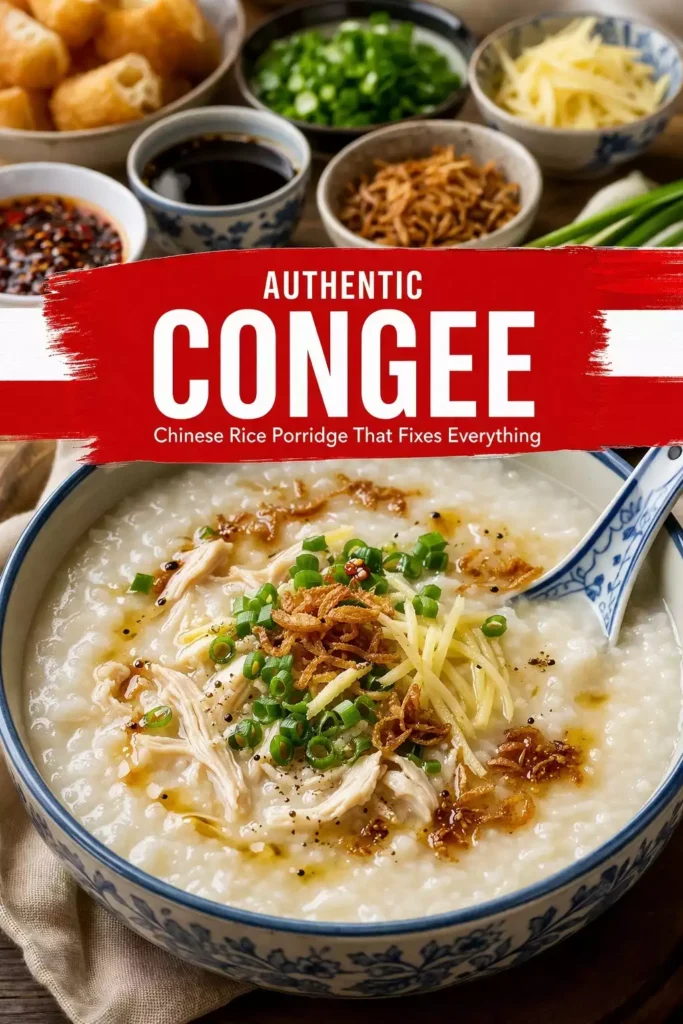
Congee — Chinese Rice Porridge That Fixes Everything
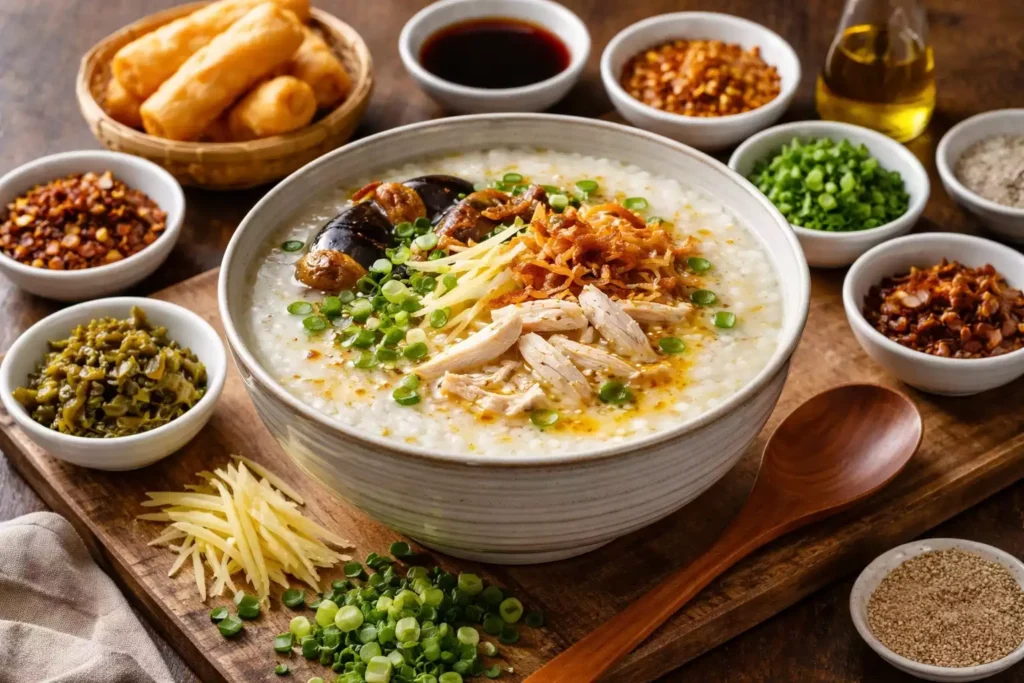
When my kids are sick, I make chicken soup. When I am sick, I make congee. Both work. This is not a coincidence — slow-cooked rice porridge with ginger and good broth is Asian chicken soup. It is the same instinct translated into a different culinary tradition: take something simple, cook it slowly, season it with care, and feed it to someone who needs it. The mechanism of comfort is identical across cultures. I find this beautiful.
Congee — or jook in Cantonese, zhou in Mandarin — is rice cooked in a large amount of water or broth until the grains break down completely into a silky, porridge-like consistency. The texture is simultaneously light and deeply filling. The flavor comes from the broth, ginger, and whatever toppings you add. The blank canvas quality of congee is intentional: it is a vehicle for the toppings, which can range from a simple drizzle of sesame oil to a full array of Chinese condiments.
I make congee with chicken stock and a whole piece of ginger. The ginger simmers in the rice the entire time and transforms from sharp and pungent to warm and mellow. By the time the congee is ready, the whole pot smells like the best possible version of comfort and the ginger has given everything it has to the rice.
Congee Ratios and Textures
Congee thickness is a matter of personal preference and regional tradition. A ratio of 1:10 rice to liquid produces a thick, filling congee. A ratio of 1:12 or 1:14 produces a thinner, more silky result. Cantonese congee is traditionally very silky and almost translucent — cooked long enough that the rice grains are fully dissolved. I make mine at 1:10 for a slightly thicker result that my children eat without complaint. Start there and adjust the ratio in future batches to your preference.
Ingredients
Basic Chicken Congee (serves 4)
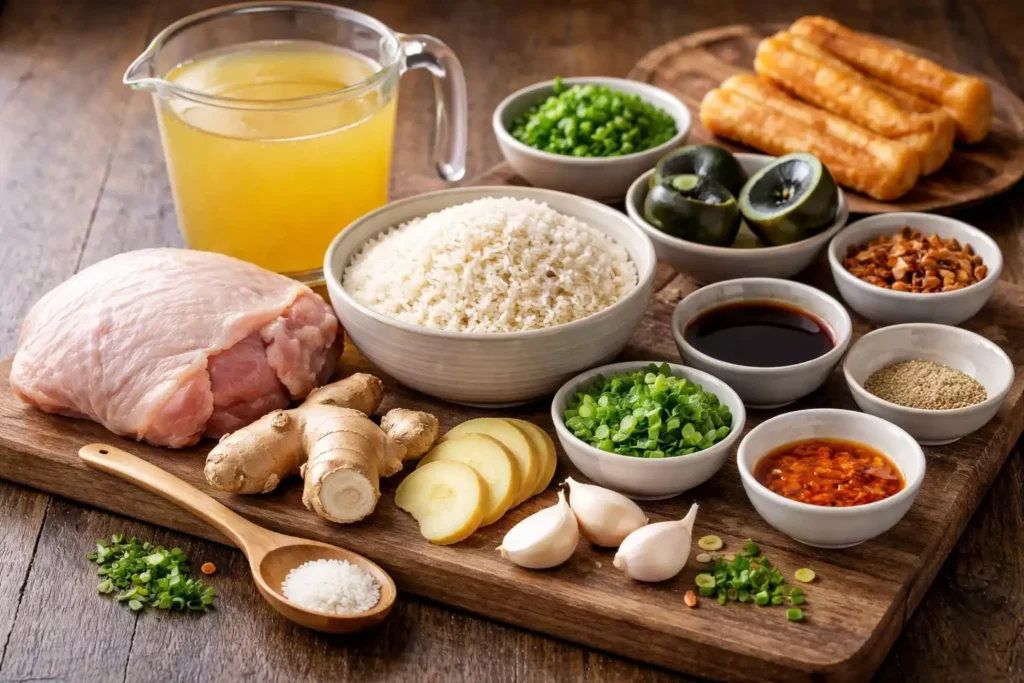
- 200g (1 cup) jasmine or long-grain rice
- 2 liters (8 cups) chicken stock
- 1 whole chicken thigh, bone-in
- 5cm piece fresh ginger, sliced into coins
- 3 cloves garlic
- 1 tsp salt
- White pepper to taste
Topping Options (choose your combination)
- Sesame oil (essential)
- Soy sauce
- Spring onions, thinly sliced
- Fresh ginger, julienned
- Century egg (pidan) — traditional
- Fried shallots or garlic
- Chili oil
- White pepper
- Crispy fried dough (you tiao) if available
How to Make It
1
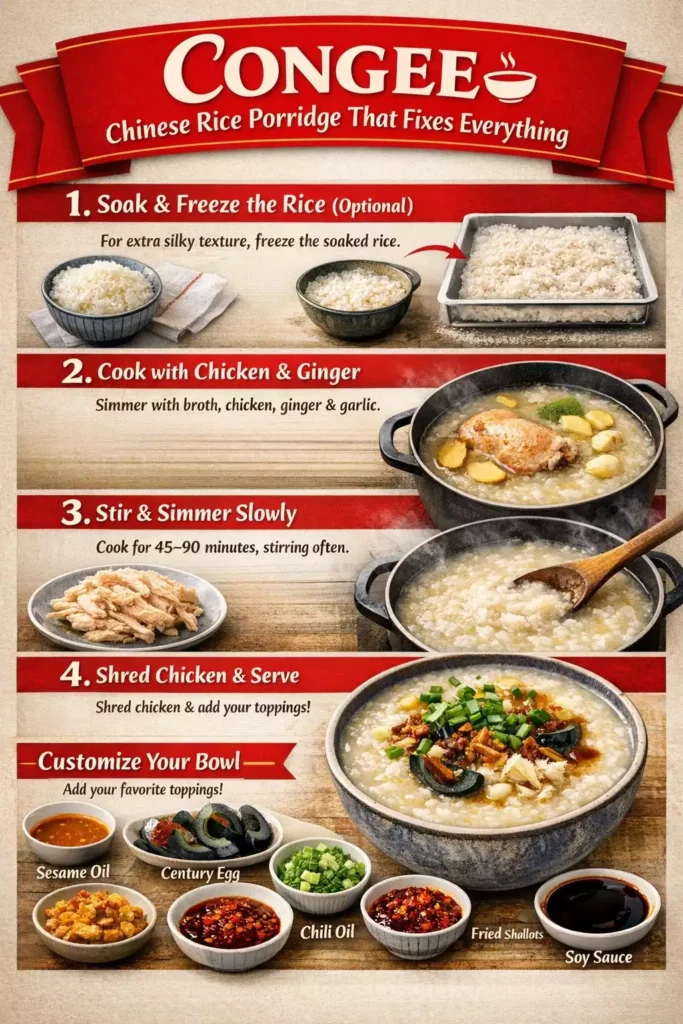
1Optional: Freeze and Soak the Rice
For ultra-silky congee, soak the rice in cold water for 30 minutes, drain, then spread on a tray and freeze for 1–2 hours (or overnight). Frozen rice breaks down faster and more completely, producing a silkier result in less cooking time. This step is optional but produces noticeably better texture. If you skip it, just rinse the rice and proceed.
2
2Start the Congee
Combine the rice, stock, chicken thigh, ginger, garlic, and salt in a large heavy pot. Bring to a boil over high heat, stirring frequently to prevent the rice from sticking to the bottom. Reduce heat to the lowest possible simmer — just enough bubbles to keep things moving. Leave the lid slightly ajar to prevent boil-over.
3
3Cook Low and Slow
Simmer for 45 minutes to 1.5 hours, stirring every 10–15 minutes, until the rice has completely broken down and the congee is silky and thick. Longer cooking equals silkier texture. At 45 minutes you will have thick but grainy congee; at 90 minutes it will be nearly smooth. Both are correct; choose your texture preference.
4
4Finish and Serve
Remove the chicken thigh. Shred the meat and discard the bone, skin, ginger coins, and garlic cloves (which will have given all their flavor to the rice). Stir the shredded chicken back into the congee. Season with white pepper and additional salt. Ladle into bowls and let each person add their preferred toppings. Finish with a drizzle of sesame oil — this is not optional.
Congee Tips
Stir often. The bottom of the pot scorches if you leave congee unstirred. Every 10–15 minutes, scrape the bottom with a wooden spoon to prevent sticking and distribute the heat evenly. This is the only demanding part of congee — regular stirring for about an hour.
Good stock produces good congee. Congee has few ingredients and the broth flavor comes through completely. Homemade chicken stock produces exceptional congee. Good-quality store-bought stock produces very good congee. Weak, watery stock produces weak, watery congee. The quality of the liquid is the quality of the dish.
The toppings table is the experience. Serve congee with all the toppings in small dishes at the table and let everyone customize. The ritual of adding spring onions, sesame oil, soy sauce, and ginger to your own bowl is part of the congee experience. It is communal food in the same way pierogi are communal food and I love that about it.
Pressure cooker version. If you have an Instant Pot or pressure cooker, use the porridge setting with 1:8 rice-to-water ratio for 20–25 minutes. The result is excellent and takes a fraction of the time. Add ginger and chicken for the same flavor. This is my weeknight version.
Serving Congee
In bowls with a full topping spread. Congee for a family dinner should have at minimum: sesame oil, soy sauce, sliced spring onions, and white pepper at the table. For an expanded spread, add fried shallots, julienned ginger, and chili oil. Pair with Chinese dumplings for a classic dim sum-style breakfast or light dinner.
Variations Worth Trying
Fish congee. Use fish stock or diluted dashi instead of chicken stock. Add thin-sliced fresh white fish (cod, tilapia, bass) in the last 5 minutes of cooking. The fish cooks gently in the hot porridge and remains extremely tender. Top with fried garlic, ginger, and sesame oil.
Pidan lean pork congee (Pidan Shouzhu Zhou). The Cantonese classic: add sliced century egg (pidan, available at Asian grocery) and thin slices of marinated lean pork to the basic congee. The pidan melts into the congee and adds a rich, savory depth. This is considered the definitive Cantonese congee topping combination.
Plain congee as a base. Neutral plain congee (rice and water, no protein in the pot) serves as a base for any topping combination. Make it plain and offer a full spread of toppings — this is how congee is eaten at breakfast in many Chinese households.
Storage
Congee thickens dramatically as it cools and will be very thick or solid when refrigerated. This is normal. Reheat with a generous splash of water or stock, stirring over medium heat until the original consistency returns. Keeps in the refrigerator for 3 days. Freezes well — portion into individual servings and freeze for up to 3 months. Ideal sick-day food to have on hand.
FAQ
What is the difference between congee and rice porridge?
Congee is a type of rice porridge — specifically one made with a high water-to-rice ratio until the rice breaks down. All congee is rice porridge; not all rice porridge is congee. The word congee comes from the Tamil kanji via British colonial usage. Japanese okayu, Korean juk, and Vietnamese chao are all related preparations with slight differences in technique and topping tradition.
Can I use leftover cooked rice to make congee?
Yes. Leftover cooked rice makes congee much faster — 20–25 minutes instead of 45–90. Use the same quantity of stock and add a smaller amount of cooked rice (half as much as raw rice). The texture will be slightly different — less silky than rice-from-raw — but excellent and much faster. Great for weeknight congee with leftovers.
Kasia Polish Mom
Polish-born, Chicago-raised, feeding a family of six with babcia’s recipes and a global pantry. I grew up folding pierogi at my grandmother’s kitchen table and never stopped — 15+ years of cooking from scratch, one Sunday dinner at a time. Everything here is tested on four kids, a hungry husband, and the memory of a woman who never measured anything but always got it right.