
Kasia Polish Mom
Polish-born, Chicago-raised, feeding a family of six with babcia’s recipes and a global pantry. I grew up folding pierogi at my grandmother’s kitchen table and never stopped — 15+ years of cooking from scratch, one Sunday dinner at a time. Everything here is tested on four kids, a hungry husband, and the memory of a woman who never measured anything but always got it right.
Chinese Tomato Egg Stir Fry — 10-Minute Comfort
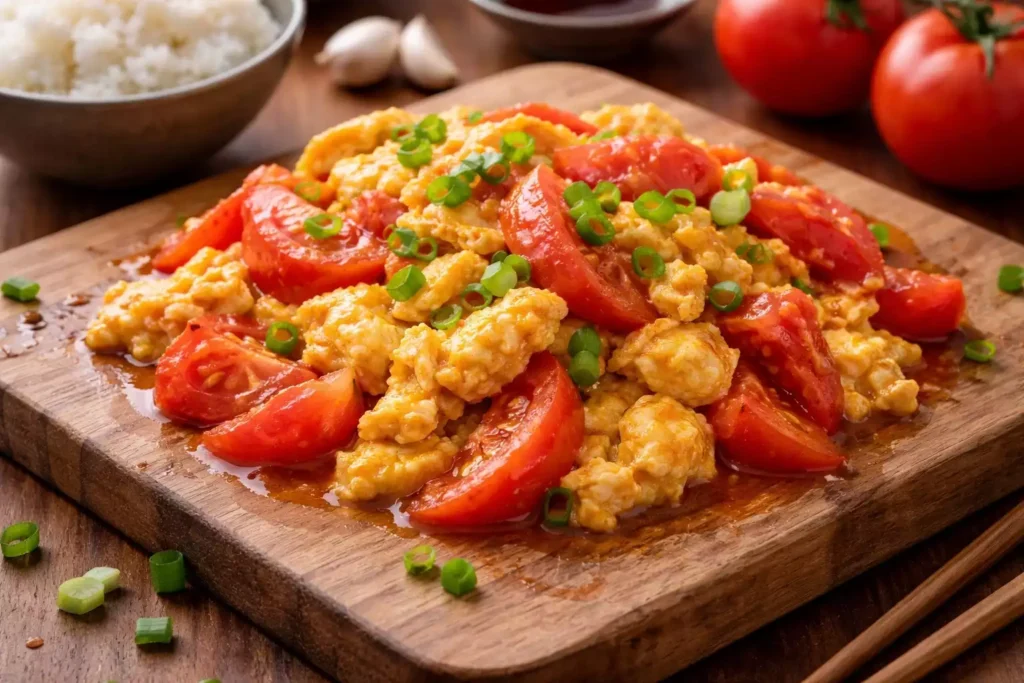
This is the Chinese equivalent of scrambled eggs on toast and it is one million times better. Three ingredients. Ten minutes. The kind of comfort food that makes you feel taken care of even when you made it yourself. Fanqie chao dan — Chinese tomato and egg stir fry — is the dish that every Chinese child grows up eating and every Chinese adult makes when they need comfort without effort. I discovered it through a Taiwanese coworker who made it for a team lunch, and I have been making it weekly since then. My kids think it is one of the greatest inventions of the human race. They are not wrong.
The magic of this dish is in the egg technique. Chinese eggs stir-fried at high heat in generous oil puff up and become almost custardy — light, tender, and richly flavored from the hot oil — before the tomatoes go in to provide their sweet-acidic juice. The sauce that forms is barely a sauce: just tomato juice, a touch of sugar, and a hit of sesame oil. It is the simplest dish in this entire Chinese collection and possibly the most satisfying.
The rule: eat it over white rice. There is no other correct serving method.
Why This Tomato Egg Stir Fry Works
The egg technique is the key. Chinese scrambled eggs are made with generous oil at very high heat, producing eggs that are almost crispy at the edges and soft inside — very different from the creamy, low-heat method of Western scrambled eggs. The hot oil causes the eggs to puff and set rapidly, creating a specific texture that absorbs the tomato juice beautifully.
Ripe tomatoes are essential. This dish has three ingredients; each one needs to be good. Ripe tomatoes produce enough juice to create a natural sauce. Unripe tomatoes are too dry and acidic, producing a different and inferior result. When tomatoes are not in season, good-quality canned diced tomatoes in juice are an acceptable and widely-used substitution.
Ingredients
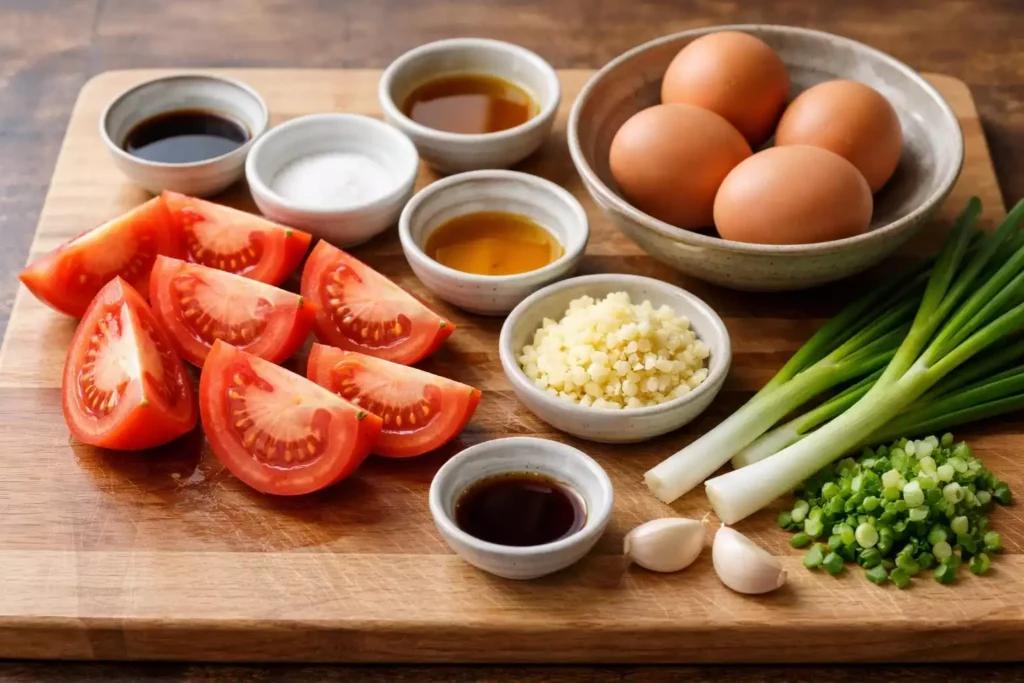
For Chinese Tomato Egg Stir Fry (serves 2–3)
- 4 large eggs
- 3 medium ripe tomatoes (about 400g), cut into wedges
- 3 tbsp neutral oil, divided
- 3 cloves garlic, minced
- 1 tsp sugar
- 1 tsp soy sauce
- 1 tsp sesame oil
- Salt to taste
- 2 spring onions, chopped, for garnish
How to Make It
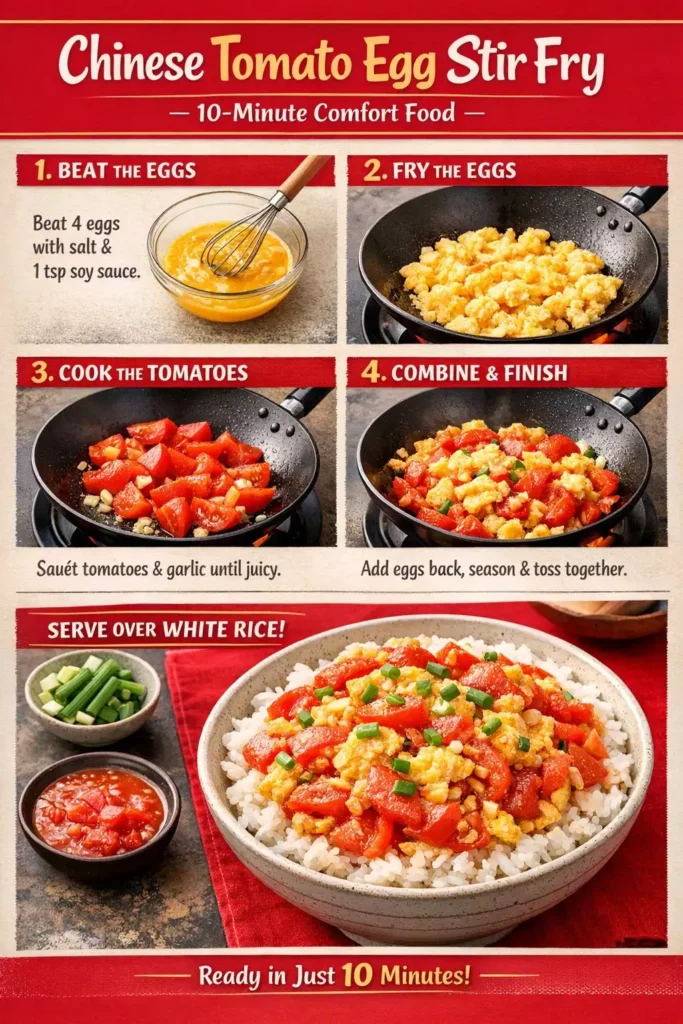
1
1Prepare the Eggs
Beat the eggs well with a pinch of salt and a teaspoon of the soy sauce. The salt pre-seasons the eggs and the soy sauce adds a subtle depth. Beat until fully combined with visible bubbles — a well-beaten egg scrambles lighter in the wok.
2
2Fry the Eggs
Heat 2 tablespoons of oil in a wok over high heat until shimmering and nearly smoking. Pour in the eggs all at once. Do not stir immediately — let the eggs puff and set at the bottom for 10–15 seconds. Then use a spatula to push and fold the eggs into large, fluffy curds. Remove when still slightly underdone (they will continue cooking). Remove from the wok and set aside.
3
3Cook the Tomatoes
Add the remaining tablespoon of oil to the same wok. Add the garlic and stir for 30 seconds. Add the tomato wedges and cook over high heat for 2–3 minutes until they begin to break down and release their juice. Add the sugar. The tomatoes should be soft and the juices creating a light sauce in the wok.
4
4Combine and Finish
Return the eggs to the wok. Gently fold together with the tomatoes — the eggs should absorb the tomato juice and become coated in the sauce. Cook for 30 more seconds over high heat. Season with salt and finish with sesame oil. Scatter spring onions over the top. Serve immediately over steamed rice.
Tomato Egg Tips
Do not overcook the eggs. Remove them from the wok while still slightly underdone. They will finish cooking when you add them back to the tomatoes. Overcooked eggs are rubbery and the texture is lost. Underdone-then-returned-to-wok is the correct technique.
Oil quantity matters. Chinese tomato egg stir fry traditionally uses more oil than Western scrambled eggs. The oil is what creates the puffed, slightly crispy-edged egg texture that makes this dish distinctive. This is not the place to reduce fat — use the full amount.
Ripe tomatoes are non-negotiable. Underripe or out-of-season tomatoes do not have enough juice to create the sauce. In winter, substitute with 400ml canned diced tomatoes in juice and drain slightly before using. The flavor will be different but still very good.
The sugar is not optional. A small amount of sugar rounds the acidity of the tomatoes and creates a sauce that is balanced rather than sharp. Skip it and the dish is noticeably less finished. One teaspoon balances the whole dish.
Serving Chinese Tomato Egg Stir Fry
Over white rice is the only correct answer. The sauce soaks into the rice and every spoonful is a combination of fluffy egg, jammy tomato, and rice. Simple, comforting, complete. Pair with a simple vegetable stir fry if you want more dishes, or eat it on its own as a one-bowl comfort meal. Egg drop soup as a starter makes this a complete, effortless Chinese dinner.
Variations Worth Trying
Spicy version. Add a tablespoon of doubanjiang (Szechuan chili bean paste) with the garlic for a deeply savory, slightly spicy version that adds a whole layer of complexity. Popular in Szechuan-influenced versions of this classic dish.
With scallions fried with the eggs. Add sliced spring onions to the hot oil before the eggs for a more aromatic base. The scallions char slightly and add a smoky-sweet note to the eggs.
With cherry tomatoes. Use halved cherry tomatoes for a sweeter, less juicy version. Cherry tomatoes are less likely to break down completely, giving the dish more structure and more tomato presence in every bite.
Storage
This dish is genuinely best eaten immediately — the eggs continue to firm up and the tomatoes release more juice as it sits. Leftovers reheat adequately in a hot pan for 2 minutes but are noticeably less good than fresh. For a 10-minute dish, just make it fresh every time.
FAQ
Is this a healthy dish?
Reasonable question. Four eggs, three tomatoes, minimal added sugar. The main caloric contribution is the oil used for frying — about 3 tablespoons in total. Per portion it is a well-balanced meal of protein (eggs), vegetables (tomatoes), carbohydrates (rice), and healthy fats. By the standards of quick weeknight cooking, it is excellent nutrition with minimal processing.
Can I add other vegetables?
Yes, though purists would object. Onion, bell pepper, or zucchini can be sautéed with the tomatoes for a more substantial dish. Keep additions minimal so the egg-tomato combination remains the star. This dish’s beauty is in its simplicity; adding too much dilutes that.
What makes Chinese scrambled eggs different from Western scrambled eggs?
Technique and temperature. Western scrambled eggs are made low and slow for a creamy, barely set result. Chinese scrambled eggs (chao dan) are made high and fast, in generous oil, producing eggs that puff up at the edges and form large, fluffy, slightly crispy-edged curds with a completely different texture. Neither is better; they are different techniques for different purposes.
Kasia Polish Mom
Polish-born, Chicago-raised, feeding a family of six with babcia’s recipes and a global pantry. I grew up folding pierogi at my grandmother’s kitchen table and never stopped — 15+ years of cooking from scratch, one Sunday dinner at a time. Everything here is tested on four kids, a hungry husband, and the memory of a woman who never measured anything but always got it right.