






Kasia Polish Mom
Polish-born, Chicago-raised, feeding a family of six with babcia’s recipes and a global pantry. I grew up folding pierogi at my grandmother’s kitchen table and never stopped — 15+ years of cooking from scratch, one Sunday dinner at a time. Everything here is tested on four kids, a hungry husband, and the memory of a woman who never measured anything but always got it right.
Chrzan — Fresh Polish Horseradish That’ll Clear Your Sinuses
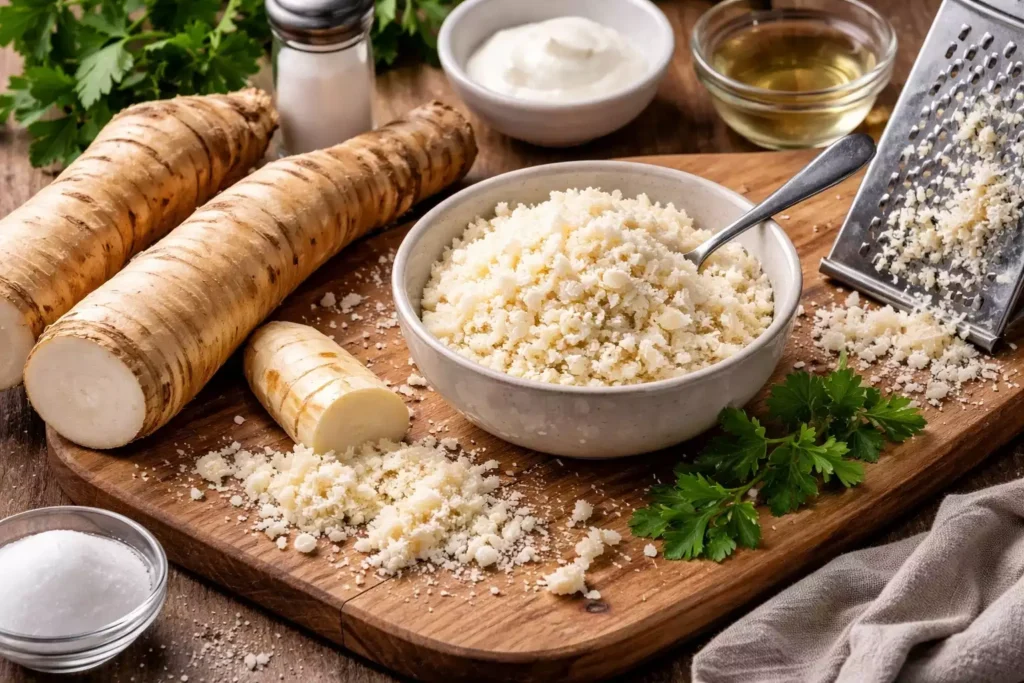
You know Easter is close when your eyes burn from grating horseradish. That smell — sharp, volatile, almost medicinal — was the annual signal in my babcia’s kitchen that the holiday had truly arrived. We would all be drafted into horseradish-grating duty at some point, and we would all lose about 45 seconds of our eyesight in the process. Nobody complained. The chrzan was worth it.
Fresh Polish horseradish sauce is one of the simplest things on the Easter table and one of the most irreplaceable. There is no prepared horseradish from a jar that replicates what you get from a fresh root grated ten minutes before serving. The intensity, the heat, the almost sweet earthiness underneath the burn — these things dissipate with processing and preservation. Fresh chrzan is alive in a way that jarred chrzan is not.
This recipe is the Polish Easter standard: freshly grated horseradish root, a little white wine vinegar to stop the enzymatic reaction and preserve the bite, a pinch of sugar to round it out, and some cream or sour cream for the milder version. It takes fifteen minutes. It makes everything it touches taste more like Easter.
Why Fresh Chrzan Is Worth the Tears
Horseradish gets its heat from isothiocyanates — volatile compounds released when the cells of the root are damaged by grating. These compounds start breaking down immediately when exposed to air, which is why freshly grated horseradish is dramatically more potent than anything that has been sitting in a jar for six months. The acid from vinegar slows this breakdown, locking in the bite at the intensity you choose.
Grating fine gives you a finer texture and more surface area, releasing more heat. Grating coarse gives you a crunchier texture with less immediate intensity. Both are valid — my babcia went coarse. I go fine. This is an ongoing disagreement.
Ingredients
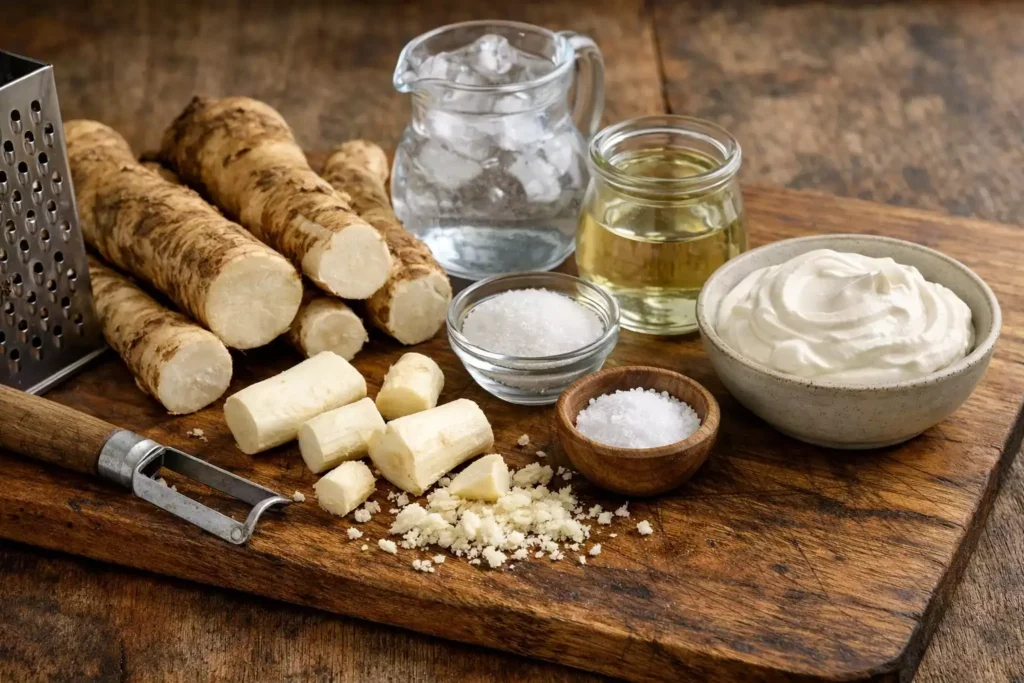
For Classic Polish Chrzan (Vinegar Version)
- 200g (7oz) fresh horseradish root, peeled
- 2 tbsp white wine vinegar (start with 1 tbsp and adjust)
- 1 tsp sugar
- ½ tsp salt
- 2–3 tbsp ice-cold water (to adjust consistency)
For Creamy Chrzan (with Sour Cream)
- All ingredients above
- 3 tbsp thick sour cream or crème fraîche
How to Make It

1
1Source and Prepare the Root
Fresh horseradish root is sold at Polish delis, some Asian grocery stores, and farmers’ markets in spring. It looks like a large, gnarled beige root — rough skin, firm flesh. Peel it with a vegetable peeler, working quickly because the longer it is exposed to air, the more pungent the vapor. Cut off any soft spots or green patches. Roughly chop into manageable pieces.
2
2Grate (With Warning)
Open a window. Seriously. The volatile compounds released by grating fresh horseradish are significantly stronger than cutting onions and will make your eyes and nose react dramatically. Grate the horseradish on the fine side of a box grater, or pulse in a food processor (which contains the vapors better). Work in small batches and step back frequently. This is not a hardship — it is a rite of passage.
3
3Season and Adjust
Transfer the grated horseradish to a bowl immediately. Add the vinegar, sugar, and salt and mix thoroughly. The vinegar stops the oxidation and fixes the level of heat — more vinegar means milder, less heat; less vinegar means more punch. Taste carefully (the fumes are strong). Adjust salt, sugar, and vinegar. Add cold water a tablespoon at a time if you want a slightly looser consistency.
4
4For Creamy Chrzan
Stir in the sour cream or crème fraîche until well combined. The cream will temper the heat significantly and produce a smoother, more mild sauce. This is the version for guests who cannot handle the full hit of undiluted fresh horseradish. Both versions belong on the Easter table.
Chrzan Tips (From Someone Who Has Cried Making This Many Times)
Work fast and outdoors if possible. Grate horseradish quickly and get the vinegar on it immediately. Every minute of delay means more volatile compounds escaping into the air (and your eyes) and less ending up in the sauce.
Food processor trick. Pulse the rough-chopped horseradish in a food processor with the vinegar already added. The lid contains most of the vapors, and the vinegar starts fixing the heat compounds before you even open the machine. Keep your face back when lifting the lid.
Make it the day before. Freshly made chrzan is intensely hot. After 12 hours in the fridge the flavors settle and mellow slightly without losing their character. Easter morning chrzan made the night before is genuinely better than chrzan made the morning of.
Protective eyewear is not embarrassing. My babcia wore her swimming goggles when grating large batches. She was right. Nobody laughs at the person whose eyes are not burning.
Serving Chrzan at Easter
Chrzan is not a background condiment at the Polish Easter table — it is front and center, in its own small bowl, next to the sausage, the ham, and the eggs. It goes with everything. A smear of chrzan on szynka wielkanocna. A teaspoon of chrzan stirred into żurek. A spoonful of chrzan alongside ćwikła on the cold cuts platter. The horseradish is the thing that cuts through the richness of everything else and reminds you that you are eating, not just consuming.
A small piece of chrzan also traditionally goes into the święconka blessed Easter basket, symbolizing the bitterness and hardship that has been endured and overcome.
Variations Worth Trying
Chrzan z ćwikłą. Mix freshly grated horseradish with cooked, grated beetroot for the classic ćwikła relish. The combination is visually stunning (vivid magenta), naturally sweet from the beets, and fiery from the horseradish. One of the best condiments in Polish cuisine.
Chrzan z jabłkiem. Grate a tart apple directly into the horseradish along with the vinegar. Apple horseradish is a German-Austrian tradition that has crossed into some Polish regions. The apple’s sweetness and acidity balance the heat beautifully, producing a milder sauce that is excellent with fatty pork.
Chrzan z śmietanką. Whip heavy cream to soft peaks and fold into the finished horseradish for a light, airy version. This is the elegant dinner party presentation — a cloud of white horseradish cream on the plate rather than a dense relish.
Storage and Reheating
Fresh chrzan keeps in a sealed glass jar in the refrigerator for up to 2 weeks. The heat gradually diminishes over time as the isothiocyanates break down — which is not necessarily bad, just different. The creamy version keeps for up to 5 days. Do not freeze chrzan — freezing and thawing destroys the texture entirely and makes it watery. Make fresh batches as needed; the process takes only 15 minutes.
FAQ
Where can I find fresh horseradish root?
Polish and Eastern European delis almost always stock it, especially around Easter and Passover when demand is highest. Some farmers’ markets and specialty grocery stores also carry it seasonally. Asian grocery stores sometimes stock it. If you absolutely cannot find it fresh, prepared pure white horseradish (no cream, no additives) from a Polish deli is the next best option — just check the label for minimal ingredients.
Can I use prepared horseradish from a jar instead of fresh?
You can — drain it if it is very wet, and skip the vinegar (it is already acidified). The flavor will be notably milder and less complex than fresh. For everyday use, prepared horseradish is a perfectly good substitution. For Easter, where chrzan is a centerpiece condiment, the fresh version is worth the effort.
How hot is fresh Polish horseradish compared to wasabi?
They have similar chemistry — both produce allyl isothiocyanates that trigger the same nasal burn. Fresh-grated horseradish is generally hotter than commercially prepared wasabi (which is often mostly horseradish anyway — pure wasabi is rare and expensive). Both heat types are sharp and nasal rather than lingering tongue-burn like chili. The heat dissipates quickly, which is why you keep reaching for more.

Kasia Polish Mom
Polish-born, Chicago-raised, feeding a family of six with babcia’s recipes and a global pantry. I grew up folding pierogi at my grandmother’s kitchen table and never stopped — 15+ years of cooking from scratch, one Sunday dinner at a time. Everything here is tested on four kids, a hungry husband, and the memory of a woman who never measured anything but always got it right.