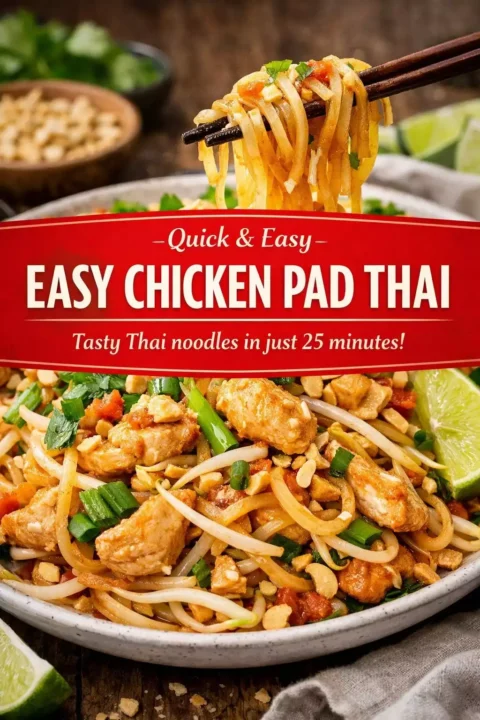
Easy Chicken Pad Thai
I ordered pad thai every Friday for a year before I decided to crack the code at home. Twelve attempts, three brands of fish sauce, and one smoke alarm incident later — I got it.
Ingredients
For the Sauce
- 3 tablespoons fish sauce
- 2 tablespoons brown sugar
- 1 tablespoon rice vinegar substitute for tamarind
- 1 tablespoon soy sauce
- 1 tablespoon sriracha adjust to taste
- Juice of 1 lime
For the Pad Thai
- 8 oz rice noodles 225g; flat, about 3mm wide
- 2 chicken breasts, sliced thin
- 2 eggs
- 3 cloves garlic, minced
- 1 cup bean sprouts
- 3 green onions, sliced
- 1/4 cup crushed peanuts
- 2 tablespoons vegetable oil
- Fresh cilantro and lime wedges for serving
Method
Soak the Noodles
-
Place the rice noodles in a large bowl and cover with room temperature water. Soak for 30 minutes — they should be flexible but still slightly firm. NOT soft. They’ll finish cooking in the pan. If they’re fully soft before hitting the wok, they’ll turn to mush. I learned this the hard way (attempt #3) and now I set a timer because my attention span during dinner prep is… compromised by four kids.
Mix the Sauce
-
Whisk all sauce ingredients together. Taste it — it should be a balance of salty (fish sauce), sweet (sugar), sour (vinegar/lime), and spicy (sriracha). If any one flavour dominates, adjust. This sauce is the whole personality of the dish. Get it right and everything else falls into place.
Cook
-
Heat oil in a large skillet or wok over HIGH heat. Cook the chicken strips 3-4 minutes until golden. Push to one side. Crack the eggs into the empty side and scramble until just set. Add the garlic — 30 seconds, no more. Add the drained noodles and the sauce. Toss everything together with tongs for 2-3 minutes until the noodles absorb the sauce and everything is coated. Add bean sprouts and green onions in the last 30 seconds — they should stay crisp.
Serve
-
Pile onto plates. Top with crushed peanuts, fresh cilantro, and a lime wedge for squeezing. Eat immediately. Pad thai waits for no one — the noodles continue absorbing sauce as they sit, so fresh from the pan is peak performance.


Kasia Polish Mom
Polish-born, Chicago-raised, feeding a family of six with babcia’s recipes and a global pantry. I grew up folding pierogi at my grandmother’s kitchen table and never stopped — 15+ years of cooking from scratch, one Sunday dinner at a time. Everything here is tested on four kids, a hungry husband, and the memory of a woman who never measured anything but always got it right.
Easy Chicken Pad Thai — Better Than Takeout, 25 Minutes
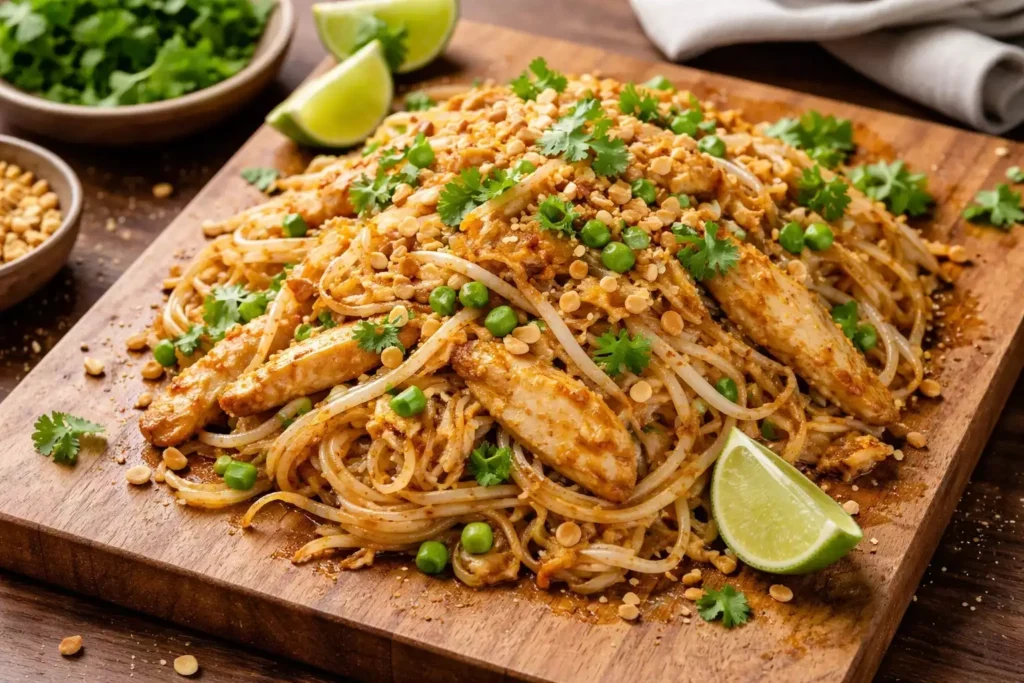
I ordered pad thai every Friday for a year before I decided to crack the code at home. Twelve attempts, three brands of fish sauce, and one smoke alarm incident later — I got it.
Pad Thai is one of those dishes that seems simple in a restaurant but is surprisingly fiddly at home. The sauce balance has to be exactly right — too sweet and it tastes like candy, too salty and it’s aggressive, not enough tamarind and it’s flat. The noodles need to be soaked just long enough that they’re pliable but not mushy. And the cooking happens fast over high heat, which means everything has to be prepped before you turn on the stove. The first time I tried, I spent 20 minutes mid-cook frantically chopping peanuts while my noodles stuck to the wok and my smoke alarm sang the song of its people. Lesson learned: prep everything first, cook second.
This version is streamlined for a home kitchen. No wok required (a large skillet works fine), no hunting for tamarind paste (a simple substitution handles it), and the sauce comes together in 2 minutes from pantry ingredients. It’s not 100% authentic Thai street food — a Thai grandmother would have notes — but it’s better than takeout, cheaper than delivery, and my family requests it every Friday, which means it’s doing something right.
Ingredients
For the Sauce
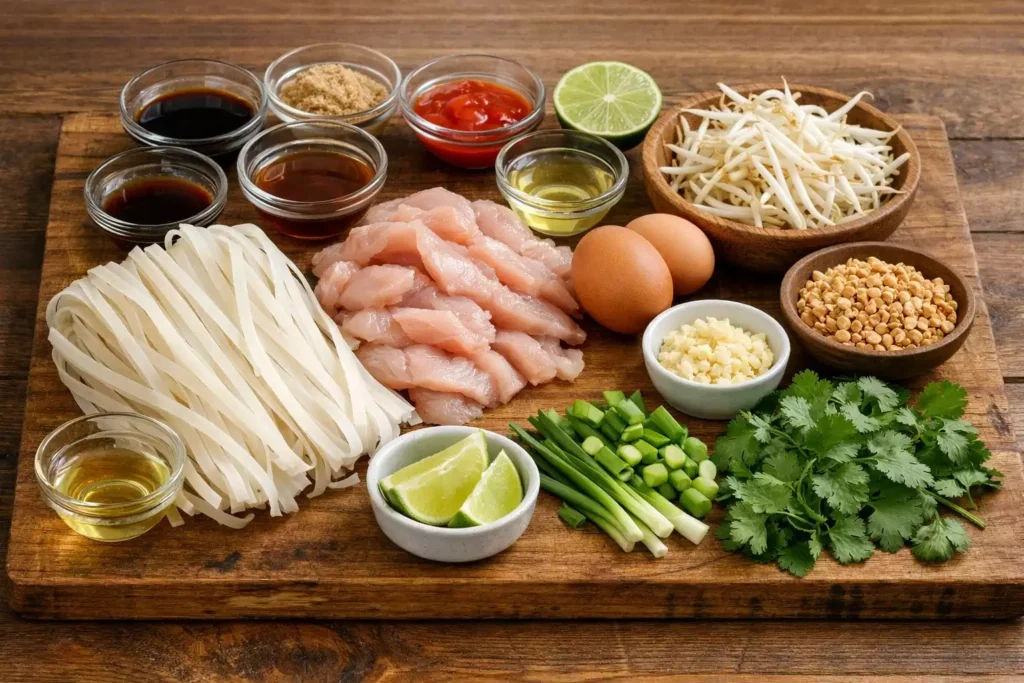
- • 3 tablespoons fish sauce
- • 2 tablespoons brown sugar
- • 1 tablespoon rice vinegar (substitute for tamarind)
- • 1 tablespoon soy sauce
- • 1 tablespoon sriracha (adjust to taste)
- • Juice of 1 lime
For the Pad Thai
- • 8 oz (225g) rice noodles (flat, about 3mm wide)
- • 2 chicken breasts, sliced thin
- • 2 eggs
- • 3 cloves garlic, minced
- • 1 cup bean sprouts
- • 3 green onions, sliced
- • 1/4 cup crushed peanuts
- • 2 tablespoons vegetable oil
- • Fresh cilantro and lime wedges for serving
How to Make It
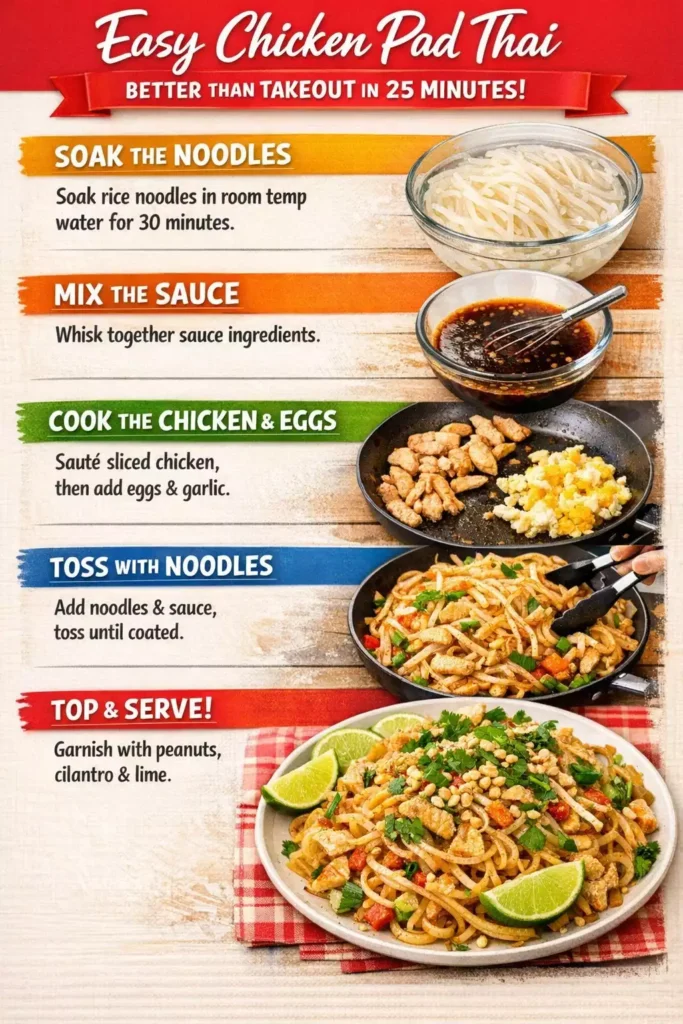
Soak the Noodles
Place the rice noodles in a large bowl and cover with room temperature water. Soak for 30 minutes — they should be flexible but still slightly firm. NOT soft. They’ll finish cooking in the pan. If they’re fully soft before hitting the wok, they’ll turn to mush. I learned this the hard way (attempt #3) and now I set a timer because my attention span during dinner prep is… compromised by four kids.
Mix the Sauce
Whisk all sauce ingredients together. Taste it — it should be a balance of salty (fish sauce), sweet (sugar), sour (vinegar/lime), and spicy (sriracha). If any one flavour dominates, adjust. This sauce is the whole personality of the dish. Get it right and everything else falls into place.
Cook
Heat oil in a large skillet or wok over HIGH heat. Cook the chicken strips 3-4 minutes until golden. Push to one side. Crack the eggs into the empty side and scramble until just set. Add the garlic — 30 seconds, no more. Add the drained noodles and the sauce. Toss everything together with tongs for 2-3 minutes until the noodles absorb the sauce and everything is coated. Add bean sprouts and green onions in the last 30 seconds — they should stay crisp.
Serve
Pile onto plates. Top with crushed peanuts, fresh cilantro, and a lime wedge for squeezing. Eat immediately. Pad thai waits for no one — the noodles continue absorbing sauce as they sit, so fresh from the pan is peak performance.
The Sauce Breakdown
Authentic pad thai sauce uses tamarind paste, palm sugar, and fish sauce. If you have those — use them. But for a weeknight dinner, this shortcut sauce gets 90% of the way there with ingredients you probably already own. The rice vinegar mimics tamarind’s tanginess, brown sugar stands in for palm sugar, and fish sauce is fish sauce — no substitute for that (it smells terrible in the bottle and tastes incredible in the dish — trust me). The sriracha isn’t traditional but adds a clean heat that works beautifully.
Tips
💡 Pro Tips
✓ Room temperature soak, not hot water. Hot water makes rice noodles fall apart. Room temperature for 30 minutes gives you the right texture.
✓ Prep EVERYTHING before cooking. Pad thai cooking takes about 5 minutes total. There’s no time to chop once you start. Mise en place is essential.
✓ High heat. Wok hei (that charred, smoky flavour) comes from high heat. A home stove can’t fully replicate it, but cranking the heat as high as possible gets you closer.
✓ Don’t overcook the noodles. They should be slightly chewy, not soft and mushy. Al dente for rice noodles is the goal.
Variations
• Shrimp pad thai: Replace chicken with large shrimp. Cook 1-2 minutes per side — shrimp overcook fast.
• Vegetarian: Skip the chicken, add extra-firm tofu (pressed and cubed). Use soy sauce instead of fish sauce.
• Spicier: Add more sriracha and fresh Thai chillies. Or, the Polish Mom move: a spoonful of gochujang for Korean-Thai fusion heat.
How to Store
Leftovers keep 2-3 days but noodles absorb sauce and soften. Add a splash of soy sauce and lime juice when reheating in a hot skillet. Not great for freezing. Pad thai is best fresh.
Frequently Asked Questions
What are rice noodles?
Flat, translucent noodles made from rice flour. They’re gluten-free and come dried in the Asian aisle. Look for flat ones about 3mm wide — labelled “pad thai noodles” on some packages. Don’t use rice vermicelli (too thin) or fresh rice noodles (different texture).
Can my kids eat this?
Skip the sriracha and it’s completely mild. My younger two eat it without any chilli at all — just the sweet-salty sauce with chicken and noodles. I add the heat to individual portions at the table. The build-your-own-heat approach has served this family well across many cuisines.
The Friday Night Tradition
Pad Thai has officially replaced pizza as our Friday night dinner. It happened gradually — first it was once a month, then twice, then my kids started asking for it specifically on Fridays, and now it’s as locked in as creamy tomato garlic pasta on Tuesdays. The ritual goes like this: I prep everything during the afternoon while the house is quiet (or as quiet as four kids allow), the cooking takes exactly 8 minutes of focused wok time, and everyone eats out of bowls on the couch while watching a movie. It’s our decompression meal after a long school and work week. My babcia would probably not approve of eating on the couch, but she never had to survive a Friday with four kids and a to-do list that never ends. Couch dinners are valid. Na zdrowie (that’s “cheers” in Polish) to the weekend.
More From Polish Mom
Marry Me Chicken · Creamy Tuscan Chicken · Spicy Korean Chicken Stir Fry (Gochujang) · Chicken Katsu Curry
Kasia Polish Mom
Polish-born, Chicago-raised, feeding a family of six with babcia’s recipes and a global pantry. I grew up folding pierogi at my grandmother’s kitchen table and never stopped — 15+ years of cooking from scratch, one Sunday dinner at a time. Everything here is tested on four kids, a hungry husband, and the memory of a woman who never measured anything but always got it right.