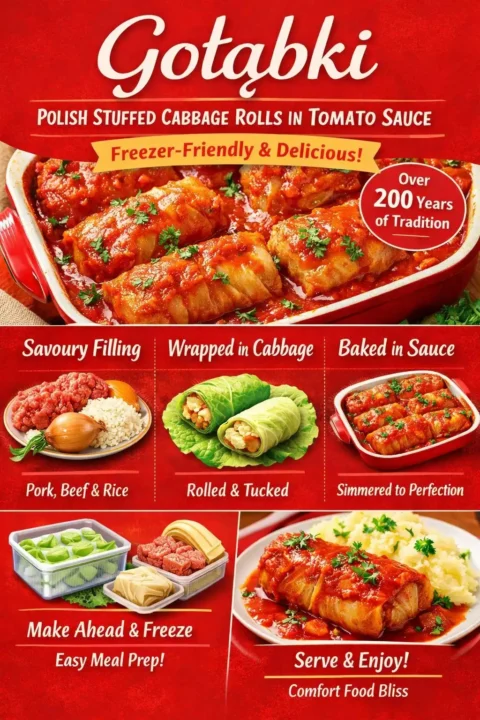
Gołąbki (Stuffed Cabbage Rolls)
Gołąbki are proof that some of the world’s best food involves wrapping something delicious inside something else delicious, then baking it in sauce. That’s the whole concept. And it’s been working for over two hundred years.
Ingredients
For the Cabbage
- 1 large head of green cabbage choose one with loose, large leaves
For the Filling
- 1 pound ground pork 450g
- ½ pound ground beef 225g
- 1 cup cooked white rice cook it to about 75% done — it’ll finish in the oven
- 1 medium onion, finely diced and sautéed until soft
- 2 garlic cloves, minced
- 1 large egg
- 1 teaspoon salt
- ½ teaspoon freshly ground black pepper
- ½ teaspoon dried marjoram
For the Tomato Sauce
- 2 cans crushed tomatoes or passata 400g each
- 1 tablespoon tomato paste
- 1 tablespoon sugar balances the acidity
- 1 tablespoon butter
- Salt and pepper to taste
Method
Step 1 — Prepare the Cabbage Leaves
-
This is the trickiest part of the whole recipe. You need soft, pliable leaves that won’t crack when you roll them.
-
Cut out the core of the cabbage using a sharp knife. Place the whole head, core-side down, in a large pot of boiling salted water. As the outer leaves start to soften and loosen (after about 3-5 minutes), carefully peel them off with tongs. Return the remaining head to the water and repeat until you’ve removed enough large leaves — you’ll need about 12-15.
-
Lay the leaves on a cutting board and use a paring knife to shave down the thick central rib on each leaf. Don’t cut it out completely — just make it thinner so the leaf bends easily without cracking.
-
Freezer shortcut: Freeze the whole cabbage overnight, then thaw it completely. The leaves become perfectly soft and pliable without any boiling. This is my preferred method — it saves time and the leaves are much easier to work with.
Step 2 — Make the Filling
-
In a large bowl, combine the ground pork, ground beef, partially cooked rice, sautéed onion, garlic, egg, salt, pepper, and marjoram. Mix with your hands until everything is evenly combined. Don’t overmix — you want it blended but not packed tight like a meatloaf.
Step 3 — Roll the Gołąbki
-
Place a cabbage leaf on a cutting board with the stem end facing you. Put about 2-3 tablespoons of filling in the centre of the lower third of the leaf. Fold the bottom edge over the filling, then fold in both sides. Roll it up tightly, like a burrito. The roll should be snug but not bursting.
-
Place each roll seam-side down in a large baking dish. Pack them closely together so they support each other and don’t unroll during baking.
-
My tip: Line the bottom of the baking dish with the outer cabbage leaves that were too torn or small to roll. This prevents the bottom rolls from burning and adds an extra layer of flavour.
Step 4 — Make the Sauce and Bake
-
In a saucepan, combine the crushed tomatoes, tomato paste, sugar, and butter. Bring to a simmer and cook for 5 minutes. Season with salt and pepper.
-
Pour the sauce over the gołąbki, making sure they’re mostly covered. Cover the baking dish tightly with foil.
-
Bake at 175°C / 350°F for 1 hour covered. Then remove the foil and bake for another 15-20 minutes until the sauce bubbles and the tops begin to brown slightly.
Step 5 — Rest and Serve
-
Let the gołąbki rest for 10 minutes before serving. Like bigos, they taste even better the next day after the flavours have melded. Serve with mashed potatoes and a generous spoonful of sauce over each roll.

Kasia Polish Mom
Polish-born, Chicago-raised, feeding a family of six with babcia’s recipes and a global pantry. I grew up folding pierogi at my grandmother’s kitchen table and never stopped — 15+ years of cooking from scratch, one Sunday dinner at a time. Everything here is tested on four kids, a hungry husband, and the memory of a woman who never measured anything but always got it right.
Gołąbki — Polish Stuffed Cabbage Rolls in Tomato Sauce (Freezer-Friendly)

Gołąbki are proof that some of the world’s best food involves wrapping something delicious inside something else delicious, then baking it in sauce. That’s the whole concept. And it’s been working for over two hundred years.
Gołąbki (pronounced “goh-WOMP-kee”) are Polish stuffed cabbage rolls — soft cabbage leaves wrapped around a savoury filling of ground meat and rice, then baked in tomato sauce until tender and bubbling. The name literally translates to “little pigeons” or “little doves,” which sounds charming until you learn that wealthy Poles used to actually stuff pigeons with filling and wrap them in cabbage. Regular people couldn’t afford pigeons, so they skipped the bird and kept the cabbage. Smart move.
These are one of the most requested dishes in our house. My boys call them “cabbage burritos,” which — honestly, not wrong. They’re the kind of food that takes a bit of effort to assemble, but you can make a massive batch, freeze half, and have weeknight dinners sorted for a month. That’s exactly how I do it: one big Sunday assembly line, three weeks of easy dinners.
What Are Gołąbki?
Gołąbki are part of a global family of stuffed cabbage dishes that spans from Eastern Europe to the Middle East. Romanian sarmale use pickled cabbage leaves. Ukrainian holubtsi are nearly identical to the Polish version. Swedish kåldolmar were reportedly introduced by King Charles XII after his time in the Ottoman Empire. Everyone figured out that cabbage + filling + sauce = excellent dinner.
The Polish version likely arrived from Ukrainian cuisine (the word comes from the Ukrainian “hołubci”) in the early 19th century. Originally, the filling was meatless — buckwheat groats and potatoes — because meat was expensive. The meat-and-rice version we know today became standard as pork became more affordable. Even now, meatless gołąbki with buckwheat and mushrooms are traditional Christmas Eve fare in many Polish households, including mine.
Tomato Sauce or Mushroom Sauce?
This is the great gołąbki debate of Polish cuisine. Every family falls into one of two camps:
Team Tomato: The most popular option, especially in the US and western Poland. A simple tomato sauce made from passata or crushed tomatoes with a touch of sugar to balance acidity. This is what I grew up with and what I make at home.
Team Mushroom: More common in eastern Poland and among traditionalists. A creamy mushroom sauce made from dried forest mushrooms, flour, and cream. It’s earthy, rich, and elegant.
Both are correct. Both are delicious. I’m providing the tomato version below because it’s simpler and my kids prefer it, but I’ve included the mushroom sauce as a variation.
Ingredients You’ll Need
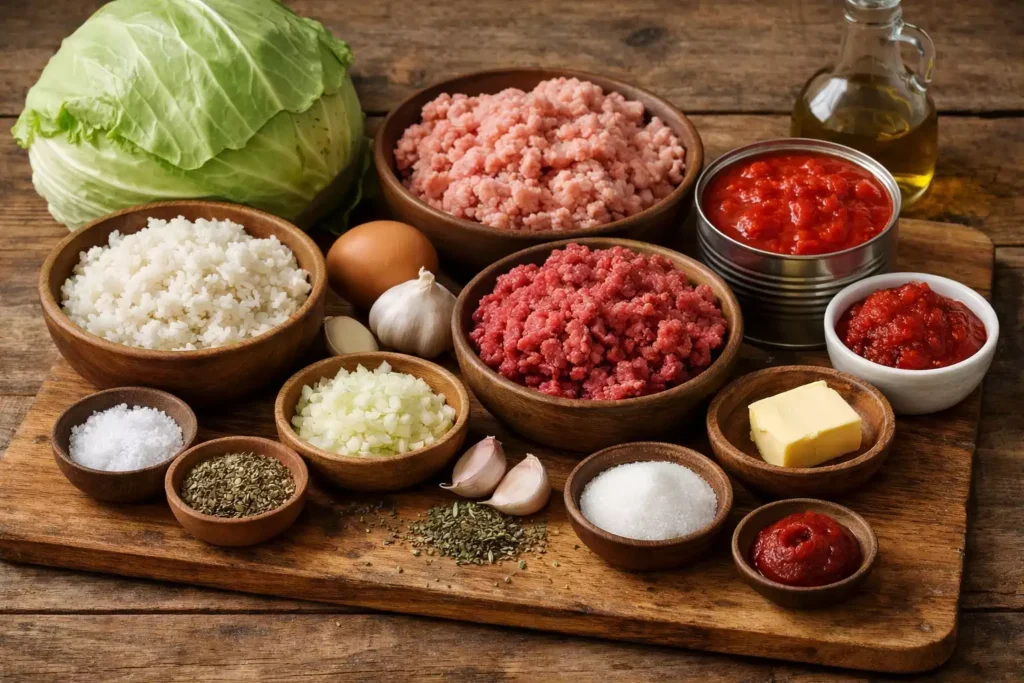
For the Cabbage
- • 1 large head of green cabbage (choose one with loose, large leaves)
For the Filling
- • 1 pound (450g) ground pork
- • ½ pound (225g) ground beef
- • 1 cup cooked white rice (cook it to about 75% done — it’ll finish in the oven)
- • 1 medium onion, finely diced and sautéed until soft
- • 2 garlic cloves, minced
- • 1 large egg
- • 1 teaspoon salt
- • ½ teaspoon freshly ground black pepper
- • ½ teaspoon dried marjoram
For the Tomato Sauce
- • 2 cans (400g each) crushed tomatoes or passata
- • 1 tablespoon tomato paste
- • 1 tablespoon sugar (balances the acidity)
- • 1 tablespoon butter
- • Salt and pepper to taste
On the meat ratio: The 2:1 pork-to-beef ratio gives the best balance of flavour and moisture. All-beef makes them too dense. All-pork can be too fatty. Some families use a three-meat blend — pork, beef, and veal — which is delicious if you can find ground veal.
How to Make Gołąbki Step by Step
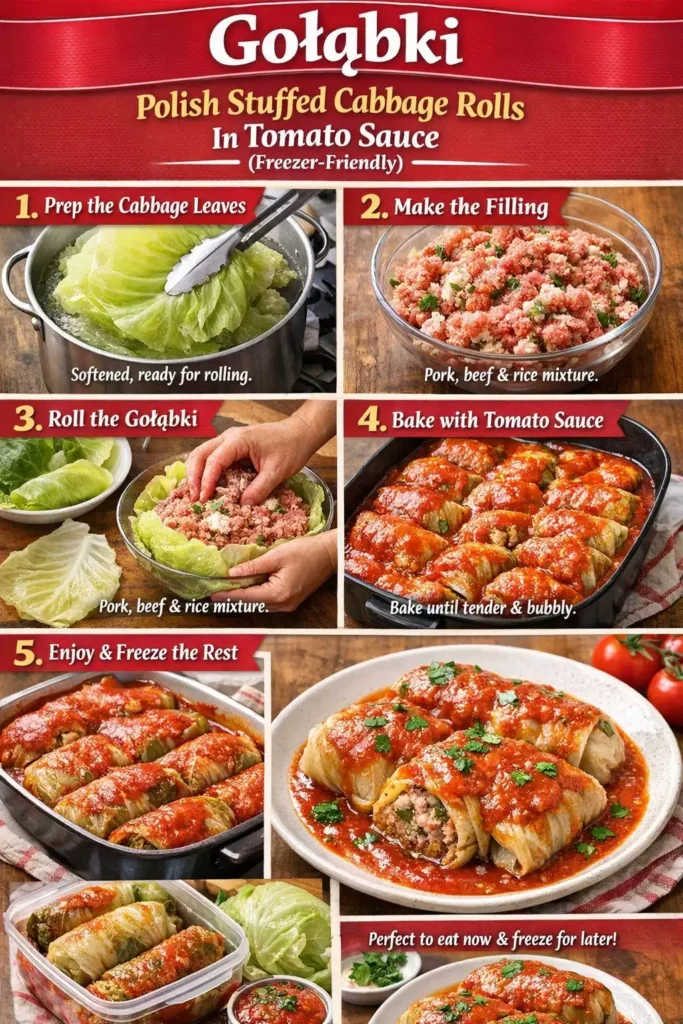
1
1Prepare the Cabbage Leaves
This is the trickiest part of the whole recipe. You need soft, pliable leaves that won’t crack when you roll them.
Cut out the core of the cabbage using a sharp knife. Place the whole head, core-side down, in a large pot of boiling salted water. As the outer leaves start to soften and loosen (after about 3-5 minutes), carefully peel them off with tongs. Return the remaining head to the water and repeat until you’ve removed enough large leaves — you’ll need about 12-15.
Lay the leaves on a cutting board and use a paring knife to shave down the thick central rib on each leaf. Don’t cut it out completely — just make it thinner so the leaf bends easily without cracking.
Freezer shortcut: Freeze the whole cabbage overnight, then thaw it completely. The leaves become perfectly soft and pliable without any boiling. This is my preferred method — it saves time and the leaves are much easier to work with.
2
2Make the Filling
In a large bowl, combine the ground pork, ground beef, partially cooked rice, sautéed onion, garlic, egg, salt, pepper, and marjoram. Mix with your hands until everything is evenly combined. Don’t overmix — you want it blended but not packed tight like a meatloaf.
3
3Roll the Gołąbki
Place a cabbage leaf on a cutting board with the stem end facing you. Put about 2-3 tablespoons of filling in the centre of the lower third of the leaf. Fold the bottom edge over the filling, then fold in both sides. Roll it up tightly, like a burrito. The roll should be snug but not bursting.
Place each roll seam-side down in a large baking dish. Pack them closely together so they support each other and don’t unroll during baking.
My tip: Line the bottom of the baking dish with the outer cabbage leaves that were too torn or small to roll. This prevents the bottom rolls from burning and adds an extra layer of flavour.
4
4Make the Sauce and Bake
In a saucepan, combine the crushed tomatoes, tomato paste, sugar, and butter. Bring to a simmer and cook for 5 minutes. Season with salt and pepper.
Pour the sauce over the gołąbki, making sure they’re mostly covered. Cover the baking dish tightly with foil.
Bake at 175°C / 350°F for 1 hour covered. Then remove the foil and bake for another 15-20 minutes until the sauce bubbles and the tops begin to brown slightly.
5
5Rest and Serve
Let the gołąbki rest for 10 minutes before serving. Like bigos, they taste even better the next day after the flavours have melded. Serve with mashed potatoes and a generous spoonful of sauce over each roll.
Mushroom Sauce Variation
Soak 1 oz dried porcini mushrooms in 1 cup boiling water for 30 minutes. Sauté a diced onion in butter until golden, add the sliced mushrooms and their strained soaking liquid. Cook for 5 minutes. Stir in 1 tablespoon flour, then add ½ cup cream. Simmer until thickened. Pour over the gołąbki and bake as above. This is the more elegant, traditional Polish way — especially for holidays.
Tips for Perfect Gołąbki
💡 Pro Tips
✓ Under-cook the rice. The rice continues to cook and absorb liquid inside the cabbage rolls. If you use fully cooked rice, it’ll turn mushy. Cook it to about 75% done.
✓ Don’t overfill. A common mistake. Overstuffed rolls burst open during baking. Two heaped tablespoons is usually enough per leaf.
✓ Pack them tight in the dish. Gołąbki that are snug together keep their shape. If there’s too much space, they unroll.
✓ Use the freezer trick for cabbage. Freezing and thawing the cabbage produces perfectly pliable leaves with zero effort.
✓ Save the tomato sauce on the side. If you’re making these ahead or freezing, store the sauce separately. Rolls stored in sauce for too long get soggy.
✓ Marjoram is the secret herb. It’s used in most traditional Polish meat dishes and adds a warm, slightly sweet flavour that complements the pork beautifully.
What to Serve With Gołąbki
• Mashed potatoes — the classic pairing. The potatoes soak up the tomato sauce beautifully.
• Crusty bread — for mopping up the last of the sauce.
• Mizeria (Polish cucumber salad) — cool and creamy against the warm, savoury rolls.
• Sour cream on the side — a dollop on top of each gołąbek adds richness.
How to Store and Freeze
Fridge: Store cooked gołąbki in an airtight container for up to 4 days. Store sauce separately if possible.
Freezer (recommended — this is a perfect freezer meal): Cool completely. Wrap individual rolls in foil or place in a single layer in a freezer bag. Freeze for up to 3 months. Thaw in the fridge overnight. Reheat in the oven at 175°C / 350°F covered with foil and fresh sauce for about 30 minutes.
Freeze before baking: You can assemble the rolls, place them in a baking dish without sauce, cover tightly with foil, and freeze. When ready to cook, add sauce to the frozen rolls and bake at 175°C / 350°F for 1.5 hours covered, then 15 minutes uncovered.
Frequently Asked Questions
Can I make gołąbki without meat?
Absolutely. The traditional Christmas Eve version uses buckwheat groats and dried mushrooms instead of meat. Cook buckwheat to 75% done, mix with sautéed onion, rehydrated sliced mushrooms, salt, and pepper. Roll and bake with mushroom sauce. It’s hearty and deeply savoury.
Why did my cabbage rolls fall apart?
Three common causes: the cabbage wasn’t soft enough (boil it longer or use the freezer method), you cut too much of the central rib out (shave it, don’t remove it), or there wasn’t enough egg in the filling to bind everything.
Can I use Savoy cabbage instead of green?
Yes — Savoy cabbage has softer, more crinkled leaves that are actually easier to roll. The flavour is milder and slightly sweeter. It’s not traditional, but it works well.
What’s the difference between gołąbki and Romanian sarmale?
Gołąbki use fresh cabbage and typically a tomato sauce. Sarmale use pickled (fermented) cabbage leaves, often include smoked pork and sometimes sour cream in the sauce. Both are stuffed cabbage traditions, but the flavour profiles are noticeably different — sarmale are tangier from the fermented cabbage.
How do I reheat gołąbki without drying them out?
Always reheat in the oven with extra sauce spooned over the top. Cover tightly with foil. 175°C / 350°F for 20-30 minutes from fridge, or 40-50 minutes from frozen. Adding a splash of water or stock under the foil creates steam that keeps them moist.
Kasia Polish Mom
Polish-born, Chicago-raised, feeding a family of six with babcia’s recipes and a global pantry. I grew up folding pierogi at my grandmother’s kitchen table and never stopped — 15+ years of cooking from scratch, one Sunday dinner at a time. Everything here is tested on four kids, a hungry husband, and the memory of a woman who never measured anything but always got it right.
Beef and Broccoli — The 20-Minute Weeknight Hero
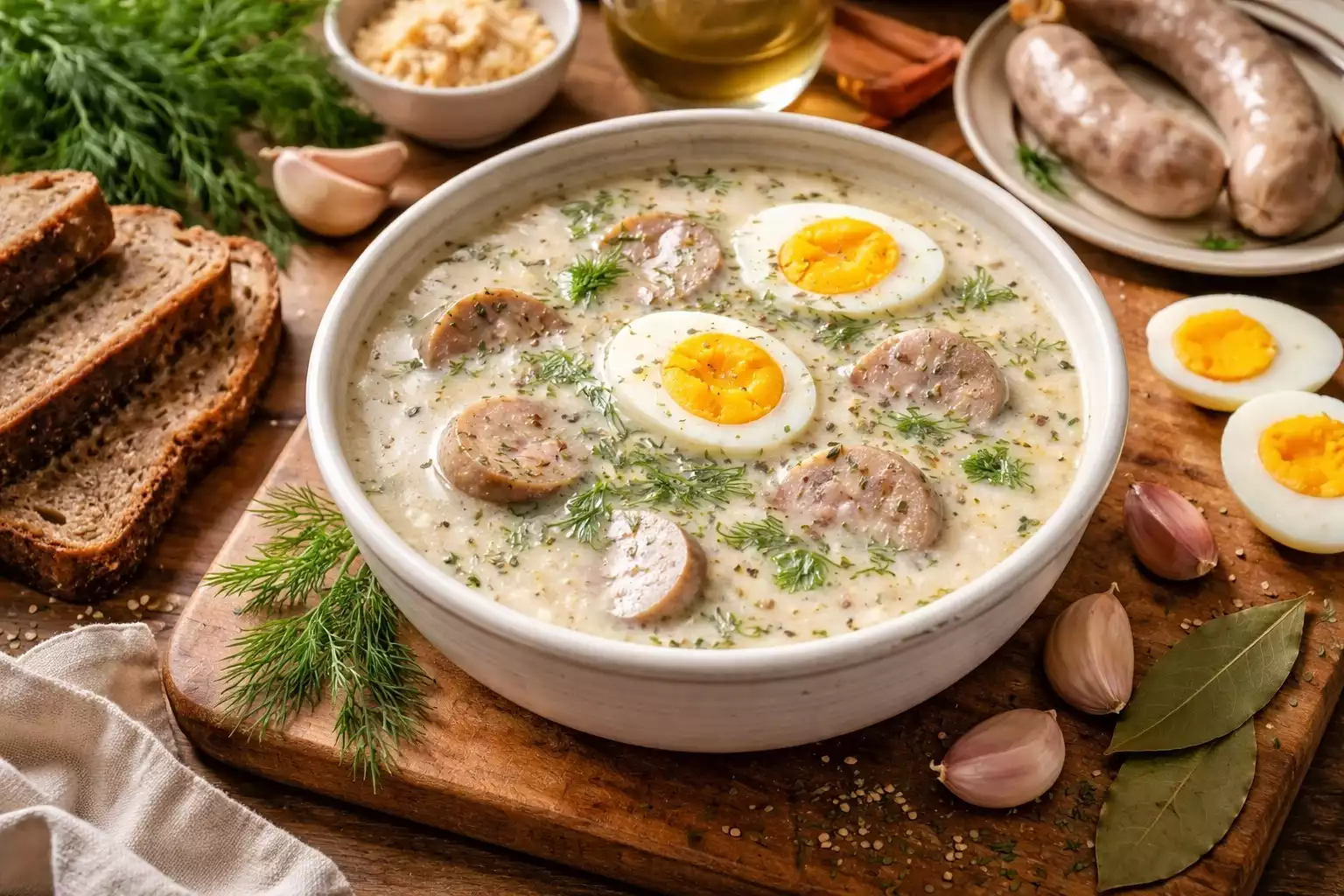
Biały Barszcz — Poland’s Other Easter Soup
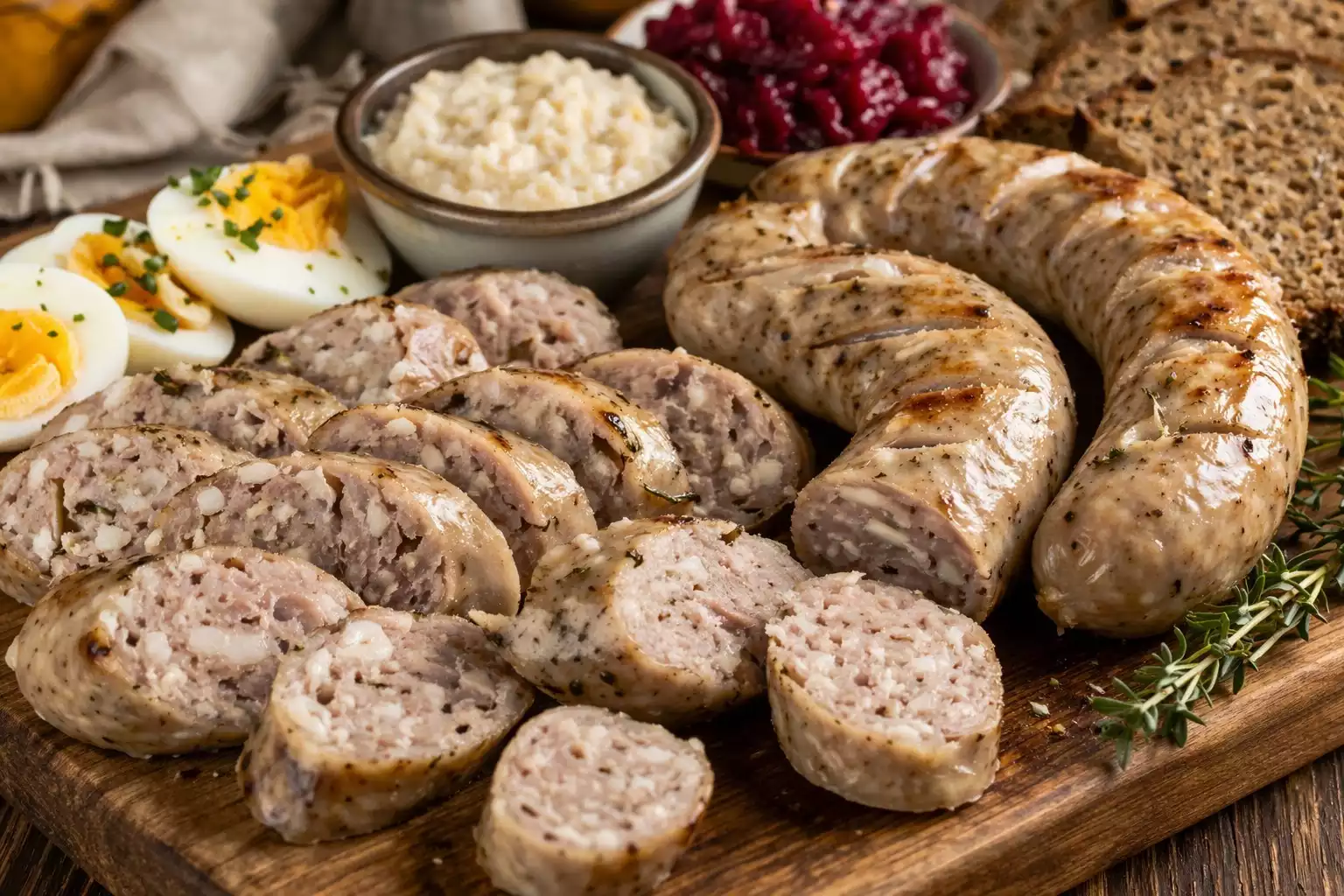
Biała Kiełbasa — The Easter Sausage Every Polish Table Needs
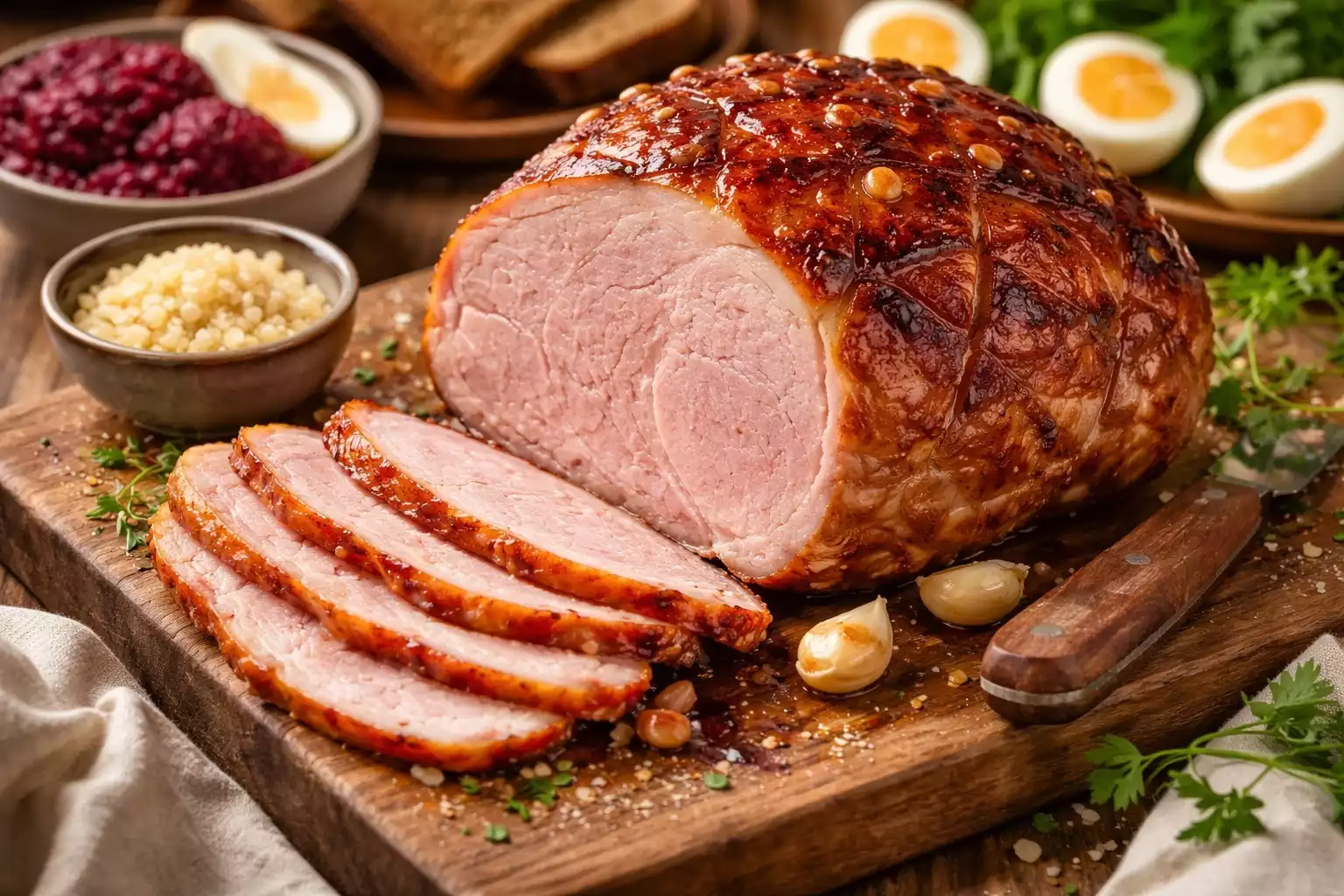
Szynka Wielkanocna — Polish Easter Ham Done Right
Babka Piaskowa — The Foolproof Polish Easter Cake