Japanese Gyoza (Pan-Fried Dumplings)
A Polish girl who makes pierogi learning to fold gyoza? I was BUILT for this.
Ingredients
For the Filling
- 1/2 pound ground pork 225g
- 2 cups Napa cabbage, finely chopped and squeezed dry
- 2 green onions, finely sliced
- 2 cloves garlic, minced
- 1 tablespoon soy sauce
- 1 teaspoon sesame oil
- 1 teaspoon fresh ginger, grated
- 1/2 teaspoon white pepper
For Assembly
- 1 package round gyoza wrappers about 40 wrappers — Asian grocery stores or the freezer section
- Small bowl of water for sealing
For Cooking
- 2 tablespoons vegetable oil
- 1/3 cup water
Dipping Sauce
- 3 tablespoons soy sauce + 1 tablespoon rice vinegar + 1 teaspoon sesame oil + chilli flakes
Method
Make the Filling
-
Finely chop the Napa cabbage, sprinkle with salt, and let it sit for 10 minutes. Squeeze out ALL the water — this is critical. Watery cabbage = watery filling = soggy, falling-apart gyoza. I learned this the same way I learned it with pierogi filling: the hard way, approximately three times. Once the cabbage is dry, mix it with the pork, green onions, garlic, soy sauce, sesame oil, ginger, and white pepper. Stir in one direction until the filling is cohesive — this helps the protein bind and creates a better texture.
Fold
-
Place a gyoza wrapper in your palm. Add about 1 teaspoon of filling to the centre. Dip your finger in water and wet the edges of the wrapper. Fold in half and pinch the centre to seal. Then create pleats along one side — 4-5 small folds from the centre outward, pressing each one against the flat back side. The pleated side faces you, the flat side faces the pan. Don’t stress about perfection — my first gyoza looked like tiny crime scenes. By my twentieth, they looked professional. By my fortieth, I could fold while having a conversation. It’s muscle memory, the same way pierogi folding became muscle memory for me as a kid.
Cook (The Crispy-Bottom Method)
-
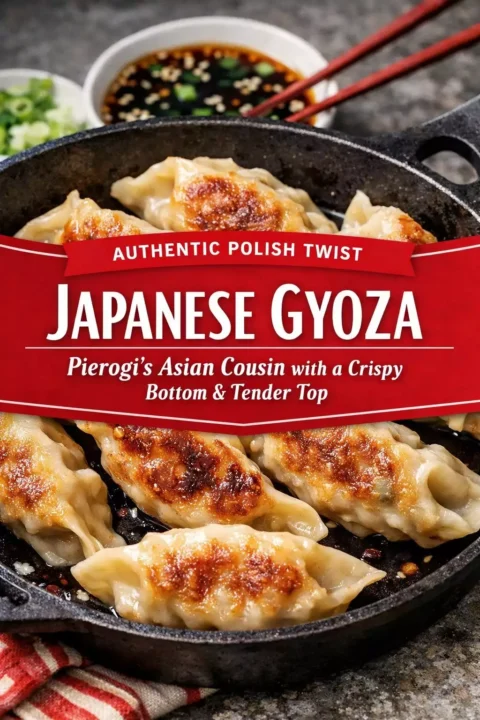
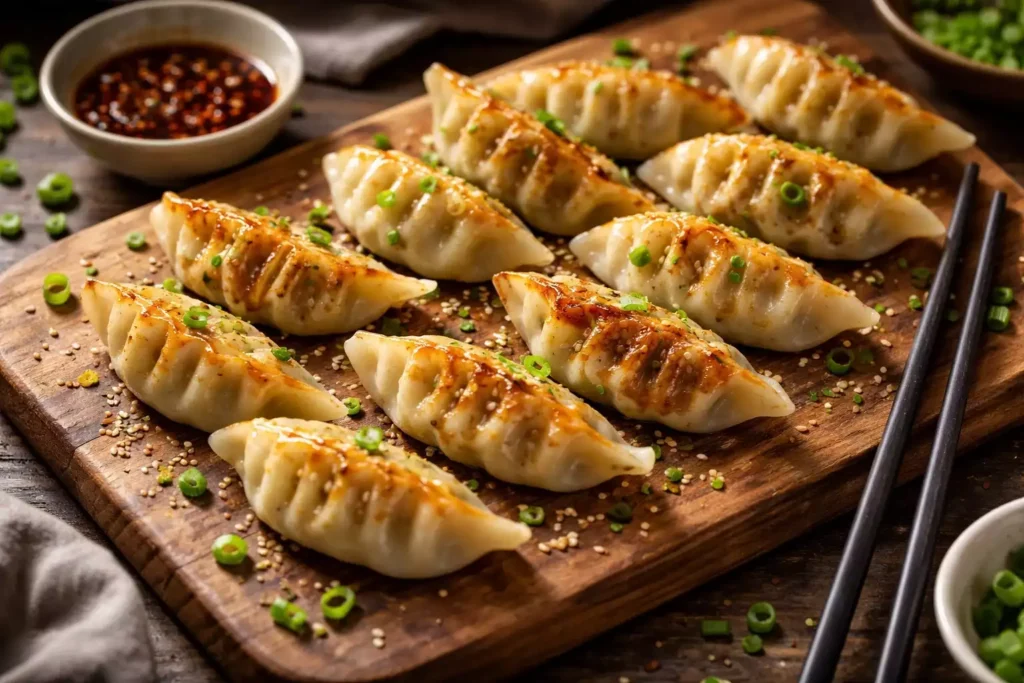
Heat oil in a non-stick skillet over medium-high heat. Place gyoza in a single layer, flat-side down. Cook 2-3 minutes without moving until the bottoms are golden brown. Add 1/3 cup water to the skillet and immediately cover with a lid. The water will sizzle and steam — this is what cooks the tops. Steam for 3-4 minutes until the water evaporates. Remove the lid and cook 1-2 more minutes until the bottoms are crispy again and the pan is dry. The result: golden, crunchy bottoms and soft, steamed tops. This contrast is everything.

Kasia Polish Mom
Polish-born, Chicago-raised, feeding a family of six with babcia’s recipes and a global pantry. I grew up folding pierogi at my grandmother’s kitchen table and never stopped — 15+ years of cooking from scratch, one Sunday dinner at a time. Everything here is tested on four kids, a hungry husband, and the memory of a woman who never measured anything but always got it right.
Japanese Gyoza — Pierogi’s Asian Cousin
A Polish girl who makes pierogi learning to fold gyoza? I was BUILT for this.
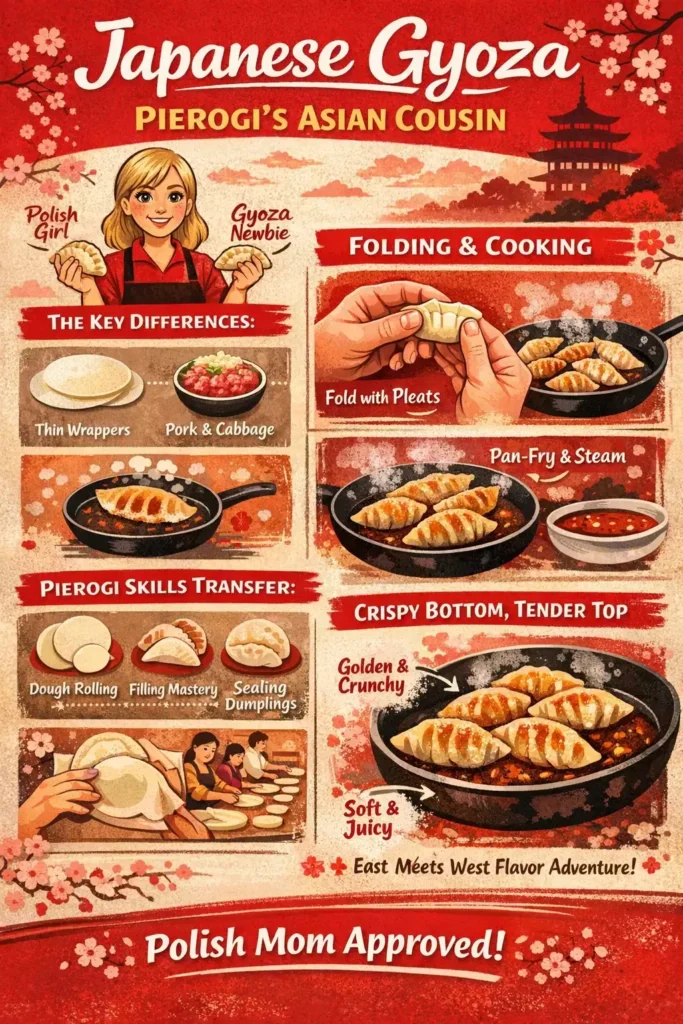
The day I decided to make Japanese gyoza at home, I had a moment of beautiful realisation: I already knew how to make dumplings. I’d been making pierogi since I was tall enough to reach the kitchen counter. The core skills — making dough, rolling wrappers, filling, sealing — transferred directly. Gyoza wrappers are thinner than pierogi dough. The filling is pork and cabbage instead of potato and cheese. The cooking method is different (pan-fried with steam instead of boiled). But the fundamental dumpling logic? Identical. My hands knew what to do before my brain caught up. It was like discovering that your native language shares grammar with a language you thought was completely foreign.
Gyoza are Japanese pan-fried dumplings with a pork and vegetable filling, cooked in a skillet with a splash of water so the bottoms are crispy and golden while the tops are steamed and tender. That contrast — crispy bottom, soft top — is what makes gyoza special. Pierogi don’t have that duality (unless you pan-fry them after boiling, which I also love). Gyoza introduced me to a whole new dumpling dimension, and my cross-cultural dumpling journey has been one of the most rewarding parts of cooking at Polish Mom.
Ingredients
For the Filling
- • 1/2 pound (225g) ground pork
- • 2 cups Napa cabbage, finely chopped and squeezed dry
- • 2 green onions, finely sliced
- • 2 cloves garlic, minced
- • 1 tablespoon soy sauce
- • 1 teaspoon sesame oil
- • 1 teaspoon fresh ginger, grated
- • 1/2 teaspoon white pepper
For Assembly
- • 1 package round gyoza wrappers (about 40 wrappers — Asian grocery stores or the freezer section)
- • Small bowl of water for sealing
For Cooking
- • 2 tablespoons vegetable oil
- • 1/3 cup water
Dipping Sauce
- • 3 tablespoons soy sauce + 1 tablespoon rice vinegar + 1 teaspoon sesame oil + chilli flakes
How to Make Them
Make the Filling
Finely chop the Napa cabbage, sprinkle with salt, and let it sit for 10 minutes. Squeeze out ALL the water — this is critical. Watery cabbage = watery filling = soggy, falling-apart gyoza. I learned this the same way I learned it with pierogi filling: the hard way, approximately three times. Once the cabbage is dry, mix it with the pork, green onions, garlic, soy sauce, sesame oil, ginger, and white pepper. Stir in one direction until the filling is cohesive — this helps the protein bind and creates a better texture.
Fold
Place a gyoza wrapper in your palm. Add about 1 teaspoon of filling to the centre. Dip your finger in water and wet the edges of the wrapper. Fold in half and pinch the centre to seal. Then create pleats along one side — 4-5 small folds from the centre outward, pressing each one against the flat back side. The pleated side faces you, the flat side faces the pan. Don’t stress about perfection — my first gyoza looked like tiny crime scenes. By my twentieth, they looked professional. By my fortieth, I could fold while having a conversation. It’s muscle memory, the same way pierogi folding became muscle memory for me as a kid.
Cook (The Crispy-Bottom Method)
Heat oil in a non-stick skillet over medium-high heat. Place gyoza in a single layer, flat-side down. Cook 2-3 minutes without moving until the bottoms are golden brown. Add 1/3 cup water to the skillet and immediately cover with a lid. The water will sizzle and steam — this is what cooks the tops. Steam for 3-4 minutes until the water evaporates. Remove the lid and cook 1-2 more minutes until the bottoms are crispy again and the pan is dry. The result: golden, crunchy bottoms and soft, steamed tops. This contrast is everything.
Pierogi Skills That Transfer to Gyoza
• Dough handling: If you can roll pierogi dough, you can handle gyoza wrappers (which are even easier because they’re pre-made).
• Filling consistency: Knowing how wet is too wet for a dumpling filling transfers directly. If your pierogi filling knowledge tells you “this is too moist,” trust that instinct for gyoza too.
• Sealing: The principle is the same — wet edges, press firmly, no air pockets. Air pockets burst during cooking in both cuisines.
• Assembly line mentality: Making dumplings is a production process, not a one-at-a-time art project. Set up your station, get into rhythm, and fold thirty in 15 minutes.
The one thing pierogi DIDN’T prepare me for: the pleating. Pierogi seals are simple crimps. Gyoza pleats are decorative and functional — they create a curved shape that sits flat in the pan. It took practice. YouTube helped. My daughter helped too — her small fingers are better at the delicate folds than my pierogi-calloused ones.
Tips
💡 Pro Tips
✓ Squeeze the cabbage DRY. Cannot overstate this. Wet cabbage is the #1 reason homemade gyoza fail.
✓ Don’t overfill. 1 teaspoon is enough. Overfilled gyoza burst during cooking.
✓ Non-stick pan is essential. Gyoza stick to everything else. A good non-stick makes crispy bottoms effortless.
✓ Ice water trick: Use ice-cold water instead of room temperature when steaming. The temperature shock creates extra steam and makes the wrappers slightly chewier.
Variations
• Chicken gyoza: Ground chicken + mushroom + ginger. Lighter, still delicious.
• Vegetable gyoza: Mushroom, cabbage, carrot, glass noodles. My daughter’s preferred version.
• Polish-Japanese fusion gyoza: Fill with potato-cheese pierogi filling. Pan-fry gyoza style. It sounds sacrilegious and tastes like two cultures high-fiving. I’ve served this at dinner parties and the conversation it starts is worth the effort alone.
How to Store
Freeze uncooked gyoza on a parchment-lined sheet (so they don’t stick), then transfer to a bag. They keep frozen for 3 months. Cook from frozen — add 1 extra minute to the steaming time. I always make a double batch and freeze half. Future-me is always grateful.
Frequently Asked Questions
Where do I buy gyoza wrappers?
Asian grocery stores (fresh or frozen section). Some regular grocery stores carry them in the produce area near the tofu. They’re thin, round, wheat-based wrappers. If you can’t find them, wonton wrappers (square) work — just cut them into circles.
Can I make the wrappers from scratch?
You can — flour, water, salt, knead, rest, roll thin. It’s very similar to pierogi dough but rolled thinner. If you already make pierogi from scratch, you can absolutely make gyoza wrappers. But store-bought wrappers are so good and so easy that I only make my own when I’m feeling ambitious, which is approximately twice a year.
Kasia Polish Mom
Polish-born, Chicago-raised, feeding a family of six with babcia’s recipes and a global pantry. I grew up folding pierogi at my grandmother’s kitchen table and never stopped — 15+ years of cooking from scratch, one Sunday dinner at a time. Everything here is tested on four kids, a hungry husband, and the memory of a woman who never measured anything but always got it right.