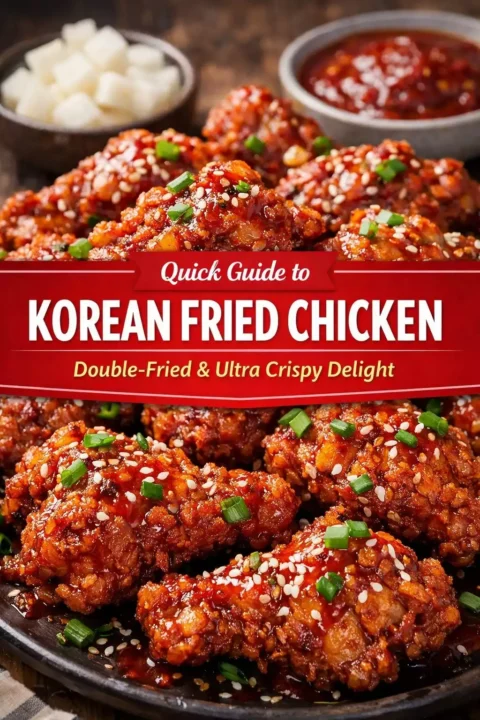
Korean Fried Chicken
Regular fried chicken is great. Korean fried chicken is a religious experience. I don’t say this lightly — I grew up on Polish schabowy, which I consider one of the finest breaded-and-fried foods on Earth. But Korean fried chicken exists on a different plane. The double-fry technique creates a coating so impossibly crispy that it stays crunchy under a thick layer of sticky, spicy-sweet gochujang glaze. Regular fried chicken goes soggy under sauce in about 90 seconds. Korean fried chicken laughs in the face of sauce. It’s engineering as much as cooking.
Ingredients
For the Chicken
- 2 pounds chicken wings or drumettes
- 1/2 cup cornstarch
- 1/4 cup flour
- 1/2 teaspoon baking powder
- Salt and pepper
- Vegetable oil for frying
For the Gochujang Glaze
- 3 tablespoons gochujang
- 2 tablespoons soy sauce
- 2 tablespoons honey
- 1 tablespoon rice vinegar
- 1 tablespoon sesame oil
- 2 cloves garlic, minced
- Sesame seeds and sliced green onions for topping
Method
Coat the Chicken
-
Pat chicken completely dry — moisture is the enemy of crunch. Mix cornstarch, flour, baking powder, salt, and pepper. The baking powder is the secret: it reacts with the oil and creates tiny bubbles in the coating that make it extra crispy and airy. Toss the chicken in the coating until every piece is thoroughly covered.
Double-Fry
-
Heat oil to 160C / 325F. Fry chicken in batches for 8-10 minutes until cooked through but only lightly golden. Remove and rest on a rack for 10 minutes. This rest is critical — steam escapes from the coating, and when it hits the hot oil again, the surface fries up crispier than a single fry could ever achieve.
-
Heat oil to 190C / 375F. Fry the chicken again for 3-4 minutes until deep golden and shatteringly crispy. The coating should audibly crunch when you squeeze a piece. If it doesn’t crunch, give it another minute. This double-fry method is the same technique I use for General Tso’s and dragon chicken — it’s the universal secret to fried food that stays crispy under sauce.
Make the Glaze
-
While chicken rests between fries, combine gochujang, soy sauce, honey, rice vinegar, sesame oil, and garlic in a saucepan. Cook over medium heat for 2-3 minutes until the sauce thickens and gets glossy. It should coat a spoon and drip slowly. Too thin = it slides off the chicken. Too thick = it clumps instead of coating.
Toss and Serve
-
Toss the hot, crispy chicken in the glaze. Work fast — every second the chicken sits in sauce, the coating softens slightly. Plate immediately. Shower with sesame seeds and sliced green onions. Serve with pickled radish (or Polish pickled cucumbers — the tangy crunch is the perfect counterpoint to the rich, sticky chicken).

Kasia Polish Mom
Polish-born, Chicago-raised, feeding a family of six with babcia’s recipes and a global pantry. I grew up folding pierogi at my grandmother’s kitchen table and never stopped — 15+ years of cooking from scratch, one Sunday dinner at a time. Everything here is tested on four kids, a hungry husband, and the memory of a woman who never measured anything but always got it right.
Korean Fried Chicken — Double-Fried, Ultra Crispy
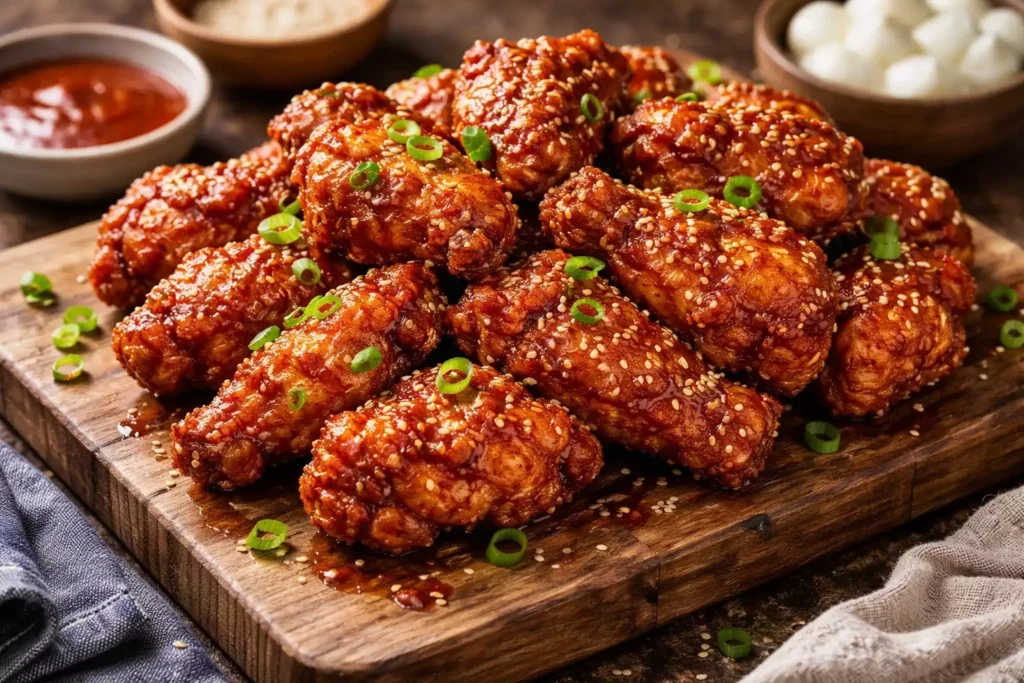
Regular fried chicken is great. Korean fried chicken is a religious experience. I don’t say this lightly — I grew up on Polish schabowy, which I consider one of the finest breaded-and-fried foods on Earth. But Korean fried chicken exists on a different plane. The double-fry technique creates a coating so impossibly crispy that it stays crunchy under a thick layer of sticky, spicy-sweet gochujang glaze. Regular fried chicken goes soggy under sauce in about 90 seconds. Korean fried chicken laughs in the face of sauce. It’s engineering as much as cooking.
My obsession started at a Korean chicken joint in Chicago — twelve-dollar wings that changed my understanding of what fried chicken could be. The crunch was audible from across the table. The glaze was sweet, spicy, and had that fermented depth from gochujang that regular hot sauce can’t replicate. I went back four times in two weeks, which my husband noted was “getting expensive,” so I learned to make them at home. Took me five attempts. First batch: coating fell off. Second: too greasy. Third: sauce too sweet. Fourth: almost perfect. Fifth: my husband said “these are better than the restaurant.” That’s the moment I stopped going back.
Ingredients
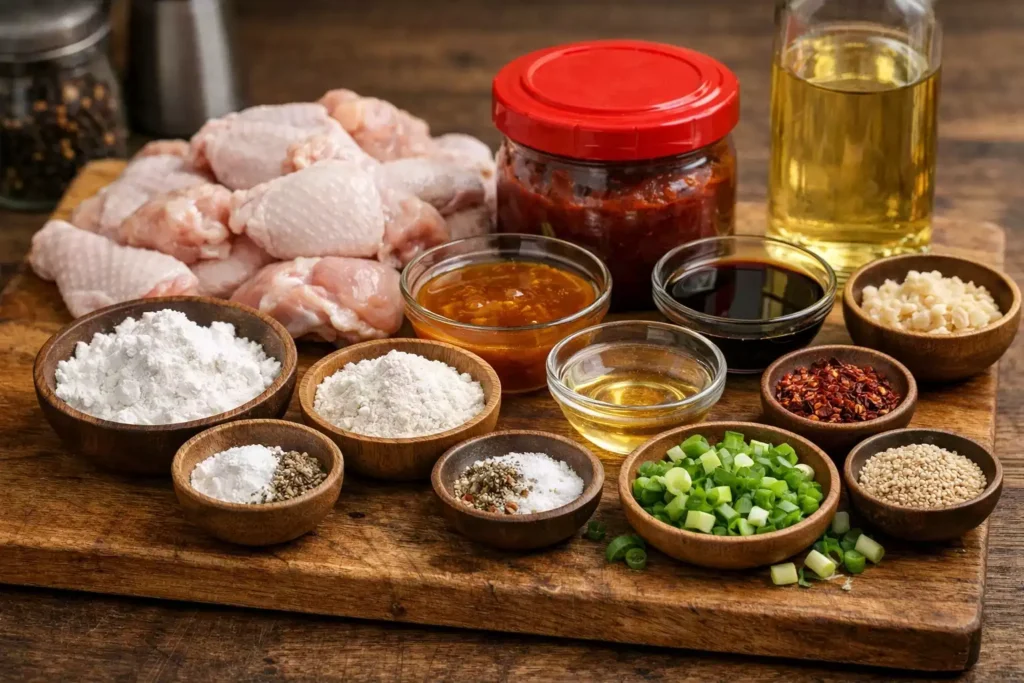
For the Chicken
- • 2 pounds chicken wings or drumettes
- • 1/2 cup cornstarch
- • 1/4 cup flour
- • 1/2 teaspoon baking powder
- • Salt and pepper
- • Vegetable oil for frying
For the Gochujang Glaze
- • 3 tablespoons gochujang
- • 2 tablespoons soy sauce
- • 2 tablespoons honey
- • 1 tablespoon rice vinegar
- • 1 tablespoon sesame oil
- • 2 cloves garlic, minced
- • Sesame seeds and sliced green onions for topping
How to Make It
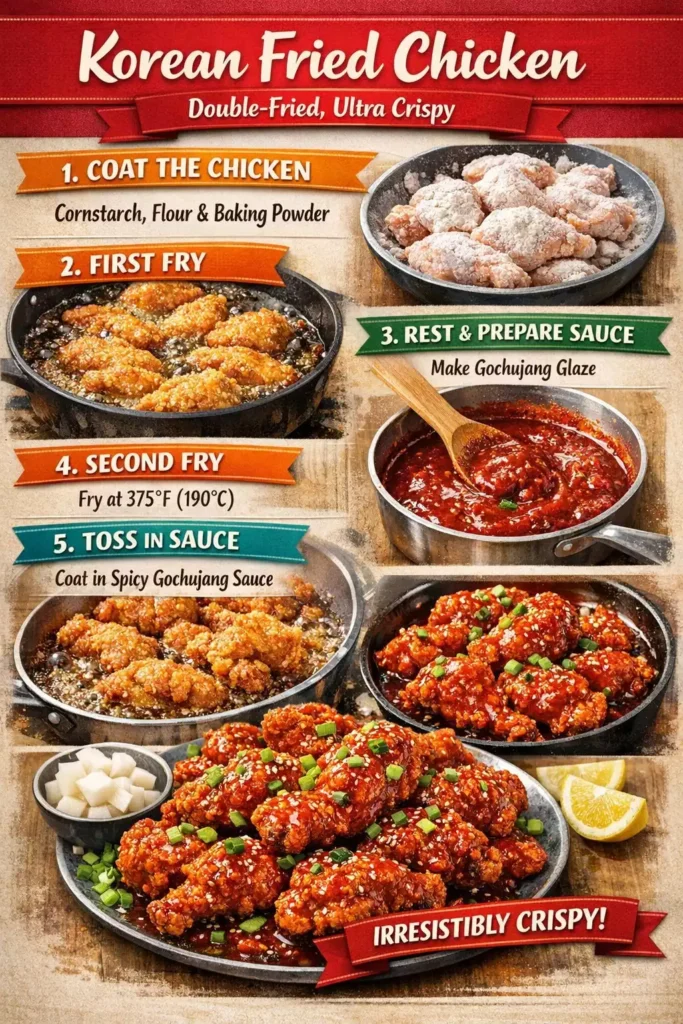
Coat the Chicken
Pat chicken completely dry — moisture is the enemy of crunch. Mix cornstarch, flour, baking powder, salt, and pepper. The baking powder is the secret: it reacts with the oil and creates tiny bubbles in the coating that make it extra crispy and airy. Toss the chicken in the coating until every piece is thoroughly covered.
Double-Fry
Heat oil to 160C / 325F. Fry chicken in batches for 8-10 minutes until cooked through but only lightly golden. Remove and rest on a rack for 10 minutes. This rest is critical — steam escapes from the coating, and when it hits the hot oil again, the surface fries up crispier than a single fry could ever achieve.
Heat oil to 190C / 375F. Fry the chicken again for 3-4 minutes until deep golden and shatteringly crispy. The coating should audibly crunch when you squeeze a piece. If it doesn’t crunch, give it another minute. This double-fry method is the same technique I use for General Tso’s and dragon chicken — it’s the universal secret to fried food that stays crispy under sauce.
Make the Glaze
While chicken rests between fries, combine gochujang, soy sauce, honey, rice vinegar, sesame oil, and garlic in a saucepan. Cook over medium heat for 2-3 minutes until the sauce thickens and gets glossy. It should coat a spoon and drip slowly. Too thin = it slides off the chicken. Too thick = it clumps instead of coating.
Toss and Serve
Toss the hot, crispy chicken in the glaze. Work fast — every second the chicken sits in sauce, the coating softens slightly. Plate immediately. Shower with sesame seeds and sliced green onions. Serve with pickled radish (or Polish pickled cucumbers — the tangy crunch is the perfect counterpoint to the rich, sticky chicken).
Why Double-Fry Works
First fry at lower temperature cooks the chicken through and creates a foundation crust. The rest period allows moisture inside the coating to migrate to the surface. Second fry at higher temperature blasts that surface moisture away, creating a dry, ultra-crispy shell. Single-fried chicken has moisture trapped in the coating — it tastes crispy for about 2 minutes, then goes soft. Double-fried chicken stays crispy for 15+ minutes, even under a thick glaze. Physics favours the patient cook.
Tips
💡 Pro Tips
✓ Pat dry. Then pat dry again. Wet chicken = steam = soggy coating. Use paper towels aggressively.
✓ Baking powder in the coating. Creates micro-bubbles that amplify crunch. Don’t skip it.
✓ 10-minute rest between fries. This is where the magic happens. Be patient.
✓ Toss in sauce at the last second. The clock is ticking once sauce meets coating.
Variations
• Soy garlic (non-spicy): Replace the gochujang glaze with: 3 tbsp soy sauce, 2 tbsp honey, 4 minced garlic cloves, 1 tbsp butter. Sweet, garlicky, kid-friendly.
• Air fryer version: Coat the chicken, spray with oil, air fry at 190C / 380F for 25 minutes, flipping halfway. Less crispy than deep-fried but still excellent.
• Boneless thigh bites: Cut thighs into chunks. Same coating and technique. Faster cooking, easier eating.
How to Store
Best fresh. Korean fried chicken doesn’t store well — the coating softens overnight. Eat it all. If leftovers happen: reheat in a 200C / 400F oven for 10 minutes to re-crisp, then re-glaze with fresh sauce. Never microwave.
Frequently Asked Questions
Can I use chicken thighs or breasts instead of wings?
Thighs work beautifully — cut into bite-sized pieces. Breasts dry out faster, so cut them small and watch the cook time. Wings are traditional and the best ratio of crispy coating to meat.
Where do I buy gochujang?
Asian grocery stores, the international aisle of regular grocery stores, or online. Same red tub as mentioned in my Korean chicken stir-fry recipe. Once you buy it, you’ll put it on everything. I’m on my fourth tub this year.
Five Attempts to Perfection
For anyone thinking “I’ll just wing it” with Korean fried chicken — let me save you some frustration with the lessons from my five failed attempts. Attempt one: I used regular breadcrumbs (Polish instinct) instead of cornstarch. The coating fell off in the oil. Attempt two: I used the right coating but fried at too high a temperature — burnt outside, raw inside. Attempt three: I nailed the fry but made the sauce too sweet — my husband said it tasted like “candy chicken” which is not a compliment. Attempt four: nearly perfect, but I tossed the chicken in sauce too early and it sat while I plated the rice, losing its crunch. Attempt five: everything aligned. The double-fry, the correct sauce ratio, the last-second toss. My husband ate eight pieces. My boys fought over the last wing. My daughter, who “doesn’t like spicy,” ate three pieces of the soy garlic version and asked when I was making them again. That’s the moment a recipe earns permanent rotation status.
Kasia Polish Mom
Polish-born, Chicago-raised, feeding a family of six with babcia’s recipes and a global pantry. I grew up folding pierogi at my grandmother’s kitchen table and never stopped — 15+ years of cooking from scratch, one Sunday dinner at a time. Everything here is tested on four kids, a hungry husband, and the memory of a woman who never measured anything but always got it right.