
Kasia Polish Mom
Polish-born, Chicago-raised, feeding a family of six with babcia’s recipes and a global pantry. I grew up folding pierogi at my grandmother’s kitchen table and never stopped — 15+ years of cooking from scratch, one Sunday dinner at a time. Everything here is tested on four kids, a hungry husband, and the memory of a woman who never measured anything but always got it right.
Mapo Tofu — The Spicy Dish That Changed My Mind About Tofu
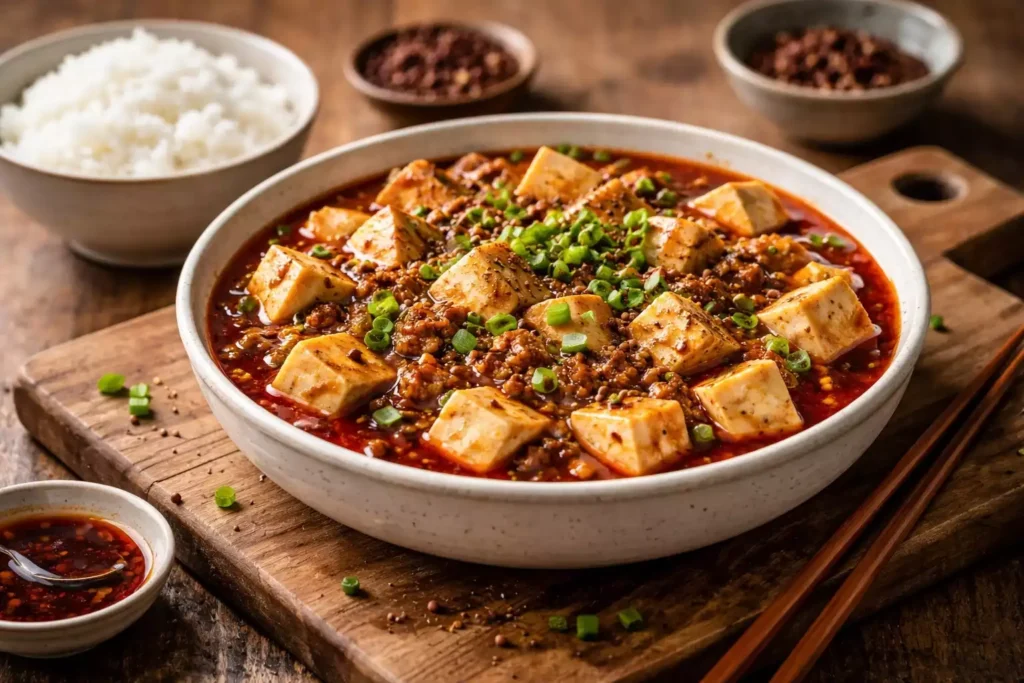
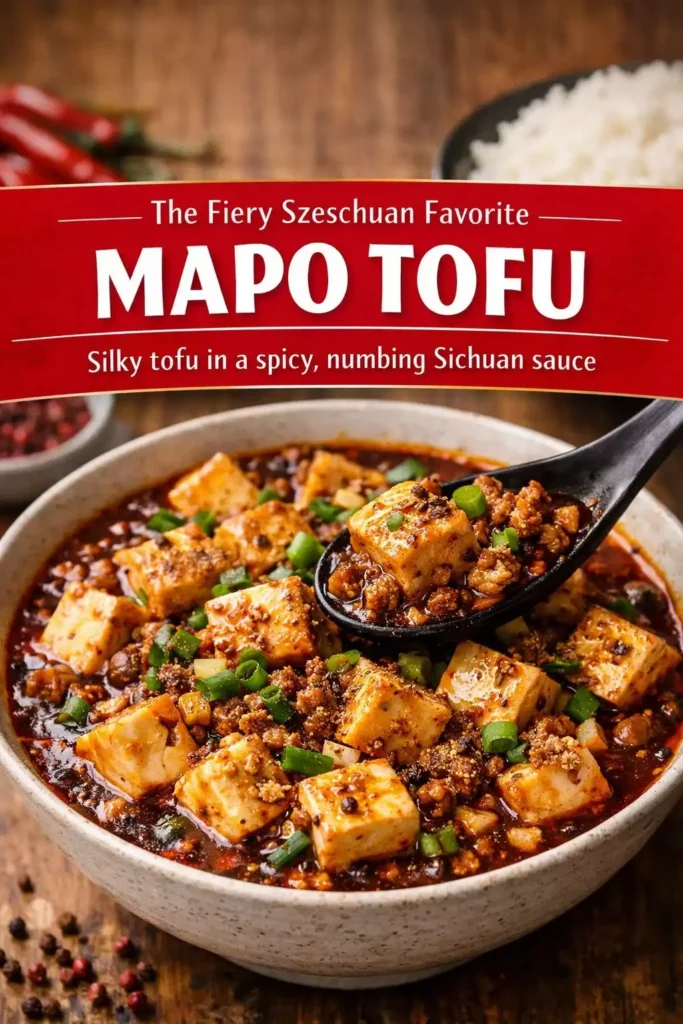
I thought I hated tofu. Then I had mapo tofu and realized I had just been eating bad tofu my entire life. This is the dish that changed my mind and it will change yours if you have any lingering tofu skepticism. Mapo tofu — silky tofu in a fiery Szechuan sauce of doubanjiang, ground pork, and Szechuan peppercorns — is one of the most aggressively good things you can eat. The sauce is deep, complex, and genuinely spicy. The tofu is a vehicle for that sauce and that is not an insult to the tofu; it is the best possible assignment for it.
The ma la sensation is the defining experience of mapo tofu — ma meaning the numbing tingle of Szechuan peppercorns, la meaning the heat from the chilies. Together they create a sensation on the palate that is genuinely addictive: first the heat, then the spreading tingle, then the lingering warm glow that makes you want another bite immediately. This is not incidental — it is the point of the dish.
My husband says this is too spicy. I say he has grown tremendously as a person in eating it with me for three years. I make it every month. He finishes his bowl every time.
The Doubanjiang Question
Doubanjiang — Szechuan fermented chili bean paste — is the non-negotiable ingredient in authentic mapo tofu. It provides the deep, complex, fermented chili flavor that cannot be replicated with substitutes. Buy it at an Asian grocery or online. Look for Pi Xian doubanjiang (郸县豆瓣), which is the preferred regional variety. Once you have it, it keeps refrigerated for months and transforms any Szechuan dish you apply it to.
Ingredients
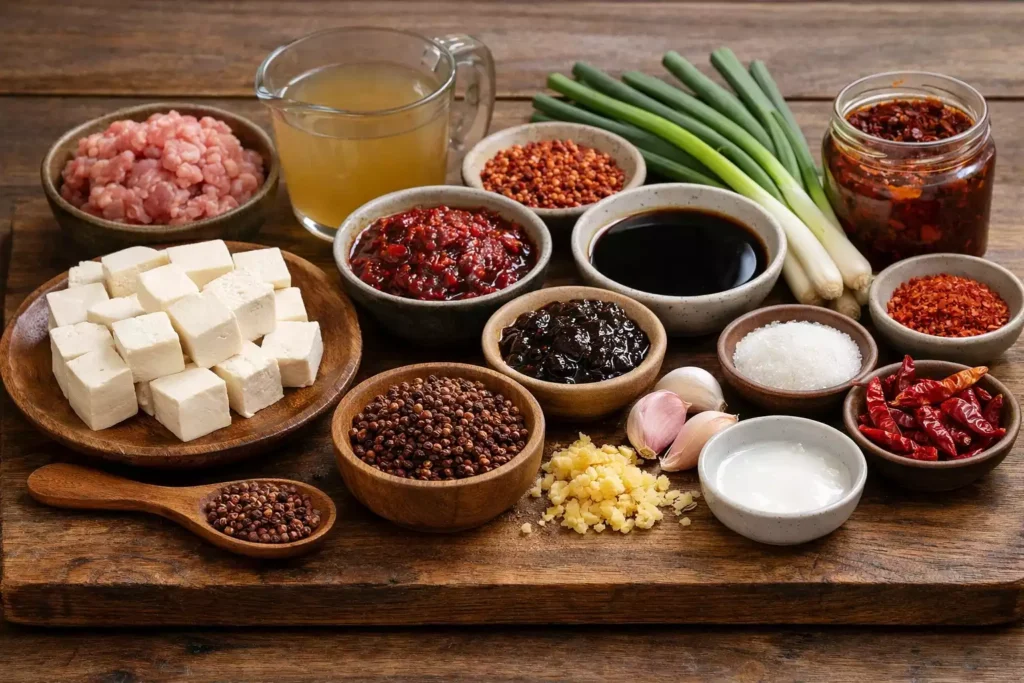
Mapo Tofu Ingredients (serves 4)
- 400g (14 oz) soft or silken tofu, cut into 2.5cm cubes
- 200g (7 oz) ground pork
- 2 tbsp doubanjiang (Pi Xian chili bean paste)
- 1 tbsp black bean sauce (douchi)
- 4 cloves garlic, minced
- 1 tbsp fresh ginger, minced
- 200ml (3/4 cup) chicken or pork stock
- 1 tbsp soy sauce
- 1 tsp sugar
- 1 tbsp cornstarch dissolved in 2 tbsp water
- 1–2 tsp Szechuan peppercorns, toasted and ground
- 3 spring onions, sliced
- 2 tbsp oil for cooking
How to Make It
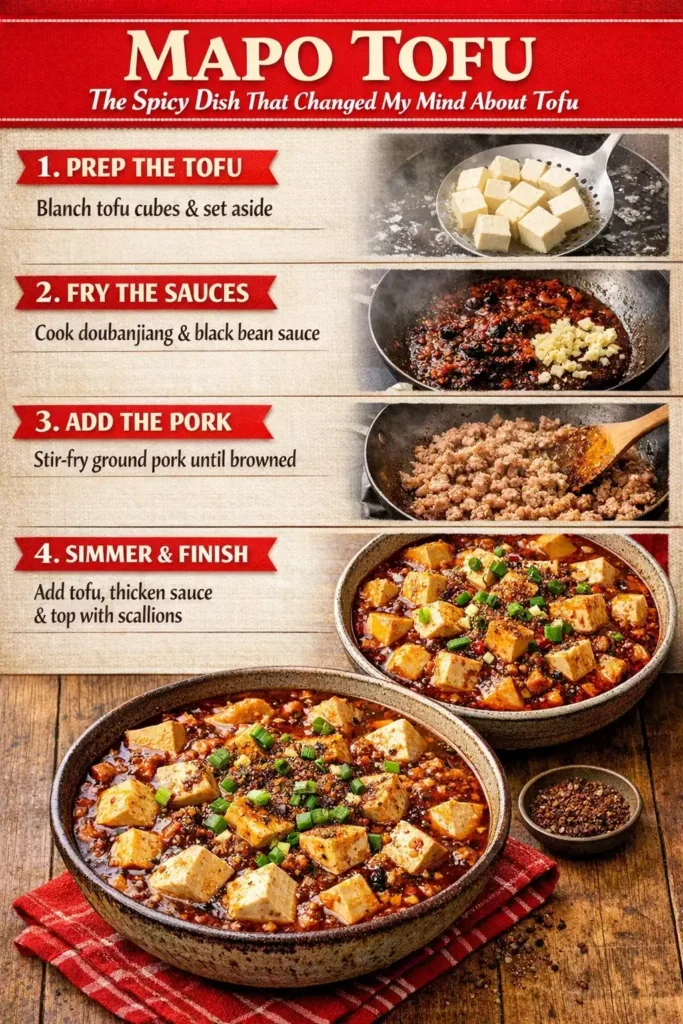
1
1Prepare the Tofu
Gently cut the tofu into 2.5cm cubes. Bring a pot of lightly salted water to a gentle simmer. Slide the tofu in and blanch for 2 minutes — this firms the tofu slightly and prevents it from falling apart in the wok. Remove with a slotted spoon and set aside. Handle gently throughout.
2
2Fry the Aromatics
Heat oil in a wok over medium-high heat. Add the doubanjiang and black bean sauce. Fry, stirring constantly, for 60–90 seconds until the paste darkens slightly, becomes very aromatic, and the oil turns red from the chili. This step builds the fundamental flavor of the sauce. Add garlic and ginger and stir for 30 more seconds.
3
3Add the Pork
Add the ground pork and stir-fry over high heat until browned and cooked through, breaking it into small pieces as it cooks. Pour in the stock, soy sauce, and sugar. Bring to a simmer. Taste: the sauce should be deeply savory, spicy, and rich. Adjust soy sauce or sugar as needed.
4
4Add Tofu and Finish
Gently slide the blanched tofu cubes into the sauce. Stir very gently to coat — use a circular motion from the bottom of the wok to avoid breaking the tofu. Add the cornstarch slurry and stir gently until the sauce thickens and coats the tofu. Simmer 2 minutes. Plate and dust generously with the ground Szechuan peppercorns. Scatter spring onions over the top. Serve immediately over steamed rice.
Mapo Tofu Tips
Fry the doubanjiang until it stains the oil red. The most important step in building the sauce is properly frying the doubanjiang paste until the oil turns deep red-orange from the chili. This step releases the fat-soluble flavor compounds and builds the complex base that makes mapo tofu taste like mapo tofu. Rush it and the sauce will be flat.
Handle the tofu gently. Silken or soft tofu breaks if stirred aggressively. Slide it in carefully, use circular bottom-stirring motions, and try not to break the cubes. Some breakage is inevitable and fine; complete disintegration is not. Blanching first helps firm the tofu slightly and reduces breakage.
Ground Szechuan peppercorn goes on at the very end. The numbing compound (hydroxy-alpha-sanshool) is volatile and fades with heat. Add the ground peppercorn after plating for maximum ma (numbing) effect. Cooking it in the sauce dulls the sensation significantly.
Adjust heat to your tolerance. Mapo tofu is legitimately spicy and should be. The doubanjiang amount controls most of the heat. Start with 1.5 tablespoons if you are heat-sensitive and increase from there. Do not eliminate the Szechuan peppercorn — the ma sensation is different from heat and provides the dish’s characteristic complexity.
Serving Mapo Tofu
Over plain steamed white rice — the rice tempers the heat and absorbs the sauce. This is not optional. Mapo tofu without white rice is like making the sauce without the doubanjiang: technically possible but not the right experience. Pair with a simple cucumber salad or blanched greens to balance the richness. Dan dan noodles as a follow-up course makes this an extraordinary Szechuan dinner at home.
Variations Worth Trying
Vegetarian mapo tofu. Replace the ground pork with finely chopped shiitake mushrooms (fresh or rehydrated dried). Use vegetable stock. The mushrooms provide umami and texture. Equally excellent and a legitimate variation in Chinese vegetarian cooking.
Ma po eggplant (instead of tofu). Cut eggplant into 3cm cubes, salt and press to remove moisture, then fry until golden before adding to the same sauce. The eggplant absorbs the sauce even more completely than tofu and produces an extraordinary variation for eggplant lovers.
Storage
Refrigerate for up to 2 days. The tofu continues to absorb the sauce and firms slightly. Reheat gently in a pan with a splash of stock to loosen. The Szechuan peppercorn numbing effect diminishes significantly on reheating — add fresh ground peppercorn when reheating. Best eaten the day it is made.
FAQ
What is the difference between soft, firm, and silken tofu? Which should I use?
For mapo tofu, soft or silken tofu is traditional and correct. It has a creamy, custard-like texture that contrasts with the bold sauce. Firm tofu holds its shape better but has a denser, less yielding texture. If you are new to mapo tofu, try soft tofu first for the authentic experience. If you are concerned about the tofu breaking apart, firm tofu is more forgiving.
Is there a substitute for doubanjiang?
Nothing replicates doubanjiang exactly — it has a specific fermented depth from aged broad beans and chilies. The closest substitute is Korean gochujang plus a small amount of black bean sauce, which approximates the fermented-chili character. Sriracha is not a substitute — it lacks the fermented complexity. If the dish is important to you, find doubanjiang. It is widely available online and at any Asian grocery.
What are Szechuan peppercorns and where do I find them?
Szechuan peppercorns are not related to black pepper — they are the dried husks of the prickly ash berry. They contain hydroxy-alpha-sanshool, which creates the distinctive numbing-tingling sensation (ma) that is the signature of Szechuan cuisine. Find them at any Asian grocery or online. Toast briefly in a dry pan and grind before using — the aroma is floral, citrusy, and nothing like black pepper.
Kasia Polish Mom
Polish-born, Chicago-raised, feeding a family of six with babcia’s recipes and a global pantry. I grew up folding pierogi at my grandmother’s kitchen table and never stopped — 15+ years of cooking from scratch, one Sunday dinner at a time. Everything here is tested on four kids, a hungry husband, and the memory of a woman who never measured anything but always got it right.